Support for nuclear energy outpaces its reflection in national climate plans
Read more
UzDaily
uzdaily.uz

Support for nuclear energy outpaces its reflection in national climate plans

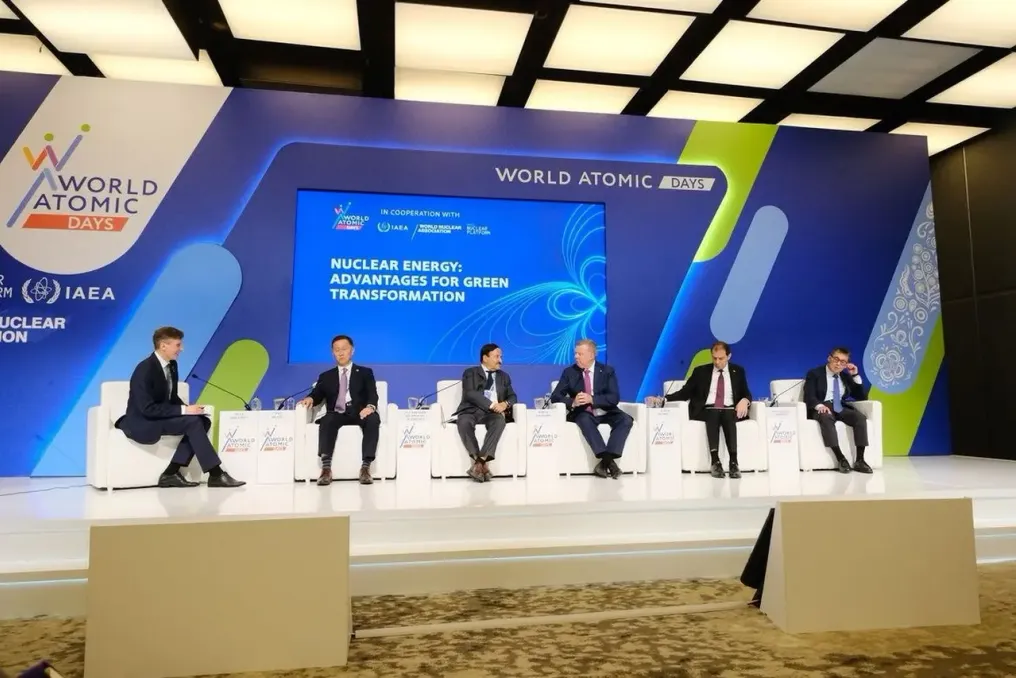
Participants at the World Nuclear Day forum stated that international support for nuclear energy is growing, but this technology has not yet been fully integrated into countries' national climate plans.

The discussion titled 'Nuclear Energy: Advantages for the Green Transition' took place on November 13 as part of an international forum held parallel to the COP31 climate conference.

Kirill Komarov, First Deputy CEO and Head of Rosatom's Development and International Business Division, highlighted three main trends shaping the global energy sector. The first is the growing demand for electricity. He noted that people need not just electricity, but stable supply at predictable prices. This is why nuclear energy is a very suitable solution to this demand.

The third, no less important trend, is people's desire to reduce the environmental footprint of all human activities, including energy production. This also explains the growing popularity of nuclear energy.

Komarov reported that more and more countries are including nuclear energy in their national energy strategies. One indicator of growing support is the international declaration presented at COP28 in Dubai in 2023, which called for tripling global nuclear capacity by 2050.

However, as Wei Huang, Director of the Planning, Information, and Knowledge Management Section at the IAEA Nuclear Energy Department, noted, nuclear energy is not widely represented in national climate documents. He was referring to Nationally Determined Contributions (NDCs), through which countries set their climate goals and measures to achieve them in accordance with the Paris Agreement.

Huang emphasized the need to include nuclear energy in NDCs. He pointed out that while 39 countries support the pledge to triple nuclear capacity, fewer than 20 countries actually include nuclear energy in their NDCs, indicating an existing gap even among countries actively supporting nuclear energy. He called for greater efforts to encourage the inclusion of this technology in countries' contributions to give it a more prominent place in the global green transition.

He also explained that climate policy is traditionally overseen by environment or development ministries, whereas nuclear programs are under the control of energy ministries and specialized organizations. Therefore, closer coordination between these institutions is required to include nuclear energy in national climate commitments.

In Turkey's NDC, submitted in 2025, the use of nuclear energy is designated as one element of the country's long-term climate strategy. Zafer Demirchan, Deputy Minister of Energy and Natural Resources of Turkey, stated that fulfilling climate obligations is one of the three priority tasks of the country's energy strategy, alongside reliable energy supply and energy independence. He recalled Turkey's goal to achieve carbon neutrality by 2053 and presented plans to expand nuclear generation.

Demirchan explained that when increasing renewable energy capacities, their inherent intermittency must be taken into account. Once renewable energy generation reaches a certain level, the system will start issuing warnings requiring the connection of additional baseload sources. Therefore, Turkey has a plan and roadmap to increase nuclear capacity. On one hand, the country is increasing renewable energy capacities, and on the other, this expansion is only possible with an increase in nuclear capacity. He added that they intend to implement new nuclear projects, and under the national plan, they will build at least 10 GW of nuclear capacity by 2040. The first project is Akkuyu with a capacity of 4.8 GW, and another project of the same scale will be built.

The session also addressed financing conditions for nuclear projects, including access to international sustainable development and energy transition programs.

The World Nuclear Day forum was organized by Rosatom with the support of the International Atomic Energy Agency, the World Nuclear Association, and the BRICS Nuclear Energy Platform. It took place in Antalya on November 12–13, parallel to the COP31 agenda.
Similar stories

Russia attacked substations in Ukraine, forcing nuclear power plants to reduce electricity generation
Read more
noticiasaominuto.com

Russia attacked substations in Ukraine, forcing nuclear power plants to reduce electricity generation

The Ministry of Energy of Ukraine reported that Russia struck electrical substations in Ukraine today, which necessitated that the country's nuclear power plants reduce electricity production. The Ministry forecasts a gradual recovery.

According to the ministry's statement published on the Telegram social network, the nuclear power plants were forced to decrease their production capacity. Resumption of production to normal levels is expected after the repair of damaged electrical grids.

It is emphasized that Russia does not directly strike Ukrainian nuclear power plants, but frequently attacks substations upon which these plants depend for supplying electricity to the national grid. Nuclear power plants generate more than half of the electricity consumed in Ukraine and play a key role in maintaining the country's energy system, especially after numerous Russian attacks destroyed or damaged non-nuclear power plants.

The attack, which occurred early in the morning, involved over 400 drones and about a hundred missiles, according to Ukrainian authorities. These bombings caused power outages in Kyiv and approximately ten regions of the country. Furthermore, energy services were forced to temporarily suspend power supply in several regions to stabilize the energy system.

A UN report released in June 2026 indicated that Russia carried out at least 423 systematic attacks on the Ukrainian power grid between October 2025 and March 2026.

Questions worth 500 billion rand hang over South Africa's nuclear plans
Read more
techcentral.co.za

Questions worth 500 billion rand hang over South Africa's nuclear plans

The Department of Energy categorically refuted claims that public consultations on the construction of 5.2 GW of new nuclear energy are a sham, despite assumptions by energy analyst Chris Yelland. Yelland, who has long criticized the construction of new nuclear facilities, believed that Minister Kgosiyenso Ramkgopa had already made a final decision.

Yelland raised this issue with Zisamele Mbambo, Deputy Director-General of the department of nuclear energy, during an EE Business Intelligence webinar he moderated on Thursday. Two days earlier, at the Nuclear and Clean Energy Conference, Ramkgopa stated: 'We are going to build nuclear energy in this country. Judge us in court.' He also noted that publishing the application for nuclear energy is necessary to prevent litigation that accompanied previous procurement attempts to 'make it very easy for judges to rule.'

Yelland expressed the opinion that, after studying the minister's speech in detail, he got the impression that it was a farce, and the decision was already made in the minister's mind. Mbambo responded categorically to this: 'I must state that it is not a farce. No predetermined decision has been made.' She assured that the process is being conducted diligently, and the minister intends to take public opinion into account before making a decision.

Mbambo reported that Ramkgopa will publish his intention to conduct a determination under section 34 of the Electricity Regulation Act by the end of November, allowing 60 days for comments, followed by regional tours. The final decision is expected in April 2027. In his prepared speech, Ramkgopa indicated that the law requires consultation with the energy regulator Nersa and the Minister of Finance, setting a deadline of 'by June 2027.'

According to Mbambo, Eskom submitted a feasibility study report, and its preliminary roadmap anticipates the commissioning of the first new plant in 2036. These 5.2 GW represent the first phase of the program, which could grow to 10 GW, which, she said, is necessary to justify local nuclear fuel cycle facilities. Nuclear technologies, she added, 'provide reliable baseload power, complementing intermittent renewable energy generation and energy storage.'

Popular