Nvidia's stock drop drops the company out of the top 3 most valuable American companies
Read more
Olhar Digital
olhardigital.com.br

Nvidia's stock drop drops the company out of the top 3 most valuable American companies

The decline in Nvidia's stock price caused the chip manufacturer to fall to fourth place among the most valuable companies in the United States on Friday, yielding to Alphabet, the owner of Google.

This prolonged downturn has reshaped the top of the market capitalization rankings and is occurring against the backdrop of shifting investor focus in the artificial intelligence sector.

Nvidia, which holds a central position in AI bets on Wall Street, is experiencing a protracted series of losses. Its shares fell by 3% on Friday, bringing the company's market value to $3.4 trillion (approximately 19.38 trillion Brazilian reais). Thus, the company entered its seventh consecutive week of decline, the longest streak since 2008.

This movement occurred just days after the release of Nvidia's first financial report since the resignation of its co-founder, Jensen Huang. The results were insufficient to dispel investors' concerns regarding the company's management and continued spending on artificial intelligence.

Losing its ranking also indicates a change in market preferences. Some investors have begun paying more attention to companies that combine significant investments in artificial intelligence with existing revenues from cloud services and software.

According to LSEG data, Apple maintains the leading position, followed by Microsoft and Alphabet. The market capitalization of these three companies was:

With a market capitalization of $3.4 trillion (19.38 trillion Brazilian reais), Nvidia is positioned directly below Alphabet, holding the fourth spot.

Similar stories

Nvidia Exceeds $100 Billion Revenue Despite Geoffrey Huang Scandal
Read more
www.aajtak.in

Nvidia Exceeds $100 Billion Revenue Despite Geoffrey Huang Scandal

American technology company Nvidia surpassed market expectations with its quarterly results, achieving revenue exceeding $100 billion for the first time. For the quarter ending in October, Nvidia's revenue reached $115.8 billion, and profit hit $65.3 billion. Both figures were above Wall Street forecasts, leading to an approximate 4% rise in the company's stock on the American stock market.

These strong financial results emerged amid significant changes in company leadership and ongoing disputes related to its former CEO, Geoffrey Huang. Nvidia also projected revenue of around $130 billion for the current quarter, indicating sustained high demand for artificial intelligence (AI) chips. Nvidia's core business is focused on manufacturing chips for AI.

In the three months ending in October, Nvidia generated $115.8 billion in revenue with a profit of $65.3 billion. Sales during this period more than doubled the figures from the same period last year. Market analysts did not anticipate such impressive results. Colette Kress, the interim CEO, informed investors that demand for Nvidia chips is constantly growing, and the company is actively increasing its production capacity. She expressed confidence that customers, business partners, and employees remain loyal to the company.

The company forecasts revenue of approximately $130 billion for the current quarter. Furthermore, revenue is expected to grow by 75% in the next fiscal year, which is 5% higher than the initial forecast made by the company in August. Nvidia expects its gross profit to remain above 70%. The primary reason cited for this stability is the continuously growing demand for AI chips.

Following the departure of Geoffrey Huang, co-founder and former CEO of Nvidia, discussions about leadership have intensified within the company. Huang publicly stated on Tuesday that he is willing to resume his duties as CEO if asked by the board of directors. However, Nvidia's Chairman of the Board, Harvey S. Jones, clearly stated that there are currently no plans for Geoffrey Huang's return. He emphasized that the board of directors unanimously accepted his resignation.

According to a report by The New York Times, Huang resigned following personal disagreements related to violations of the company's code of conduct. The report mentions his extramarital affairs, including dealings with Chinese businesswoman Alice Huang. There are suspicions from American agencies that Alice is involved in espionage on behalf of China. Nvidia is conducting an independent investigation into the entire matter. Currently, Colette Kress serves as the interim CEO. Nvidia has also hired a search firm to find a permanent CEO, considering both internal and external candidates.

Nvidia decided to halt shipments of its H200 AI chips to China. Geoffrey Huang had repeatedly tried to secure permission to sell these chips in China, having reached an agreement with the US government to transfer 25% of sales revenue to China. Nevertheless, the Chinese side showed little interest in purchasing these chips. In the quarter ending in October, Nvidia sold chips to China worth about $2.4 billion, which constitutes a small portion of the total revenue of $115.8 billion. Now, the company faces the challenge not only of meeting the growing demand for AI chips but also of maintaining development momentum amidst leadership changes and trade restrictions related to China.

Nvidia's strong financial results alleviated concerns about weakening demand in the AI sector. The company's growth in sales and profit shows that the need for AI chips remains very high. Nevertheless, the impact of Geoffrey Huang's departure, the cessation of shipments to China, and new American restrictions on the company's future still need to be assessed.

Nvidia reports strong third-quarter revenue and projects further growth despite CEO departure
Read more
olhardigital.com.br

Nvidia reports strong third-quarter revenue and projects further growth despite CEO departure

Nvidia released its third-quarter financial results, which exceeded Wall Street market expectations. The semiconductor manufacturer recorded revenue of US$115.84 billion, more than double the revenue from the same period last year. This balance sheet was presented on Tuesday, the 17th, marking the first financial report since Jensen Huang left the company's leadership.

The figures presented surpassed the forecasts made by analysts consulted by LSEG, who had projected revenue of US$109.1 billion. Furthermore, the adjusted earnings per share stood at US$2.68, higher than the estimated US$2.48. The company's net income reached US$65.3 billion, an increase of about 105% compared to the US$31.9 billion recorded a year ago.

Following the publication of these positive results, Nvidia's shares rose by approximately 3% in after-hours trading. Additionally, the company shared an optimistic outlook for the fourth quarter, targeting revenue of around US$130 billion, with a predicted variance margin of 3%. This estimate exceeds the average of analysts, which was US$125.25 billion, representing a growth of approximately 90% compared to the corresponding quarter of the previous fiscal year.

The company also anticipates that its adjusted gross margin will be between 71% and 72%, which is lower than the 74.9% achieved in the third quarter. This reduction is attributed to pressure on component costs, notably memory. It is relevant to note that this revenue projection does not include revenues from chip sales to data centers located in China, as communicated by Nvidia in its financial report.

Despite the robust financial performance, the announcement occurred at a sensitive time for Nvidia. Jensen Huang had stepped down as CEO the previous week, following allegations related to extramarital relationships, including one with a woman suspected of working for Chinese intelligence, in addition to two others with employees of the company itself. His departure ended three decades of leadership by the co-founder and raised questions about the maintenance of the manufacturer's technological and commercial strategy.

Kress temporarily assumed management of the company while simultaneously holding the role of Chief Financial Officer. Her first public presentation of the results as interim CEO comes amidst investor demands regarding the corporate future. For his part, Huang publicly stated that he would be honored to return to the position if the board of directors judged it to be the best path for shareholders, employees, and Nvidia itself. However, according to information from The Wall Street Journal, the board was not evaluating his return.

The manufacturer's shares had been falling by about 30% in the last month. Nvidia also lost the position of the world's most valuable company to Apple, with its market value decreasing from over US$5 trillion at the beginning of October to approximately US$3.7 trillion. Another point of concern is international operations, specifically chip sales to Asia and suspicions that components intended for companies in the region were diverted to China.

This issue gained greater prominence following revelations involving Alice Huang, a former executive at Megaspeed, a data center company based in Singapore. US authorities suspect she has ties to Chinese intelligence services. Megaspeed used Nvidia chips to build AI infrastructure in Southeast Asia and is under investigation for alleged product diversion to China.

In response to political pressure, Nvidia announced this Tuesday the formation of a new committee on the board of directors. This committee will be responsible for overseeing the company's national security policies, compliance with American export control regulations, and risks inherent in international trade. Suzanne Nora Johnson will chair this group, supported by board members Stephen Neal and John Dabiri.

Nvidia's national security and trade compliance teams will also report to the committee and the interim CEO in monitoring operational activities. This initiative comes one day after the U.S. Department of Commerce announced new regulations aimed at limiting remote access of Chinese companies to advanced American chips through data centers located in other countries.

In addition to Huang's succession and Asian investigations, investors are expressing apprehension regarding the financing strategy adopted by Nvidia recently. The company has made investments, provided financial guarantees, and established agreements with buyers of its chips for the construction of AI infrastructure. Critics classify some of these practices as circular financing, as Nvidia's financial support can help its own customers acquire the manufacturer's products, creating a risk of financial dependence between the company and the promoters of demand for its processors.

With Huang's departure, investors are seeking clarity on whether the new leadership will maintain this strategic approach and how it plans to manage the risks associated with the signed agreements. Although the quarterly result confirms the vigorous demand for AI chips, the current challenge lies in knowing whether Nvidia can sustain this growth given the uncertainties related to its leadership, global operations, and the future of investments in the sector.

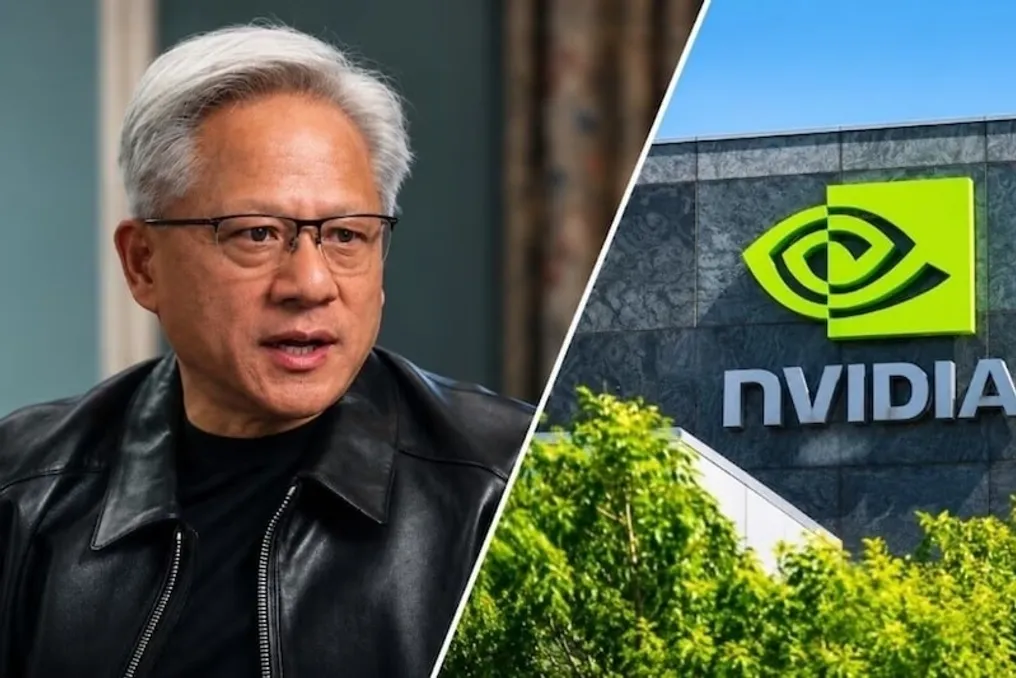
Trump Administration plans to include Nvidia in group of leading AI companies to boost American technology
Read more
olhardigital.com.br

Trump Administration plans to include Nvidia in group of leading AI companies to boost American technology

The Donald Trump administration is planning to incorporate Nvidia into a group of more than twenty companies designated as 'national champions' in artificial intelligence. This initiative aims to strengthen the presence of American technology in global markets.

According to The Wall Street Journal, the announcement of this initiative is expected next week, although sources close to the plans indicate that the date may change. The program, conceived about a year ago as part of Washington's technological strategy, aims to encourage foreign countries and corporations to use American solutions instead of Chinese technologies.

The proposal consists of grouping artificial intelligence components, such as chips and models, into integrated packages, thereby simplifying acquisition for international clients. Besides Nvidia, other companies that will be part of this group include Amazon, Microsoft, OpenAI, and Anthropic.

The U.S. Department of Commerce stated that the selected companies may benefit from three specific advantages. Nvidia's inclusion comes amid debates about the security of American exports. Recently, it was revealed that Jensen Huang, the company's former CEO, maintained an extramarital relationship with an individual suspected of being a source of Chinese intelligence, which generated new demands for stricter controls on semiconductor trade.

Proponents of stricter national security policies argue that the United States must prioritize its strategic interests, even if it means ceding market share. Chips manufactured by Nvidia are essential for powering the most sophisticated AI models and are among the planet's most valuable assets.

Donald Trump has repeatedly praised Huang, recognizing the building of an American company that has established itself as a prominent technological supplier to the sector. Commerce Secretary Howard Lutnick is set to present the program. However, his actions face pressure due to criticism regarding the lack of effective measures to block loopholes that allow Chinese companies access to advanced Nvidia chips.

In a previous report by The Wall Street Journal, Lutnick showed reluctance to implement actions that could generate dissatisfaction in China during bilateral trade negotiations. The secretary is expected to accompany Trump on his visit to China this week, while his department works on drafting new regulations aimed at limiting chip diversion to the Chinese market. The final announcement date for participating companies remains subject to change, according to people familiar with the plans.

The competition for international artificial intelligence markets constitutes another battlefield in the technological dispute between the United States and China, a rivalry that also covers sectors such as 5G networks, where Chinese companies like Huawei have expanded their influence in Europe and Latin America.

Popular