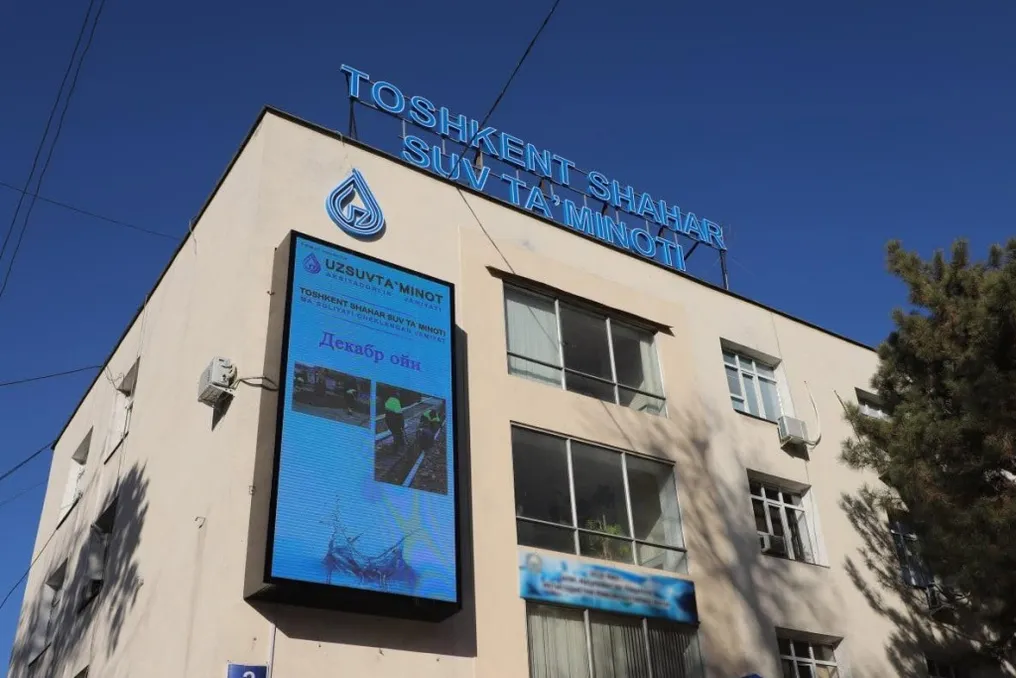
A dispute has arisen in Tashkent regarding the requirements of JSC 'Tashkent City Water Supply,' which some citizens claim is imposing obligations inherent to businesses simply based on owning non-residential premises.
According to the established practice of the capital's water utility, one does not need to open a business or hire staff to obtain entrepreneur status; owning a non-residential property is sufficient. However, this raises questions because legislation establishes such obligations for legal entities and citizens conducting activities without registering as an individual entrepreneur.
The situation escalated when a resident of Tashkent attempted to sell their non-residential property. When processing the documents, they requested a certificate of no debt but received a requirement to mandatorily install an electronic water meter with remote data transmission capability. Representatives of the water utility insisted that the installation of such a 'smart meter' must be borne by the owner, as the contract was concluded with them as a private individual, not an entrepreneur.
The owner appealed to JSC 'Tashkent City Water Supply' to explain the legality of this requirement. In response, the water utility cited Presidential Decree No. PP-257 dated May 24, 2022, noting that despite concluding the contract with a private individual, the consumer falls into the third group because water is supplied to a non-residential fund object, which, in their opinion, is grounds for installing a remote meter at the owner's expense.
However, an analysis of this decree conducted by Podrobno.uz revealed a discrepancy in interpretation. Subpoint 'v' of paragraph 4 states that modern meters with remote data transmission functions must be installed by legal entities and citizens engaged in entrepreneurial activity without forming a legal entity (e.g., sole proprietors). Owners of non-residential premises who are not engaged in business and do not have the status of an individual entrepreneur are not listed among those obligated.
The difference between these categories is critical because it determines who bears the cost of special equipment. Furthermore, the decree provides for tax benefits for organizations and individual entrepreneurs on the purchase of such meters. The document also outlines the consequences of lacking a remote meter: starting January 1, 2024, billing for consumers without metering devices must be carried out against legal entities and individual entrepreneurs who have not installed such meters, while ordinary private individuals—owners of non-residential premises—are not mentioned in this list.
Thus, the water utility extends the requirement to ordinary citizens merely because the real estate belongs to the non-residential fund, which calls into question whether this is sufficient to equate a person to an entrepreneur.
To obtain a professional assessment, the issue was submitted to lawyers at SherLegal. They concluded that the requirement to install a remote meter, based solely on the non-residential nature of the premises, lacks legal justification. In their opinion, the obligation to install such devices lies with legal entities and citizens engaged in entrepreneurial activity without registering as an individual entrepreneur, and private individuals who own non-residential premises and are not individual entrepreneurs are not included in this list.
The specialists emphasized that the purpose of the property and the person's entrepreneurial status are different concepts. According to Article 24 of the Civil Code, the ability to conduct business without registering as an individual entrepreneur only arises after official state registration. The lawyers also clarified that renting out non-residential real estate by a private individual without registering as an individual entrepreneur does not constitute entrepreneurial activity, as the income received is considered property income subject to personal income tax (NDFL).
SherLegal also commented on the water utility's argument about reclassifying the consumer into the third group. Although paragraph 51 of the Rules for Providing Water Supply and Sewerage Services does provide for classifying the consumer into a group when the premises transition to non-residential use, the group is determined based on the consumer's main type of activity, not just the purpose of the property. Moreover, according to the lawyers, there is a gap in the current rules regarding classification, as citizens who own non-residential premises but do not conduct business are not explicitly designated.
The lawyers do not deny the general obligation of the owner to ensure water metering, requiring a functional and registered meter. However, they argue that this does not oblige the owner to replace a working device with an electronic one with remote data transmission, as such a requirement is addressed to individual entrepreneurs and legal entities. Furthermore, billing according to the rules for consumers without metering devices cannot be applied automatically, and the water utility did not notify the owner of the need to receive a written warning 30 days in advance, as required by the rules. The absence of a remote device is also not among the grounds for cutting off water.
In conclusion, SherLegal lawyers believe that the phrasing 'non-residential premise means entrepreneur' cannot serve as a sufficient basis for imposing the obligation on a citizen to install a remote meter.
Owners are advised to first demand a written justification from the water supply organization for the requirement, including a reference to the norm confirming the entrepreneurial status. If the justification is not provided or the requirement is not revised, the citizen can appeal to JSC 'Uzsuvtaimonot,' the Ministry of Construction and Housing and Communal Services, the prosecutor's office, or the court.