Aruna Lohia Goenka on the power of care: hunger recognizes no caste, religion, or skin color
Read more
The times of India
timesofindia.indiatimes.com

Aruna Lohia Goenka on the power of care: hunger recognizes no caste, religion, or skin color

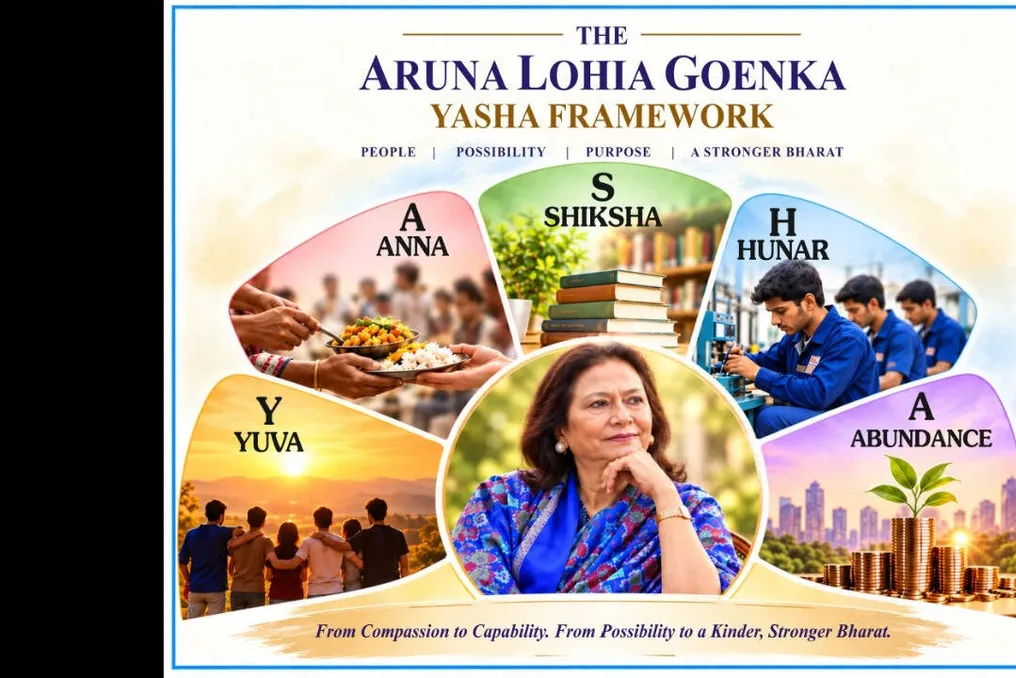
For three decades, Aruna Lohia Goenka, a catalyst of influence, has followed one simple instinct in all spheres of life—homes, classrooms, hospitals, communities, and government institutions: if someone needs help, something must be done. As part of Sanjeev Kaur's series of knowledge, the Chief Corporate Social Responsibility Officer of The Times of India, she explored the concept of Anna (food)—one of the five pillars of her YASHA system for achieving Viksit Bharat 2047. These pillars also include Shiksha (education), Yuva (youth), Hunar (skills), and Abundance (general prosperity).

Sanjeev Kaur noted that while researching Goenka's work, her team discovered perhaps the most unusual restaurant in the world—her langar. Aruna Lohia Goenka responded that in her langar for the last three decades, there has never been a 'reservation desk,' because hunger does not accept advance bookings. Anyone can come and receive food without an application, registration, or eligibility check.

When Kaur asked about the paradox that Goenka, having experienced wealth, says that the satisfaction from her langar cannot buy any wealth, she explained that this is only true if one assumes that everything valuable has a price. She emphasized that the meal has a price, but blessings require no payment. Goenka stated that she does not consider herself a giver, but merely shares her abundance, and that service comes to her naturally, bringing her joy.

Discussing the philosophy, Goenka linked it to Annapurna, who, in her opinion, embodies a beautiful aspect of tradition—the guarantee that no one will go hungry, which also implies responsibility. She suggested that if the Universe was generous to them, they, in turn, could share this abundance with others. The question of water in her mission was illustrated by an example: in 45-degree heat, a person does not need lectures on climate change; they need cool water.

Goenka asserts that her philosophy of 'Each one feeds one' can help bridge the gap between rural and urban areas. She noted that people who build and maintain cities and homes often come from remote villages, and their labor deserves a fair share of this prosperity. As citizens of Bharat, they have a responsibility to provide these people with fresh, nutritious food, fair wages, and respectful treatment.

Goenka expanded the concept of Anna, stating that it goes beyond mere sustenance. She stressed that eating is useless if a person is denied dignity. It is necessary to recognize that those who serve people are citizens of Bharat, and their nourishment, well-being, and dignity must matter to society. They should be fed nutritious food, paid fairly, and treated with respect.

When asked whether hunger is fundamentally the government's responsibility, Goenka replied that the government can create a food security system, but citizens help shape a culture where ignoring hunger concerns no one. She considers caring for fellow citizens a personal moral obligation, not just an act of charity, and sees this as the desired image of Bharat, requiring the restoration of personal relationships with the homeland.

In conclusion, Goenka explained that alongside economic growth, technology, and global influence, workers and future generations must be nourished. She concluded that a well-nourished Bharat is the foundation of Viksit Bharat, and her dream is millions of lives touched by the simple idea of 'Each one feeds one.'

Similar stories

Foshan: A City in Guangdong Province Where Lingnan Traditions Live On
Read more
cgtn.com

Foshan: A City in Guangdong Province Where Lingnan Traditions Live On

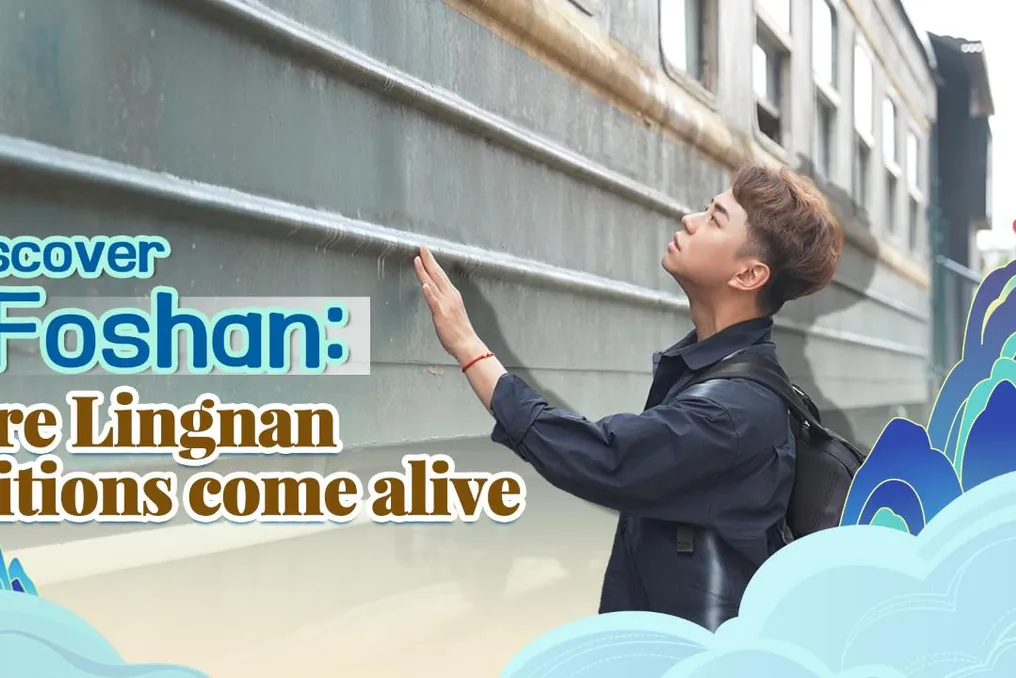
The city of Foshan, located in southern China, in Guangdong province, possesses a rich history. It is known as the birthplace of legendary kung fu masters such as Wong Fei-hung and Ip Man, and is deeply rooted in Lingnan culture.

In Foshan, one can explore numerous attractions: from the energy of lion dance to Wing Chun art, to the ancient Ancestor Temple and a century-old railway station.

However, Foshan is more than just history; it is a city where traditions continue to exist in daily life, constantly finding new ways to interact with modernity. Given that China will be at the center of world attention due to APEC 2026, Foshan is ready to present its unique cultural stories to the world.

Annakut Festival Celebrated in Kashi: 501 Quintals of Offerings Presented to Deities for Annapurna and 21 Quintals for Baba Vishwanath
Read more
www.aajtak.in

Annakut Festival Celebrated in Kashi: 501 Quintals of Offerings Presented to Deities for Annapurna and 21 Quintals for Baba Vishwanath

The Annakut festival was celebrated with great fanfare in the religious city of Kashi, Uttar Pradesh. On Kartik Shukla Pratipada, 501 quintals of mahabhog, prepared from 108 types of dishes, were offered to the deity in the ancient temple of Mother Annapurna. Simultaneously, 21 quintals of sweets were presented to the deity Shiva at the Shri Kashi Vishwanath temple.

A large number of pilgrims gathered during this special event. Visitors were able to see the golden idol of Mother Annapurna and the five-faced idol of Baba Vishwanath. The temple premises were decorated with flowers, lamps, and incense, creating an atmosphere of deep devotion and ecstasy.

As part of the Annakut, 501 quintals of offerings were presented to Mother Annapurna. These offerings included various types of laddu, sweets, snacks, dal, and rice, with rice holding special significance in this offering.

There is a belief that thanks to the blessings of Mother Annapurna in Kashi, no one goes to sleep hungry. According to religious beliefs, Lord Shiva requested alms from Mother Annapurna in Kashi, after which she bestowed a blessing so that no god or person living in Kashi would go hungry.

At the Shri Kashi Vishwanath temple, the deity Vishveshwara was adorned with 21 quintals of sweets. These included bundi laddus, nut laddus, and other traditional sweets.

On this day, a procession took place featuring the five-faced silver mobile statue of Lord Vishwanath, Mother Gauri, and Ganesha. This procession started from the residence of the Mahant family in Tedhinim. To the sound of shanaai and dmarru, the statue was placed in the sanctum sanctorum. Following this, the midday bhoga aarti ceremony was conducted according to established rituals.

After the bhoga aarti, prasad was distributed to the pilgrims. By accepting the prasad, devotees wished for happiness, prosperity, health, and peace.

In the ancient temple of Mother Annapurna in Kashi, a five-day event is held, starting with Dhanteras and continuing until Diwali and Annakut. During this time, special pilgrimage visits are made to the golden idol of Mother Annapurna. Pilgrims have the opportunity to see this rare idol of the Mother only during these five days in a year.

During this period, Richhari prasad, which symbolizes grain, and Lava, symbolizing wealth, are distributed. It is believed that keeping this prasad at home prevents shortages of grain and money. According to organizers, about 10 million rupees worth of Richhari was distributed among pilgrims over the five days.

The Annakut festival is also associated with the worship of Govardhan Hill performed by Lord Krishna. This festival is considered a symbol of grain abundance, its preservation, and gratitude to nature.

The events held in the temples of Mother Annapurna and Baba Vishwanath in Kashi lend a majestic appearance to this religious tradition. Pilgrims participated in the worship and distribution of prasad. The Annakut festival also conveys a message of faith, giving, cooperation, and social harmony.

Aruna Lohia Goenka discusses the concept of abundance: why the feeling of poverty is not dependent on material wealth
Read more
timesofindia.indiatimes.com

Aruna Lohia Goenka discusses the concept of abundance: why the feeling of poverty is not dependent on material wealth

In a special episode of the Knowledge series dedicated to Diwali, Sanjeev Kaura, Director of Corporate Social Responsibility at The Times of India, conversed with Aruna Lohia Goenka, catalyst at iImpact, about the concept of abundance, which is one of the five pillars of her YASHA philosophy.

The discussion covered the paradox of wealthy people who feel poor, as well as the exceptional power of love, gratitude, and mindfulness. During the conversation, it was revealed that prosperity begins not with what a person possesses, but with how they perceive life.

Sanjeev Kaura noted that Diwali is a festival of prosperity, but Aruna Lohia Goenka countered, asserting that abundance is not closely related to the amount of money in a bank account. She emphasized that abundance is a feeling, and love lies at the core of this feeling. A person can possess very little and still feel wonderfully well-off, just as someone can own vast wealth yet experience a deep sense of need.

When Kaura suggested that theoretically he could be a billionaire and still remain poor, Goenka clarified that this is entirely possible. She gave the example that one can rule the world without having mindfulness, or have power over millions without controlling one's own mind. She questioned what use there is in owning the world if every morning a person feels a lack of something.

Goenka explained that the opposite of abundance is not necessarily poverty; sometimes it is the inability to recognize what one already has. Kaura raised the issue of how difficult it is to avoid comparisons with others, as the world constantly reminds us of others' superiority. Goenka called comparison one of the main enemies of abundance, noting that looking at someone else's house, car, or success can suddenly make yesterday's happiness seem insufficient, thereby turning abundance into scarcity without any real changes in life.

Responding to the question of developing an abundant consciousness, Goenka advised starting by acknowledging what is already present in a person's life: health, relationships, the ability to learn, the opportunity to serve, as well as things like the sunrise or love, which do not need to be bought or earned through financial transactions. She suggested imagining that the Universe sends bills for sunlight and fresh air, which might make people realize their true wealth. However, she added that gratitude is only the beginning; an abundant consciousness also implies seeing opportunities where others see limitations, and seeking chances to contribute instead of competing.

Regarding the central role of love, Goenka explained that love changes a person's attitude towards the world. When thinking in a state of scarcity, a person asks: 'What can I get?', whereas when thinking in a state of abundance, they begin to ask: 'What can I give?'. Love, compassion, kindness, and encouragement are exceptional forms of wealth that can be shared without diminishing one's reserves, much like a candle loses nothing by lighting another.

When asked by Kaura whether one can tell a person struggling for sustenance that poverty is merely a feeling, Goenka categorically answered no. She stressed that material lack, hunger, lack of healthcare, education, and opportunities are real problems requiring collective solutions. When she says that poverty can be a feeling, she refers to the internal experience of deficit, not the denial of economic hardships. On the contrary, an abundant consciousness should enhance awareness of the suffering of others, not diminish it; true abundance is the aspiration to ensure the prosperity of others.

Kaura asked if gratitude could lead to complacency. Goenka dispelled this myth, saying that gratitude does not mean abandoning ambition. One must be grateful for what one has while remaining enthusiastic about what one can create. The difference lies in the source of ambition: fear or possibility. Scarcity dictates: 'I must achieve more because I am not enough,' whereas abundance affirms: 'I am grateful for who I am, and excited about who I can become.' Calmness and ambition are not enemies; one provides peace, the other provides purpose.

In conclusion, Goenka linked the philosophy of abundance to her vision of YASHA for Viksit Bharat 2047. She noted that YASHA integrates Yuva, Anna, Shiksha, Hunar, and Abundance, with Abundance serving as the spirit connecting the other four elements. She questioned the meaning of educating children if they believe success means defeating someone else, or the meaning of skill development if it is not used to create opportunities for others, or the meaning of prosperity if it does not lead to overall well-being.

In her concluding message for Diwali, Goenka urged lighting a lamp at home, but also lighting a fire in one's own consciousness so that it illuminates gratitude instead of comparison and love instead of fear.

Popular