Uzbekistan's Climate Resilience Project Enters Top Five Initiatives at COP31
Read more
UzDaily
uzdaily.uz

Uzbekistan's Climate Resilience Project Enters Top Five Initiatives at COP31

Uzbekistan's project aimed at enhancing the climate resilience of the Isfara River hydraulic infrastructure corridor has been selected among five initiatives within the international NBS-IA program. The National Committee for Ecology and Climate Change reported that a total of 109 applications were submitted from countries in Central Asia and Africa.

The initial selection results were announced at the 31st Conference of the Parties to the UNFCCC (COP31), held in Antalya, Turkey. Of the applications received, 44 passed the primary screening, and 20 made it to the preliminary list. Among the first five selected projects were also submissions from Kazakhstan, Mozambique, Kenya, and Algeria.

Uzbek Project Proposal

The Uzbek project proposes using nature-based solutions to protect the Isfara River hydraulic infrastructure corridor from climate threats. The main dangers include flash floods, riverbank erosion, and channel silting. This initiative was prompted by a flash flood on May 1, 2026, when the water flow reached 100 cubic meters per second, approximately seven times the river's average discharge.

This disaster resulted in damage to irrigation facilities, destruction of sections of canals and roads, and silting of water use infrastructure, which harmed agricultural lands. The project includes restoring forests along the river, creating protective vegetation belts, and strengthening banks using bioengineering methods. Furthermore, plans involve restoring degraded pastures in the upper reaches of the watershed.

According to the project goals, these measures should reduce the inflow of fine sediment into the irrigation system by 20–40% and decrease the frequency of mechanical canal cleaning by 20–35%. The project is also aimed at reducing emergency repairs, riverbank failures, and irrigation disruptions by 30–50%. It plans to stabilize 3–8 km of priority river and canal sections serving 15,000–40,000 water users.

During the design phase, the preparation of a technically and economically sound package of investment documentation is anticipated. This package will include engineering solutions, cost estimates, environmental and social guarantees, as well as future infrastructure operation mechanisms.

The selection of this initiative opens the possibility of attracting between $500,000 and $1 million USD for pilot implementation. There is also consideration for securing larger climate investments through the participation of international financial institutions.

The project was developed by an international consortium comprising Italian organizations SWS Consulting Engineering and IRIDRA, the Uzbek company Sustainability Nexus Solutions, the International Water Management Institute (IWMI), and the Botanical Garden and Museum of Sapienza University in Rome. The NBS-IA initiative is implemented by the Italian Ministry of Environment and Energy Security in collaboration with the United Nations Environment Programme (UNEP) and the Organisation for Economic Co-operation and Development (OECD).

Shahboz Akhmedov, Director of the Climate Residency Program at the Central Asian University of Environmental Issues and Climate Change (Green University), emphasized the importance of specialized training and international cooperation when implementing nature-based solutions in infrastructure projects. In the future, approaches developed under this initiative may be applied to other water use facilities in Uzbekistan and Central Asia, combining engineering protection of infrastructure with the restoration of natural ecosystems.

Similar stories

Uzbekistan joins the first group of countries participating in the BRIDGE platform at COP31; Turkey allocates $3 million
Read more
uzdaily.uz

Uzbekistan joins the first group of countries participating in the BRIDGE platform at COP31; Turkey allocates $3 million

Uzbekistan has become one of the first five countries to join the Climate Implementation Bridge (BRIDGE) initiative at COP31. The goal of this platform is to transform national climate commitments into investment-ready projects. The platform has expanded to include four more countries, and Turkey has contributed $3 million to support its launch.

According to a statement from the COP31 Presidium, the five initial participants in the initiative are Uzbekistan, Ethiopia, Fiji, Indonesia, and Pakistan. Their participation was announced during the 81st High-Level Week of the United Nations General Assembly in New York.

Subsequently, four more states joined the platform: Chile, Lebanon, Mexico, and Zambia. BRIDGE, which is based on the UN Development Programme's Climate Promise initiative, aims to help countries transition from climate pledges to practical implementation. It is designed to identify investment barriers, strengthen institutional capacity at the national level, and establish links between governments and technical and financial partners.

On November 13, the Turkish Ministry of Treasury and Finance, the Ministry of Environment, Urbanization and Climate Change, and the UN Development Programme signed a memorandum of understanding to support this initiative. Turkey committed to providing $3 million in grant funding to operationalize the platform.

The five initial countries are conducting diagnostic assessments to determine priority sectors, investment needs, and barriers to project implementation. The results are expected to form the basis for targeted support and help countries develop investment-ready climate projects.

COP31 President Murat Kurum emphasized that one of the key challenges in international climate cooperation is overcoming the gap between climate ambitions and actual implementation. According to Kurum, BRIDGE was created to help countries transform their national priorities into bankable projects while improving access to financing, technical expertise, and partnerships.

For Uzbekistan, participation in this initiative is particularly relevant given the country's significant need for investment in climate change adaptation. Data presented at Uzbekistan's national pavilion at COP31 indicates that the country's need for climate adaptation financing is estimated at approximately $30.1 billion by 2035. Potential areas where such investment mechanisms could be useful include modernizing water resource management infrastructure, developing climate-resilient agriculture, and increasing energy efficiency.

However, the COP31 Presidium's announcement did not specify any particular projects in Uzbekistan that could receive support through BRIDGE. It is worth noting separately that multilateral development banks, including the Asian Development Bank (ADB) and the European Bank for Reconstruction and Development (EBRD), reaffirmed their commitment at COP31 to expanding investments in climate adaptation and mobilizing additional public and private financing.

The $3 million allocated by Turkey is intended to support the BRIDGE platform as a whole and does not constitute a separate financial allocation for Uzbekistan. This initiative reflects a broader focus at COP31—the shift from climate pledges to practical financing mechanisms capable of translating national climate priorities into investment opportunities and measurable results.

Uzbekistan's $30 Billion Climate Challenge: Water Resources, Agriculture, and Investment Gap at COP31
Read more
uzdaily.uz

Uzbekistan's $30 Billion Climate Challenge: Water Resources, Agriculture, and Investment Gap at COP31

According to data presented at Uzbekistan's national pavilion at the UN Climate Change Conference COP31, the country may require approximately $30.1 billion in climate adaptation investments by 2035. These estimates highlight the enormous financial volume needed to protect healthcare systems, housing, water resources, and agriculture from increasing climate threats.

The figures presented, accompanied by Uzbekistan's initiatives in renewable energy, sustainable irrigation, and green investments, point to a key challenge in the country's climate policy: transforming national adaptation priorities into fundable and implementable projects.

Water resource management and agriculture account for the largest share of the estimated costs. This reflects the country's dependence on irrigation and the vulnerability of its agrarian economy to rising temperatures, water scarcity, and land degradation.

Despite expanding Uzbekistan's climate commitments and implementing new investment mechanisms, the scale of required adaptation raises questions regarding financing, implementation capacity, and the distribution of costs among the state, private investors, and international development partners.

According to the climate profile presented at the Uzbekistan pavilion at COP31, estimated adaptation investment needs are $15.7 billion by 2030 and $30.1 billion by 2035.

The pavilion details these requirements by sector: agriculture accounts for approximately 66% of projected adaptation needs, and water resources for another 26%. Together, these two sectors cover over 92% of the total identified investment needs. This distribution shows that Uzbekistan's adaptation challenge is closely linked to the future of its agricultural production and water resource management systems.

It is important to note that these figures are only estimates of required investments, not confirmed financial obligations. The pavilion materials do not specify what portion of the projected funding is already secured, what methodology was used to calculate the estimates, or what exact period of expenditure each sector covers. This distinction is significant because the size of the investment need itself does not prove the existence of an equivalent financial gap.

Uzbekistan's reliance on irrigated farming makes the relationship between water availability, food production, and energy consumption particularly critical. Agricultural productivity depends not only on the availability of sufficient water but also on the infrastructure necessary for its efficient transport, distribution, and use.

As temperatures rise and pressure on water resources intensifies, modernizing irrigation becomes both an adaptation priority and an economic necessity. The national pavilion demonstrates results presented by Uzbekistan for the period 2017–2025. According to the data shown, water-saving technologies have been implemented over an area of about 2.6 million hectares, corresponding to 60% coverage according to the indicator used in the presentation.

The materials also report the existence of 5,795 kilometers of irrigation networks and 34,500 kilometers of internal lined irrigation networks. Another indicator shows a reduction in annual electricity consumption from 8.3 billion to 6.4 billion kWh, although the pavilion does not provide sufficient methodological information to determine what portion of this reduction is directly related to irrigation improvements. This illustrates a broader aspect of Uzbekistan's adaptation strategy: water use efficiency and energy efficiency cannot be viewed in isolation. Reducing water losses, improving irrigation infrastructure, and modernizing pumping systems can also decrease energy demand, potentially bringing economic benefits beyond the agricultural sector. The financial question is whether these benefits can be measured and used to justify additional investments.

One of the investment mechanisms presented at COP31 is ANORA—a platform designed to attract funding for sustainable agro-food systems and climate-resilient agriculture. According to information presented at the Uzbekistan pavilion, the platform aims to mobilize up to 1.5 billion euros. Its estimated funding structure includes 650 million euros from financial institutions, 500 million euros in private capital, 300 million euros in concessional finance, and 50 million euros in grants. The pavilion indicates 2027 as the full launch year for the platform. Declared investment areas include water-saving technologies, increasing agricultural productivity, emission reduction, infrastructure development, and soil restoration. The platform also aims to implement water-saving technologies over 340,000 hectares by 2030. ANORA is particularly important because it attempts to link national climate goals with investment projects capable of attracting funding.

The Food and Agriculture Organization of the United Nations reported in July 2026 that Uzbekistan approved a roadmap for climate-smart food investments, developed with the support of the European Bank for Reconstruction and Development and FAO. This roadmap aims to transform the country's climate commitments into technically and economically viable investment opportunities. The EBRD also disclosed information on technical cooperation to operationalize the ANORA investment portfolio and strengthen financing readiness. However, the target figure of 1.5 billion euros should not be interpreted as already disbursed or fully guaranteed funding. A critical performance indicator for the platform will be the number of projects that move from investment proposals to financial closure and implementation.

Uzbekistan's updated Nationally Determined Contribution, NDC 3.0, presented in November 2025, commits the country to reduce greenhouse gas emissions intensity per unit of GDP by 50% by 2035 compared to 2010 levels. This is an emissions intensity target, not a commitment to reduce absolute national greenhouse gas emissions by 50%. The country's climate strategy also defines adaptation priorities in water resource management, agriculture, sustainable infrastructure, health, and disaster preparedness. The issue is increasingly shifting from setting goals to their actual implementation.

In October 2026, Uzbekistan was included in the list of five pilot countries participating in the Climate Bridge Implementation, or BRIDGE, initiative, supported by the COP31 Presidium and the United Nations Development Programme. This initiative aims to help participating countries turn climate commitments into investment-ready projects and identify opportunities for international financing. Uzbekistan's participation may provide additional technical support for project preparation, though it does not imply automatic receipt of direct investment commitments. The difference between project development support and actual financing is especially important for adaptation projects. Unlike renewable energy assets, which can generate measurable revenue from electricity sales, many adaptation investments provide benefits through avoided losses, increased resilience, and reduced exposure to future climate risks. These benefits can have significant economic value but are often harder to monetize. Consequently, adaptation projects may require a combination of public funding, concessional loans, grants, and private investment, rather than relying solely on traditional commercial financing.

During COP31, Uzbekistan also presented its participation in a regional initiative to enhance climate resilience, which includes neighboring Central Asian countries. The 'Climate-Resilient Landscapes in Central Asia' program, known as CLiCA, plans to mobilize 103.7 million euros for activities in 15 districts of Andijan, Fergana, Namangan, and Surkhandarya in Uzbekistan. According to the country's environmental agencies, planned measures include restoring 18,000 hectares of forest land and 123,000 hectares of pastureland, implementing drip irrigation systems, promoting drought-resistant crops, and providing climate advisory services to 12,000 farmers. The program is expected to increase climate resilience for approximately 342,000 people, with implementation scheduled to begin in 2027. Although its financial scope is significantly smaller than Uzbekistan's overall adaptation needs, CLiCA serves as an example of how broad climate goals can be translated into geographically defined interventions with measurable targets. Its implementation will also allow for an assessment of whether the stated mobilization of investments leads to tangible improvements in agricultural sustainability, land restoration, and rural livelihoods.

The Uzbekistan pavilion also showcases significant ambitions in renewable energy development. Targets for 2030 include 9,395 MW of solar capacity, 12,200 MW of wind capacity, 4,548 MW of energy storage systems, and 4,000 MW of small solar installations. These figures reflect the country's intention to expand clean power generation while strengthening necessary infrastructure. However, renewable energy expansion and climate change adaptation address different, albeit interconnected, policy objectives. Renewable energy primarily contributes to mitigation by reducing dependence on carbon-intensive generation. Adaptation focuses on limiting damage from climate impacts that are already occurring or expected in the future. In Uzbekistan, the link between these goals is particularly evident in water-energy relations. Electricity is required for water pumping and distribution, while water availability and management can influence power generation, agricultural yield, and overall economic activity. Therefore, investment decisions in one sector can have significant consequences for another. A more integrated approach could help Uzbekistan identify projects that simultaneously improve water use efficiency, reduce energy demand, and strengthen agricultural resilience.

Uzbekistan's presentation at COP31 demonstrates the breadth of its climate policy ambitions: from renewable energy and sustainable irrigation to climate-smart agriculture and green investment mechanisms. However, several crucial questions remain regarding whether these ambitions can be realized. First, what portion of the estimated $30.1 billion in adaptation investment needs is already covered by approved state budgets, signed financing agreements, or international aid commitments? Second, what share of the projected costs must be financed through sovereign borrowing, concessional lending, grants, or private investment? Third, how will the government prioritize projects if available funding is insufficient to cover all identified needs? And fourth, what indicators will be used to measure the effectiveness of adaptation spending? For instance, for irrigation projects, documenting built kilometers of infrastructure may be less informative than tracking reductions in water loss, electricity consumption, and agricultural vulnerability. Similarly, investments in climate-resilient housing or healthcare should ultimately be assessed by improved protection against climate risks. These questions are not unique to Uzbekistan; they reflect a broader challenge facing developing economies striving to meet increasingly ambitious climate commitments.

Uzbekistan's Opportunities at COP31: Climate Investments, Energy and Water Security
Read more
uzdaily.uz

Uzbekistan's Opportunities at COP31: Climate Investments, Energy and Water Security

Uzbekistan is among the five countries selected to participate in the Climate Implementation Bridge (BRIDGE) international initiative, which aims to help transform national climate commitments into investment-ready projects. At the UN Climate Conference COP31, opened on November 9th in Antalya, the need to mobilize up to $1.3 trillion annually for climate finance, accelerate the transition to renewable energy sources, and protect economies from growing climate threats was discussed.

The 31st Conference of the Parties to the UNFCCC (COP31) began in Antalya, Turkey, on November 9th. One of the key issues for international negotiators is the transition from stated climate goals to practical investment projects. The conference, which will run until November 20th, brings together representatives of governments, international financial institutions, businesses, the scientific community, and civil society. The main priorities are climate finance, energy security, climate adaptation, and infrastructure resilience.

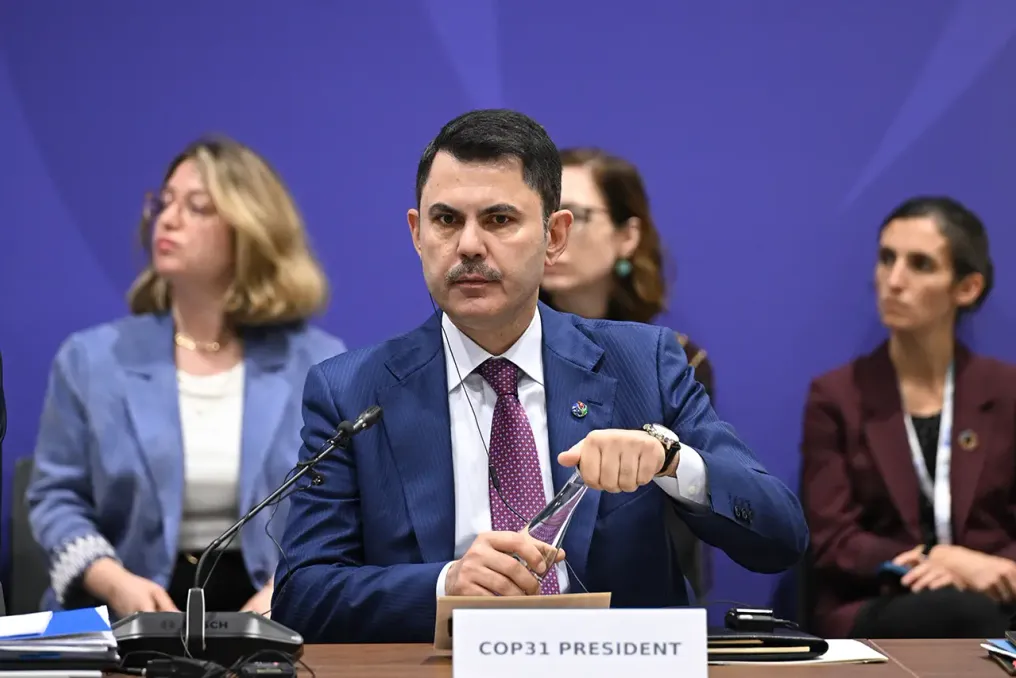
The President of COP31, Turkey's Minister of Environment, Urbanization, and Climate Change, Murat Kurum, called on countries to focus on fulfilling previously agreed-upon commitments. Turkey's presidency at COP31 positions the summit as an implementation-oriented platform where climate goals must be translated into concrete projects, investments, and tangible benefits for the population.

Kurum emphasized that the climate crisis is inextricably linked to economic instability, geopolitical conflicts, food security issues, and increasing inequality in access to technology and finance. Droughts, floods, extreme heat, and water shortages affect not only the environment but also food production, industry, energy infrastructure, economic stability, and public health. Furthermore, Kurum confirmed that limiting global warming to 1.5°C above pre-industrial levels remains a central objective of international climate policy.

One of the most important aspects of the COP31 agenda for Uzbekistan is the Climate Implementation Bridge (BRIDGE) initiative, presented by the Turkish Presidency in September 2026. Uzbekistan was chosen as one of the first five pilot countries alongside Ethiopia, Fiji, Indonesia, and Pakistan. The goal of this initiative is to bridge the gap between national climate commitments and the necessary funding for their implementation. It aims to support countries in developing investment-ready projects, strengthening institutional capacity, and establishing connections with potential financial partners. The United Nations Development Programme (UNDP) is the implementing partner for BRIDGE.

For Uzbekistan, participation in the program can provide an additional mechanism for preparing climate-related investment projects in the fields of energy, infrastructure, and other capital-intensive sectors. However, it should be understood that BRIDGE is not an independent investment fund, and selection as a pilot country does not guarantee automatic access to funding. It is critically important to determine exactly which projects Uzbekistan will present, how well they are prepared to attract capital, and which international financial institutions might agree to support their implementation.

Climate finance has become one of the central themes of the opening discussions at COP31. Murat Kurum recalled the goal achieved at the UN climate conference in Baku—to ensure developing countries receive at least $300 billion in annual climate finance by 2035. A broader goal involves mobilizing at least $1.3 trillion annually from public and private sources. Nevertheless, the stated amounts are only part of the equation; the conditions under which countries can access these resources are equally important.

Developing economies continue to face high borrowing costs, difficulties in preparing financially viable projects, limited institutional capacity, and challenges in attracting private investment in infrastructure. Against this backdrop, initiatives like BRIDGE are designed to help countries move from national strategies to projects that can be assessed and financed by potential investors. This is particularly relevant for Uzbekistan given the need to modernize its energy infrastructure, improve resource efficiency, and adapt the economy to climate change.

Accelerating the electrification of the global economy is another major priority at COP31. The Turkish Presidency is promoting the '35 by 35' initiative, which aims to increase the share of electricity in final energy consumption to 35% by 2035. Key areas of this initiative include expanding renewable energy sources, modernizing power grids, implementing energy storage systems, improving energy efficiency, electrifying transport, and reducing industrial carbon intensity.

Australia's Minister for Climate Change and Energy, Chris Bowen, who is leading the COP31 negotiations, stressed the direct link between international climate cooperation and global energy security. He noted that the conference should promote investment attraction, infrastructure development, and economic resilience. Simon Steele, Executive Secretary of the UNFCCC, also highlighted the economic consequences of fossil fuel price volatility. According to data presented by him, renewable energy saved the global economy $265 billion in the first half of 2026.

For Uzbekistan, discussions on electrification are practically significant against the backdrop of growing electricity demand, expansion of solar and wind generation, construction of new power plants, and the need to increase grid reliability. At the same time, developing energy infrastructure requires a comprehensive approach that considers not only electricity generation volumes but also technology costs, access to investment, and system resilience to climate risks.

As part of the preparations for COP31, the Turkish Presidency also introduced the Antalya Pact on Energy-Efficient Buildings. This initiative aims to reduce the operational energy intensity of the global housing stock by 25% by 2035 compared to 2020 levels. This area is becoming increasingly important amid rising electricity consumption for air conditioning, cooling, and heating. For Uzbekistan, improving the energy efficiency of residential and commercial buildings can help reduce the load on energy infrastructure and lower consumer costs. Such measures are especially relevant in cities where extreme summer temperatures increase electricity demand, and expanding housing construction creates additional long-term energy needs. However, implementing energy efficiency projects requires accessible financing mechanisms, technical standards, and economic incentives for developers and property owners.

The first thematic day of COP31, held on November 9th, was dedicated to food, agriculture, and health. Participants discussed the impact of climate change on food security, agricultural sustainability, water resource management, and public health. Among the initiatives proposed is the Antalya Initiative for Sustainable Health Systems (AIR), developed with the participation of the COP31 Presidency, the Turkish Ministry of Health, the World Health Organization, and international partners. Its task is to help countries strengthen their health systems' ability to forecast, adapt to, and respond to climate-related threats.

Discussions on climate finance for agriculture, the role of women and youth in transforming food systems, and improving water resource management were also included in the first day's agenda. Special attention is paid to the Turkic Alliance—an initiative aimed at connecting sustainable water resource management, food security, and climate adaptation. These issues are critically important for Central Asia, as irrigated agriculture heavily depends on water resources, hydrological conditions are changing, and water demand is rising in households, agriculture, and the energy sector.

The opening of COP31 coincided with the publication of new data from the World Meteorological Organization (WMO). According to the global climate update presented on November 9th, the last 12 years have been the warmest in instrumental record, and the last four years are among the four hottest. These trends underscore the growing urgency of adapting to extreme weather events, including droughts, floods, and periods of abnormally high temperatures. Prior to the Turkish Presidency, Australia, Brazil, and Azerbaijan also presented the Belem Mission report on the 1.5°C target of the Paris Agreement, analyzing the opportunities and obstacles to achieving this temperature goal.

For Uzbekistan, the conference outcomes will be particularly significant in three interconnected areas: access to climate finance, energy infrastructure resilience, and adaptation to growing water and climate risks. Participation in BRIDGE provides an additional opportunity to prepare projects for international financing. However, its practical value will depend on the quality of the proposed project portfolio, the readiness of national institutions, and the terms of securing investment.

Electrification and energy efficiency initiatives can support the modernization of the energy system, reduce losses, and help cities become more resilient to intense heat. At the same time, discussions on water and food security point to the need for better coordination between energy, agricultural, and climate policies in Central Asia. The central question is whether international initiatives and financial commitments can be translated into concrete investments and measurable results.

COP31 will run until November 20th. During these two weeks, participants expect to discuss mechanisms for implementing climate commitments, adaptation finance, the energy transition, and other areas of international climate policy. For Uzbekistan, a practical measure of success will be its ability to move beyond participation in international initiatives and begin developing and implementing projects that strengthen the national economy's resilience to climate change.
Popular