Russian agricultural product exports to Uzbekistan increased by 60% in volume
Read more
UzDaily
uzdaily.uz

Russian agricultural product exports to Uzbekistan increased by 60% in volume

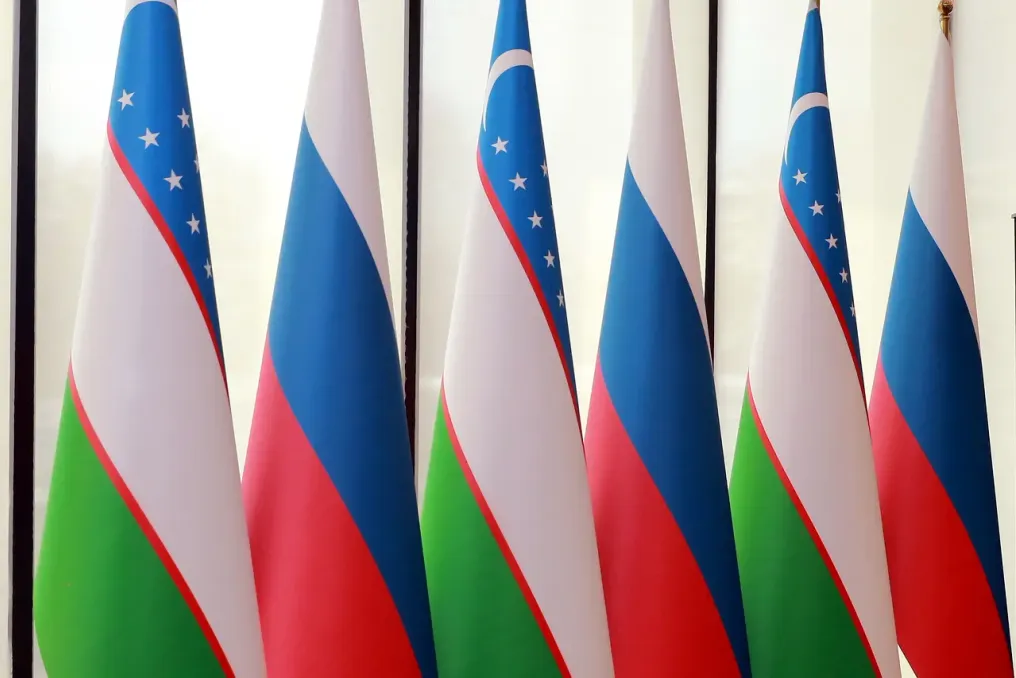
The Federal Center for Agroexport reported that from January to October 2026, Russia increased the volume of agro-industrial product exports to Uzbekistan by 60%, and by value by 32%. The total volume of supplies exceeded 1.4 million tons and amounted to over 1.2 billion US dollars.

Experts at the center noted that during the first ten months of 2026, Russian supplies to Uzbekistan reached record levels in both volume and monetary value. Furthermore, exports during this period surpassed the total amount recorded for the entire previous year.

Export Structure

Sugar accounted for the largest share of Russian agricultural supplies to Uzbekistan, valued at approximately 274 million US dollars. Soy meal and shrot came in second place, costing about 139 million dollars.

In addition, the export of chocolate confectionery products reached approximately 93 million dollars. Sunflower oil exports exceeded the mark of 60 million dollars, and wheat was valued at approximately 52 million dollars.

Similar stories

Foreign currency supply in Uzbekistan grows faster than demand, according to the Central Bank
Read more
uzdaily.uz

Foreign currency supply in Uzbekistan grows faster than demand, according to the Central Bank

The Central Bank of Uzbekistan reported that the volume of foreign currency sales in the country's domestic market increased by 22%, reaching $50.4 billion from January to October 2026, while demand grew by 20%, totaling $58.2 billion.

These figures were presented by Farohod Ortikov, head of the department in the Central Bank's Monetary and Credit Operations Department, during a briefing at the Media Content Training Center. He noted that the supply of foreign currency from private individuals and enterprises exceeds the demand.

During the first ten months, companies acquired foreign currency worth $45.8 billion, an 18% increase compared to the previous year. Approximately half of this amount, specifically $21.8 billion, was used to pay for imported raw materials and services for production needs.

Additionally, $13.9 billion was used to repay external currency loans, and $8.3 billion went towards purchasing consumer goods and medicines.

The volume of foreign currency sales by legal entities increased by 24%, reaching $29.3 billion. Businesses sold $11 billion received from exports, which is 36% more than the previous year. Furthermore, companies realized $8.8 billion obtained through external currency loans, showing a growth of 21%.

Individuals sold $21.1 billion to banks and purchased $12.4 billion from them. This resulted in a net surplus for banks of $8.7 billion, which is 11% higher than in the same period last year.

International transfers brought $17 billion to the country, while $2.2 billion was sent abroad, ensuring a net inflow of $14.8 billion.

During the reporting period, the exchange rate of the sum fluctuated between 11,765 and 12,320 per US dollar. As of the end of October, the exchange rate was 12,023 sums per dollar.

The Central Bank also presented plans for reforming the currency market. With the support of international experts, a strategy for currency operations and interventions in the domestic market for the period 2026–2030 was developed. According to this strategy, the Central Bank will implement the sale of foreign currency related to gold purchases through an 'American auction' mechanism, where the supply volume is announced in advance, and transactions are conducted at various prices.

Currency operations and interventions have been shifted to a risk-based approach, and trading hours on the currency exchange have been extended. The number of market participants, or market makers, has increased from two to five. In 2025, the share of the currency market in GDP reached 77%, compared to 39% in 2019, and the number of companies operating in the market increased from 29,000 to 90,000.

In June, following consultations on Article IV, the International Monetary Fund reclassified Uzbekistan's exchange rate regime from 'managed float' to 'floating'. Farohod Ortikov stated that this is international recognition that the national currency rate is determined by internal market mechanisms without state intervention.

Going forward, the Central Bank plans to focus on managing interest rate risks and currency risks, as well as implementing financial derivatives. The regulator also intends to maintain stable market liquidity and increase the resilience of domestic companies to external threats. According to Ortikov, these measures are designed to deepen and improve the transparency and stability of the currency market, creating more favorable conditions for business.

Kazakhstan increased oil supplies to Uzbekistan by almost 80% in the first eight months of 2026
Read more
podrobno.uz

Kazakhstan increased oil supplies to Uzbekistan by almost 80% in the first eight months of 2026

In the first eight months of 2026, Kazakhstan significantly increased its crude oil exports to Uzbekistan, boosting supply volumes by nearly 80%. During this period, the total volume of supplies reached 65.1 thousand tons, which is substantially higher than the 36.2 thousand tons recorded in the same period last year.

According to official statistics, from January to August, Kazakhstan sent 65,076 tons of crude oil and petroleum products derived from bituminous rocks to Uzbekistan. The value of this export rose from 13 million to 29.73 million dollars, representing an increase of 128.8%. The average price per ton of oil rose from approximately 359 to 457 dollars.

In August alone, Uzbekistan imported about 6 thousand tons of oil from Kazakhstan, paying 5.19 million dollars for it. It is important to note that in the first eight months of the current year, the supply volume has already exceeded the entire volume of Kazakh oil purchases in 2025, which amounted to 64.2 thousand tons.

Furthermore, there is a significant growth in oil transit through Kazakhstan towards Uzbekistan. According to KazTransOil, from January to October, transit reached 81 thousand tons, compared to only 4 thousand tons the previous year. This signifies an increase in transit volume by more than twenty times; it should be emphasized that this transit figure differs from the statistics on Kazakh exports.

Previously, plans were announced for the Bukhara Refinery to invest 328 million dollars in modernizing its production complex.

Uzbekistan's tourism service exports grew by 49.5% to $6 billion
Read more
uzdaily.uz

Uzbekistan's tourism service exports grew by 49.5% to $6 billion

According to the Tourism Committee, Uzbekistan's tourism service exports showed a growth of 49.5% compared to the previous year, reaching a volume of $6.0757 billion for the period from January to October 2026.

In the overall structure of Uzbekistan's exports during this period, tourism services accounted for 20%. Central Asian regions contributed $2.7 billion, which is 44.4% of the total volume, while other countries provided the remaining 55.6%, or $3.4 billion.

In the first ten months of 2026, Uzbekistan welcomed 11.6221 million foreign tourists. This increase of almost 1.9 million people corresponds to a growth of 19.4% compared to the same period in 2025.

Russians were the largest group of tourists, with their arrivals reaching 1.1041 million, which is 1.3 times higher than last year's figure. China attracted 430,300 visitors, double the number in the same period in 2025. Turkey sent 169,600 tourists, showing a growth of 15%.

Growth was noted among European countries: Germany welcomed 50,800 visitors, an increase of 26%, and France welcomed 32,900 people, which is 20% more. The number of visitors from the UK was 30,200, demonstrating a growth of 26%.

The United States sent 47,300 tourists, which is 1.4 times higher than the previous year's level. Arrivals from Japan reached 42,800 people, which is 1.5 times higher. Tourists from Malaysia numbered 15,900, an increase of 1.7 times, while Indonesia welcomed 10,500 visitors, which is 1.6 times more. Additionally, 7,500 tourists arrived from Egypt, which is 1.9 times higher than the previous year's figure.

Popular