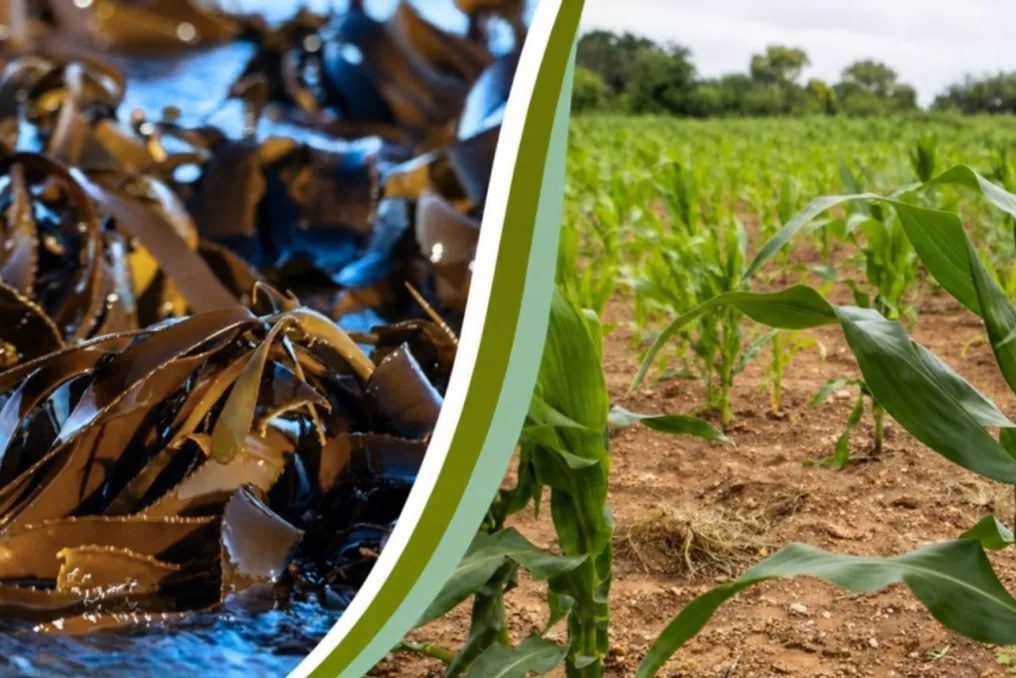
As farmers face the need to increase production while reducing costs, plant biostimulants are becoming a critical element of modern crop management. Alkelp SA offers precision agriculture solutions based on seaweed, going beyond standard extracts.
Agriculture is entering a period where productivity cannot be separated from resource efficiency, climate resilience, and environmental friendliness. Plant biostimulants are transforming from a new category of agricultural additives into an integral part of modern agromangement.
The European Biostimulant Council (EBIC) has played a significant role in this transition, advocating for biostimulants as technologies capable of improving nutrient uptake efficiency, crop quality, and resistance to abiotic stress. The current EBIC strategy focuses on innovation, scientific data, global market development, and the integration of biostimulants into sustainable food systems.
For Alkelp SA, these trends represent not just an industry forecast but the foundation for developing the company's products.
At the core of Alkelp SA's operations is research and development. The company's work with Ecklonia maxima aims to understand how the local South African seaweed resource can be converted into stable, application-oriented agricultural solutions. This requires not just extracting the seaweed, but identifying, characterizing, and preserving the compounds and properties that can bring tangible agronomic benefits.
This distinction is becoming increasingly important as the biostimulant industry matures. The future will likely belong not just to products labeled 'natural' or 'seaweed-based,' but to those supported by scientific data, reproducible manufacturing, and clearly defined areas of application.
EBIC itself emphasizes the importance of evidence-based claims, product quality, and transparency to build farmer trust and industry authority.
Alkelp SA's development path reflects this principle. South Africa's requirements for registering seaweed products include scientific proof of efficacy, corresponding analytical characterization, and controlled trials on representative crops. These guidelines also link efficacy evidence directly to stated claims and intended uses.
This creates an important bridge between research and real-world impact. Product development cannot end with demonstrating that a seaweed extract contains potentially valuable compounds; it must establish whether the formulated product performs stably under specified agricultural conditions, at realistic application rates, and using practical methods.
This is where Alkelp SA sees an opportunity for differentiation.
The next generation of biostimulant applications will increasingly focus on precision, evidence base, and integration, understanding not only the product's composition but also when, where, how, and why it should be applied. Thus, the method of application, dosage, and crop-specific performance become as important as the formulation itself.
South African registration guidelines directly require that recommendations for application methods and dosages be supported by scientific research. Simultaneously, the industry is moving towards a broader understanding of biostimulants as part of comprehensive plant nutrition and sustainable agricultural production. EBIC defines nutrient use efficiency, abiotic stress mitigation, and soil health as central elements of the future role of biostimulants.
For Alkelp SA, this forms a clear strategic direction: transforming the scientific understanding of Ecklonia maxima into reliable products that solve specific agricultural problems, backed by evidence and designed for practical integration into crop cultivation programs.
There is also a responsibility that extends beyond the farm. The development of sustainable biostimulants must consider the sustainability of the biological resources upon which the industry depends. Therefore, Alkelp SA approaches seaweed processing with a long-term perspective, reflected in its commitment: 'Processing beyond today's exploitation to protect future seaweed forests.'
Ultimately, Alkelp SA's potential lies not merely in producing seaweed extracts, but in creating a scientifically grounded platform capable of transforming South Africa's natural resources into agricultural technologies with measurable value.
Thus, the path from research and development to real-world impact is not linear. It is a continuous cycle of research, formulation, testing, application, learning, and refinement.
As the biostimulant industry moves toward greater scientific rigor, precision, and sustainability, Alkelp SA positions itself to participate not only in the growth of this category but also in shaping what the next generation of biostimulants can become.