Central Asian countries must establish a harmonized surveillance system for antimicrobial resistance (AMR) that integrates data from healthcare, veterinary, environmental research, and climate monitoring. Despite the growing global threat of antibiotic resistance, the lack of comparable regional data hinders the assessment of the problem's scale and the identification of pathways for the spread of resistant microorganisms.
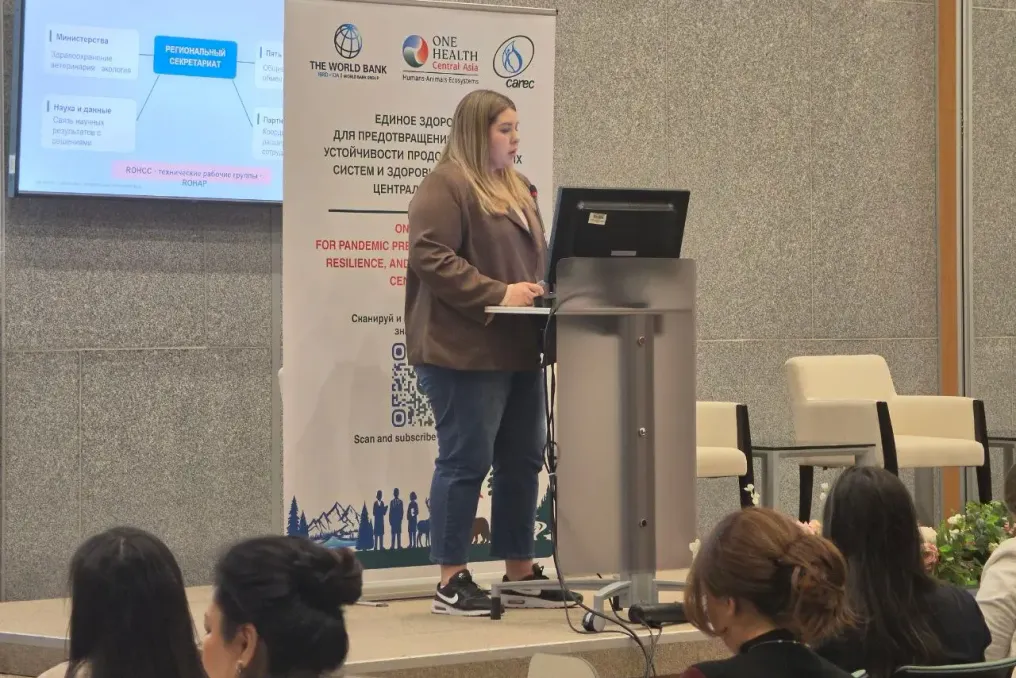
This was stated by Oksana Kravtsova, project coordinator at the Central Asia Regional Environmental Centre (CAREC), during an international conference on antimicrobial resistance held in Astana on November 19–20. In her presentation titled 'Climate Change as a Factor Contributing to Antimicrobial Resistance,' Kravtsova examined ecological mechanisms affecting the spread of antibiotic resistance, gaps in regional surveillance systems, and opportunities for cross-border cooperation under the 'One Health' approach.
According to Kravtsova, combating antibiotic resistance requires a comprehensive approach because resistant microorganisms and resistance genes can circulate among humans, animals, and in the environment.
Antimicrobial Resistance: 1.14 Million Deaths Per Year
Kravtsova cited data from the Global Burden of Disease 2021 study, published in the scientific journal The Lancet in 2024. According to this study, bacterial antimicrobial resistance was directly responsible for approximately 1.14 million deaths worldwide in 2021, with another 4.71 million deaths linked to bacterial AMR.
It is important to distinguish these figures: the first reflects deaths directly related to bacterial resistance, while the second covers a broader category of deaths caused by infections triggered by resistant pathogens. Under the baseline projection scenario, antimicrobial resistance could lead to cumulative 39.1 million deaths between 2025 and 2050.
Kravtsova emphasized the need to separate global estimates from regional indicators, as the figures presented reflect the global AMR burden but do not establish corresponding mortality rates in Central Asian countries. One of the main obstacles to making such assessments is the shortage of comparable data collected by medical, veterinary, and environmental institutions.
Water Temperature and Transmission of Resistance Genes
Kravtsova also addressed the potential influence of climate-related factors on the spread of resistant microorganisms. She referred to a study published in the Journal of Hazardous Materials in 2024. A laboratory experiment established that increasing water temperature from 5°C to 30°C is associated with an approximate 30-fold increase in the frequency of antibiotic resistance gene transfer.
This finding indicates that temperature conditions can significantly affect the horizontal transfer of resistance genes between bacteria. However, Kravtsova stressed the limitations of interpreting such experimental results. The observed increase applies to a specific laboratory system and does not imply a comparable rise in morbidity, mortality, or prevalence of resistant bacteria in the natural ecosystems of Central Asia.
She also noted that temperature is not the only factor contributing to antimicrobial resistance; important determinants remain antibiotic use, sanitation conditions, and access to healthcare.
Four Categories of Data for Integrated Surveillance
Kravtsova identified the fragmentation of information collected by various state agencies and institutions as one of the central problems of regional AMR surveillance. To form a comprehensive understanding of the issue, at least four categories of data must be integrated.
Healthcare Data
These include laboratory results for resistant pathogens, antibiotic prescribing practices, patient diagnoses, and treatment outcomes.
Veterinary Data
This data covers the use of antibiotics in livestock farming and the results of monitoring resistant microorganisms in animals.
Environmental Data
This helps track the presence of bacteria and antibiotic resistance genes in municipal and hospital wastewater, surface waters, and soils.
Climate Data
This includes information on temperature, precipitation, floods, and hydrological conditions that may affect the environmental spread of microorganisms.
According to a CAREC representative, effective integration of these datasets requires harmonized indicators, data quality standards, information exchange procedures, and common analytical approaches. Without such coordination, an increase in individual studies will not necessarily provide a complete picture of the spread of antibiotic resistance in the region.
Six Potential Environmental Pathways for Resistance
In her speech, Kravtsova named six types of natural and anthropogenic environments that can contribute to the accumulation and circulation of resistant microorganisms and resistance genes. These include municipal and hospital wastewater, rivers and other bodies of water, livestock systems, agricultural soils, wildlife, as well as glaciers and meltwater.
Transboundary water systems are particularly important for Central Asia. Kravtsova highlighted three main river systems—the Amu Darya, Syr Darya, and Ili—that connect territories of several countries. Potential environmental risks can arise from insufficiently treated wastewater discharges, runoff from agricultural and livestock areas, and changes in water use practices during droughts.
Floods and heavy rains can facilitate the movement of pollutants into surface waters. In conditions of water scarcity, the importance of sanitary protection measures and water purification quality increases, especially where water reuse occurs. Nevertheless, the existence of these environmental pathways does not confirm that transboundary spread of resistant bacteria has already been recorded in each of the mentioned river systems; specialized studies are required to determine the scale and direction of such movement.
Five Research Priorities for Central Asia
Kravtsova outlined five research priorities necessary for a deeper understanding of antimicrobial resistance in the region. The first priority concerns seasonal correlations between temperature, flooding, and antimicrobial resistance indicators. The second involves studying the movement of resistant bacteria and resistance genes through water, soil, livestock systems, and interaction with human populations.
The third priority calls for comparing microorganisms isolated from clinical samples, animals, and environmental sources, which can help identify possible links between different reservoirs of resistance. The fourth priority relates to behavioral factors, including antibiotic use practices and risk communication. The fifth priority is assessing the burden of antimicrobial resistance, including its impact on morbidity, mortality, treatment costs, and broader socio-economic consequences.
Advancing these research directions will require not only expanding laboratory investigations but also harmonizing methodologies across countries.
How Regional Cooperation Can Be Organized
Discussing possibilities for regional interaction, Kravtsova presented a model that includes four levels of coordination: the Regional Council, technical working groups, the Regional Secretariat, and national institutions. The Regional Council will promote the alignment of priorities among participating countries and government bodies. Technical working groups can provide scientific expertise, develop harmonized laboratory approaches, and organize joint events.
The Regional Secretariat will support cross-border dialogue, knowledge exchange, and the development of common cooperation procedures. National institutions will retain responsibility for data collection, epidemiological surveillance, response measures, and implementation. In Kravtsova's view, regional coordination should strengthen existing national systems, not replace them or create parallel administrative structures. The main focus, therefore, is on ensuring the compatibility of national surveillance systems and their ability to work together, rather than creating a separate supranational management system.
Significance for Uzbekistan
For Uzbekistan, the development of integrated surveillance is particularly relevant, given the country's dependence on transboundary water resources, the scale of irrigated agriculture, and the need to control antibiotic use in healthcare and animal husbandry. Data from medical laboratories, veterinary services, environmental monitoring, and hydrological observations can be analyzed together to identify possible links between antimicrobial resistance and environmental changes.
Risk assessment in the Amu Darya and Syr Darya basins will require not only national research but also comparable monitoring data from neighboring countries. Such cooperation is becoming increasingly important in the context of climate change. Rising temperatures, droughts, extreme rainfall, and floods can alter the survival and spread conditions of microorganisms. However, the extent of the influence of these factors on antimicrobial resistance in Central Asia is yet to be determined.
The approaches proposed by CAREC call for moving beyond isolated laboratory studies and fragmented institutional surveillance towards coordinated data analysis. This can help countries more accurately assess risks, define prevention priorities, and develop joint measures to combat antimicrobial resistance.