
London launches 'House of All Faiths and Communities' to prevent hate and violence in religious context
Read more
Aaj Tak
www.aajtak.in

London launches 'House of All Faiths and Communities' to prevent hate and violence in religious context

The 'House of All Faiths and Communities' was opened in London, which aims to stop hatred and violence committed in the name of religion. This new body, founded by Mohandji, is based on the principles of responsibility, accountability, and respect, asserting that no one should be harmed for the sake of God, faith, or religion.

The new organization, which unites religious and community leaders, was officially launched at the St Ethelbert's Centre for Reconciliation and Peace in London. Leaders of religions and communities from the UK and other countries, diplomats, and peacekeepers participated in the event. More than 200 people tuned into the broadcast from different parts of the world.

Mohandji, a public figure and humanist, founded this organization. He emphasized that its activities are focused on three pillars: responsibility, accountability, and respect. His conviction is that no human being, living entity, community, or culture should be harmed under the pretext of divinity, faith, or religion.

As part of an event titled 'Time of Necessity: The Responsibility of Leaders,' representatives from Scotland, Belgium, New York, and Serbia gathered. The ceremony took place on the historic grounds of St Ethelbert's Church, which was destroyed by an IRA bombing in 1993 and subsequently restored as a centre for reconciliation and peace.

Mohandji stated that he had attended various interfaith forums for many years, but noticed that statements and speeches often did not translate into real action. He noted that even if ten people listened to him or...
Similar stories

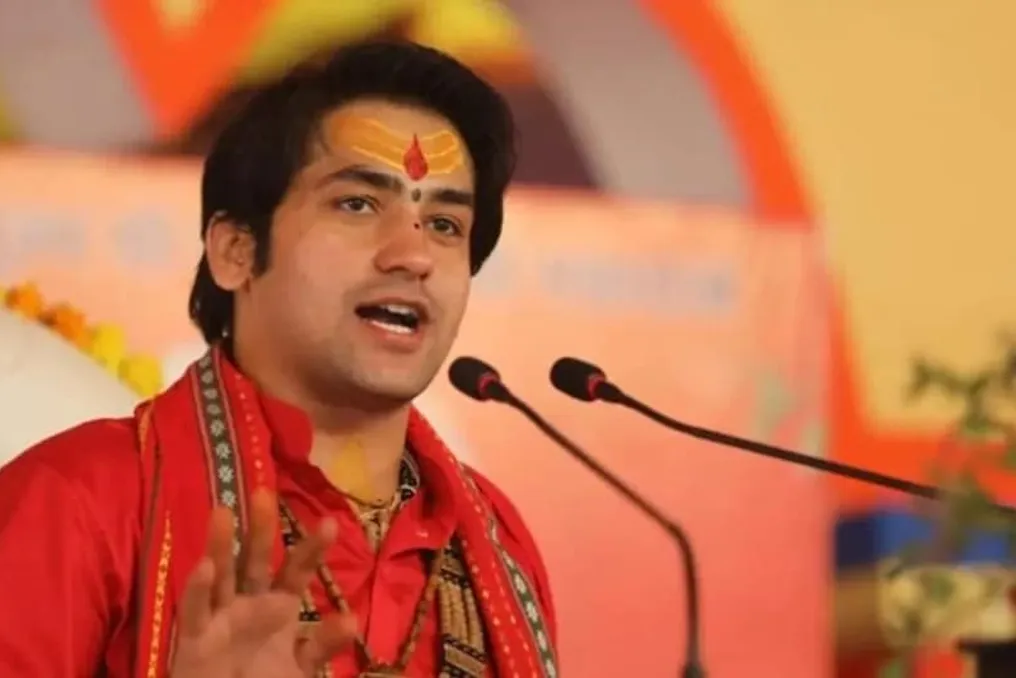
Dhirendra Shastri in Pratapgarh stated: stopping religious discourses could lead to demands to stop Namaz
Read more
www.aajtak.in

Dhirendra Shastri in Pratapgarh stated: stopping religious discourses could lead to demands to stop Namaz

In Pratapgarh, Uttar Pradesh, the Ramkatha (religious discourse) is being held by Bagneshwar Dham head, Dhirendra Krishna Shastri. Many political figures participate in these events, where religious and political issues are actively discussed. During this event, Dhirendra Shastri raised the issue of attempts to halt religious discourses and made a statement that attracted the attention of political circles. He suggested that if there is a demand to stop the discourses, there might also be a demand to stop Namaz, which poses a threat to social stability.

Shastri clearly stated that religious sermons and discourses should not be interrupted. In his opinion, not only the speakers but also the listeners benefit from such events, as they contribute to the spread of spiritual and religious consciousness in society.

Shastri also responded to accusations of gaining political advantage from holding the discourses. He acknowledged that religious events are often organized during election years, and people tend to link these programs with politics. Nevertheless, he emphasized that his goal is not participation in electoral politics, but the promotion of Hinduism (Sanatana).

Shastri noted that if any political party benefits from such events, it is an internal matter of that party. He added that both speakers and listeners benefit from participating in the discourses. Furthermore, Dhirendra Shastri reiterated his intention to build a magnificent Krishna temple in Mathura. This plan also became a subject of discussion among those present at the religious event.

Many prominent leaders from the Bharatiya Janata Party (BJP) participated in this event. Particular attention was drawn to the statement by former MP Brijbhushan Sharan Singh. Referring to Radhe Bhai, he said: 'There is influence, there is influence, and the influence will remain.'

These statements, made on the Ramkatha platform in Pratapgarh, turned the religious event into a center of political discussions. On one hand, Dhirendra Shastri spoke about discourses, Namaz, and Hinduism, while on the other hand, Brijbhushan's comments provoked new discussions regarding Radhe Bhai's political influence.

Popular