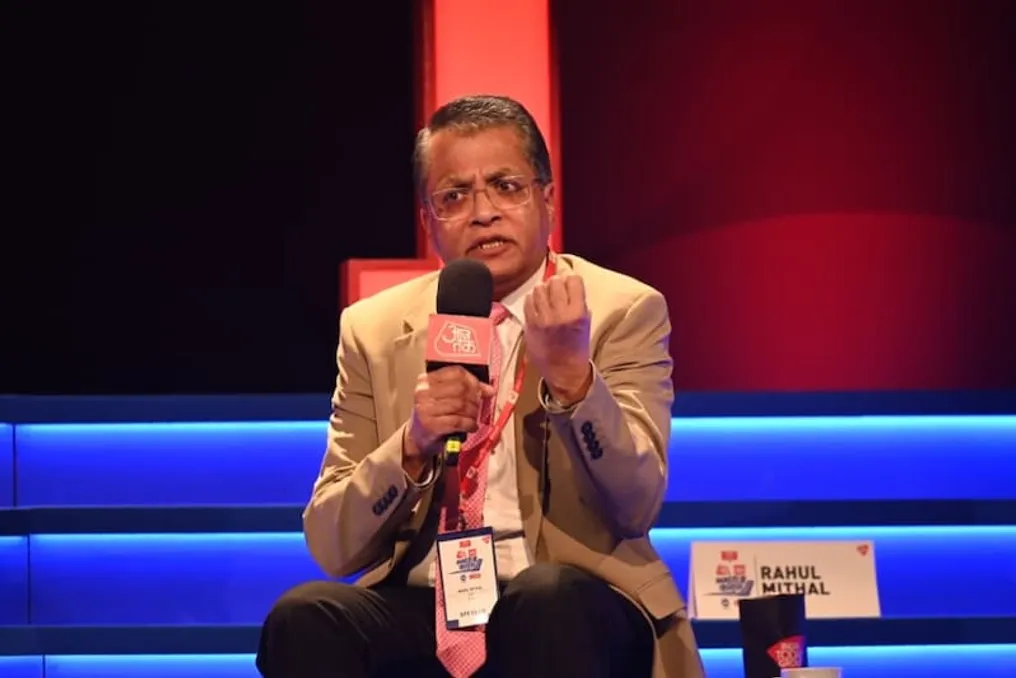
During the session 'Railways Paths, Career Path' as part of the Aaj Tak Masterclass Day 1 program, Rahul Mittal, Chairman and Managing Director of RITES, presented a clear picture regarding personnel recruitment in the railway industry, guarantees of public service, and comparison of salaries with the private sector.
When young people were asked during the session if they wished to work in railways, few hands were raised, which participants attributed to growing competition and concerns about the limited number of vacancies. However, Rahul Mittal noted that due to record capital expenditure (Capex) in Indian Railways, the expansion of new corridors, and the increase in rolling stock in recent years, there is an acceleration in hiring both within the railway itself and in around eight associated Public Sector Undertakings (PSUs).
Regarding the common opinion about low salaries in the public sector, Rahul Mittal highlighted an important point. He stated that previously there was a significant difference in salaries between the public and private sectors, but the situation has changed at the entry level. According to him, the total package (including CTC and other benefits) in government structures or PSUs like RITES remains comparable or even better than in some private companies for the first ten to twelve years, i.e., until reaching the middle management level. Nevertheless, after 35 years or upon reaching leadership positions, salary growth in the private sector accelerates significantly. Public service still provides security, but continuous learning is necessary for advancement.
Working at RITES, a company that has existed for 52 years as an infrastructure consultant, handles over 700 consultancy orders across 13 verticals globally. Over the last five decades, the company has worked in more than 55 countries. Concerning recruitment, Mittal reported that thanks to a stable inflow of orders, approximately 900 employees were hired last year, and over 300 hires have already taken place this year, with about 400 vacancies remaining in reserve across various verticals.
Session participants also asked questions about train delays, derailments, fog, and high-speed trains. Rahul Mittal explained that the problem of punctuality arises due to increasing traffic and the operation of different types of trains in the railways, but the situation is improving thanks to new corridors and record capital investments. He also shared information about the implementation of Artificial Intelligence (AI) tools for railway track inspection, which help identify potential weak spots based on past failure data. Furthermore, he mentioned that active work is underway on systems such as 'Kavacha' and the improvement of signaling to enhance safety in foggy conditions. In conclusion, he emphasized that regardless of whether the sector is public or private, true career success is determined by perseverance, skills, and a constant desire to learn, not just the initial years.