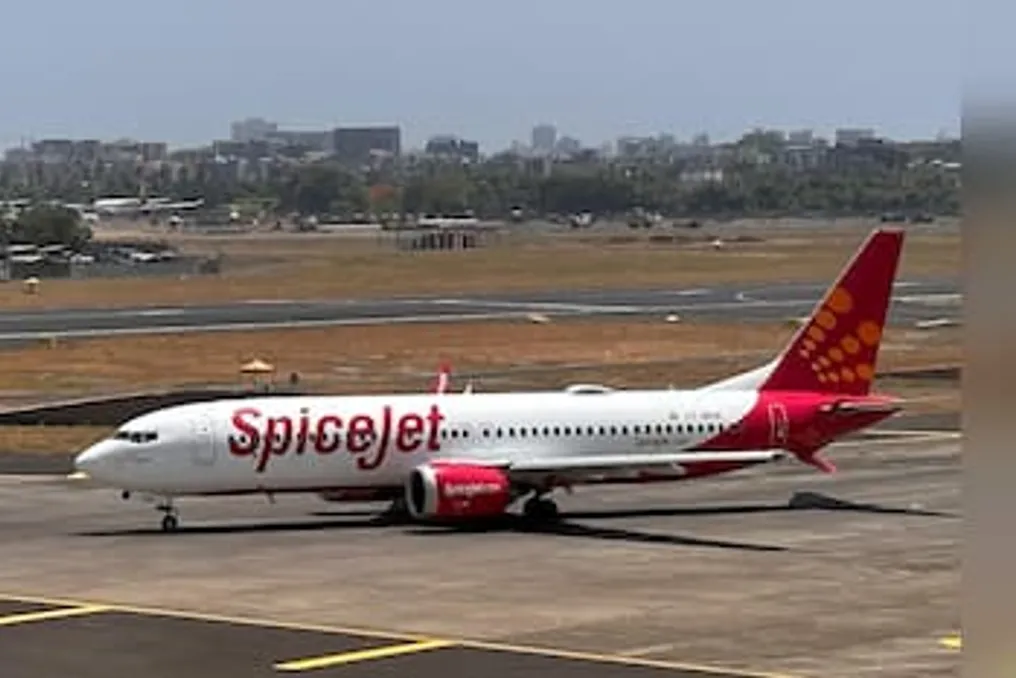
Low-cost carrier SpiceJet intends to raise up to 550 billion rupees amid growing disputes over payments, the ground condition of aircraft, and a sharp decline in market share. This initiative is the airline's latest attempt to restore its operations after several previous fundraising rounds.
The company's current operational difficulties are evident: on Thursday, SpiceJet cancelled 31 out of 42 scheduled flights at airports in Delhi, Mumbai, and Bangalore. These cancellations were due to a lack of funds and accumulated debts owed to service providers and aircraft lessors.
The proposed fundraising, approved by the airline's board of directors this week, may include equity capital and other permitted financial instruments. SpiceJet stated that the funds raised will help reduce liquidity pressure, strengthen the balance sheet, resume flights, support fleet expansion, and meet operational needs. As reported by Reuters, the airline is also in talks with potential investors.
Market share drops amid operational cuts
The scale of SpiceJet's decline is demonstrated by passenger traffic data. According to the Directorate General of Civil Aviation (DGCA), the airline's domestic market share fell from 3.9 percent in January 2026 to 0.6 percent in September. Over the same period, passenger numbers decreased from 592,000 to just 73,000.
In September, SpiceJet's figures were lower than those of regional carrier Star Air, which held a 0.7 percent market share. Furthermore, the DGCA noted that during the month, the airline recorded a flight cancellation rate of 20.29 percent, the highest among scheduled domestic carriers.
Financial uncertainty is also increasing pressure. SpiceJet has not provided its financial results for the quarters of March and June 2026. The airline attributed the delay to the need to complete an audit, as reported by Reuters. The Bombay Stock Exchange (BSE) warned that trading in its shares could be suspended from December 10 if reports are not submitted by December 7.
Cash constraints have also affected aircraft availability. As reported by the Times of India, six recently leased aircraft remained grounded due to unpaid debts to lessors. Moldovan low-cost carrier FLYONE also terminated a lease agreement for three aircraft with SpiceJet due to outstanding payments.
When did the crisis begin?
SpiceJet's financial problems are not new. The annual report for the 2015 fiscal year linked the crisis to delayed financing, outdated obligations, and rising payment demands from service providers, aircraft lessors, and banks.
The airline indicated that the lack of expected funding in early 2015 weakened its financial position, leading to non-payment to tax authorities, employees, airport operators, suppliers, and other creditors. These defaults resulted in the return of several aircraft to lessors and flight cancellations. SpiceJet's average daily flight count dropped from 340 in July 2014 to 230 in December 2014, reducing revenue.
The situation worsened after the DGCA imposed restrictions on advance bookings, cancelled slots, and increased safety oversight in December 2014. SpiceJet's annual report noted that these regulatory measures caused an immediate drop in revenue of about 90 percent. The airline partially suspended operations in mid-December.
In January 2015, the board of directors approved a revival plan, under which Ajay Singh took over management and control from former promoters Kalaniti Marana and Kal Airways.
Fundraising in 2024 brought temporary relief
In subsequent years, the airline continued to face financial difficulties, including losses and lawsuits over unpaid debts to aircraft lessors, creditors, and other lenders.
In September 2024, SpiceJet raised 300 billion rupees through a Qualified Institutional Placement (QIP). The promoter group also invested 500 billion rupees during the 2025 fiscal year, including a final tranche of 294.09 billion rupees. SpiceJet's annual report for the 2025 fiscal year reported that by March 31, 2025, 2699.54 billion rupees from QIP was used to repay mandatory payments, settle creditor claims, maintain and return aircraft to service, fleet induction, employee payments, and airport charges.
The capital injection coincided with improved financial performance. SpiceJet reported a net profit after tax of 58.07 billion rupees for the 2025 fiscal year, compared to a loss of 409.44 billion rupees in the 2024 fiscal year. Its net worth also became positive at 683.02 billion rupees as of March 31, 2025, compared to a negative 2585.85 billion rupees the previous year.
However, this improvement did not resolve its fundamental financial problems. SpiceJet's annual report for the 2025 fiscal year recorded accumulated losses of 7764.81 billion rupees and a deficit of 3845.07 billion rupees between current assets and current liabilities. Its statutory auditors also pointed to significant uncertainty regarding the company's ability to continue operating.
Grounding of aircraft exacerbates financial strain
Aircraft availability remains a central issue for SpiceJet. The 2025 annual report indicated that a significant portion of its fleet became inoperable due to maintenance issues. It also mentioned that aircraft underutilization affected profitability, while payments to lessors, suppliers, and government bodies were postponed.
A CARE Ratings assessment published in April 2026 presented a longer-term picture of the decline. SpiceJet's operational fleet shrank from 114 aircraft in March 2020 to 25 in March 2025, before recovering to 33 in December 2025. However, at the time of the assessment, about 37 aircraft were grounded, and the rating agency cited unpaid debts to lessors, financial constraints, and shortages of components and spare parts.
CARE downgraded the airline's long-term bank financing rating to CARE B+ from CARE BB-, citing a deteriorating financial risk profile and stretched liquidity. The agency also identified the low number of active aircraft and operational losses as factors affecting performance.
Operational and financial problems reinforce each other. Cash shortages and unpaid bills hinder aircraft maintenance, lessor payments, and returning grounded aircraft to service. A smaller operational fleet limits flight capacity, reducing the airline's ability to transport passengers and generate revenue. The resulting pressure on profits and cash flows complicates the financing of maintenance and operational expansion.
Can another fundraising round change the trajectory?
The proposed raise of 550 billion rupees comes after the 300 billion rupee QIP in 2024 and the improved results for the 2025 fiscal year. However, the recent decline in market share, delays in filing financial statements, and disputes related to aircraft payments show that the previous capital injection did not ensure sustainable operational recovery.
The board's approval for raising 550 billion rupees is subject to necessary shareholder and regulatory approvals. How much the fundraising will improve SpiceJet's financial position and operational capacity will become clear based on its ability to mobilize funds, return aircraft to service, and increase flight frequency.