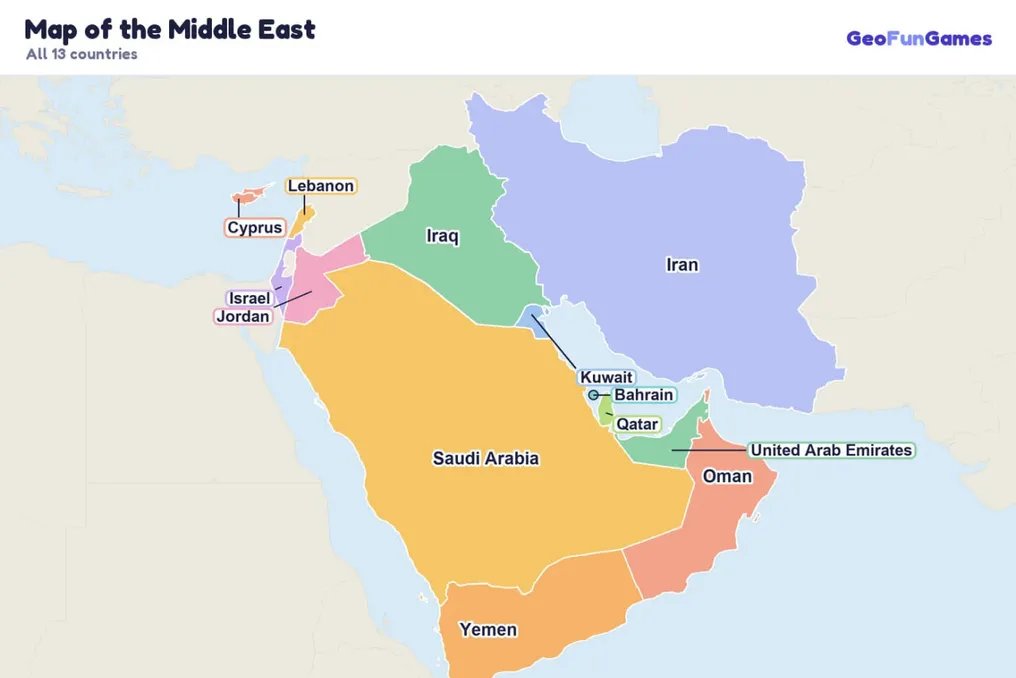
Gulf states face the prospect of broader escalation. Potential risks are not limited to Yemen, Lebanon, Iraq, and Iran; they could spread to other Gulf countries whose economies are closely linked to international investments, energy, trade, technology, and financial services.
Some of these countries, including Kuwait and the UAE, may face pressure affecting their core economic and strategic interests if confrontation intensifies and escalation continues.
Scenarios under consideration include the possibility of targeted attacks on American interests and companies operating in the region, including in information technology and artificial intelligence, as well as oil companies and industries related to petroleum products and fertilizers. The danger lies in the dependence of Gulf economies on a stable business environment, the flow of trade, the continuous supply of energy, and investor confidence.
Consequently, the expansion of the potential zone of impact could lead to damage beyond direct losses, affecting investments, insurance, shipping, and supply chains. However, the assumption that such events will lead to the collapse of Gulf states or the complete depletion of their investments remains an extremely serious scenario, not an inevitable outcome. The consequences will depend on the scale and duration of the escalation, as well as the ability of these states to protect their economic infrastructure and adapt to shocks, especially if the United States suffers a defeat and leaves them.
The expansion of confrontation to targeted attacks on American economic interests opens a new dimension to the conflict. Attacks on commercial assets or companies associated with the United States can impose costs on Washington that go beyond its military apparatus. Companies working in advanced technologies, artificial intelligence, and energy represent part of America's foreign economic and strategic interests.
The presence of these companies in the region also depends on the availability of protection and stability, as well as the ability to conduct business under normal conditions. If the security risk zone expands, insurance and operational costs may rise, investment interest may decline, and host governments may face increasing pressure requiring additional protection. This highlights one of the potential strategic options: increasing pressure from military assets onto the economic interests underpinning American presence and its network of connections in the region.
One of the most dangerous scenarios is the possibility that escalation could affect subsea cables running through strategic maritime corridors. These cables play a vital role in data transmission and communication between countries, especially in Gulf countries where investment volume exceeds $200 billion, as well as between continents. Digital infrastructure has become an integral part of the economic and strategic security of nations.
Communications have ceased to be merely a civilian service separate from military conflicts. Any large-scale disruption of subsea cables could affect internet services, international communication, the financial and business sectors, as well as digital services. Nevertheless, the nature of the damage will depend on the location and scale of the disruption, as well as the availability of alternative routes.
Including digital infrastructure in the assessment of potential risks demonstrates how far the scope of possible confrontation can extend. Sea routes transport not only oil and goods; they also carry a fundamental part of the infrastructure upon which modern economic life depends. Scenarios under consideration also include the possibility of attacks on US naval assets, which constitute an integral part of the United States' ability to project power abroad.
These assets play a role in demonstrating American military might, deterring adversaries, and reassuring allies. The American naval presence is based not only on its combat function. It is also tied to the image that the United States seeks to project: the image of a power capable of protecting sea lanes, international interests, its network of military bases, and overseas military deployments.
Therefore, if these assets suffer serious or even partial destruction, or come under significant pressure, it will affect America's defensive posture and the level of trust its allies place in its ability to protect them. Moreover, the sense of security for some allies is based on the assumption that American protection will remain available and effective, regardless of how much the confrontation expands. This assumption may be tested if the cost of protecting American interests and deployments abroad exceeds Washington's capacity or willingness to bear those costs.
Alongside economic and maritime pressure, there is the possibility of expanding the confrontation to land territory as another strategic option that may arise if other forms of pressure fail to achieve a settlement. Raising this possibility does not mean a decision has been made or that its implementation is inevitable. Rather, it is part of the range of scenarios that must be considered when analyzing the course of the war.
An offensive operation on land differs from air and missile strikes in terms of required forces, logistical support, ability to hold territory, and potential for absorbing losses. It can also open up new avenues of attrition and make escalation increasingly uncontrollable. The central point is that the spectrum of options available to the parties, along with the various costs imposed by each option, makes war calculations much more complex than simply comparing the size of military arsenals.
Just as the United States sometimes welcomes the idea of occupying certain islands and takes steps in that direction, the opposing side also has options that can put pressure on countries in America's camp. Some of these countries fear the possibility of territorial division, while their regimes fear collapse, especially against the backdrop of regional conflicts developing against their interests.
Saudi Arabia, for example, illustrates this situation with its war in Yemen, efforts to form defensive alliances, and calls for the deployment of Egyptian forces. Syria is also part of this broader picture, as events there potentially threaten to push the entire region into explosion and increase the likelihood of changes to existing borders. Such is the nature of major wars: they generate far-reaching consequences, among which are major geopolitical transformations, including changes to the map itself.