Donald Trump, in his usual bombastic style, described the deal concluded in August with the Venezuelan interim government as 'the largest oil deal in world history.' This deal effectively transfers control over seventeen oil fields to American interests.
Speaking before his audience, current President Delcy Rodriguez emphasized the need for investments that 'translate into the development of Venezuela.' These territories are presumed to contain 65 billion barrels of oil, accounting for about 20% of Venezuela's total reserves. Exploitation rights are transferred to the company North American Blue Energy Partners (NABEP), which is owned by Venezuelan Alejandro Betancourt, but one-third of which belongs to the U.S. Strategic Capital Authority.
Furthermore, the U.S. receives preferential access to 20% of production at cost. Rodriguez claims the deal will bring more than $200 billion to the country. However, some estimates suggest that Venezuela could lose billions by not holding a free auction of the rights. Critics also point to a lack of transparency in the details, potential loss of tax revenue, and hidden environmental costs due to the absence of an industry impact mitigation plan.
The path to this deal was paved after the U.S. detained former President Nicolas Maduro in January. Less than three weeks later, the Venezuelan National Assembly approved a new Hydrocarbon Law. This law repealed the Chavez-era regulations providing state control over oil fields and allowed for enhanced private commercialization.
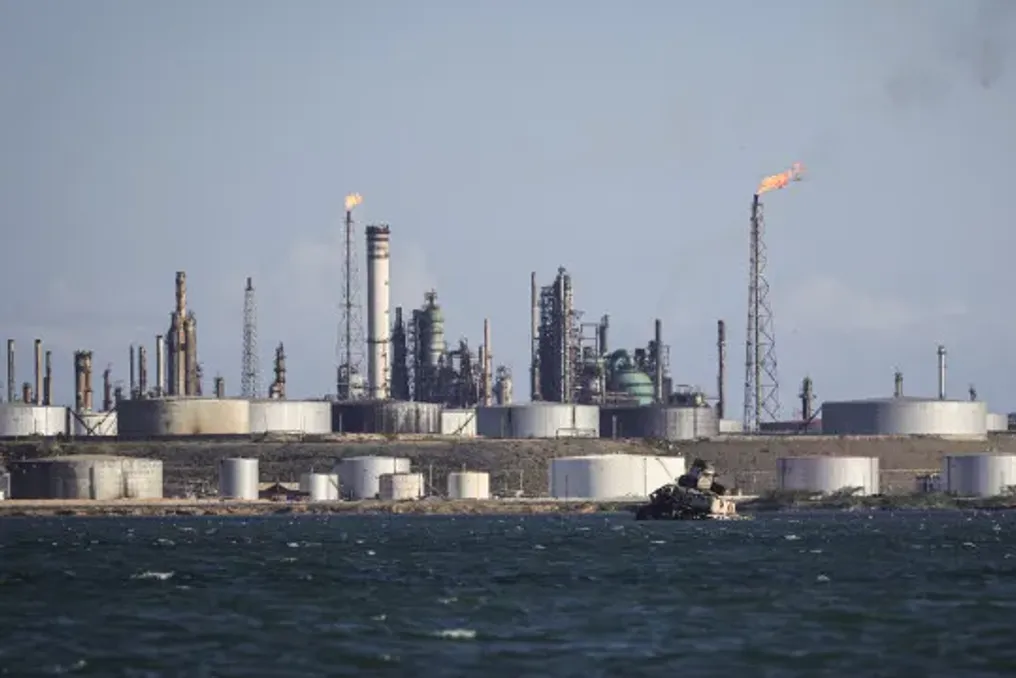
NABEP plans to invest $100 billion under the agreement and states that it will increase current production from 200,000 barrels per day to 500,000 by the end of 2028. According to El Nacional, the list of affected areas includes eight unexplored or undeveloped oil fields known as 'green fields' in the Oriente Magnetic Oil Belt, which covers an area of 55,000 sq km north of the Oriente River in central and eastern Venezuela, and is believed to hold 300 billion barrels of extra-heavy crude oil. It also includes mature fields, 'brown fields,' in the Maracaibo Lake basin.
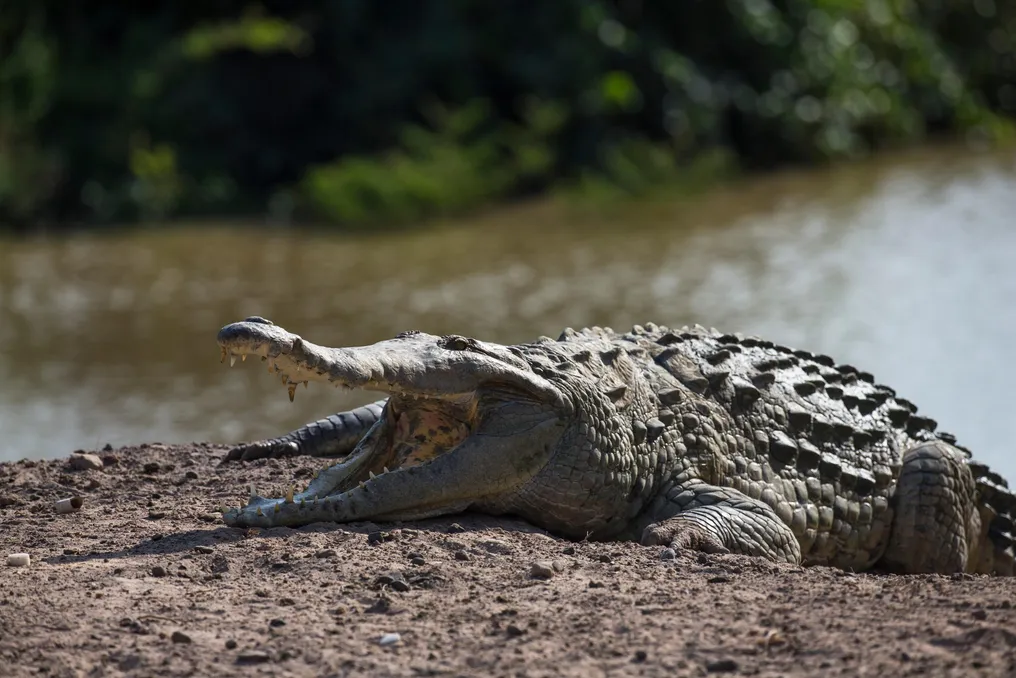
This belt is an important biodiversity reservoir, home to reptiles, migratory birds, and mammals, including endangered species such as the Oriente crocodile and the Oriente river dolphin. One of the challenges for this initiative is that the Oriente belt's extra-heavy crude oil has posed extraction problems since the 1920s due to its viscosity and density, which spurred the development of new methods for its exploitation. Since the deal was announced, NABEP has announced the arrival of 20 drilling rigs for maintenance and up to 60 new drilling rigs for expansion or commencement of work in the Oriente belt areas.
Another issue is the lifespan of the fields. Carlos Mendoza Potella, an oil economist and former advisor to the Central Bank of Venezuela, told Dialogue Earth that mature fields still have 'significant reserves, but a short productive lifespan by industry standards.' They have been operated for 60–80 years, so, according to Mendoza, they may cease to be profitable before the 25-year concession period expires.
Economist Asdrubal Oliveros also notes that material conditions in Venezuela could be an obstacle. The Venezuelan International Oil and Gas Summit, held in Caracas from September 28 to 30, attracted many oil executives from around the world. Oliveros believes this 'confirmed huge demand for Venezuela, but also limitations. We have oil, but we need electricity, roads, ports, storage, pipelines, modernizers, oil services, financing, and human capital.' Estimates from Siemens and General Electric show that only restoring the power grid requires an investment of between $15 and $40 billion.
For oil expert Paulino Betancourt, investments will not materialize 'without legal guarantees for extraction and repatriation of dividends without contractual surprises. There is preliminary interest, but large capital and big firms will enter when legal certainty outweighs political risk.' On September 30, current President Rodriguez stated that Venezuela will receive minimum royalties of 16% and taxes of 34%. 'For every barrel extracted and sold, about $19 goes directly into our country,' she said, adding that this will total $209 billion over 25 years.
However, Oliveros points out that this equates to $8 billion annually, which is 8% of Venezuela's GDP in 2025. He also questions the ambitious timelines. 'I would not expect an oil miracle overnight,' he says. 'If the rules are followed, the announced capital does arrive, infrastructure improves, and the political and institutional process gains trust; in three to five years, we can talk about a completely different economy for Venezuela.' His timeframe, however, will be 'several years,' not months.
It is not enough just to extract barrels; it is important how they turn into prosperity for Venezuelans. According to former National Assembly member and oil economist Jose Herrera, Venezuela lost $6.2 billion in revenue by transferring territories without public auctions and agreeing to provide 20% of oil at cost. Oliveros believes the impact of the deal can only be assessed after the true effect on development, jobs, and the economy emerges, alongside the implementation of transparency, savings, and investment policies. He emphasizes: 'It is not enough just to extract barrels; it is important how they turn into prosperity for Venezuelans.'
The oil deal also highlights the lack of progress in Venezuela's energy transition, which stalled even before it began. The state energy company PDVSA abandoned several wind power plants before completion due to budget issues, while a solar panel factory using Chinese technology operates barely. Maintenance was also suspended on the national network of small solar installations. Current energy plans focus on developing infrastructure for natural gas extraction and restoring and expanding hydropower, the country's main source of electricity.
Juan Carlos Sanchez, a Nobel Peace Prize laureate in 2007 as a member of the Intergovernmental Panel on Climate Change, recommended that the government adopt a different approach. In the 'Venezuela Energy Roadmap 2026–2050,' a document he prepared independently to inform decision-making, he advises using oil revenues to finance improvements in electricity infrastructure, develop renewable energy sources, and achieve economic diversification. The roadmap calls for strengthening institutions and creating an energy transition fund. It highlights the absence of state goals in the field of energy transition and climate change.
Meanwhile, the government revealed last year that from 1990 to 2022, the power grid was mainly supplied by hydropower (79.73%), with about 20% coming from fossil fuel-powered thermal power plants. In 2024, wind and solar power plants were added to the grid. Using Venezuela's 2021 Nationally Determined Contribution inventory, Efecto Cocuyo calculated that solar and wind energy account for only 0.27% of energy consumed in Venezuela.
Neglect of national oil infrastructure has also led to frequent leaks, especially in hundreds of kilometers of underwater pipelines in Lake Maracaibo. Environmental NGO Clima 21 and NGO Provea issued a joint statement in September, urging the government to establish environmental safeguards and human rights guarantees in light of the new oil agreement. They demanded transparency, consultation with indigenous communities, and resolution of existing spills.
Questions regarding Chinese and Russian oil interests
The deal also called into question the oil interests long held by companies from China and Russia. In January 2026, after Maduro's takeover, the Russian state oil company Roszarubezhneft stated that all its assets in Venezuela 'are property of the Russian state, acquired by the Russian side under market conditions, in full compliance with the laws of the Bolivarian Republic of Venezuela, international law, and intergovernmental agreements.'
In September, Guo Jiajun, spokesperson for the Chinese Ministry of Foreign Affairs, insisted that cooperation between China and Venezuela 'is protected by international law and the laws of both countries,' and that its legitimate interests 'must be guaranteed.' US Energy Secretary Chris Wright stated a few days after the new deal that China would have no rights to new oil revenue to repay Venezuela's outstanding debt. During his visit to Venezuela in February, he said that the influence of China, Russia, and Iran 'would be significantly reduced.'
Venezuelan Minister of Hydrocarbons Paula Enao stated that joint ventures with China and Russia remain valid. However, most contracts signed by Chinese companies since 2024 were under the Anti-Blockade Law. This legislation, adopted to circumvent U.S. sanctions, offered less legal certainty but greater profit than joint ventures. According to Reuters, citing U.S. officials, five of the 17 oil fields involved in the deal were transferred from Chinese companies. Among them is the private firm China Concord Resources, which, according to Dialogue Earth former National Assembly member Luis Diaz Salazar, is now seeking compensation.
Salazar argues that China can 'play the long game,' waiting for better geopolitical conditions, confident in its advantages. Oil expert Paulino Betancourt predicts an 'exercise in cold pragmatism and strategic patience' from Chinese interests. He tells Dialogue Earth: 'They will employ the diplomacy of a patient debt collector: they know that administrations change, but debts and subsoil resources remain.'