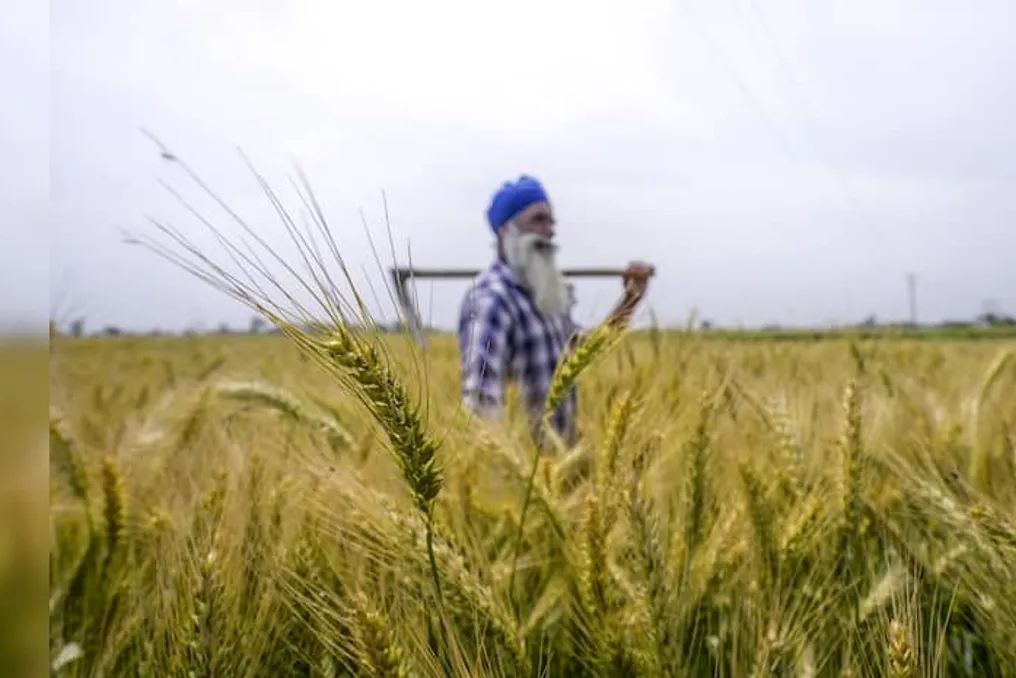
According to industry experts, wheat sowing areas in India may experience the most significant decline in the last 26 years. This is because the weakening of monsoon rains forces farmers to switch to less water-intensive crops, such as chickpeas, raising concerns about wheat yields and food inflation growth.
The fall in sowing, exacerbated by the risk of reduced yields due to the harsh El Niño weather pattern, threatens to limit production in the world's second-largest wheat producer. This, in turn, could lead to price increases and complicate efforts to curb food inflation.
Farmer Vilas Bhutekar from Jhalana in the western state of Maharashtra noted that wheat requires irrigation at least four to five times, but there is not enough water even for sowing. He reported that they chose chickpeas because it requires less water.
India's main winter crop, wheat, usually competes for sowing area with rapeseed, chickpeas, and maize. Monsoon rains in India from June to September were the lowest in over a decade. The drying effect of El Niño resulted in rainfall in key wheat-growing states such as Punjab, Rajasthan, Madhya Pradesh, and Maharashtra being 41 percent below the average.
Nitin Gupta, Country Head at Olam Agri India, emphasized that wheat requires more water than other competing crops, but water scarcity is observed in some regions this year, which may prompt farmers to plant less wheat.
According to government data, 5 million hectares (12 million acres) were sown with wheat by November 13, which is 15.3 percent less than the previous year. Based on the average estimates of 10 industry experts, sowings for the 2026/27 season are expected to be about 6 percent lower than last year's record of 33.6 million hectares (83 million acres).
This will be the sharpest decline since 2000/01, leading to the area under this crop reaching its lowest level in four years—31.58 million hectares (78 million acres).
Crop Shift
Wheat sowing areas are expected to remain largely stable in the key northern states of Haryana and Punjab, as these regions have access to reliable irrigation. However, industry experts indicate that farmers in other states are likely to switch from wheat to less water-demanding crops such as chickpeas and rapeseed.
Sandeep Bansal, a flour mill director from the northern state of Uttar Pradesh, noted that the prices of these crops have significantly increased compared to wheat prices, motivating farmers to divert sowing areas away from the grain crop. Bansal added that although wheat is traditionally the preferred choice for farmers, other crops offer better returns this year.
The Food Corporation of India procures wheat from farmers at a minimum support price, which New Delhi raised by only 1 percent this year—to 2,610 rupees per 100 kg. This is the smallest increase since 2002/03. A trader from New Delhi working in a global trading company stated that the government usually incentivizes wheat sowing by increasing procurement prices by 5-6 percent annually, and that the current increase of only 1 percent effectively discourages farmers from increasing wheat sowings.