Mercedes-Benz launches seven-seater electric GLB in Brazil with a price of R$ 409,900
Read more
AutoPapo
autopapo.com.br

Mercedes-Benz launches seven-seater electric GLB in Brazil with a price of R$ 409,900

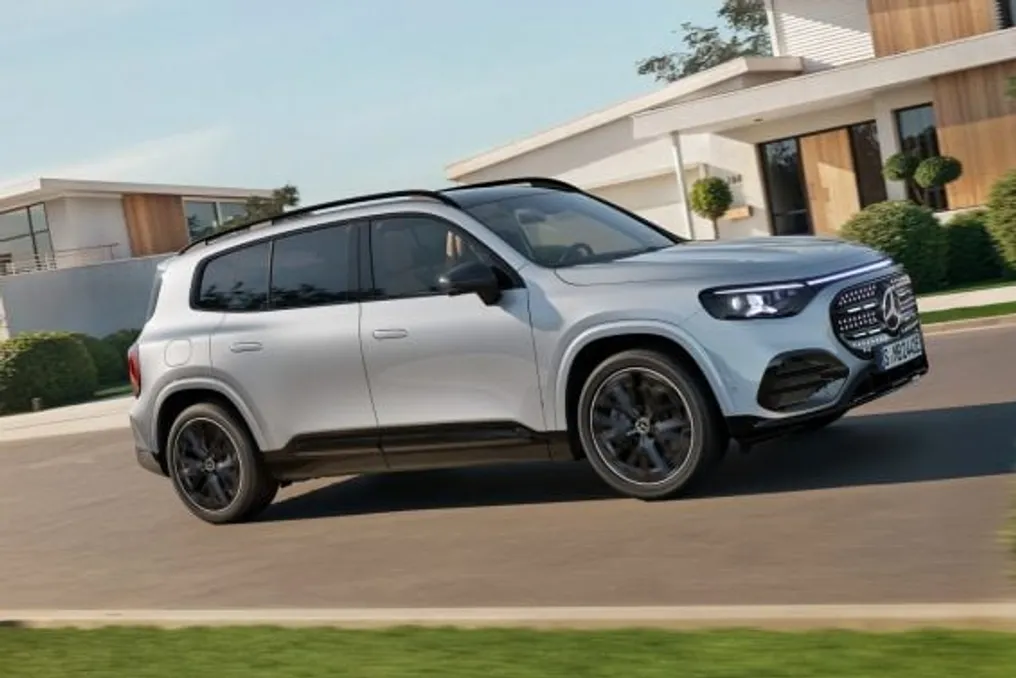
Mercedes-Benz has started sales in Brazil of its new generation GLB model, which is now exclusively electric. This seven-seater SUV is available in the GLB 250+ AMG Line configuration, priced at R$ 409,900.

This new vehicle costs only R$ 10 thousand more compared to the EQB 250+, the electric version of the previous model introduced in the country in 2025. Despite the slight price increase, the new SUV features significant improvements in performance, driving range, and charging speed.

The electric motor, positioned on the rear axle, generates 272 hp and 34.2 kgfm. In contrast, the EQB had 190 hp and front-wheel drive. According to Mercedes, the GLB can reach 100 km/h in 7.4 seconds and has a top speed of 210 km/h.

There was also an increase in battery capacity, which went from 70.5 kWh to 85 kWh. Consequently, the range, measured by the Inmetro standard, increased from 376 km to 427 km. Furthermore, on fast DC chargers, the SUV supports up to 320 kW, more than three times that of its predecessor's 100 kW.

This technological advancement is enabled by the new MMA platform, shared with the new CLA, which uses an 800-volt electric architecture. In terms of dimensions, the GLB measures 4.73 meters in length, 2.03 meters in width, and 1.69 meters in height. The third row accommodates two occupants, and the trunk offers a space of 540 liters, according to the manufacturer.

Externally, the AMG Line package includes exclusive bumpers, 19-inch wheels with wider tires at the rear than at the front, retractable door handles, and a closed front panel adorned with 94 stars. Internally, the SUV operates with the MB.OS operating system and features the fourth generation of the MBUX multimedia system.

The instrument cluster integrates a digital display, a 14-inch central screen, and a dedicated passenger screen, in addition to cameras for selfies and videos with facial recognition. The standard equipment list includes Burmester 3D sound, dual-zone digital air conditioning, panoramic roof, heated front seats with electric adjustments, adaptive cruise control, and emergency automatic braking function.

Similar stories

Mercedes-Benz S-Class arrives in Brazil with 537 hp hybrid V8 engine for R$ 1.27 million
Read more
autopapo.com.br

Mercedes-Benz S-Class arrives in Brazil with 537 hp hybrid V8 engine for R$ 1.27 million

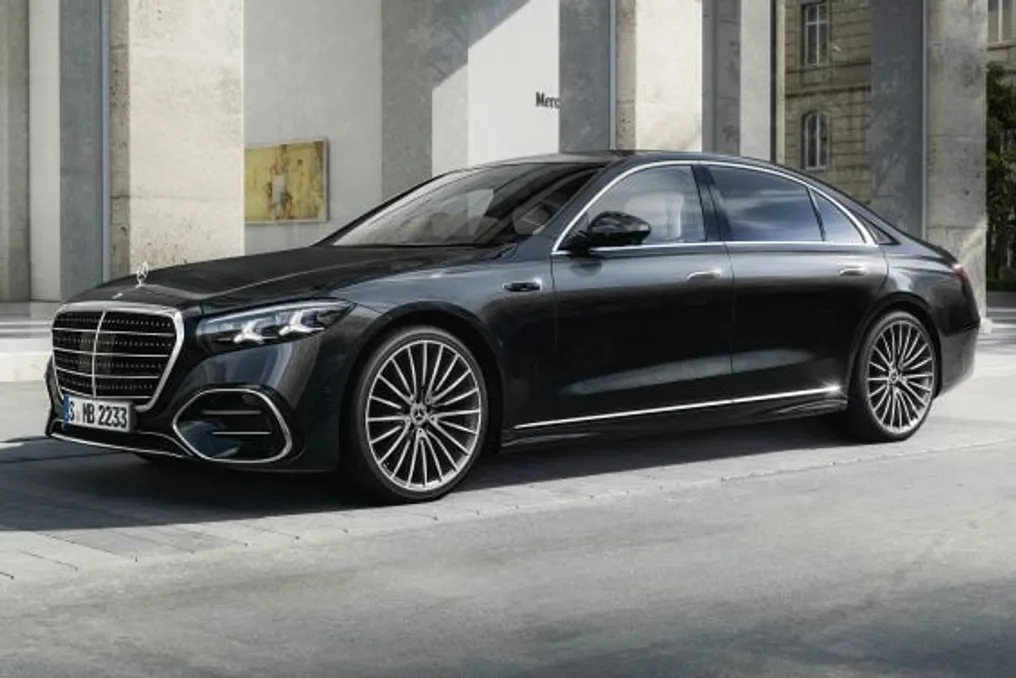
The Mercedes-Benz S-Class has undergone a redesign and arrived in the Brazilian market in the S 580 4Matic version, with a set price of R$ 1,266,900. This luxury sedan is positioned to compete with models such as the electric BMW i7 and the Porsche Panamera.

According to Mercedes-Benz itself, more than half of the elements of this model have been updated or redesigned during this renewal. Under the hood, there is a 4.0 biturbo V8 engine that generates 537 hp and 76.5 kgfm, complemented by a 48V mild hybrid system (MHEV).

This mild hybrid system incorporates a small electric motor capable of adding up to 23 hp during acceleration and recovery, although it is not responsible for the vehicle's autonomous movement. The transmission is a nine-speed automatic and features 4Matic all-wheel drive.

In terms of performance, the manufacturer reports that the sedan can reach 100 km/h in just 4 seconds and has a maximum speed of 250 km/h. The pneumatic suspension offers adjustment according to road conditions, while the steering rear axle allows the rear wheels to turn up to 4.5 degrees when the speed is below 60 km/h, assisting both in maneuvers and high-speed stability.

Externally, the S-Class features an illuminated grille, Digital Light adaptive headlights, three-star taillights, and 20-inch wheels. With a total length of 5.30 meters, the sedan accommodates five passengers, or four individual seats if the Premium Plus Package (optional) is selected.

In this optional configuration, the second row is equipped with first-class seats, an executive center console, and retractable tables. Standardly, the Rear Comfort Package already includes heated and ventilated seats with electric adjustments and memory, as well as inductive charging, rear airbags, and remote control for the MBUX multimedia system.

The interior cabin also features four-zone air conditioning, an air purifier and freshener, a panoramic sunroof, and a dedicated 12.3-inch screen for the front passenger. The 3D audio system is provided by Burmester, with the option to upgrade to the 4D version, which integrates 31 speakers, eight exciters (responsible for vibrating the seats with music), and 1,610 watts of power.

Regarding driver assistance systems (ADAS), the vehicle offers lane keeping, blind spot monitoring, autonomous emergency braking, and a 360-degree camera. Additionally, there is a projected alert to prevent the wheels from scraping the curb.

Comparison between Haval H9, Tank 300, and Tank 400: Differences between GWM chassis SUVs
Read more
autopapo.com.br

Comparison between Haval H9, Tank 300, and Tank 400: Differences between GWM chassis SUVs

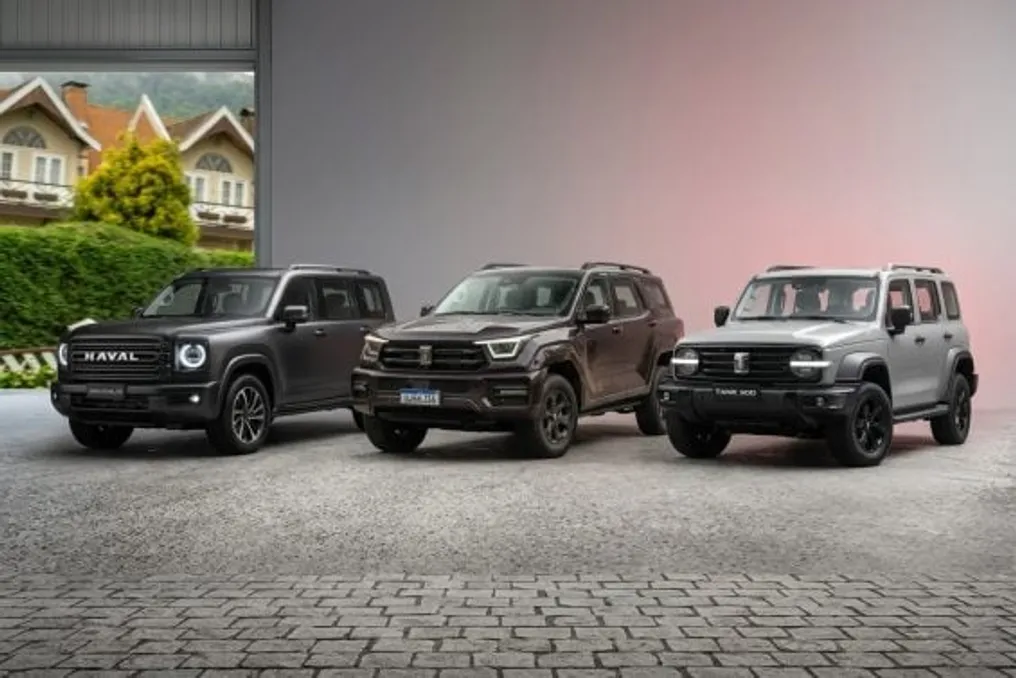
GWM has innovated in the segment of traditional ladder-frame SUVs with 4x4 traction, reduction gear, and a rigid rear axle by introducing the plug-in hybrid Tank 300, followed by the diesel-powered Haval H9, and more recently, the launch of the plug-in hybrid Tank 400.

Although they share a similar construction, these SUVs are distinguished by their proposals and the equipment packages offered. The Tank 300 is aimed at the off-road enthusiast, the Haval H9 targets the more traditional consumer who prefers diesel engines, and the new Tank 400 focuses on a more luxurious profile.

In terms of sales, the Haval H9 leads the trio, registering 9,805 units sold between January and October. The Tank 300 sold 4,119 units, almost half the volume of its counterpart. The Tank 400 is recent and is not yet in the sales ranking.

The Haval H9 is the most affordable model of the trio in terms of the GWM chassis, equipped with a 2.4L turbodiesel engine without electrification and a nine-speed automatic transmission. This engine generates 184 hp and 48.9 kgfm, allowing the vehicle to reach 100 km/h in 13 seconds.

The Tank 300 operates as a plug-in hybrid, combining a 2.0L turbo flex engine with an electric component integrated into the nine-speed automatic transmission. Together, they produce 394 hp and 76.4 kgfm, regardless of the energy source used.

Due to the integration of the electric motor into the transmission, it can drive the rear axle or all wheels through the transfer case. In the Tank 400, the mechanical setup is identical, and GWM reports that both achieve 0 to 100 km/h in 6.8 seconds.

Inmetro data indicates that the Haval H9 is the most economical traditional SUV from GWM. This classification is due to the testing methodology, which does not favor plug-in hybrids because it is conducted with the battery discharged. Nevertheless, the Haval H9 proves to be economical when compared to other turbodiesel models.

The difference in electric range between the two hybrid models is modest: the Tank 300 can travel 74 km on a full charge, while the Tank 400 reaches 71 km. This occurs because both share the same 37.1 kWh battery, with a fast charging capacity of up to 50 kW.

Differences between GWM Chassis SUVs

At this point, the three SUVs begin to show clear distinctions. The Tank line is more oriented towards off-road use, and the brand supports this vocation with specific accessories for this niche.

The Tank 300 features 4x4 traction with a reduction gear and locking differentials available on the front, center, and rear axles. Its ground clearance is 22.2 cm, the lowest in the group, but its smaller size gives it an advantage in trails.

The Haval H9 also offers 4x4 traction with a reduction gear and allows locking the front and rear differentials. Its ground clearance is slightly higher, measuring 22.4 cm.

GWM has equipped the Tank 400 with a distinct traction system, including an automatic 4x4 mode option. Its center differential can redistribute power between the axles, enabling use on asphalt as four-wheel drive. Furthermore, it has a reduction gear, 4x2 mode, and the ability to lock all three differentials.

Analyzing the specifications, it is noted that the Tank 400 surpasses the others in ground clearance, approach angle, and has larger tires. Its wading depth is equal to that of the Haval H9. All vehicles include useful trail features, such as Tank Turn (which reduces turning radius), 540° camera with transparent chassis, and off-road cruise control.

These attributes, combined with the more sophisticated traction system, suggest that the Tank 400 is the most suitable for those who practice off-roading. However, if the budget does not support the nearly R$ 400 thousand, the other brand SUVs also offer good options.

Currently, the Haval H9 is the only seven-seater SUV from GWM available in Brazil. To accommodate seven occupants, it needs to be larger, which is reflected in its dimensions.

The Tank 400 has a similar size and shares the 2.85m wheelbase, but it is configured with only five seats. The Tank 300 is the smallest in dimensions, as the H9 weighs more due to the lack of electrification.

GWM specifies the roof cargo space measurement, which is the only aspect where the Tank 300 exceeds its siblings, accommodating up to 863 liters.

Technology and Finish

Despite the traditional construction, the equipment package of these models is full of advanced technology. Features such as full-LED headlights, Level 2+ ADAS package, 540° camera, 50W wireless smartphone charger, heated front seats, powerful sound system, and other luxury items come standard.

The Haval H9 comes equipped with a 14.6-inch multimedia center and a 10.25-inch instrument panel, in addition to second-row seat ventilation, triple-zone air conditioning, retractable step, full-LED matrix headlights, panoramic sunroof, and a 220V outlet in the trunk.

Among the highlights of the GWM Tank 300, the dashboard with two 12.3-inch screens for the multimedia center, dual-zone air conditioning, sunroof, fixed step, driver massage function seat, analog clock, and winch preparation stand out.

The Tank 400 incorporates greater luxuries, such as the climate-controlled center console, 15.6-inch multimedia center, 12.3-inch instrument cluster, head-up display, panoramic sunroof, triple-zone air conditioning, active noise cancellation, two 50W wireless chargers, rear window blinds, and massage for both driver and passenger.

GWM has clearly established the positioning of its three chassis SUVs in the Brazilian market, managing to meet various consumer profiles without generating internal sales competition.

The Haval H9, with its diesel engine and three rows of seats, configures itself as a family alternative for those who do not want an electrified vehicle. Its engine is efficient and ensures great autonomy thanks to the 78-liter tank.

The Tank 300 is smaller and has a larger trunk. This feature, combined with excellent off-road capability, makes the model ideal for expeditions and adventures.

Finally, the new Tank 400 enhances the capabilities of its sibling, adding various luxury features inherited from the Wey 07, such as the climate-controlled console. Thus, GWM seeks to offer SUVs that please all tastes.
Mercedes-Benz launches electric truck sales of eActros 600 in Brazil during Fenatran 2026
Read more
autopapo.com.br

Mercedes-Benz launches electric truck sales of eActros 600 in Brazil during Fenatran 2026

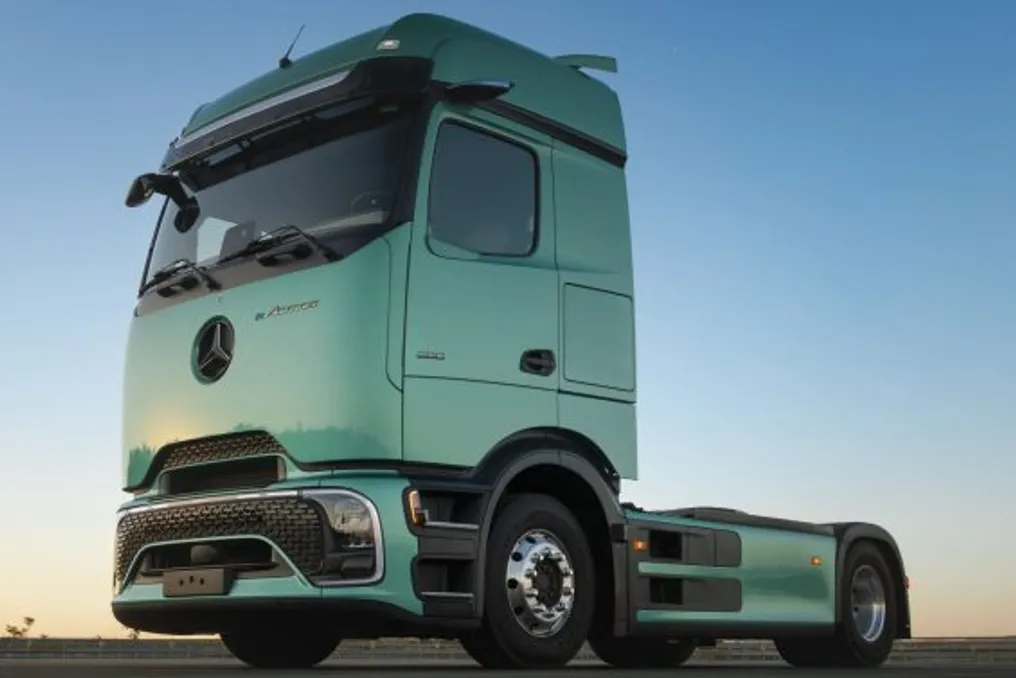
During Fenatran 2026, Mercedes-Benz began commercializing the electric truck eActros 600 in Brazil. This model has an autonomy of up to 600 kilometers and is suitable for medium and long-distance operations, available in chassis and rigid configurations, with 4x2 and 6x2 traction.

In addition to the electric offering, the manufacturer presented innovations in the Accelo, Atego, Axor, Actros, and Arocs lines. At the stand, the Zetros 6x6 was also exhibited, and the Unimog 4x4 was made available for testing, both with all-wheel drive designed for off-road use.

The eActros 600 is equipped with three battery packs totaling 621 kWh, ensuring an autonomy between 500 and 600 km. Its main focus is on 'middle mile' operations, such as transport between distribution centers and factories, covering the food, beverage, and e-commerce sectors.

The first acquisitions of this vehicle were made by the companies Bravo Serviços Logísticos, based in Uberaba (MG); Reiter Log, from Nova Santa Rita (RS); and Ever Express, from Campinas (SP). Mercedes-Benz also guarantees support before and after the sale to facilitate the integration of these electric trucks into customers' fleets.

One of the improvements in the portfolio is the inclusion of a new 10.1-inch multimedia center, applicable to the Accelo, Atego, Axor, Arocs, and Actros lines. This equipment is compatible with Android and Apple, offering offline navigation and considering height, weight, and width restrictions when suggesting routes.

For the civil construction sector, the Atego 3433 6x4 received a modification with a wheelbase of 3.6 meters and a console for mounting implements, which facilitates the assembly of concrete mixers and tipping skips, improving maneuverability in tight locations and construction sites.

Regarding the Accelo 1117, a specific version for cash-in-transit transport was launched. This model leaves the factory without a cabin, ready to receive an armored body. This configuration was developed in collaboration with an implementer to meet the needs of Brink’s, a company that has already ordered ten units.

For mining activities, the Atego 3433 6x4 gained a variant with an extended wheelbase and a payload capacity of 33.5 tons. It can be adapted to transport tanks of up to 20 thousand liters, equipped with a spraying system to dampen dirt roads and reduce dust; the retarder is standard from the factory.

The Arocs 5851 8x4 was updated with a mining kit that includes a reinforced dual air filter and a vertical exhaust. Additionally, it can be equipped with the Active Braking Assistant ABA5, which performs automatic braking to prevent rear collisions.

In the agricultural sector, the Atego 3033 8x2 now features a reinforced HL7 rear axle and differential lock, features aimed at operating on uneven terrain and dirt roads. According to Mercedes-Benz, more than 50 units of this configuration were sold in 2026.

The Actros 2653 6x4 can also be equipped with the Robustness Package, which includes a higher bumper with an approach angle of up to 21 degrees, as well as protectors for the oil pan and headlights.

As for the Arocs, it meets the requirements of 11-axle and 91-ton compositions, such as the super articulated trucks used in sugarcane transport. For this purpose, the model can receive a protective blanket on the vertical exhaust to prevent the accumulation of soot, dust, and dry straw on the external part of the component.

In road transport, the Axor received the new Retro Light Blue color option, honoring the L 312 models, known as Torpedo, and 1113. Since its relaunch, the truck has accumulated 2,400 sales until September 2026.

This model is also available from the factory with preparation for third-party tracking systems and offers customization options, such as a 25-liter refrigerator and the Alliance aerodynamic package, which includes side skirts and roof and side deflectors.

On the Actros 2653 6x4, the novelty is the CabLock, an extra door locking system for the cab, operated from the driver's bunk. The line also features an auxiliary battery set to start the engine, serving as a reserve if the primary batteries are discharged.

Among the available options are a heated and massaging seat, electric sun visor, electric cab tilt, night air conditioning, airbag, and MirrorCam. The Actros can also be equipped with a foam mattress and pocket spring mattresses, the new Matte Blue Meisse color, and other options such as the Robustness Package, Actros Estrelas Delas, extra cameras for steering monitoring, and Alliance side skirts.

Popular