Anthropic, the developer of the Claude chatbot, made its debut on Nasdaq this Thursday, the 19th, in an Initial Public Offering (IPO) that entered financial market history. The company managed to raise an impressive $81.3 billion, the highest amount ever recorded in an IPO.
The share prices closed the first trading day at $97.17 (equivalent to approximately R$ 515), representing a 17.1% increase compared to the $83 (about R$ 440) set for the offering. However, the final result occurred after a period of intense market volatility.
Trading started with shares being traded at $111.50 (about R$ 591) and peaked at $115.10 (approximately R$ 610), but lost momentum throughout the afternoon. At closing, the price was about 12.9% below the initial value registered on the stock exchange.
The debut was also notable for the trading volume. In just one minute, about 139 million shares were traded, moving approximately $15 billion (R$ 79.5 billion), according to Yahoo Finance estimates. Anthropic offered 980 million shares at $83 each, surpassing the previous record for the largest IPO, which belonged to Elon Musk's company, SpaceX.
The trading volume right at the opening was particularly high. Yahoo Finance calculations indicate that 139 million shares circulated in the first minute, generating about $15 billion (R$ 79.5 billion), nearly double the financial volume recorded by SpaceX in its first minute of trading, which occurred in June 2026. Furthermore, only Anthropic's first trade involved 108 million shares, in a transaction estimated at $12 billion (R$ 63.6 billion), keeping the volume high throughout the day.
By mid-trading session, more than 640 million of the company's shares had been traded, surpassing the 522 million moved by SpaceX at its debut. At that moment, Anthropic held the highest trading volume on Nasdaq.
Despite the overall success, the movement was marked by instability. After opening at $111.50, the stocks fell to about $97 within half an hour. A Yahoo Finance analysis, based on data from 21 major U.S. IPOs, pointed out that no significant initial public offering since 2008 had shown such a sharp drop relative to the initial trading price within such a short interval.
The offering also attracted attention due to individual investor participation. Anthropic allocated 15% of the IPO shares to this public, a percentage higher than usually allocated to retail investors in initial public offerings, which generally ranges between 5% and 10%. Data from Vanda Research showed that net purchases by individual investors reached $18.6 million (about R$ 98.6 million) in the first 30 minutes of trading, with a total volume of $255 million (R$ 1.35 billion) in the same period, signaling mixed buying and selling activity.
Large technology corporations also invested in Anthropic. AMD, Broadcom, Google, Micron, Microsoft, Nvidia, and Taiwan Semiconductor Manufacturing Company (TSMC) jointly invested $26 billion (R$ 137.8 billion) in Anthropic's shares at the IPO price, although this investment was private and should not be added to the $81.3 billion raised publicly. Specifically, Nvidia agreed to buy about $10 billion (R$ 53 billion) in Anthropic Class N common shares, fulfilling a prior commitment to invest up to $10 billion in the company.
The banks involved in the operation will also receive substantial remuneration. A document submitted to the U.S. Securities and Exchange Commission (SEC) revealed that Anthropic agreed to pay $550 million (about R$ 2.9 billion) to participating institutions, including Goldman Sachs and Morgan Stanley. This amount exceeds the approximately $500 million (R$ 2.65 billion) paid to banks in the SpaceX IPO, held in June.
The debut comes after a period of strong growth for Anthropic. In the offering prospectus, the company reported revenue of $33.24 billion (about R$ 176 billion) in the nine months ended September 30, 2026, representing a 1,200% increase compared to the same period last year. Additionally, the company stated in another update to the offering document that third-quarter revenue reached $17 billion (R$ 90.1 billion), a figure 12 times higher than recorded in the same period of 2025, reflecting the progress of Claude models and the company's corporate products.
The valuation may also generate significant gains for employees and investors who participated in private funding rounds. According to CNBC, over 400 employees could possess a net worth of at least $100 million (R$ 530 million), considering the share price at that time. Among those benefiting is Ashton Kutcher, co-founder of the venture capital firm Sound Ventures, who invested $435 million (about R$ 2.3 billion) in Anthropic in 2023 and subsequent rounds, with his stake currently valued at about $7 billion (R$ 37.1 billion), according to Yahoo Finance.
The capital opening occurred amid debates about the rapid advancement of Artificial Intelligence and its potential impacts. More than 100 people protested in front of Anthropic's headquarters in San Francisco, California (USA), on Thursday. The protesters criticized technological advancement, shouting phrases like 'ban AI that builds AI.'
The demonstration was motivated, among other factors, by concerns about so-called recursive self-improvement, a concept describing the possibility of AI systems creating successor versions without human intervention. Although this capability is not yet viable, researchers and industry companies debate the inherent risks of its eventual emergence.
The debut also generated responses from Democratic legislators in the United States. Senator Mark Warner, Vice Chairman of the Senate Intelligence Committee, reinforced his advocacy for sector regulation, mentioning a bill that would require disclosure of information regarding AI-related financing by publicly traded companies. Representative Pramila Jayapal also criticized Anthropic's IPO, expressing concern about the offering given recent disruptions in crucial systems and advocating for measures to mitigate technological risks.
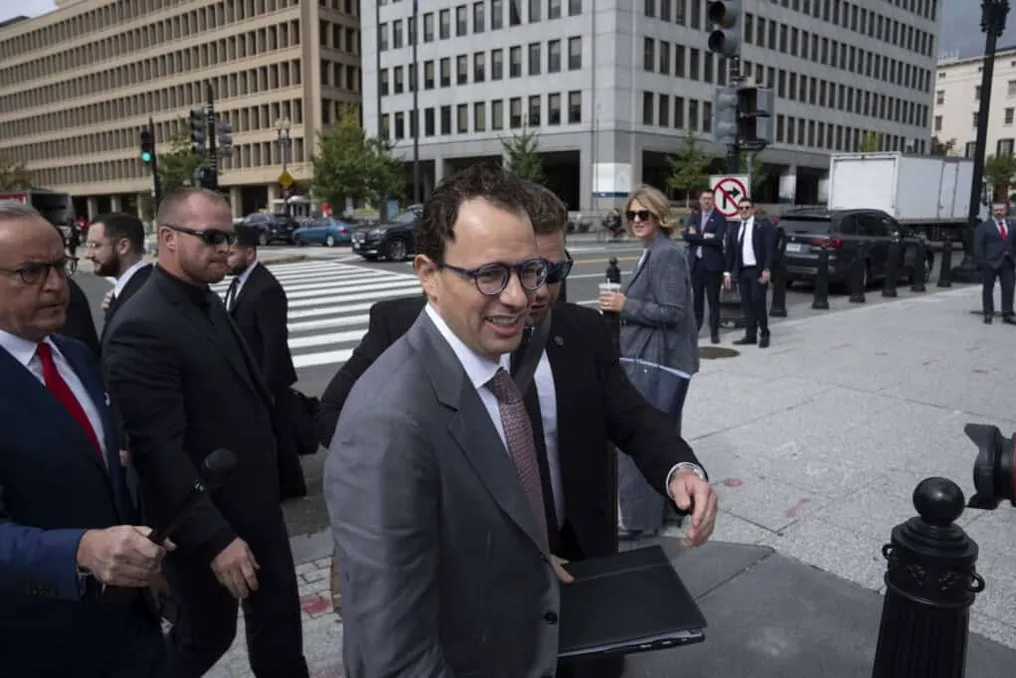
During the ceremony at Nasdaq, Dario Amodei, CEO and co-founder of Anthropic, reiterated that safety must guide the development of advanced AI systems. Daniela Amodei, president and co-founder, also addressed concerns related to the technology, stating: 'This technology needs you. Not your trust, not your use, but your voice,' addressing those who are apprehensive or unaware of what to expect from the expansion of AI.