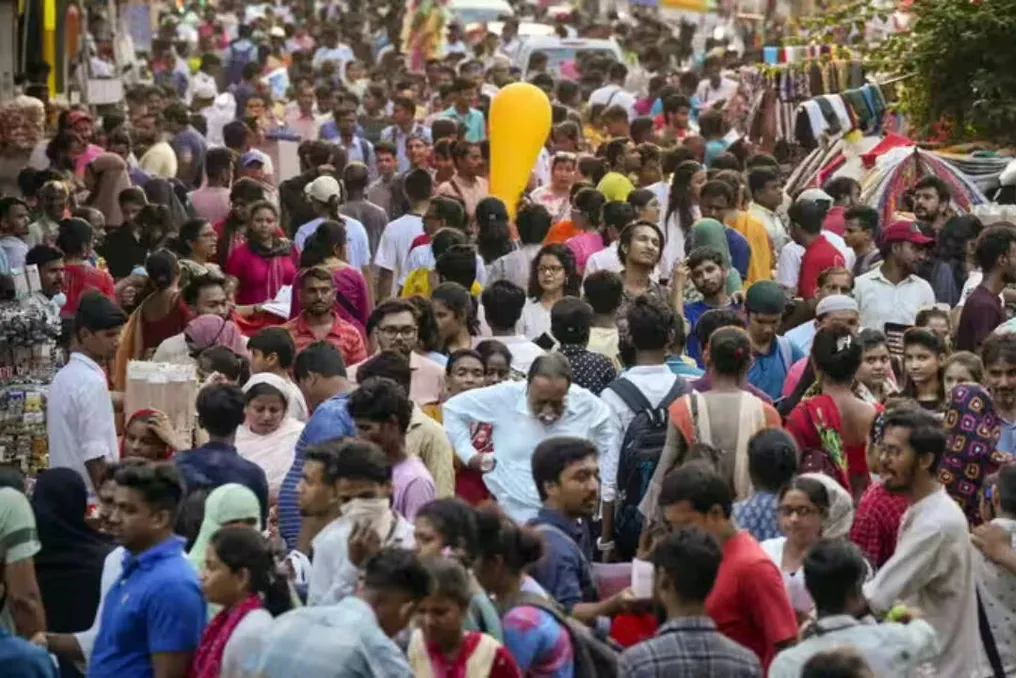
According to the UNFPA report on the state of world population for 2026, India, which continues to be the most populous country in the world, is projected to reach a population of 1.47 billion (147.66 crore). The doubling time for the population in India is estimated at 81 years. India's population is expected to grow to approximately 1.7 billion (170 crore) in about 40 years, after which it will begin to decline.
In 2025, India's population was 1.46 billion, and the year before that was 1.44 billion. The report emphasizes that more than a quarter of Indians are aged between 10 and 24, calling this 'India's youth moment' and urging investment while the demographic dividend window remains open.
India surpassed China to become the world's most populous country in 2023 when its population reached 142.86 crore, while China's population was 142.57 crore. It is projected that China's average population in 2026 will reach 1.41 billion (141.29 crore), with 70% of China's population in the 15–64 age group and 15% aged 65 or older.
India's demographic indicators show that 24% of the population is in the 0–14 age group, 17% in the 10–19 age group, and a strong 26% in the 10–24 age group, reflecting the country's youth dividend. Overall, 69% of India's population is in the 15–64 age group, and the share of people aged 65 or older is 8%. The average life expectancy for men in India is 71 years, and for women is 74 years.
Globally, the world population is estimated at 8.3 billion in 2026, with a doubling time of 84 years. The global average life expectancy at birth is 71 years for men and 76 years for women.
The report also notes that the total fertility rate in India remains at 1.9, consistent with last year's figure and below the replacement level of 2.1 children per woman. This indicates that women are having fewer children than necessary to maintain the population from one generation to the next.
Furthermore, the report is based on UNFPA's Global Demographic Future survey, conducted among over 108,000 internet-connected adults in 73 countries, including 1,722 people in India. The survey sheds light on people's aspirations regarding relationships, parenthood, and life goals, as well as the conditions affecting their ability to realize them. UNFPA states that the aspirations of youth regarding family and relationships will play a key role in shaping the nation's demographic trajectory.
The results of the survey in India show a high level of optimism: 83% of respondents consider the future positive or very positive, despite concerns about conflicts, economic instability, and inequality. Women aged 18 to 39 cite an ideal family size of 2.1 children, and parenthood remains a strong aspiration: almost 85% of childless respondents aged 35 to 39 would like to become parents.
UNFPA stresses the need to expand and strengthen youth-oriented primary healthcare, stating that 'Young people need confidential, unbiased information and services in sexual and reproductive health (contraception, menstrual health, STI prevention, referral) along with prenatal, maternal, and postnatal care.'