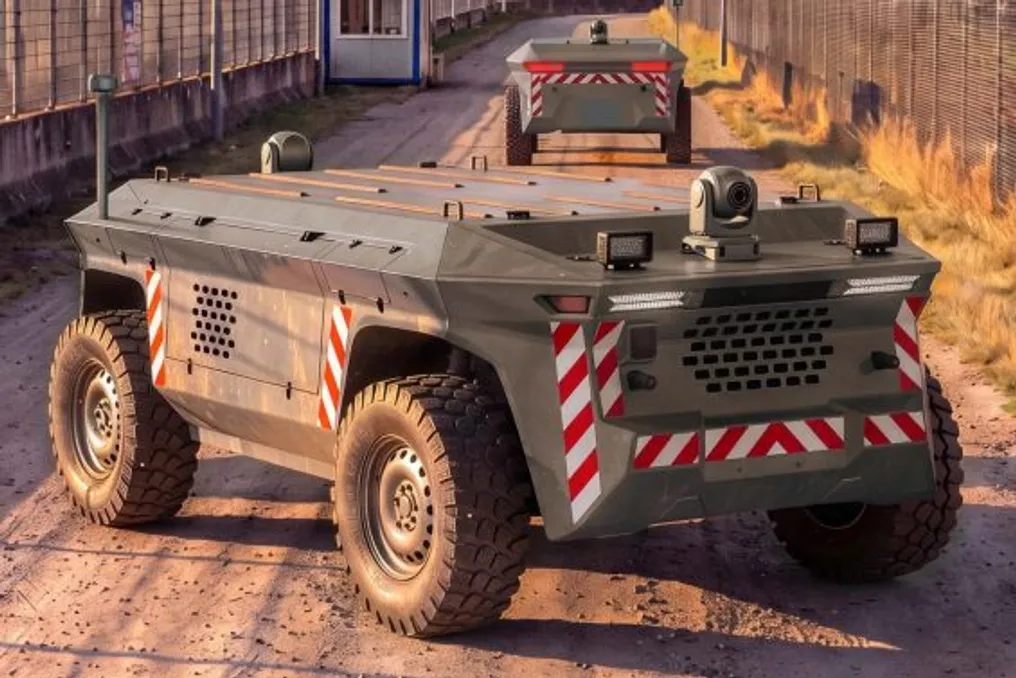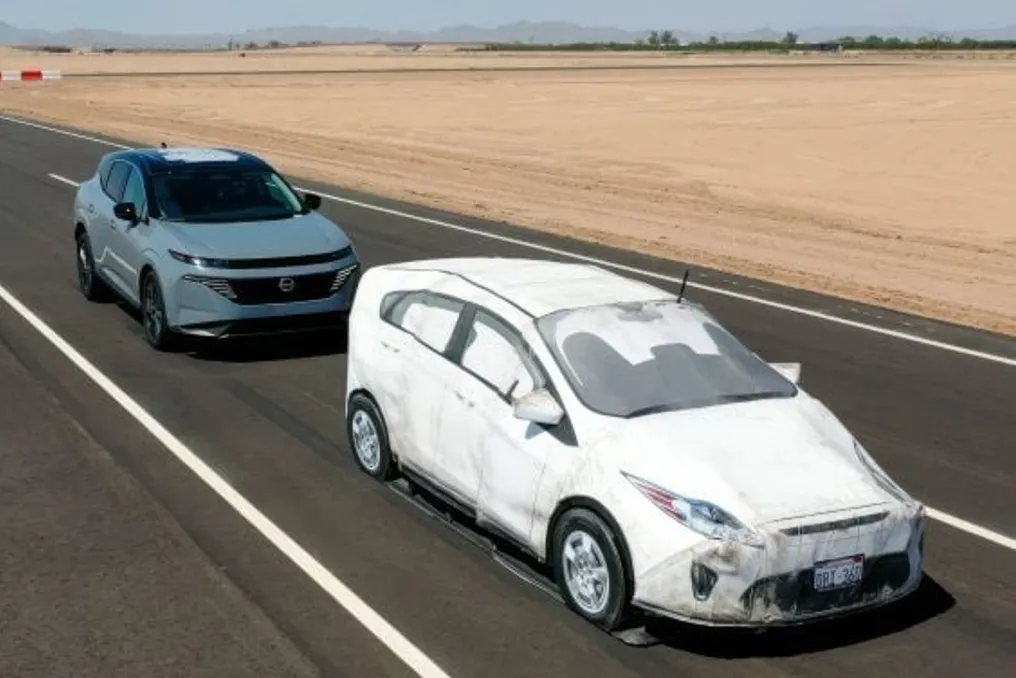
Automatic emergency braking in the newest SUVs continues to fail in a common road situation—when a vehicle pulls out from a side street. This is evidenced by a test conducted by the American Automobile Association (AAA) involving four 2026 models equipped with automatic braking at intersections: Chevrolet Equinox, Ford Explorer, Hyundai Tucson, and Tesla Model Y. A total of 74 simulations were performed on a closed track.
In the most critical scenario, the SUV was traveling straight at approximately 48 km/h when a target vehicle, controlled by a robot and simulating real traffic, pulled out from a perpendicular street at 8 km/h and entered the lane of travel. Only the Tesla Model Y managed to avoid a collision in all attempts, stopping an average of 1.60 m from the target.
The Chevrolet Equinox warned the driver in four out of five instances and braked in one, but collided in all tests, reaching speeds of about 40 km/h. The Ford Explorer and Hyundai Tucson models neither issued an alarm nor braked at all.
During a left turn maneuver in front of oncoming traffic, which has been rated by Euro NCAP (the European equivalent of Latin NCAP) since 2020, all four SUVs signaled, braked, and prevented an accident in every attempt. However, when this maneuver was repeated without the turn signal activated, the Tucson did not react and collided in all cases. According to AAA, the turn signal may be one of the signals required to activate the system.
Greg Brennan, Director of Automotive Engineering and Research at AAA, noted that the technology is only progressing in limited intersection crossing scenarios that are being tested, but its performance remains unstable outside these conditions. Nevertheless, positive momentum is observed: in 2022, vehicles without this feature did not react in any similar test.
AAA recommends treating this function as supplementary protection and keeping a foot on the brake pedal when approaching intersections. In Brazil, where the Equinox is also sold, automatic emergency braking will become mandatory for all new vehicles starting in 2029 by decision of the National Traffic Council (Contran).