DKW Universal celebrates 70 years as one of the first cars manufactured in Brazil
Read more
FlatOut
flatout.com.br

DKW Universal celebrates 70 years as one of the first cars manufactured in Brazil

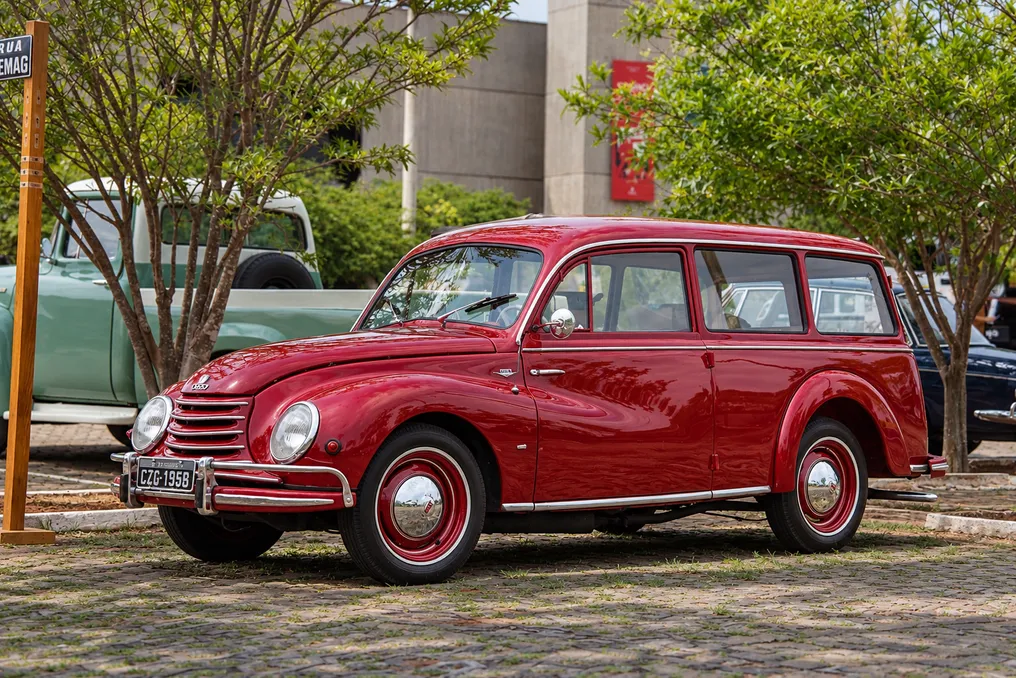
On November 19, 2026, marks seven decades since the DKW Universal left the production line, the van considered the first automobile manufactured in Brazil, thus celebrating the anniversary of the national automotive industry.

When referring to the first Brazilian car, two options arise: the DKW Universal or the Romi Isetta. If the DKW Universal is considered the pioneer, the anniversary is today; however, if the Romi Isetta is chosen, the celebration took place on June 30.

What does it mean to manufacture a car?

The discussion about the beginning of the Brazilian automotive industry is complex, as vehicle assembly had been occurring for decades before 1956. Companies like Ford began operations in the country in 1919, assembling the Model T with imported parts, and General Motors did the same in 1925 with the Chevrolet Superior. In these cases, production followed the CKD (Completely Knocked Down) regime, where vehicles arrived disassembled and were assembled locally.

Technically, these assemblies did not constitute national manufacturing in the modern sense, as the dependence on foreign components was high and there was no established local supply chain. The change began during Getúlio Vargas's second term, with import restrictions and a focus on developing basic industry, such as the creation of Petrobras and the expansion of steelmaking.

The automotive sector needed a specific incentive, which came with Juscelino Kubitschek's government, which prioritized the implementation of a genuinely national industry in its Goals Plan. On June 16, 1956, the Executive Group for the Automotive Industry (GEIA) was established, led by Admiral Lúcio Meira, with the mission to foster the industry and offer governmental benefits, including commitments to progressive nationalization of components.

This context is crucial because the comparison between Romi and Vemag transcends mere chronology. Both companies had distinct projects and related differently to the government industrialization program. Furthermore, the legislation used by GEIA to define a passenger car did not exist when the first Romi Isetta was produced.

The first off the line

The trajectory of the Romi Isetta must be understood within this scenario. It originated from Indústrias Romi, located in Santa Bárbara d’Oeste, inland São Paulo, and founded by Américo Emílio Romi. The company already possessed industrial infrastructure and experience in mechanical machinery.

In the early 1950s, Américo and his stepson, Carlos Chiti, encountered the Iso Isetta, a small car developed by the Italian Iso Autoveicoli. This vehicle was compact, economical, with a rounded body and a single front door, facilitating access for the two occupants. The concept resembled European post-war bubble cars.

After importing two units for evaluation, Romi negotiated production rights directly with Renzo Rivolta, owner of Iso. Although a broader partnership with the Italians did not materialize, Romi assumed the investment, paying royalties for the project. Thus, the Romi Isetta was born, maintaining its original Italian characteristics but being manufactured in Brazil.

The first example left the assembly line on June 30, 1956, a date that the Romi Foundation uses to celebrate the start of automotive production in Brazil. This date precedes the launch of the DKW Universal, which would occur in November of that year. The official launch of the Isetta was on September 5, when the first 16 models produced in Santa Bárbara d’Oeste circulated in São Paulo.

It is important to note that the Romi Isetta was not just a prototype; it entered serial production with a national supply chain. Romi involved about 60 Brazilian suppliers, including for metal parts of the chassis and body. Initially, the two-stroke engine and gearbox were imported from Italy (changing to a four-stroke BMW engine in 1959), installed by Romi in Brazil, along with trim and steering. Romi's production ended in 1961, after about 3,000 units.

The debut of the DKW Universal

While Romi worked on its small car in inland São Paulo, Vemag, whose acronym stands for Agricultural Vehicles and Machinery, was also preparing to produce vehicles in Brazil. The company had entirely Brazilian capital and a history predating the national industry. Its origin dates back to Distribuidora de Automóveis Studebaker, founded in 1945 to represent and assemble American vehicles. In 1952, after merging with Elit Equipamentos para Lavoura e Máquinas Agrícolas, its corporate name was changed to Veículos e Máquinas Agrícolas S.A. (Vemag).

Vemag already accumulated experience in assembling Studebaker vehicles, Scania-Vabis trucks, and Ferguson tractors, possessing industrial structure and a relevant supplier network. The company formed a partnership with the German Auto Union to manufacture DKW vehicles under license. The agreement was signed in November 1955 and provided for the production of a utility van, a jeep, and a cargo van, in addition to a four-door passenger car.

GEIA approved the project on August 20, 1956, through Resolution No. 1, immediately authorizing the manufacture of the van. Vemag became the first company to obtain a nationalization plan approved by GEIA. The time between approval and launch was brief, only three months.

The first model selected for Brazil was the DKW Universal, based on the F91 Universal manufactured in Germany between 1953 and 1955. It is a conventional van, capable of carrying five occupants, with two side doors and a vertically divided rear hatch. Its design was not developed in Brazil; Vemag used a German design, with a license, tools, and technical support from Auto Union.

The presentation of the DKW Universal took place on the day the first unit left the factory, on November 19, 1956, exactly 70 years ago. The Vemag factory was located in Vila Carioca, Ipiranga neighborhood, in São Paulo, and the ceremony was attended by President Juscelino Kubitschek. The model represented a milestone in the implementation of the Brazilian automotive industry, being linked to the GEIA manufacturing program.

The Universal measured 4.12 meters and presented a new mechanical configuration for the Brazilian market of that time. Its engine was a two-stroke three-cylinder, with 903 cm³ and 38 hp, mounted longitudinally at the front, with front-wheel drive and a four-speed manual transmission. The rear seat could be folded down, creating a flat floor capable of carrying up to 440 kg of cargo, making it a compact and versatile van.

Two-stroke engines have an inherently simpler construction than four-stroke engines, dispensing with valves and camshafts. Lubrication was done by mixing oil directly into the gasoline, which resulted in the characteristic bluish smoke from the exhaust. DKW used this aspect in its advertising with the slogan 3=6, suggesting that its three-cylinder two-stroke offered performance comparable to a six-cylinder four-stroke engine.

The first Universal had structural peculiarities that would be adjusted in later versions, such as the side doors opening in the opposite direction to the usual, popularly nicknamed 'suicide doors.' Vemag only changed this mechanism in 1966, already in an advanced stage of production.

However, the first Universal differs from subsequent DKWs because the 1956 unit still depended on imported components, notably the engine, gearbox, differential, and wheels. Its nationalization index, however, was already relevant for the stage of the project. A report from the magazine O Observador Econômico e Financeiro, published in November 1956, indicated that 42% of the weight of the DKW Universal was composed of national items. This list included bodywork, chassis, radiator, electrical and exhaust systems, suspension, linings, rubber and metal trims, as well as tires, batteries, paints, and solvents. Vemag also produced part of these components. The publication added that the company received parts from about 300 Brazilian factories, all operating via subcontracting under rigorous technical control, a much larger supplier network than that of the Romi Isetta. The 42% index, although lower than the 72% of the small car, already exceeded the 40% target established for the end of that year in the industrial plan to which the Universal was tied. Only 68 units were assembled.
Similar stories

Kia Sorento receives positive reviews in the Indian market, showing strong sales figures
Read more
www.aajtak.in

Kia Sorento receives positive reviews in the Indian market, showing strong sales figures

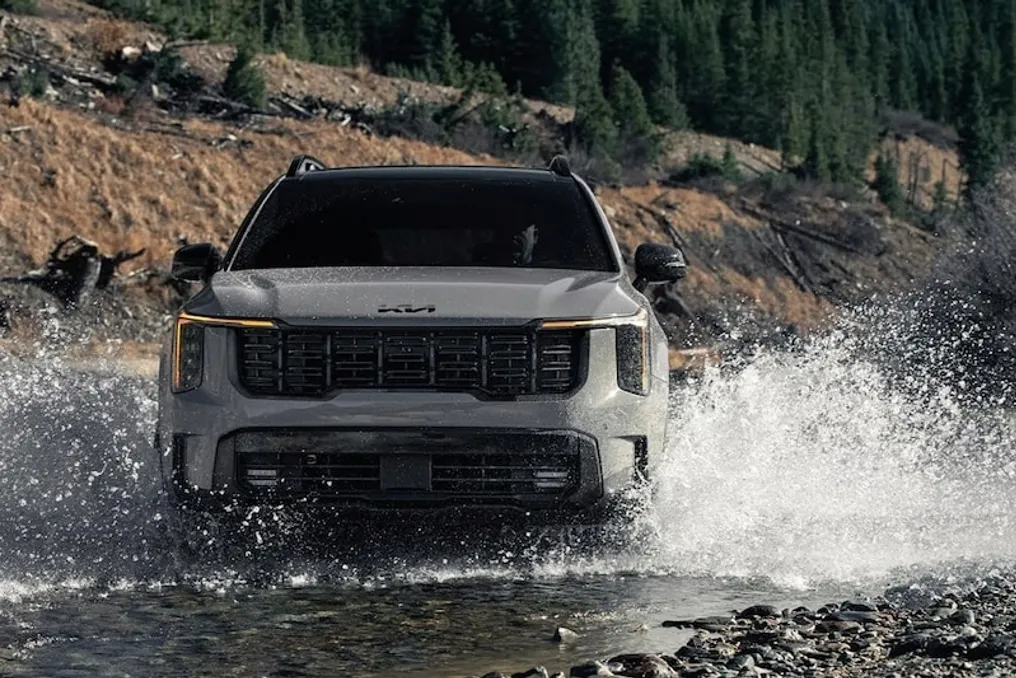
Kia launched its flagship SUV, the Sorento, in the Indian market in September. Despite active discussions leading up to the launch, it is now being assessed how successfully the vehicle has gained popularity among consumers based on sales data.

This vehicle is equipped with premium features, including a hybrid powertrain, Level 2+ ADAS driver assistance system, and all-wheel drive. Initial sales results showed a good response, and the Sorento secured a spot in the list of ten best-selling SUVs between 4.5 and 5.0 meters in length.

According to Kia data, 4,500 units of this vehicle have been delivered so far, and these figures differ from retail sales. The company expects Sorento's share of monthly sales to reach double digits soon. In October, 2,148 units were delivered, accounting for 6.42 percent of Kia's total sales volume.

To support buyers, the company offers various programs. Among them is a guaranteed buyback program, where the buyer will receive 70 percent of the vehicle's value after three years. This scheme may be beneficial for those planning to change or upgrade their vehicle.

Furthermore, Kia announced a premium service program to enhance the customer experience. A key feature of this program is the single point of contact function, which will operate as a premium service consultant for Sorento owners.

The Kia Sorento is available in both diesel and hybrid variants. The diesel version is equipped with a 2.2-liter engine that generates 193 horsepower and 442 Nm of torque, paired with an 8-speed DCT automatic transmission. The hybrid model uses a 1.6-liter turbocharged gasoline engine producing 180 horsepower and an electric motor of 65 horsepower, while the hybrid Sorento is fitted with a 6-speed automatic transmission unit. The claimed fuel consumption for the hybrid version is 19.6 kilometers per liter, and the vehicle has all-wheel drive capability.

The Sorento is the first model in its segment to offer all-wheel drive combined with a hybrid powertrain. The vehicle is equipped with over 85 connected car features, a panoramic sunroof, ventilated front and rear seats, and a 12-speaker audio system. The starting price for the Kia Sorento is 27.99 lakh rupees exclusive, while its hybrid version starts from 29.49 lakh rupees exclusive.

Toyota Hilux 2005 and the revolution of mid-size pickups in the Brazilian market
Read more
flatout.com.br

Toyota Hilux 2005 and the revolution of mid-size pickups in the Brazilian market

The year 1989 was a significant milestone for the Brazilian automotive industry, as it introduced an entirely new vehicle to the national market, unlike mere derivatives of existing sedans, vans, or pickups.

The Chevrolet Kadett emerged as a phenomenon comparable to the Fiat Uno, launched in 1984. Its modern and unusual design generated both surprise and great appreciation. The sporty GS version, packed with comfort and technology features such as a trip computer and rear suspension leveling, was quite impressive. Its superior finish and aesthetics made the Gol, its main competitor, seem like an outdated and inferior vehicle in terms of comfort and overall appearance.

However, the Kadett was not the only highlight of 1989; a blue Gol attracted a lot of attention, competing on equal footing. This Volkswagen compact, designed to have the performance of a mid-sized car, received a two-liter engine, identical to the one used in the brand's larger family car.

The expectation for high performance was immense, but the vehicle actually delivered satisfactory results. Although it did not repeat the extreme accelerations announced by the manufacturer, its performance was robust enough to surpass all other national cars, including the Kadett GS.

Nevertheless, the Gol GTi transcended the mere enhanced look of the Gol GTS and the more powerful engine. By initiating the era of electronic injection in Brazil, the Gol GTi fundamentally changed the prevailing driving rules. The carburetor, which required meticulous maintenance and was frequently mentioned by drivers, gave way to the more efficient and simplified control of electronic injection as the technology matured.

The Gol GTi inaugurated a new phase of modern driving, whose benefits are evident today, in 2026, with the ease of starting the car and driving without failures or sputtering. After this innovation, Fiat introduced the multi-valve cylinder head and the turbo, and the rest of the industry continued to evolve, adapting to the pioneering innovations in the market, already influenced by advanced imported car technologies.

Although this history is known, it is relevant to revisit the fundamentals before analyzing another electronic era, although generally less impactful, but crucial for a specific niche: mid-size pickups. In this segment, there was an equivalent to the 'Gol GTi', a vehicle intended to redefine the standards of its category and guide the evolution of subsequent mid-size pickups. As suggested in the title, this truck is the 2005 Toyota Hilux.

Mid-size trucks in 2005 and the Hilux

Legislation is probably one of the most important transforming factors in the automotive industry. Naturally, all manufacturers seek to create more beautiful, better, more powerful, and more profitable products, as a well-received car generates abundant revenue. However, this success must comply with legal requirements, especially environmental ones.

It is unnecessary to judge whether such measures are positive or negative, or whether they stem from sincere concerns or less noble interests, given that the nature of these regulations is complex, involving economic aspects. However, it is necessary to consider the scenario if the world had followed the path of the 70s, without restrictions on pollutant emissions.

Returning to the topic, the environmental requirements of Proconve L4 forced pickups that emitted large volumes of black smoke to change. Mechanical injection via injection pump was gradually replaced by electronic management and the Common Rail direct injection system.

The 'rail' system is named so because it resembles the shape of a musical instrument, due to the tube that receives diesel from a high-pressure pump. The pressurized fuel is distributed to the injectors through this tube, with the electronics controlling the timing, duration, and amount of diesel for each nozzle. Furthermore, the system allows for pre-injections and post-injections in the same engine cycle, with the former being responsible for smoothing combustion and reducing noise. The finer atomization of diesel aids in reducing smoke and pollutants, classifying the engine as a 'clean' diesel and compliant with the new, stricter environmental standards.

The manufacturer that first introduced this technology and made a good impression would gain an early advantage with the pickup public. It became clear that the era of electronic pickups was inevitable, generating fierce competition among the first to adopt the new technology.

The first pickup in this new group with common rail electronic injection, displaying the 'Electronic' badge on the tailgate, was the Ford Ranger, launched in February 2005. Externally, nothing indicated the new heart besides the mentioned stickers and the '3.0' signaling the new displacement. The Power Stroke 3.0 Electronic replaced the old mechanical Maxion/International HS 2.8, which was a popular model among enthusiasts of the time, as it surpassed the MWM of the S10 and Nissan Frontier by 3 hp, a highly praised engine, despite having a certain delay in power delivery before 1,800 rpm.

The difference of 3 hp between engines of similar displacement may seem insignificant, but the sector was experiencing intense commercial dispute, where any advantage was amplified by brand marketing. The 135 hp of the Maxion engine were raised to 163 hp in the 3-liter MWM International. It is important to note that the Power Stroke differs from the Sprint in architecture, number of valves, and injection systems.

With 163 hp, the Ranger received a major benefit: the engine was larger and significantly more powerful than those of its competitors. The increase in torque, smooth operation, and efficiency provided by the electronics elevated the utility vehicle to a new level.

To illustrate the quality of this new Ranger, the author reports participating in the Mercosur Rally in 2005, invited by Quatro Rodas magazine. Ford provided three Rangers for the event: two electronic ones, a novelty, and one 2.8-liter mechanical one. Witnessing the performance of the electronic Ranger with experienced Rally Paris-Dakar pilots, he could confirm its strength on the roads.

The pickup easily overtook traffic, maintained acceleration on inclines even when loaded, and exhibited high speed on any surface, whether dirt or asphalt. On a long descent on a dirt road, the speedometer registered 190 km/h (probably more than 170 km/h actual), and the driver enjoyed the high-speed driving. During the most difficult dirt sections, the 2.8 Ranger was preferred for offering more constant torque. He observed that the electronics behaved more like a car than a rustic truck, being quieter and delivering power at higher revolutions.

In a direct comparison, on flat terrain near Buenos Aires, a double-cab S10 2.8 reached about 180 km/h on the dashboard (just over 160 km/h on GPS), a good result for a diesel utility vehicle from over twenty years ago, but considerably inferior to the performance of the new Ranger.

Calling it a 'new Ranger' might be an exaggeration, as externally it maintained the traditional mid-size pickup design, and the cabin preserved the basic dimensions of the model introduced in the country in the 90s. The interior was simple and dated. However, since competitors also did not offer more space, these limitations were little noticed, and the Ranger, thanks to its mechanical improvement, became the desire of most Brazilian pickup owners.

This dominance, however, was brief. Less than a month later, the seventh-generation Toyota Hilux was launched, a completely new model in terms of external design, internal space, and overall behavior compared to existing mid-size pickups.

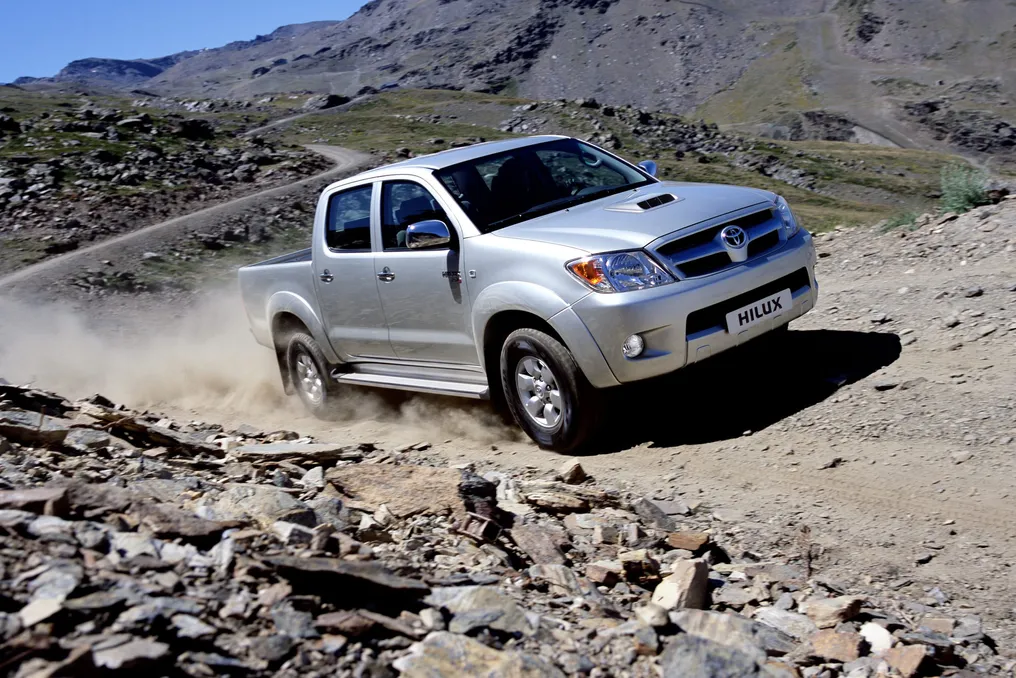
Its engine was unprecedented and, naturally, already electronic. The 3.0-liter D-4D had the same displacement and power as its main rival's engine: 163 hp. The torque was 35 kgfm, slightly below the Ford's 38.7 kgfm, which was the only disadvantage of the Hilux. In all other aspects, it was a technological leap: the design was aligned with the expectations of the new millennium, leaving the 90s behind. The interior silence, the rear seat space, and the dynamic behavior (which at the time was superior to all) recalled a large luxury sedan. The rear doors of the 2005 Hilux demonstrate this advantage, with wide and smooth panels and generously sized windows in height and width, highlighting the superior space and comfort for the driver and passenger.

Besides the modern aesthetics, a differential of the Hilux was the availability of an automatic transmission in the top-of-the-line SRV version. Although Mitsubishi already offered this option in the L200 Sport since 2003, Toyota improved the experience with a peculiar gear selector, similar to that of Mercedes-Benz, with a serrated path and positions defined on side steps. With a little adaptation, the driver perceived the gear or function just by touch, without needing to look at the lever or dashboard. This represented a big difference compared to the long and firmly engaging, but somewhat rough, levers of other manual pickups, offering car comfort in urban traffic.

It is no wonder that the advertising slogan was 'Total Revolution', and this phrase was not an exaggeration. Behind the wheel, the pickup charmed with its excellent ergonomics and updated dashboard; the engine was exceptional, with the soft whistle of the turbo being the predominant sound of the four-cylinder engine.

}, {
Fiat Tempra: How Betim demonstrated the capacity to produce large vehicles
Read more
autopapo.com.br

Fiat Tempra: How Betim demonstrated the capacity to produce large vehicles

The Fiat Tempra was introduced in Europe in 1990 and later arrived in the Brazilian market in November 1991. This imposing sedan marked Fiat's entry into the segment of larger and more luxurious cars, an area previously dominated by models such as the Chevrolet Monza and the Volkswagen Santana. The Italian brand presented a design that was simultaneously modern, attractive, functional, and aerodynamic, surpassing its competitors.

The high and robust rear housed a large trunk with 552 liters, facilitating access to luggage through its lid. The doors featured an innovative construction characteristic, curving at the top and integrating with the roof, which aided the vehicle's aerodynamics, achieving a notable drag coefficient (Cx) of 0.32 at the time.

In terms of mechanics, the engine and transmission were transversely mounted at the front. The 2.0 engine featured dual overhead camshafts, hemispherical combustion chambers, and centralized ignition spark plugs. Despite this refined engineering, the Fiat engine delivered only 99 hp of maximum power, a value that coincided with the tax payment limit for a specific bracket, as an increase of just one hp would elevate the car to a more burdensome tax category.

The transmission, always manual, offered five quick and precise shifts. The suspension system was advanced, being independent on all four wheels. However, the rear used a different solution than that employed in the European model, as the assembly chosen for the Brazilian Tempra provided greater resistance to handle the conditions of local roads and streets. This rear suspension also conferred greater handling sensitivity, requiring smooth and cautious steering movements near the adhesion limit to prevent the rear from losing control.

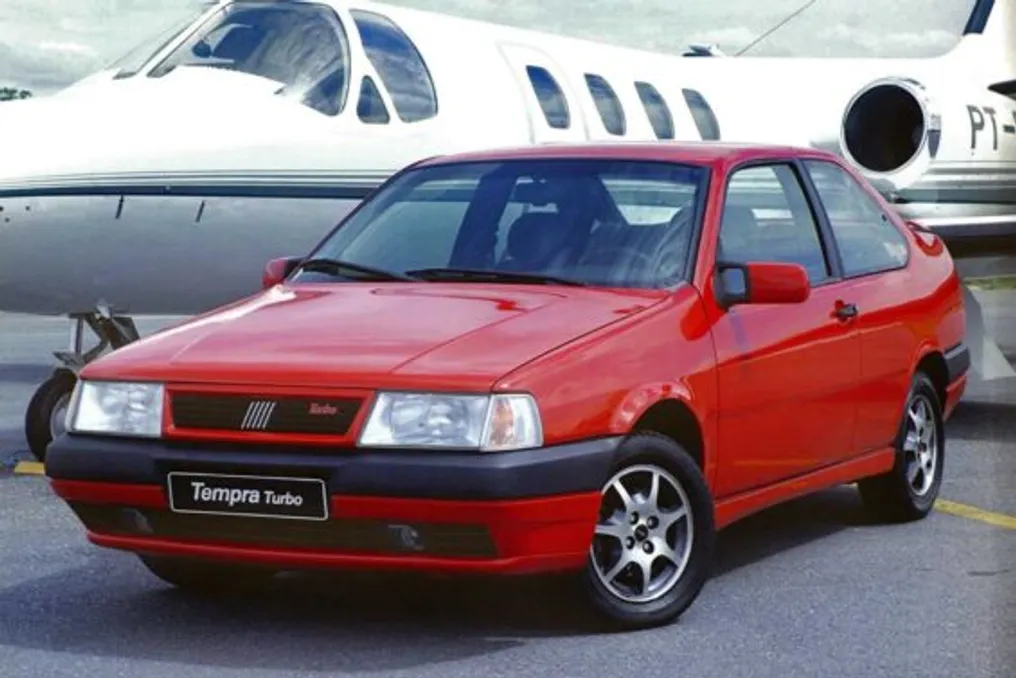
Initially launched in Brazil only in the four-door sedan version, the Tempra gained a two-door configuration, affectionately nicknamed 'coupe' due to the slope of the rear pillars. This sportier variant was made available in the Brazilian market in 1992, already under the 1993 model year.

In 1994, the wagon version of the Tempra appeared, equipped with a 2.0 engine and multi-point injection. It is important to note that this configuration, called Tempra SW, was imported from Italy, as its sales volume was estimated to be too small to justify domestic production.

Throughout its trajectory, the Tempra introduced constant innovations for the Brazilian consumer. In 1994, the market received the four-door sedan, the two-door coupe, and the SW family version. Mechanically, the Tempra pioneered in Brazil by incorporating a 16-valve head. Again, coincidence or not, this new 16-valve engine generated 127 hp, approaching an important tax threshold of the time. In the first half of 1994, the Turbo version of the Tempra was also launched, which maintained the eight-valve engine but produced 165 hp, offering impressive performance for a Fiat sedan and making it the fastest national car in the Brazilian market during that period.

Production of the Fiat Tempra in Brazil continued until the end of 1998, when it was succeeded by the Fiat Marea, available in sedan and wagon versions, both with four doors. During these seven years of manufacturing, just over 204 thousand units of the national Tempra were produced, including the two- and four-door versions. The wagon imported from Italy was not included in this total due to low sales volume in the country. On average, about 30 thousand Tempras were sold annually during the national production period, a modest number compared to higher-volume models, but relevant for a segment where Fiat had just entered.

Popular