Representatives of Portuguese branches of two international environmental organizations called today for the final COP31 agreement to reinclude a commitment to phasing out fossil fuels and promoting financing following the publication of the latest draft final text.
The Director of Greenpeace Portugal, Toni Melajoki Roseiro, told Lusa that the new document represents an 'open door for the fossil fuel industry to continue burning our future.' Bianca Mattos, Coordinator for Policy and Climate at WWF Portugal, also informed Lusa that the most important point excluded from the text was the 'mention of transitioning away from fossil fuels,' emphasizing that 'this decision was made in Dubai' at COP28 in 2023.
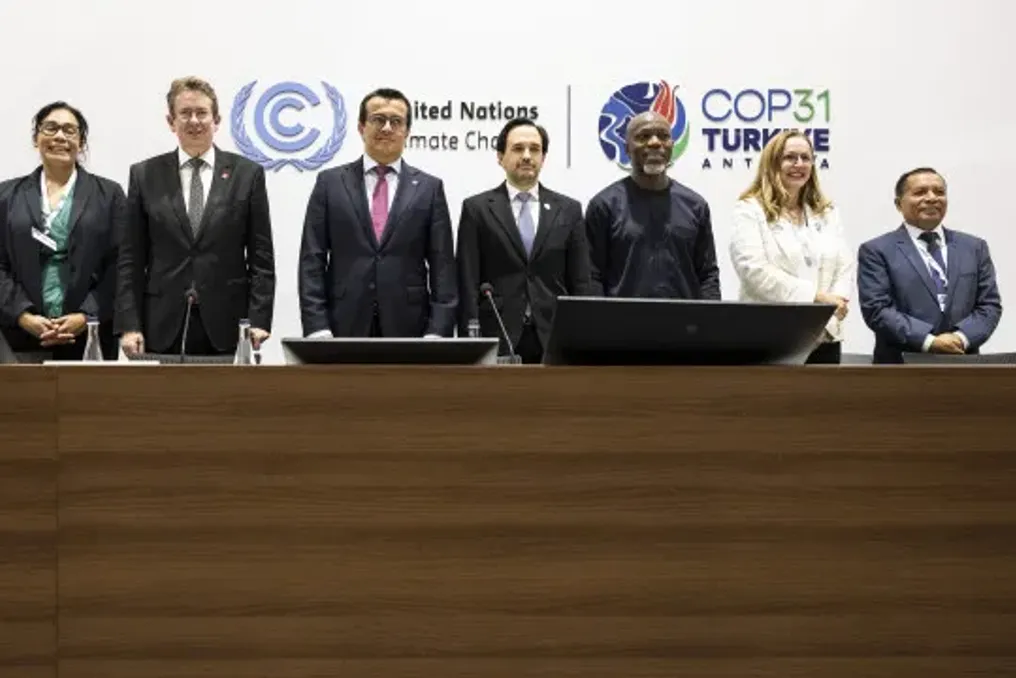
Bianca Mattos further noted that progress must be made within the agreed frameworks, insisting on the introduction of mandatory development of national roadmaps for each country, which were also absent in the second draft. The publication of the second version of the document under the summit's chairmanship marked the beginning of the final stage of negotiations in Antalya, Turkey, where nearly two hundred countries aim to reach a consensus before the scheduled close on Friday.
Both organizations also criticized the wording of the goal to increase the share of electricity in final energy consumption to 35% globally by 2035. Greenpeace Portugal insisted that this goal should be linked to the 'actual cessation of oil and gas use,' while Bianca Mattos considered the goal weakened because 'it is no longer binding, but voluntary.'
The WWF Portugal representative also pointed out the lack of progress in climate change adaptation financing and called on COP31 chairpersons to present a more substantive document. She stated: 'Everyone acknowledges that this should be a COP of implementation, but it ends up being an empty document in this way.'
Toni Melajoki Roseiro reminded that 'Portugal has announced a roadmap for phasing out fossil fuels' and supported the position that the Portuguese government and the European Union should reject the text that retains references to 'false solutions such as carbon capture and storage.' The Director of Greenpeace Portugal added: 'Only those who live in Portugal know that diplomatic loopholes do not stop storms, floods, and fires.'
Toni Melajoki Roseiro also urged the Portuguese delegation to demand the exclusion of 'any mention of carbon capture' and the inclusion of a 'clear commitment to phasing out fossil fuels, already with a horizon until 2040.' He stressed: 'The Portuguese delegation must demand that the final COP31 text excludes any mention of carbon capture, adopts a clear commitment to phasing out fossil fuels, already with a horizon until 2040, and also guarantees tripling financing for climate adaptation, making major polluters pay the bill.'
COP31, which is set to conclude on Friday, is focused on moving from commitments to actions, particularly in phasing out the use of fossil fuels, which was explicitly mentioned in the first version of the conclusions but subsequently removed. Fossil fuels, such as oil, coal, and gas, are no longer featured in the draft final text of the UN climate conference published today, although they were present in the previous version.
The text contains a call to increase the share of electricity in final energy consumption to 35% globally by 2035. This goal does not specify the source of electricity and is presented as a supplement to efforts to triple the global renewable energy production potential and double the annual rate of energy efficiency improvement by 2030. This latest version of the final text appears on the eve of the UN climate conference concluding in Antalya, Turkey. Electrification is one of the priorities of the Turkish COP31 chairmanship, which initially intended to offer this goal to countries wishing to join voluntarily. At COP28, held in Dubai in 2023, countries committed to starting the transition away from fossil fuels. Since then, negotiations on this issue have stalled, as producing countries oppose references to these energy sources, whose use is the main cause of global warming caused by human activity.