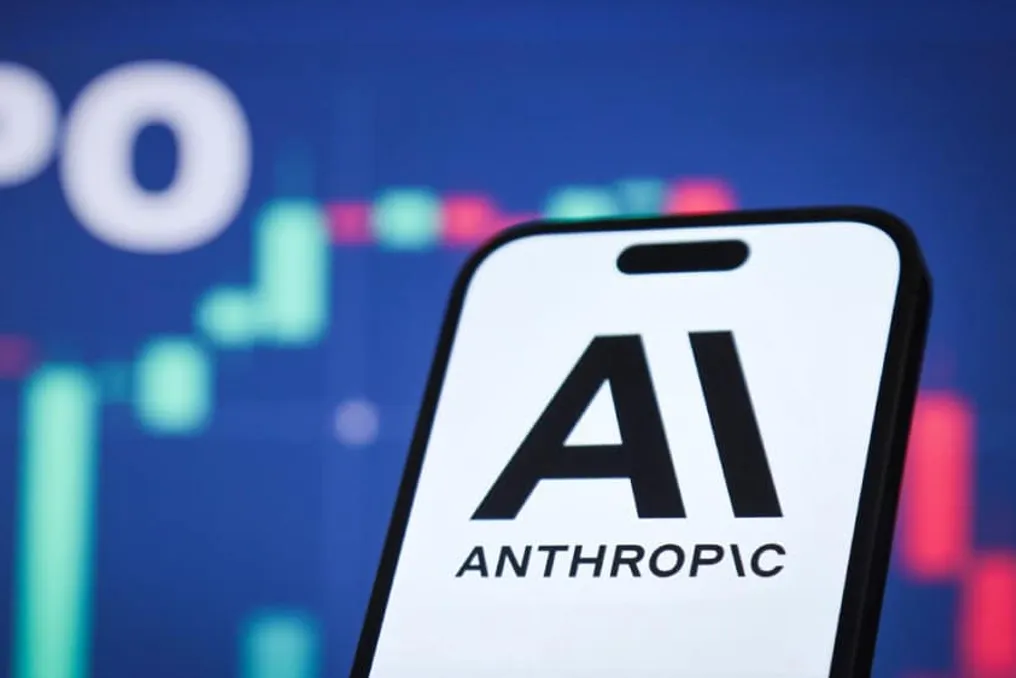
Anthropic's Nasdaq Debut Registers Largest IPO in History and Raises Questions About the AI Bubble
Read more
Olhar Digital
olhardigital.com.br

Anthropic's Nasdaq Debut Registers Largest IPO in History and Raises Questions About the AI Bubble

Until Wednesday, the 18th, investment in artificial intelligence (AI) was concentrated on acquiring shares of large technology companies, such as Nvidia and Microsoft. However, Anthropic's entry into the American stock exchange Nasdaq this Thursday, the 19th, changes this scenario, allowing 'pure machine intelligence' to be traded directly on the stock market.

This IPO serves as an indicator to assess whether the rapid expansion of AI is generating real profits or fueling a speculative bubble. By closing its trading at US$ 83 (equivalent to approximately R$ 490), the developer of Claude surpassed even SpaceX, setting a record for the largest initial public offering in history.

For Álvaro Machado Dias, a professor at Unifesp, neuroscientist, and futurist, this IPO signals a 'transition to a model where pure machine intelligence is accessible to investors,' characterizing a significant change that demonstrates a 'very important maturity' of the market.

Conversely, Arthur Igreja, a specialist in technology and innovation, emphasizes that the sector is still in the construction phase of AI, with high levels of investment and business models in the process of maturing, whose profitability may take time to materialize.

Álvaro Machado Dias also considers the IPO of Dario Amodei's company as a test to verify the existence of a bubble in AI, although not obviously so. According to him, the initial public offering suggests that any existing bubble will be transient.

Arthur Igreja attributes Anthropic's leadership to distinct characteristics compared to other companies in the sector. Its main differentiator lies in being strongly focused on the corporate market, possessing a robust B2B presence, code development through Claude Code, and integration capabilities.

Igreja clarifies that Anthropic is not limited to being just a conversational tool for the end-user, as is predominantly the case with OpenAI, Gemini, or Copilot. Álvaro Machado Dias adds that Anthropic's strategy aims to 'create a better product,' rather than just adopting superficial tactics or momentary positioning.

Kenneth Corrêa, an AI specialist and professor at FGV, observed that Anthropic can anticipate OpenAI because it has a history that the financial market can price: revenue from companies. However, Corrêa points out that the real risk lies in the nearly US$ 900 billion in computing commitments, comparable to a long-term factory lease contract based on quarterly orders.

He warns that for the average consumer, nothing will change this Thursday. The effects will be felt later, manifesting less in subscription value and more in usage limits, the discontinuation of older models, and the introduction of optimized versions for lower cost per task, such as Opus 5.5, which costs about 40% less per task than Opus 5, as detailed in the prospectus.

The Brazilian Stock Exchange (B3) made a BDR (Brazilian Depositary Receipt) available shortly after the initial public offering in the United States, priced below R$ 100. Thalita Forne, Superintendent of Listed Products at B3, explains that the benefit for the Brazilian investor is the possibility of trading the BDR in reais, since the company's foreign debut, using their local broker, without needing to open international accounts or make remittances.

Forne defines the BDR as a mechanism that allows the acquisition, in national currency, of an asset representing shares of a company listed outside Brazil, stating that the objective is to 'democratize access.' She adds that making the BDR available for less than R$ 100 expands the reach of this investment opportunity to a much larger audience, and this proximity between the Brazilian investor and global markets is an area of operation for B3.

For those who wish to invest in Anthropic, the BDR can be acquired using the code ANTH34.
Similar stories

Anthropic's Initial Public Offering Tests Wall Street's Confidence in the AI Boom
Read more
cgtn.com

Anthropic's Initial Public Offering Tests Wall Street's Confidence in the AI Boom

Anthropic demonstrated an impressive valuation of around $2 trillion upon its debut on Nasdaq on Thursday, surpassing SpaceX's listing in June. This stock market entry concluded a challenging period for the artificial intelligence sector, which had cast doubt on Wall Street's appetite for this technology.

However, initial enthusiasm began to wane, foreshadowing volatility as investors took profits and major indices declined amid renewed concerns about the sector's prospects.

The shares of the six-year-old company opened at $111.50, 34% higher than the $83 IPO price set on Wednesday. Nevertheless, during the day, the shares reduced their growth and closed at $97.17, which still represents a 17% increase compared to the IPO price.

The fully diluted valuation of the company, including stock options and restricted shares promised to employees, reached approximately $2 trillion. However, based on the number of outstanding shares, the market value peaked at about $1.5 trillion on Thursday.

This debut comes against a backdrop of cooling interest in AI-related stocks in recent weeks. Investors are increasingly questioning whether rising valuations and massive computational infrastructure costs can translate into sustainable profits.

Bob O'Donnell, lead analyst at TECHnalysis Research, noted: 'Anthropic's blockbuster launch is a critical step in calming the market regarding AI potential, but it is only the beginning. We still have to see what happens with OpenAI, how the situation with Nvidia develops, how the political climate for data centers will form, and what Anthropic's historical dynamics will show before we feel real stability.'

A New Benchmark for AI Companies

As the first advanced AI company to go public, Anthropic is poised to become a benchmark for the entire sector. The company sold 980 million shares at $83 each, exceeding its initial IPO range of $70 to $78.

The IPO revenue could reach up to $93.5 billion if underwriters fully exercise their right to purchase additional shares. Currently, this amount exceeds $107 billion, including an additional $26 billion raised through a private placement. Investors in this private placement included AMD, Broadcom, Google, Micron, Microsoft, Nvidia, and TSMC.

The IPO will also lead to the creation of thousands of paper millionaires and several billionaires among employees and early investors. According to Reuters calculations based on documentation details, the stake held by co-founders, including CEO Dario Amodei, and his six co-founders accounts for about 10% of the company and is valued at nearly $150 billion.

Profits vs. Costs

Under the leadership of Amodei, a former OpenAI employee, Anthropic positions itself as a guardian of AI safety while simultaneously trying to convince investors that its business can be profitable despite colossal computing costs.

The company's net loss decreased in the third quarter as revenue grew by 47% compared to the previous quarter, even with a sharp slowdown in growth compared to the prior quarter. The company has nearly $900 billion in commitments for computing power with partners such as Amazon and Google from Alphabet.

Amodei told CNBC in an interview on Thursday: 'At some point in the future, we hope to reach an investment level, and debt is a tool available to us, and we would like to use it in the future.'

Meanwhile, debates are intensifying over whether the AI boom is becoming a bubble, as rising valuations and a network of cyclical deals involving AI developers, chip manufacturers, cloud providers, and investors fuel questions about the industry's longevity.

Talli Leger, Chief Market Strategist at The Wealth Consulting Group, believes that Anthropic is not a sensible opportunity for retail clients looking to 'buy at any price,' noting that buyers of high-profile tech IPOs on the first day of trading historically performed worse than broader market indices over a three-year period.

Anthropic debuts on Nasdaq with rising shares, attracting significant investor interest
Read more
olhardigital.com.br

Anthropic debuts on Nasdaq with rising shares, attracting significant investor interest

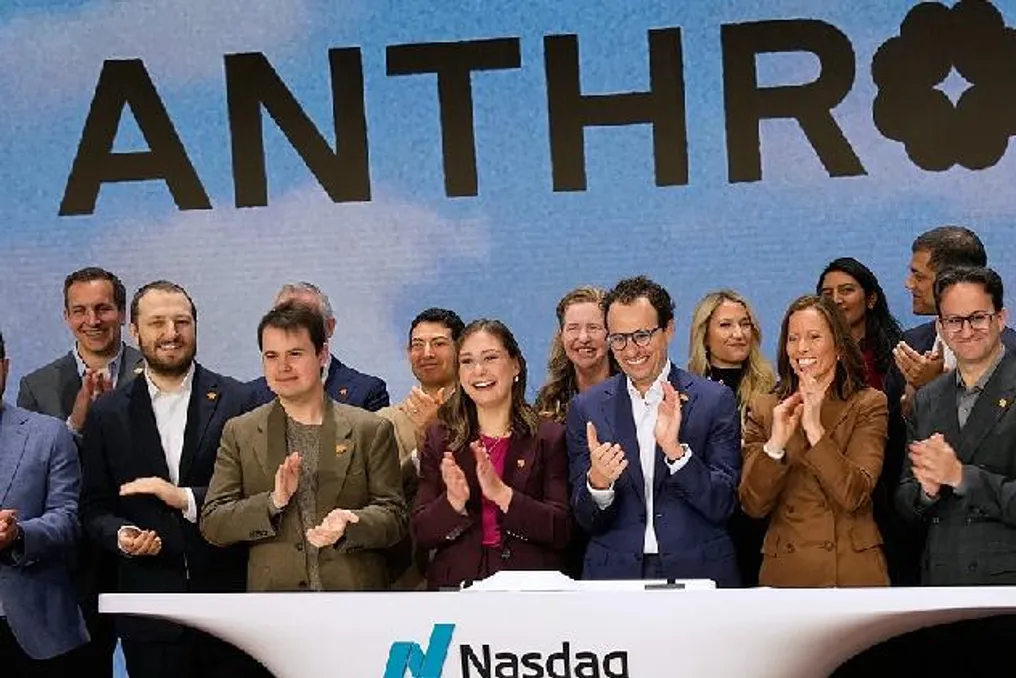
Anthropic made its debut on the Nasdaq this Thursday, the 19th, marking one of the most anticipated Initial Public Offerings (IPOs) in the artificial intelligence segment. The company chose to set its share price above the initially projected range, driven by considerable interest shown by investors.

This launch occurs amid a general appreciation of AI-related companies, although persistent concerns remain about how this technology will affect labor markets and businesses in general.

The established value for each share was US$ 83 (equivalent to R$ 473.10), surpassing the initial estimate which ranged between US$ 70 and US$ 78 (R$ 399 to R$ 444.60). Initial trading quotes reached US$ 103 (R$ 587.10), indicating very strong demand for the stock.

Recognized as Yahoo Finance's Company of the Year for 2026, Anthropic demonstrated accelerated growth, with its quarterly revenue being twelve times higher than in the same period last year. In the first nine months of 2026, sales already exceeded the mark of US$ 33 billion (R$ 188.1 billion).

This expansion is also visible in the corporate client base. There was a notable increase in the number of corporations investing more than US$ 100 thousand (R$ 570 thousand) in the company, comparing December 2025 with September of the current year. Furthermore, Anthropic reports improvements in computational efficiency, resulting in higher revenue per dollar invested in infrastructure.

The growth rate attracted the attention of Arun Sundararajan, a professor at New York University, who highlighted the absence of historical precedents for a company achieving such success in such a short time. Despite these positive results, Anthropic competes with giants like OpenAI, Google, and Meta, and still deals with debates about the risks of AI in employment and system security.

In parallel, vulnerabilities detected with the aid of AI are moving the digital security sector. According to Yahoo Finance data, the National Vulnerability Database registered nearly 17,500 new software flaws in October alone, representing about four times the volume recorded the previous year. The cumulative total for 2026 has already exceeded 100 thousand, surpassing the sum of records from 2024 and 2025.

Ben Emons, from FedWatch Advisors, coined the term 'Patchpocalypse' to describe this phenomenon, referring to the large volume of flaws found by AI and the consequent need for fixes, which in turn can generate new problems.

Before the opening bell, CEO Dario Amodei addressed topics of AI safety. Meanwhile, President Daniela Amodei advocated for the inclusion of society in decisions regarding the use of the technology and mentioned that more than half of the companies listed in the Fortune 500 use Claude.

Popular