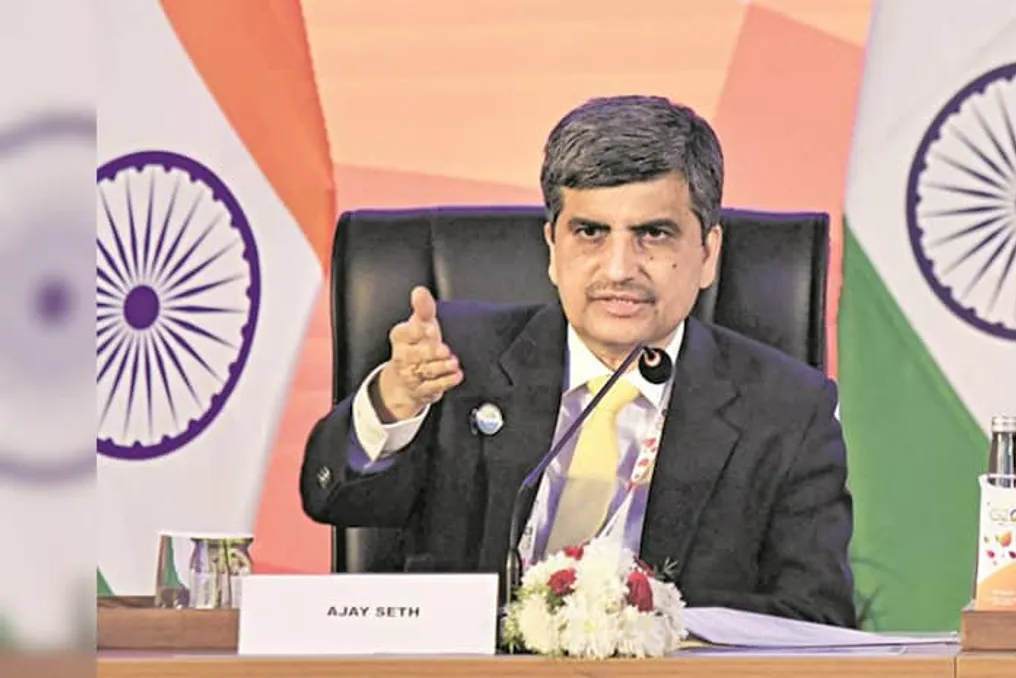
The Chairman of the Insurance Regulatory and Development Authority of India (IRDAI), Ajay Seth, issued a warning against market participants using technology to impose charges on consumers by requesting personal information even before providing a price quote. He cautioned that such methods could undermine consumer interests.
Seth noted that while technology has increased efficiency and simplified service delivery, some practices made possible by it may not be in the interest of the economy and insurers. He emphasized that consumers must have the ability to view and compare products and prices without disclosing personal data in advance. Furthermore, he pointed to potential conflicts of interest arising from business models where organizations offer multiple services.
He stated that such situations could negatively affect the quality of advice and services offered to clients. Seth stressed the role of company boards in ensuring that such conflicts do not impede the protection of policyholders' interests. He emphasized: 'The role of the board becomes more important... to ensure that these conflicts of interest do not hinder the provision of the best advice, best service, best product to customers.'
IRDAI is working on creating a Public Insurance Register that will help consumers access information about insurance products, insurers, their market behavior, and distributors. Seth clarified that this initiative will focus on data governance rather than creating a centralized database, with minimal centralization of information. He also called for providing summaries in simple language in local languages explaining policy coverage, exclusions, and refund conditions.
Regarding product accessibility, Seth insisted on the necessity of offering insurance products for different income levels. He explained that a larger risk pool allows insurers to manage risks more effectively, whereas a smaller pool typically makes products more expensive.
He also highlighted the need to improve operational efficiency and transition to Indian Accounting Standards (Ind AS) to enhance the transparency of financial reporting. This transition could create an opportunity to align a risk-based capital system with these standards, allowing for more efficient capital utilization.
Seth drew attention to the growing use of Artificial Intelligence (AI) in the insurance sector: according to a recent study by a group of experts led by Sandeep Kumar Shukla, Director of the International Institute of Information Technology Hyderabad, about 85 percent of insurers use this technology in some form. While AI opens up opportunities for innovation and efficiency, its expanded application in underwriting and claims settlement carries new risks. Insurers must ensure that models are properly trained considering India's economic conditions, policyholder behavior, and associated risks. He added that human oversight in final decision-making is equally important.
Seth stated that IRDAI plans to establish two industry working groups within the next 10 days to enhance the transparency of medical claim processing and standardize performance indicators among insurers. These groups will be formed under the Insurance Advisory Committee after the creation of a subcommittee. One group will examine ways to ensure real-time visibility of the medical insurance process, including pre-authorization, hospital discharge, and claims settlement. The other group will focus on developing standardized performance metrics for claims and complaint resolution to allow for comparison between insurers.
Questioning the industry's reliance on claims settlement ratios, Seth noted that this frequently used metric, which is largely based on the number of decisions made on claims, does not necessarily reflect policyholder experience. Figures can include fully paid, partially paid, rejected, or closed claims. In Seth's view, what matters more to policyholders is whether the insurer paid the full claimed amount, rather than just the number of settled claims.
IRDAI desires insurers to compete on the quality of products, timeliness of claims settlement, and complaint handling, supported by common definitions and disclosure. Seth also identified shortcomings in the industry's grievance redressal mechanism, noting that about 60 percent of complaints reviewed by senior executives of insurance companies are resolved in favor of policyholders. Similarly, about 60 percent of remaining cases reviewed by insurance ombudsmen are also decided in favor of policyholders. He advised insurers to view complaints as feedback for improving product development, sales practices, claims decisions, and customer service, rather than merely as cases to be settled. Seth also pointed out delays in claims processing caused by repeated requests for documentation. He recommended that insurers proactively communicate documentation requirements to minimize subsequent requests and delays.