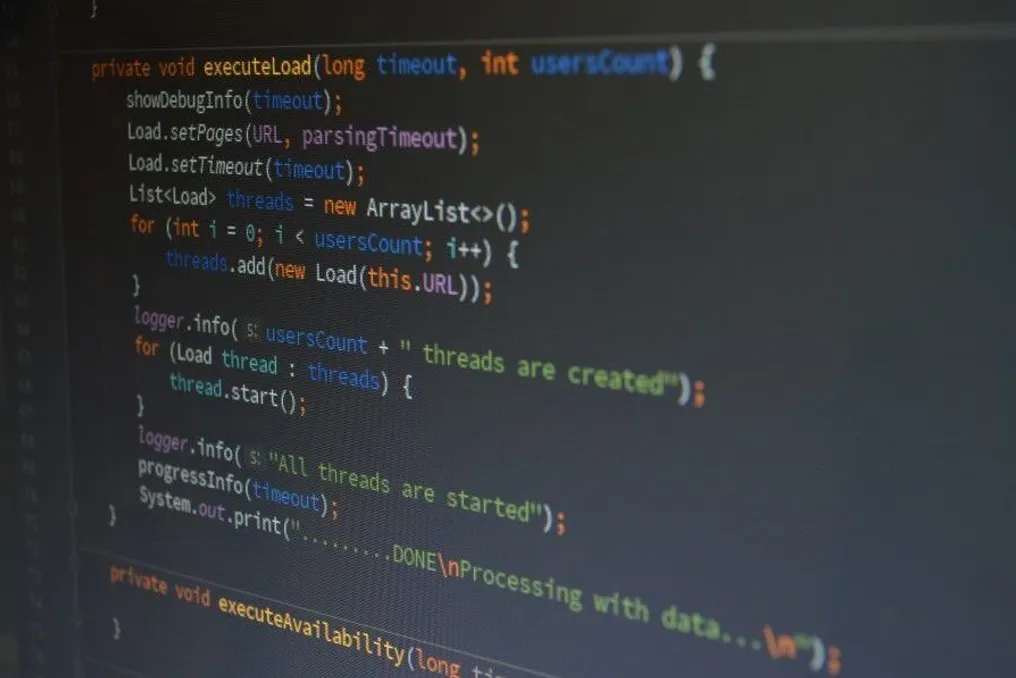
Artificial intelligence has helped researchers discover a critical vulnerability in Java, a programming language used in systems of approximately 90% of companies on the Fortune 500 list. This vulnerability, named Java4Shell, potentially allows attackers to gain unauthorized remote access to internal systems.
The discovery was announced on Tuesday (17) by Calif, a cybersecurity startup, which utilized OpenAI's GPT-6 Cyber model designed for digital security research. According to the company, the vulnerability was found in Java's Base64 decoder, a component responsible for converting specific binary data into text.
The issue attracted attention due to its potential scale. Java is used in banks, hospitals, airlines, technology companies, and government agencies, including those related to national security. Bruce Dang, a senior researcher at Calif, stated that 'Java is the beating heart of the modern economy,' and suggested that almost all large companies would be affected by this vulnerability.
This finding also highlights a shift in the digital security sector: AI tools are accelerating the detection of software bugs, a pace that may challenge the work of system protection specialists.
In recent days, Calif has been working to coordinate the disclosure of the vulnerability with governments and technology companies. These efforts have involved countries in the Five Eyes intelligence-sharing alliance: the United States, Canada, Australia, New Zealand, and the United Kingdom. Companies such as Google and Microsoft were also notified. Oracle, which owns the Java brand and provides commercial licenses for the language, released a security update on Tuesday.
The U.S. Cybersecurity and Infrastructure Security Agency (CISA) also published a warning recommending that organizations immediately install the fix. Google stated that after receiving information about the vulnerability, it implemented protective measures and updates in its services, and developed detection mechanisms to check for exploit usage, publishing guidelines for customers.
It is unclear whether temporary outages in the U.S. National Security Agency (NSA) network on Tuesday are related to the fix. The Times reported that the agency did not respond to a request for comment on this matter.
This discovery is the second major vulnerability identified by Calif using OpenAI models in recent weeks. Last month, the startup discovered serious flaws in PHP, a programming language used in approximately 70% of websites and applications on the internet. This incident triggered an international mobilization to patch vulnerable systems before criminals could exploit them.
At that time, government bodies, including the NSA, recommended that companies take their sites offline if they could not immediately apply the necessary patches. Despite initial concerns, the consequences turned out to be less severe than predicted, as hackers were unable to easily reproduce the attack method.
The difference is that Java is present at a broader level of digital infrastructure. In addition to standard applications, this language supports cloud computing services, identity and authentication systems, and mail platforms.
Thai Duong, CEO of Calif, noted that the vulnerability is not as simple to turn into an attack, giving companies and developers more time to apply fixes. Nevertheless, he warned that such errors can remain a threat for years; systems that do not receive updates over the next five to ten years may remain susceptible to this problem.
This case also demonstrates how AI is changing the dynamics of cybersecurity. Advanced models help researchers find code issues and develop exploit demonstrations in much less time than previously required. This can help defensive teams identify vulnerabilities sooner than criminals. On the other hand, the same tools can reduce the effort needed to create sophisticated digital attacks.
Ollie Whitehouse, CTO of the UK's National Cyber Security Centre, stated that AI is already being used to detect a growing number of software and digital service vulnerabilities. However, there is concern that the technology is also facilitating the activities of malicious actors. This week, the FBI issued a warning about hackers allegedly using autonomous AI tools to attack government agencies and companies in various countries.
Fouad Matin, head of research and cybersecurity at OpenAI, stated that Calif's research shows how AI can help specialists find serious errors in software used by millions of people. He added that collaboration between researchers and developers can make critical systems more secure.
The progress of AI in cybersecurity is reminiscent of World Chess Champion Garry Kasparov's prediction after his defeat by IBM's Deep Blue nearly 30 years ago. At that time, Kasparov suggested that the best games would be played in a combination of human and computer, a concept known as centaur, after the mythical creature combining a human and a horse. For years, players combining human abilities and computational power were considered the strongest in chess. Now, the same idea is beginning to emerge in digital security, where researchers and AI tools work together to find and exploit vulnerabilities.
Calif and other teams have already demonstrated that small groups of experts can develop attacks that previously required months of work from large, highly specialized hacker teams, in just hours or days. According to Thai Duong, the startup's CEO, AI may soon be able to develop complex attacks autonomously. 'I don't know how much time we have—maybe three months, maybe three years. But right now, the best hacker is a centaur hacker,' he told The Times.