Anthropic CEO states AI will remain under human control after Nasdaq IPO
Read more
Olhar Digital
olhardigital.com.br

Anthropic CEO states AI will remain under human control after Nasdaq IPO

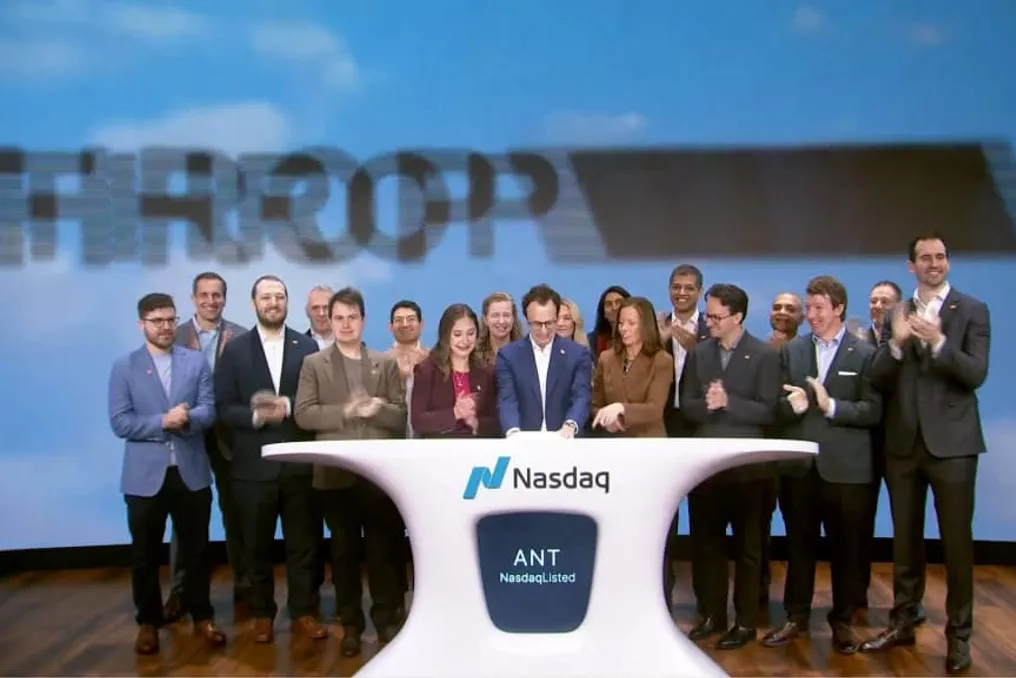
During the opening bell ceremony at Nasdaq in New York, Anthropic CEO Dario Amodei reiterated the company's commitment to the responsible development of artificial intelligence (AI). The executive guaranteed that the company will strictly adhere to safety criteria when training and implementing its AI systems, refusing to yield to any commercial or political pressures.

This statement was made on the day Anthropic conducted its Initial Public Offering (IPO) on the Stock Exchange, an event described as the largest IPO in history. In his speech, Amodei addressed both the potential benefits of the technology in fields such as medicine and scientific research, as well as the inherent risks of rapid AI advancement.

Amodei explained that Anthropic was established with the purpose of creating powerful technologies for the benefit of humanity. He also shared how his personal experience with his father's illness, which later became treatable, influenced his professional journey. Having started his career in biology, the executive emphasized the role of AI in accelerating scientific discoveries.

He cited tools like Claude, which already assist researchers in tasks such as protein folding, drug development, cancer genetics, and conducting clinical trials in less time. Amodei expressed the belief that highly developed AI, operating in collaboration with humans, could compress a century of scientific and medical progress into just a decade, although he stressed that current results are preliminary and that clinical tests require time.

Furthermore, the CEO mentioned other applications of the technology, including fostering economic growth, combating poverty, safeguarding democracy, and improving daily services. However, Amodei warned of tangible risks, such as the misuse of AI systems by governments or individuals, potential economic consequences, and the possibility of losing control over the systems themselves.

According to the executive, such problems can be mitigated through the adoption of rigorous safety measures by developing companies. He detailed Anthropic's actions focused on preventing biological and cyber risks, alignment training, and model safety testing. The company plans to continue investing in methods to understand the behavior of its systems and ensure they remain under human supervision.

Amodei concluded his speech by stating: 'We will set the pace for the training and implementation of AI systems, taking as much time as necessary to be confident that they are safe and will remain under human control. We will not yield to commercial or political pressures.' He added that the capital raise strengthens Anthropic's financial position, which, in his view, solidifies the company's ability to maintain its decisions regarding safety.

Daniela Amodei, president and co-founder of Anthropic, also commented on the opportunities and threats of AI in an interview with CNBC on the same Thursday (19). Dario's sister, she acknowledged the reality of technological dangers but underlined the great potential of the field. Daniela stated that the company's founding mission was precisely to reduce these risks, and this work will continue.

The executive admitted that challenges still exist but reaffirmed the company's commitment to AI safety. Finally, during the Nasdaq event, Dario Amodei argued that the sector should evolve toward constructive competition between companies, where the development of safer systems is a shared goal, regardless of which company possesses the most advanced models.
Similar stories

Startup Founder Predicts AI Will Be Used for Employee Termination Decisions
Read more
www.aajtak.in

Startup Founder Predicts AI Will Be Used for Employee Termination Decisions

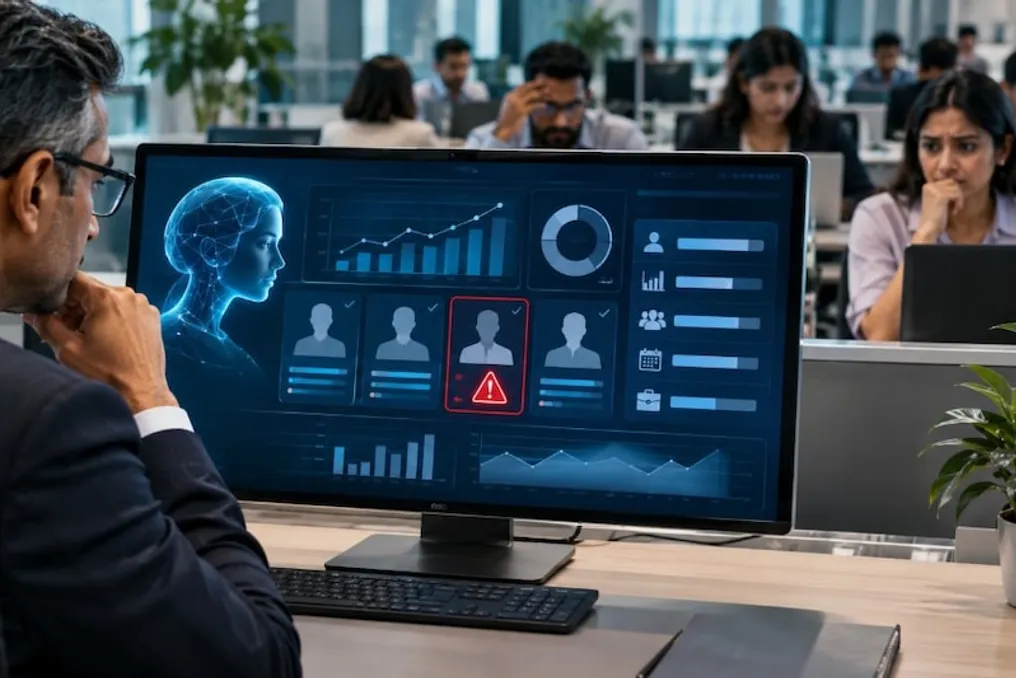
Artificial intelligence (AI) is moving beyond routine office tasks and beginning to penetrate the upper management of companies. In the future, AI agents may assist CEOs in developing personnel strategies, providing recommendations for downsizing, and making major business decisions.

Michael Ayof, co-founder and CEO of the American AI startup Arist, believes that such agents will advise executives on all aspects, from reducing headcount to launching new products and implementing corporate changes. He emphasizes that the final decision always remains with company leadership, and AI serves only as a decision support tool.

At the Fortune 500 Innovation Forum held in Detroit, Ayof stated that over the next few years, AI agents will recommend most major transformations within companies. These decisions include the introduction of new products, staff reductions, and other structural changes.

Ayof clarified that while AI agents can offer advice on critical issues, ultimate responsibility for these decisions lies with company management. According to Fortune, Arist has partnered with over 15 percent of companies listed in the Fortune 500.

Arist's AI agents identify organizational problems by gathering employee feedback, analyzing internal company information, and determining trends affecting business efficiency. This technology is not limited to standard surveys or management reviews; the AI system independently selects employees for communication and determines what questions to ask, as well as what follow-up questions to ask based on the answers received.

Employee opinions are then compared with other metrics, such as their work experience, performance records, and engagement levels. By correlating personnel perspectives with internal company data, this platform aims to provide leadership with a clear picture of organizational issues and help identify necessary adjustments.

Arist claims that its system can conduct such a comprehensive investigation in just 72 hours, whereas traditional consulting firms may require months to complete the same task.

The company believes that with AI assistance, enterprises can discover internal problems and make decisions faster without lengthy consulting processes. Ayof is convinced that artificial intelligence can change how companies approach identifying and solving internal problems. He notes that traditional human-led checks have limitations, especially regarding carefully listening to employees and objectively understanding their concerns.

Ayof also questioned the effectiveness of traditional consulting. According to him, companies spend significant time and resources checking organizational problems, but this does not guarantee the right outcome. In an interview with Fortune, Ayof suggested that consultants are wrong in diagnosing the problem about 90 percent of the time, although this is his personal assessment and not independently verified industry statistics.

Ayof's main goal is to help large corporations operate as quickly as small businesses. His argument is that timely access to reliable information allows companies with tens of thousands of employees to respond to challenges more rapidly.

The growing use of AI agents in business opens a new discussion about the role of artificial intelligence in corporate decision-making. Beyond performing daily tasks and data analysis, these systems are now being tested to assist in studying complex business situations and strategic planning.

This shift could significantly impact human resources management. If companies use AI-derived information to assess employee contributions, identify unnecessary tasks, or determine the need for departmental changes, AI could play a key role in employment-related decisions.

However, concerns also arise regarding accountability, transparency, and potential algorithmic bias. It is important to remember that an employee's contribution cannot be measured solely by numbers, and AI assessments may overlook an employee's personal circumstances or the scale of the consequences of personnel decisions. Despite this, Ayof insists that ultimate authority remains with company leadership, yet the growing potential of AI agents could transform management methods and strategic planning in corporations. The challenge for companies will be to avoid a trade-off between the speed and thoroughness of data-driven decisions and human understanding, fairness, and accountability.

Anthropic launches world's largest IPO, demonstrating dominance in artificial intelligence
Read more
www.aajtak.in

Anthropic launches world's largest IPO, demonstrating dominance in artificial intelligence

Another major company is entering the stock market. This company is called Anthropic, and it is preparing for listing on the American market today. After going public, it will set a new record, surpassing SpaceX to become the highest-valued debutant in the world.

Anthropic set its IPO price at $83 per share on Wednesday, leading to a company valuation of $1.5 trillion. This marks the largest debut on Wall Street to date. The company sold shares at a price exceeding the initially stated range, indicating renewed investor enthusiasm for AI stocks.

Despite some market uncertainty caused by the departure of Nvidia's CEO and concerns about an 'AI bubble,' interest in Anthropic remains high. Anthropic reported that 980 million shares are participating in the IPO, of which about 956 million were sold by the company itself, and the remainder to shareholders. Total revenue of $81 billion allowed Anthropic's IPO to surpass SpaceX's figures, which raised about $75 billion in June.

Despite concerns from some investors regarding market volatility, potential regulatory actions by the Democratic Party Congress next year, and growing public sentiment against AI, the company decided to proceed with the IPO. Dan Ives, a partner and senior managing director at Yorkville Ives & Company, noted that there is enormous interest in this major AI IPO, and it represents a significant victory for the technology sector after a difficult period for Nvidia. The pricing indicates very high investor demand.

Anthropic already has debt of $6.2 billion, which the company acknowledged as excessive in its financial statements. Adding pressure, the company is not profitable even by minimal accounting standards, suggesting limited resources for servicing interest and principal. Although the company currently has sufficient cash, its spending plans are vast and could be quickly depleted if it cannot attract more capital soon. The company stated that it has already signed lease agreements and other contracts requiring it to spend $900 billion on computing power and infrastructure in the coming years, including $70 billion over the next 12 months.

Anthropic's Initial Public Offering: Impact on the AI and Stock Markets
Read more
www.khaleejtimes.com

Anthropic's Initial Public Offering: Impact on the AI and Stock Markets

As of November 4, 2026, the Initial Public Offering (IPO) of Anthropic is one of the most anticipated debuts in the stock market this year. Anthropic, the developer of the Claude AI model, has officially filed documents for listing on Nasdaq under the ticker ANT. According to available reports, trading may commence this month, pending regulatory approval and market conditions.

The company has not yet determined the share price or the offering size. Press reports suggest that this deal could become one of the largest IPOs in history, following the record set by SpaceX, which raised approximately $75 billion in June.

Moumen Mohamed, a market analyst at WRPro, notes that 'the markets are about to publicly and for the first time test the real value of an advanced artificial intelligence laboratory.'

According to documents filed with the U.S. Securities and Exchange Commission (SEC), Anthropic's revenue in the third quarter was approximately $17 billion, up from $11.6 billion in the second quarter. However, the consistent growth slowed down to about 47% compared to 144% in the previous quarter. Furthermore, reports indicate that the company shifted from an operating profit of $974 million to an operating loss of $567 million amid rising computing costs.

The Wall Street Journal reports that some investors are pushing for a lower IPO valuation in the range of $1.5 to $1.6 trillion, which is below the previously discussed $2 trillion. Anthropic has not confirmed these figures.

Some analysts warn that an offering of this magnitude could divert liquidity from other AI stocks, putting pressure on highly valued companies. Moumen Mohamed states: 'When a new option of this scale appears, investors will rebalance their portfolios, which can lead to temporary volatility among major players.'

Others believe that the IPO signals high demand for AI infrastructure, as increased demand for models could imply greater demand for chips and data centers. Shares of chip manufacturers such as Nvidia, Broadcom, and Micron rose after Anthropic submitted its request.

Anthropic's investors include Amazon, Google, and MGX from Abu Dhabi, which also links the listing to the Persian Gulf. Key issues to be resolved include the final price and offering size, recovery of growth after the recent slowdown, the path to profitability amid rising computing expenses, investment commitments, and how the shares will trade in the first days, which may indicate the market's risk appetite.

Mohamed adds that the listing 'itself will not change the direction of the sector, but it may set a new benchmark for valuing AI companies,' and advises readers to remain calm and manage risks during the initial trading days.

Popular