Bust of Kazakh writer Rakhmetolla Raimkulov opened in Tashkent region
Read more
Nuz.uz
nuz.uz

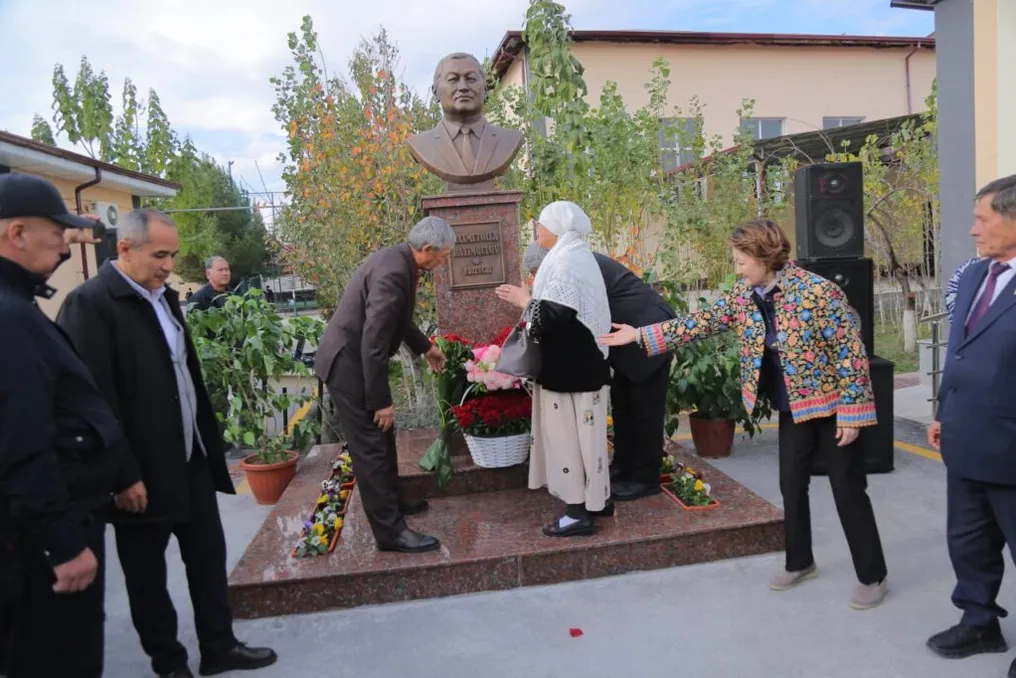
Bust of Kazakh writer Rakhmetolla Raimkulov opened in Tashkent region

On November 19, a bust of Kazakh writer Rakhmetolla Raimkulov was unveiled in the village of Karamanas, Bostanlyk district, Tashkent region. The monument was installed on the territory of School No. 34, which has now been renamed after him.

The bust was created by Uzbek sculptor Nodir Usmanov, and the writer's family provided support for the project's implementation. Representatives from diplomatic and state structures of Uzbekistan and Kazakhstan, as well as writers, members of the creative intelligentsia, Raimkulov's relatives, teachers, and students were invited to the solemn ceremony.

Rakhmetolla Raimkulov was born in 1913 in the same village of Karamanas. He is recognized as a writer, playwright, translator, and public figure whose work contributed to the development of literary contacts between Uzbekistan and Kazakhstan.

The decision to name School No. 34 after the writer was made by order of President Shavkat Mirziyoyev and took place in September 2026. The naming ceremony was timed to coincide with the first Forum of Writers of Kazakhstan and Uzbekistan and was held on September 2.

Raimkulov was often called 'the eagle figure of two countries,' which emphasizes his significance as an outstanding figure for both nations. The opening of this bust is seen as another contribution to preserving the writer's literary heritage and strengthening cultural ties between Uzbekistan and Kazakhstan.
Similar stories

Sarmyshay Petroglyphs in Uzbekistan are preparing for inclusion in the UNESCO World Heritage List
Read more
podrobno.uz

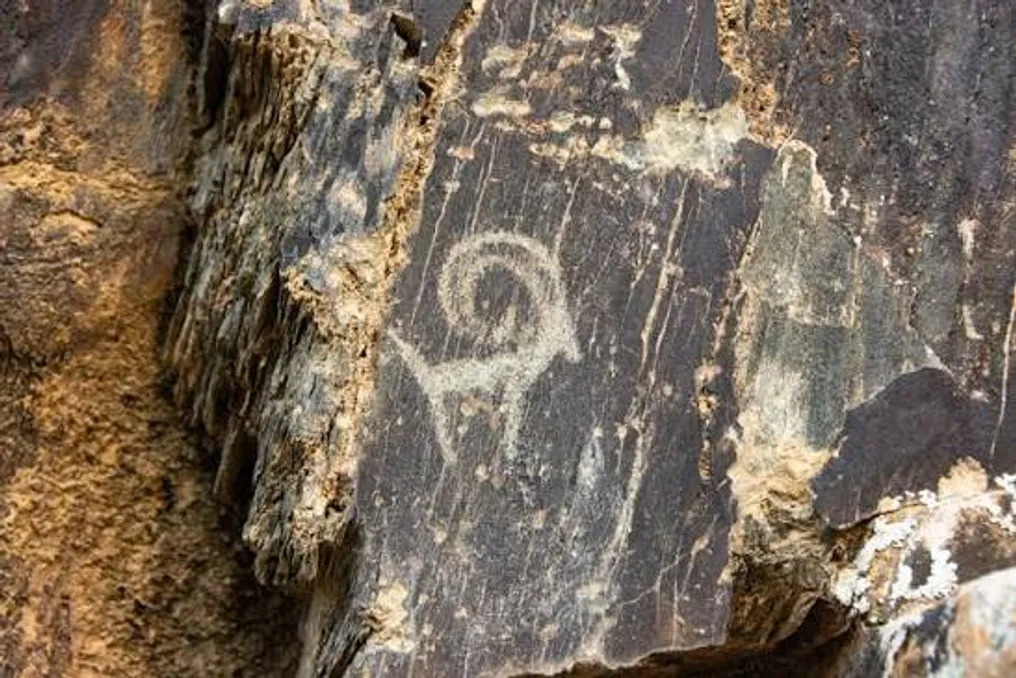
Sarmyshay Petroglyphs in Uzbekistan are preparing for inclusion in the UNESCO World Heritage List

Uzbekistan is preparing the necessary documentation to nominate the Sarmyshay petroglyphs for the UNESCO World Heritage List. This well-known rock art monument of the country is considered an object possessing both cultural and natural value.

The nomination for 'Sarmyshay Petroglyphs' was discussed during an online meeting organized by the Permanent Representation of Uzbekistan to UNESCO. Benjamin Smith, President of the International Committee for Rock Art of ICOMOS, as well as a professor of archaeology from the University of Western Australia, participated in the discussion.

Representatives from several Uzbek structures joined the dialogue: the National Commission of Uzbekistan for UNESCO Affairs, the Fund for the Development of Culture and Arts, the Agency for Cultural Heritage, the National Committee on Ecology and Climate Change, and the Khokimiyat of Navoi Region.

Sarmyshay, located in the Navoi Region, is recognized as one of the largest rock art sites in Uzbekistan. The petroglyphs in this area reflect various historical periods and hold high significance for the study of Central Asian cultural heritage.

One of the central issues was considering the possibility of submitting an application for Sarmyshay as a mixed World Heritage site. This approach would allow for the consideration of not only ancient drawings but also the unique natural characteristics of the area.

According to Benjamin Smith, this monument possesses significant historical and cultural potential, and previous research confirms its importance for the future nomination. However, a further study of the region's natural features is required to formalize the mixed nomination.

Experts also closely examined the UNESCO criteria required for granting World Heritage status. Topics discussed included conducting a comparative analysis with similar sites, defining precise boundaries and protection zones, and developing a long-term management and preservation plan for the petroglyphs.

As a result of the meeting, participants agreed to continue joint work on the dossier, exchange scientific data, and conduct additional consultations with international experts. The preparation of all materials will be carried out in accordance with UNESCO standards and international norms in the field of cultural heritage protection.

Previously, 4.2 billion soums were allocated from the state budget to improve the tourist and protective infrastructure of Sarmyshay. These funds allowed for the construction of two entrances, the erection of information centers, the laying of a 2.5-kilometer pedestrian path to the petroglyphs, and the installation of lighting, shelters, and a video surveillance system. Additionally, 1.2 billion soums from the Agency for Cultural Heritage Fund were directed towards creating a visitor center and a control point.

Scientists from Uzbekistan and China have begun excavations of an ancient settlement in the Namangan region
Read more
podrobno.uz

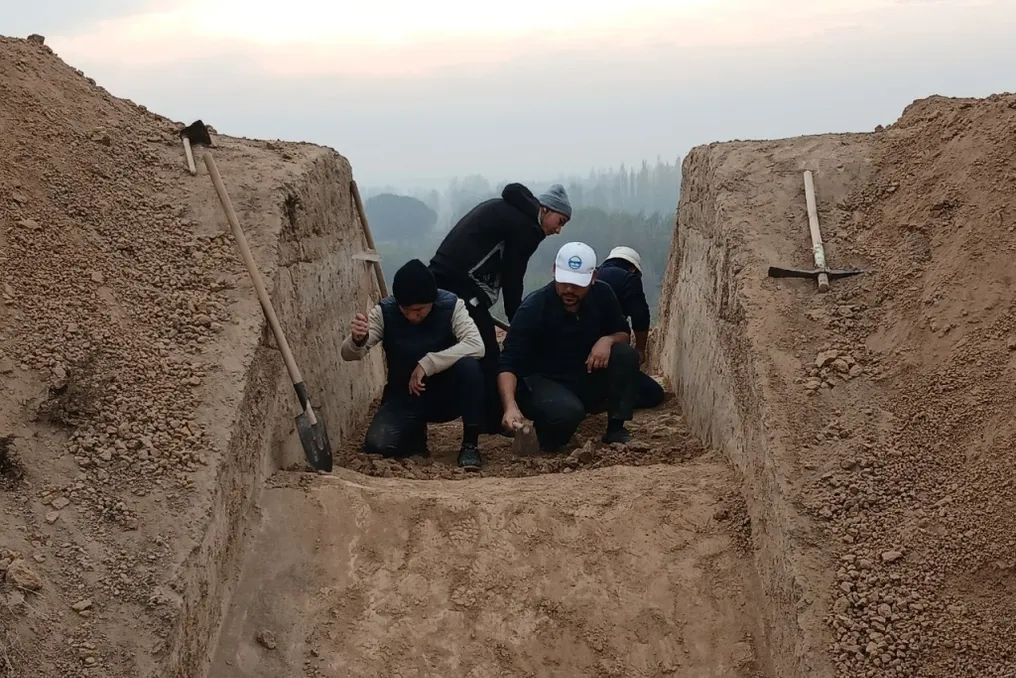
Scientists from Uzbekistan and China have begun excavations of an ancient settlement in the Namangan region

Archaeological surveys are underway at the ruins of the ancient settlement of Kyrkkhujra in the Papsky district of the Namangan region. The goal of the work is to determine the external appearance of the city in the past and the way of life of its former inhabitants.

Specialists from the Institute of Anthropology of the Academy of Sciences of Uzbekistan, as well as employees of the Institute of Archaeology of the Chinese Academy of Social Sciences, are participating in this scientific expedition. Additionally, lecturers and students from Namangan State University are involved in the work.

Leadership and Composition of the Expedition

The research is supervised by Doctor of Historical Sciences, Professor Abdulhamid Anarbayev. He is assisted by his Chinese colleagues Liu Tao, Ai Aisa, and Wang Xin.

The excavations were organized in four different areas. Archaeologists focused on the citadel, which represents the core of the settlement, as well as its northern and western sectors.

During the work, specialists are finding many artifacts, including old pottery, everyday objects, and building remains. These discoveries will serve as a basis for determining the stages of settlement development, the features of its urban planning, and the daily life of the local population.

According to the researchers, the results of this expedition will provide fresh data on Kyrkkhujra, its architectural features, and the lifestyle of people in ancient times. Moreover, new findings contribute to a deeper understanding of the history of the current Namangan region.

It is worth noting that previously, archaeologists found petroglyphs in the Koshrabad district of the Samarkand region, which likely date back to the Mesolithic and Neolithic periods, as well as traces of Bronze Age settlements in the Nuratinsky range mountains.

Popular