Brazilians can invest in Anthropic through BDRs for about R$ 60
Read more
Olhar Digital
olhardigital.com.br

Brazilians can invest in Anthropic through BDRs for about R$ 60

Brazilian citizens now have the opportunity to invest in Anthropic, an artificial intelligence company whose shares began trading on the Brazilian Stock Exchange this Thursday, the 19th. This trading occurs through Brazilian Depositary Receipts (BDRs) at an approximate cost of R$ 60.

This operation was launched concurrently with the AI company's debut on the Nasdaq in the United States, allowing investors in Brazil to have a stake in the company without needing to invest directly in the international market.

The receipts are available on B3 under the code ANTH34 and can be bought in reais, using the platforms of accredited brokers. This initiative accompanies Anthropic's IPO in the US, where each share was priced at US$ 83, which was equivalent to about R$ 482 at the closing price on Wednesday, the 18th.

The product offered by B3 has a 1:8 parity, meaning that each Anthropic share traded on Nasdaq corresponds to eight BDRs in the Brazilian market. The term BDR refers to Brazilian Depositary Receipt and represents foreign securities traded within the national territory.

With BDRs, investors can access international corporations without the bureaucracy of opening accounts abroad, making international transfers, or executing direct currency exchange operations. To acquire Anthropic receipts, one must have an account with an authorized financial institution or brokerage, accessing the home broker or investment platform to search for the code ANTH34 and submit the purchase order.

The acquisition process is similar to that used for trading Brazilian stocks, ETFs, and other BDRs listed on the exchange, with all steps completed in Brazil and in local currency, without the requirement of conversion to dollars.

Luiz Masagão, Vice President of Products and Clients at B3, highlighted that the introduction of Anthropic receipts expands the reach of national investors to global companies focused on innovation. He stated that the launch of the Anthropic BDR, coinciding with the IPO in the United States, reinforces B3's role in facilitating Brazilian investors' access to world innovation companies at an affordable cost, strengthening diversification opportunities through the domestic market.

Anthropic now joins a group of international companies that already have BDRs on the Brazilian stock exchange. This group includes companies from sectors such as technology, entertainment, and consumer goods, citing examples like SpaceX, Apple, Microsoft, Amazon, Alphabet, Meta, Tesla, Netflix, Disney, Coca-Cola, and McDonald's.

Despite the ease of investing in these assets in the national market, B3 warns that BDRs carry risks that must be evaluated before purchase. The value of the receipts is subject to fluctuations in the shares traded abroad and to currency changes, which also impact their value in Brazil. Additionally, these assets are subject to international market instability.

The stock exchange emphasizes that such movements can generate an even more pronounced effect in cases of growth and technology companies, such as Anthropic. To help investors gain more knowledge about this type of investment, B3 provides financial education content, including a free course on the B3 Education platform about BDRs, detailing the operation, modalities, and crucial points of attention for those interested in international assets.

Similar stories

Vivo negotiates purchase of Vero for estimated value of R$ 6.3 billion
Read more
tecnoblog.net

Vivo negotiates purchase of Vero for estimated value of R$ 6.3 billion

Telefônica Brasil, the owner of Vivo, is in negotiations to acquire the internet provider Vero. The operation is being valued at approximately one billion euros, which is equivalent to about R$ 6.3 billion, according to reports from the Spanish newspaper Expansión. Discussions with Vero's shareholders are centered on this amount.

The talks primarily involve Vinci Partners and Warburg Pincus, the managers responsible for controlling about 60% of Vero. Specifically, Vinci Partners holds approximately 37.5% of the shares, while the American fund Warburg Pincus owns the other 22.5%.

Information about this potential acquisition began circulating last month. Vero is established as the sixth largest fixed broadband provider in Brazil, with about 1.2 million customers. Its coverage spans 425 municipalities located in seven Brazilian states: Rio Grande do Sul, Santa Catarina, Paraná, São Paulo, Minas Gerais, Mato Grosso do Sul, and Goiás. The company's infrastructure reaches approximately 7.2 million residences.

The completion of this purchase would significantly strengthen Vivo's presence in the South and Southeast regions. According to data from the ranking of the largest broadband operators, Telefônica Brasil had about 8.5 million fixed internet accesses in August 2026. With the inclusion of Vero's customer base, this number would rise to approximately 9.8 million, still remaining below Claro, which registered 10.8 million accesses.

In addition to fiber offerings, Vero operates as a mobile virtual network operator (MVNO), utilizing TIM's infrastructure to provide cell phone plans. By the end of September, the company registered about 420,000 mobile customers, representing a 56.4% increase compared to the previous year.

This possible transaction occurs amid mixed financial results for the Brazilian provider. In the third quarter of 2026, Vero reported a net loss of R$ 3.7 million, reversing the profit of R$ 12.2 million achieved in the same period the previous year, according to Teletime. Net revenue fell by 3.3% year-on-year, reaching R$ 419.8 million. Although the broadband base showed a setback of 5.6%, the mobile telephony segment demonstrated notable growth.

For Telefônica, the acquisition would allow Vivo to accelerate its expansion in areas where the operator has lower penetration, in addition to increasing its infrastructure and customer portfolio. However, as of now, neither company has disclosed a finalized agreement or a timeline for concluding the negotiations, and the proposed value has not been officially confirmed by Telefônica Brasil.

Brazilian initiative on climate financing presented at COP 31
Read more
super.abril.com.br

Brazilian initiative on climate financing presented at COP 31

The United Nations Climate Conference (COP 31) began on November 9 in Antalya, Turkey, and will run until the 20th of this month. Over these two weeks, representatives from nearly 200 countries are gathering to discuss measures for environmental protection and combating the climate crisis. Topics of focus include global warming, fossil fuels, energy transition, and preparing populations for climate change.

Scientists, environmentalists, civil society organizations, and businesspeople participate in the conference, but official negotiations are conducted by representatives of countries who may be heads of state, ministers, diplomats, and others. The goal of these discussions is to achieve international agreements and environmental commitments by the end of COP, including setting greenhouse gas emission reduction targets. These decisions are made by consensus among governments.

Each country presents its proposals and topics it deems important for discussion, and some even organize pavilions within the event. This is the case with Brazil, which hosted COP last year and is now presenting the results and continuing the initiatives of COP 30.

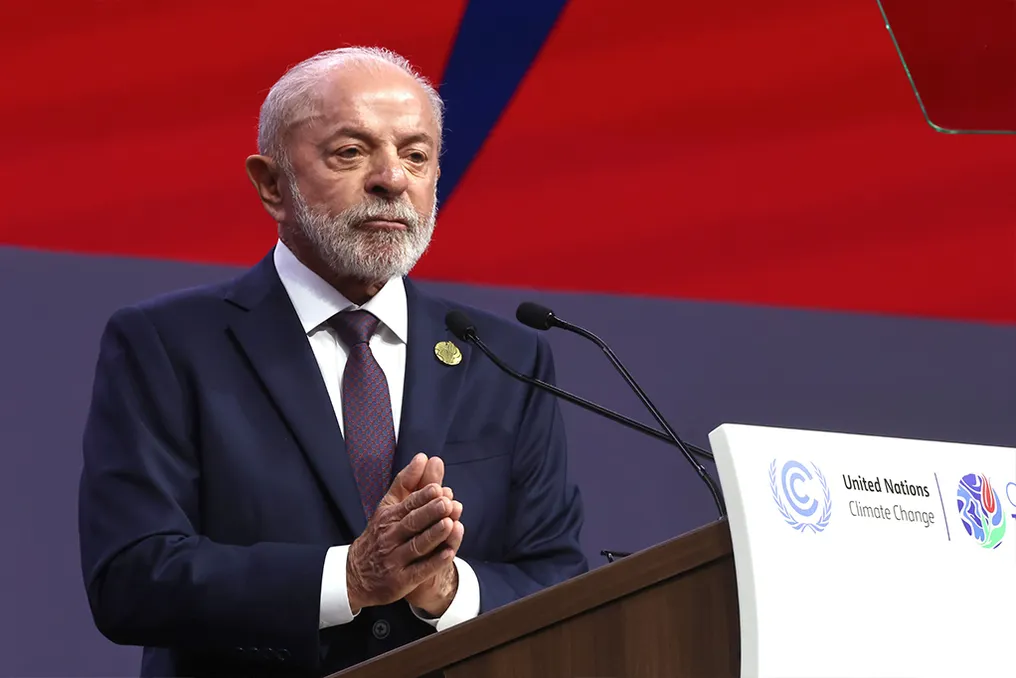
President Lula is in Turkey along with ministers, deputies, and representatives of the Brazilian financial market. The main topics that Brazilians will present over the days include fossil fuels, deforestation, and climate financing. These issues will be highlighted in the Brazilian program, which includes presentations and debates in its pavilion, and will also be officially proposed in negotiations with other countries.

Special attention is paid to climate financing—a topic long discussed at COP. Essentially, this term refers to mobilizing financial resources so that countries (primarily developing ones) can meet their climate goals and implement environmental projects.

Brazil's proposal is to achieve a target of attracting no less than $1.3 trillion USD annually in climate financing for developing countries by 2035. This target was defined at COP 29 in Baku, Azerbaijan, and has two levels. The main level stipulates at least $300 billion annually until 2035, with developed countries leading this mobilization from both public and private sources. The second, broader level calls on everyone—governments, development banks, and the private sector—to work together to increase the total amount to at least $1.3 trillion per year. At COP 30 in Belém, countries decided to accelerate actions towards this amount. Thus, Brazil proposes confirming this commitment and fully expanding the financing, which has been insufficient in recent years and does not meet the needs of developing countries.

The $1.3 trillion figure refers to the total volume that should be directed annually to developing countries to finance climate measures. This volume can be used, for example, for building clean energy facilities, protecting forests, and creating structures resilient to climate phenomena.

However, when it comes to climate financing, one of the main discussions is who will provide the money and how. It is not as simple as opening a bank account and waiting for countries to deposit over a trillion dollars to transfer to developing nations. Resources can come from various sources and instruments: private investments, where companies and banks invest money in sustainable projects; government donations that do not require repayment; loans (which must be repaid later by developing countries); carbon markets, and other opportunities. Countries disagree on the weight of each source: developing countries demand more public money from wealthy nations, while the latter rely on the private sector. The Brazilian plan proposes a middle ground, combining public and private resources, without relying on a single method of fundraising.

The proposal will be discussed with other countries on November 13 during COP 31's Day of Finance and Trade. Meanwhile, the report of the Presidency of Brazil at COP 30 is already available, detailing the proposal and explaining possible resource sources. The document was published on November 8.

Titled 'Implementing the Baku to Belém Roadmap to $1.3 Trillion,' this 78-page document presents six areas that could become sources of climate financing. According to the report, these areas do not have equal weight: they were chosen as primary funding channels identified during the Baku to Belém Roadmap process, not based on their size. The document explains: 'The six assessment areas correspond to the main channels and instruments identified within the Baku to Belém Roadmap process, not their current or potential magnitude. Therefore, they do not possess comparable scale or maturity and should not be interpreted as six equivalent pillars.'

The idea is that by expanding the resources in these areas, the trillion-dollar sum can be reached. According to the report, without changes, international climate financing will reach only between $458 and $461 billion annually by 2035; with the proposed measures, it could amount to between $1.27 trillion and $1.41 trillion. Another proposal is to track this financial volume using a 'climate finance action compass,' a tool jointly created with the Climate Policy Initiative organization to monitor the scale, speed, coverage, and impact of resources.

Brazil receives donation of 78.85 million euros for the Tropical Forests Fund at COP31
Read more
noticiasaominuto.com

Brazil receives donation of 78.85 million euros for the Tropical Forests Fund at COP31

During the COP31 Leaders Summit, held in Antalya, Turkey, a group of philanthropic organizations announced a contribution of 78.85 million euros to the Forever Tropical Forests Fund (TFFF).

The TFFF was established by Brazil the previous year and functions as a financing mechanism aimed at ensuring a continuous flow of revenue for nations possessing tropical forests, as well as for communities involved in their preservation.

This initiative has the support of 67 countries, which collectively hold over 90% of the world's tropical forests.

The nine philanthropic organizations that formalized the donation include Bacon Foundation, Children's Investment Fund Foundation, Conservation International, David and Lucile Packard Foundation, Gordon and Betty Moore Foundation, Minderoo Foundation, Quadrature Charitable Foundation, The Nature Conservancy, and a private family office.

Organizers informed that the donation, equivalent to 88 million dollars at the current exchange rate of 78.85 million euros, takes place just weeks before the deadline to reach the capitalization goal of 10 billion dollars (or 8.9 billion euros) by the end of this year.

However, they stressed that for this vision to materialize, the TFFF needs to cover a funding gap of 2.1 billion dollars (equivalent to 1.88 billion euros) to meet its annual objective.

Mauro Vieira, Brazil's Minister of Foreign Affairs, commented that the $88 million contribution represents a firm endorsement of the TFFF's credibility and materializes one of the fund's central goals: expanding financial support for forests beyond contributions from official governments.

Popular