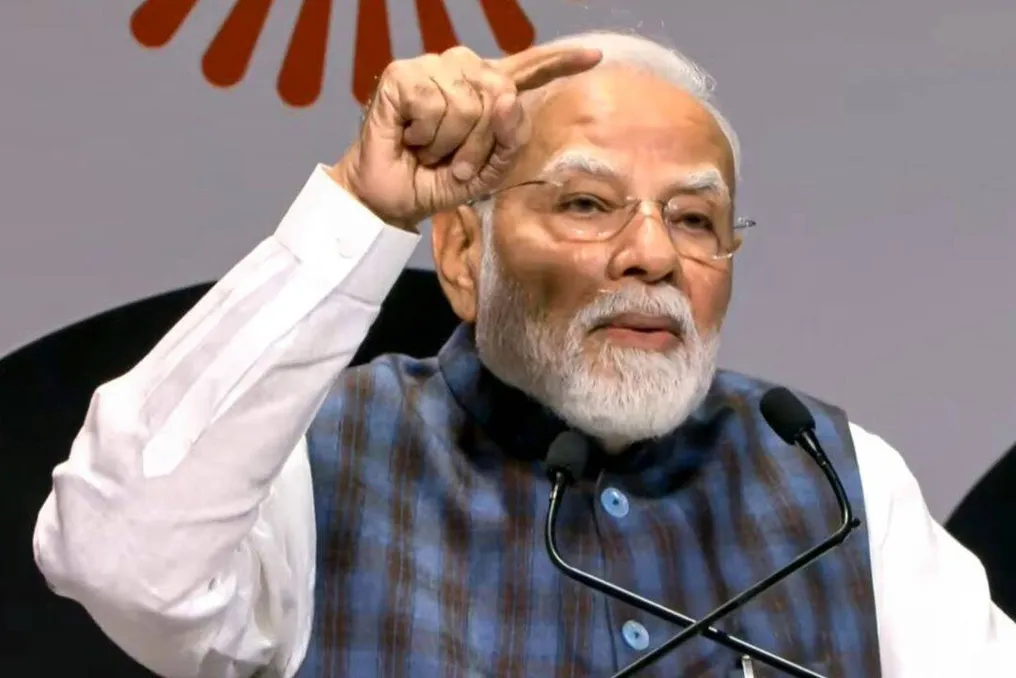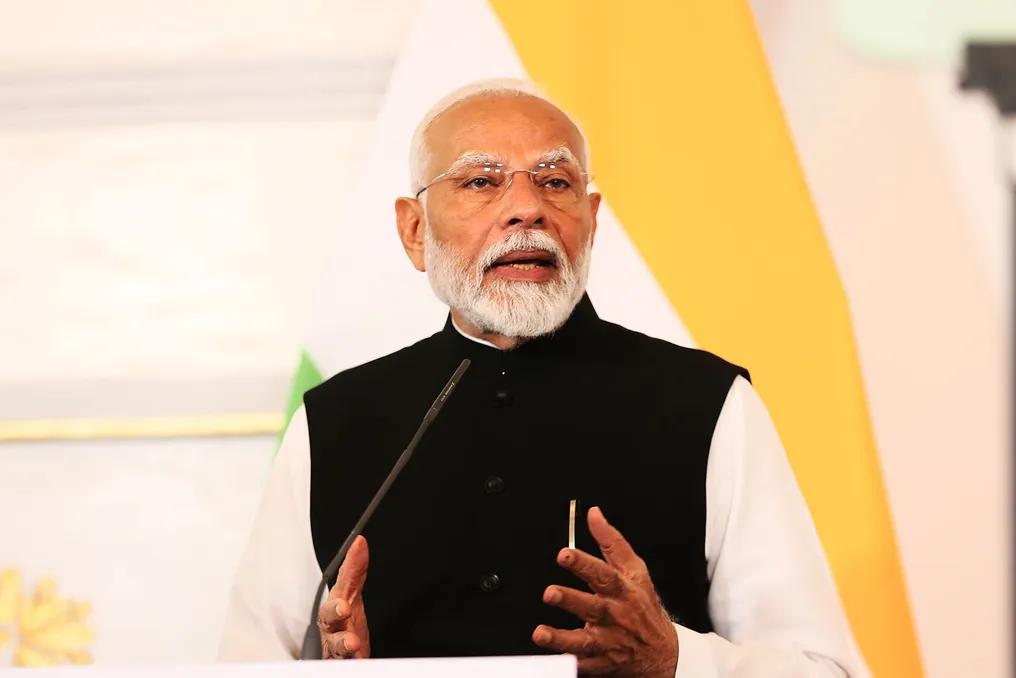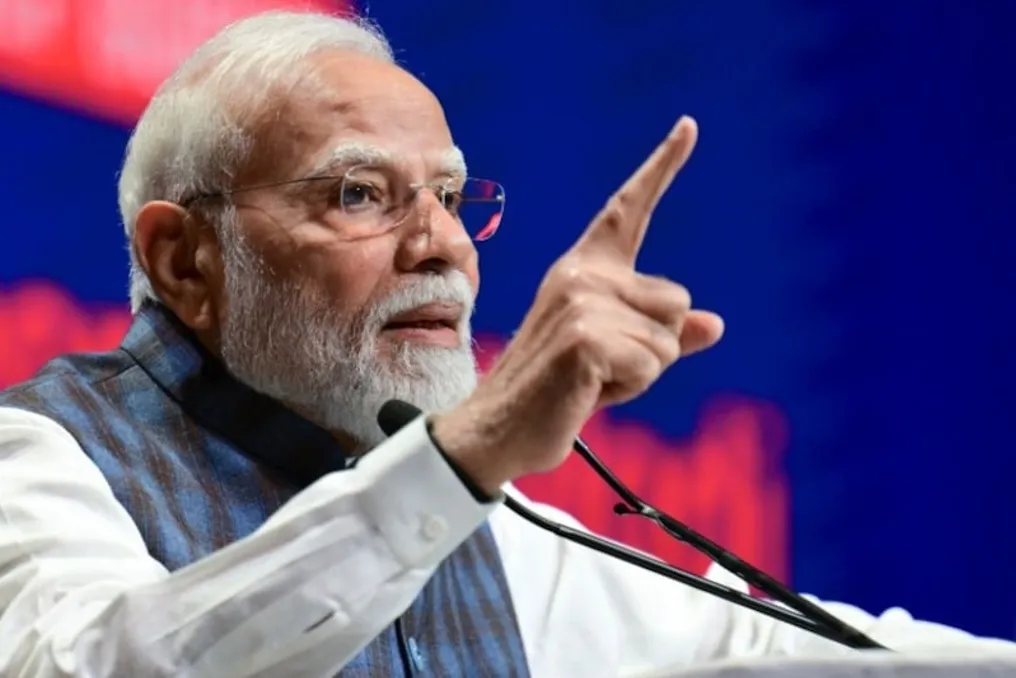
Prime Minister Narendra Modi sharply criticized the country's large corporations, accusing them of utilizing tax concessions provided by the government but failing to direct those benefits towards increasing employee salaries or creating new jobs.
These statements were made by the Prime Minister during an event organized by the Federation of Indian Chambers of Commerce & Industry (FICCI) at Bharat Mandapam in Delhi, marking the organization's centenary. This marked Modi's first stern remarks directed at businessmen.
During his speech, Modi reminded attendees that the government reduced the corporate tax rate from 30 percent in 2014 to 22 percent in 2019. Furthermore, the new tax regime offered tax benefits on annual income up to 12 lakh rupees, subject to certain conditions. Despite state support, companies had not taken substantial steps to increase staff wages or secure new employment.
Addressing the entrepreneurs, the Prime Minister sarcastically remarked: 'I know you won't applaud. I know perfectly well because your hunger is so great that no amount of feeding will satisfy it.' He then posed the question: 'Have you increased the salaries of your employees? Have you increased the number of people you employ? No. Your attitude is such—Modi ji, keep doing it, and we will just watch.' Modi questioned whether business would continue in this manner.
Despite rising company profits, worker earnings remained either stagnant or declined when adjusted for inflation over the last decade in India. Experts note that the private sector is not actively creating high-quality and stable jobs; most new vacancies are in temporary employment, known as gig work.
The government had hoped that the reduction in corporate tax would incentivize companies to increase hiring and raise wages, but these benefits did not reach the workers. Meanwhile, the populace suffered from inflation, and personal income tax revenues began to surpass taxes paid by corporations. Since domestic consumption accounts for 61.5 percent of GDP, the decline in public purchasing power negatively impacts economic growth.
Modi emphasized that the government had provided significant income tax relief to boost citizens' purchasing power, allowing people to retain more funds for spending.
The Prime Minister also mentioned the simplification of the tax refund process. Previously, receiving a tax refund could take months, but now the process takes only one week. He added sarcastically: 'We have also simplified the system for filing tax returns and refunds so that taxpayers' money does not get stuck in the system unnecessarily. Before, the letter would arrive after eight months. Today, the refund arrives in a week. Whether it arrives or not, at least applaud for that.'
According to the Motilal Oswal Financial Services report for June 2026, the profits of companies in the Nifty-500 index increased by an average of 28.7 percent annually during the period from the fiscal year 2019-20 to 2025-26. During the same period, the country's average annual GDP growth was 9.5 percent.
Parallel to the rise in corporate profits, investments by Indian firms abroad also increased. According to a Financial Times report published in July this year, Indian companies announced equity investments exceeding $14 billion in the first four months of the financial year beginning April 1st. This figure was $18.7 billion over the previous 12 months.
Currently, the government receives more revenue from personal income tax than from corporate tax in India. The government has repeatedly granted tax benefits to companies since 2016. In September 2019, an option was provided to reduce the corporate tax rate for domestic companies from 30 percent to 22 percent, and low-rate benefits were also expanded for small businesses.
On the other hand, citizens were also given benefits under the new tax regime, allowing them to pay no tax on annual income up to 12 lakh rupees if certain conditions were met. According to the Tax Department, in the fiscal year 2023-24, the government received 10.45 lakh crore rupees from personal income tax and securities transaction tax (STT), compared to 9.11 lakh crore rupees from corporate tax.
This first occurred in the fiscal year 2020-21, when personal income tax brought in 4.88 lakh crore rupees, and corporate tax brought in 4.58 lakh crore rupees. In the fiscal year 2021-22, corporate tax once again surpassed personal income tax. Subsequently, in 2022-23, personal income tax showed renewed growth.