
UN warns that young people feel their future is out of reach due to insecurity and inequality
Read more
Noticias ao Minuto
noticiasaominuto.com

UN warns that young people feel their future is out of reach due to insecurity and inequality

The United Nations Population Fund (UNFPA) issued an alert indicating that a growing number of young people perceive their future goals as unattainable, even with the progress made in recent decades in areas such as education, technology, and health.

The UN agency released this warning in a statement presented in Tokyo, as part of its report on the State of the World's Population 2026. The document, titled 'Future Generations: Empowering Youth to Shape Their Future,' points out that young people have often been excluded from decision-making processes that affect them, appealing to global leaders to build the future in collaboration with them, rather than creating systems just for them.

To compile this report, over 100,000 people aged between 18 and 39 were surveyed across 73 countries and territories during the fourth quarter of 2025 and the first quarter of 2026. The conclusions were also based on various surveys conducted by other United Nations agencies with young people.

According to the Spanish news agency EFE, the report demonstrates that high levels of education, unprecedented access to information, and significant improvements in global health and human rights are not enough to ensure a secure start to adult life.

Among the most relevant findings, it is highlighted that one in five young people globally is unemployed, not studying, or not receiving training. Additionally, in lower-income nations, four in five young adults lack stable employment.

Diene Keita, Executive Director of UNFPA, emphasized that while young people desire independence and stable relationships, many also aspire to have children. However, economic insecurity, difficulty accessing housing, conflicts, and exclusion prevent these ambitions from materializing.

In terms of personal life, 70% of respondents declared that marriage is the ideal relationship model, despite more than 40% not being married. Furthermore, 91% expressed a desire to have at least one child, while a quarter indicated they plan to have fewer children than desired at their age.

Participants pointed to financial uncertainty as the biggest obstacle to developing stable relationships or having offspring. Globally, 50% of people aged 25 to 29 live with their parents, and most only establish stable relationships after the age of 30 and have children after 35.

The report also notes low youth political participation. Although adults aged 30 or under constitute 19% of the world's population, they hold only 2.8% of parliamentary seats, with less than half of these positions held by women.

Keita stated that young people demand more than merely symbolic roles; they want to have a real influence on the decisions that will define their future, especially on issues such as digital regulation, climate, and peace.

In this regard, UNFPA advocates for strengthening practical education and creating stronger connections between educational institutions and the labor market, thereby facilitating students' professional integration. The organization also emphasizes the need for investment in reproductive health, combating gender-based violence, and promoting youth participation in areas such as technology, climate change, and conflict resolution.
Similar stories

Guterres: Those who profit from the planet's destruction cannot dictate the future
Read more
noticiasaominuto.com

Guterres: Those who profit from the planet's destruction cannot dictate the future

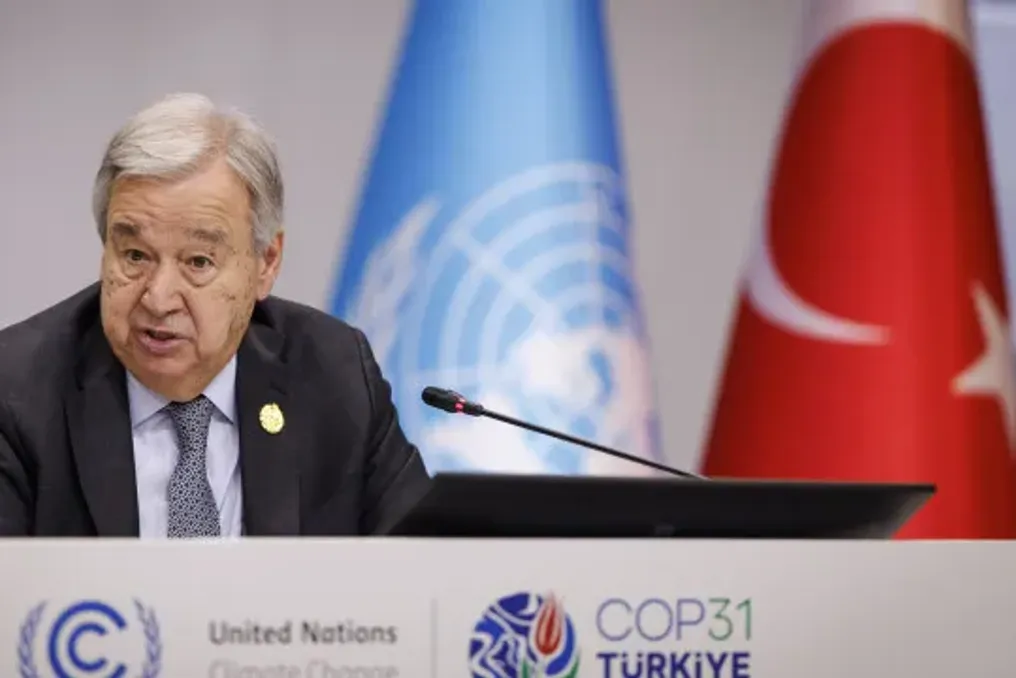
UN Secretary-General António Guterres concluded his participation in climate summits, issuing a warning against the influence of oil interests and calling for resilience against global warming.

In his final speech at COP31 in Antigua, Turkey, Guterres, who will leave office at the end of this year, stated the necessity of countering the disproportionate influence of fossil fuel lobbying. He emphasized that the planet's future should not be determined by those who profit from its destruction.

He argued his position by stating that fossil fuels are the cause of the climate crisis, asserting that achieving climate security is impossible without abandoning them. The former Portuguese statesman summarized nearly ten years of work at the United Nations, saying he always sought to speak the truth about climate change, even when it was uncomfortable or met with negative reactions.

Guterres reminded that global warming exacerbates hunger, population migration, debt burdens, and the struggle for land and water, noting: 'It is impossible to build a world on a burning planet.'

He maintained that climate action must encompass all areas of UN activity—from eradicating poverty to protecting human rights. Guterres condemned the injustice where the least responsible parties suffer the most severe consequences of the problem.

In his farewell address, he called for an accelerated just transition away from fossil fuels for climatic, economic, and security reasons. He pointed out structural injustice: those who pollute the most have failed to create conditions for an adequate response to the needs of those affected.

The Secretary-General added that dependence on oil and gas exposes countries to price fluctuations and geopolitical instability, insisting that reducing dependency, rather than changing suppliers, is the solution to the problem.

Guterres supported the expansion of clean energy but stressed that this growth must lead to a real reduction in the production, consumption, and emissions of fossil fuels. He also endorsed electrification but emphasized that electricity generation must be clean.

He warned that exceeding the 1.5-degree warming threshold is already inevitable and strongly urged limiting this situation as much as possible to subsequently return to a level below this threshold. To achieve this, he demanded immediate emission reductions of around 6% annually in the coming years.

Under current national commitments, he warned that the world is heading toward approximately 2.5 degrees of warming by the end of the century, which he termed a 'recipe for catastrophe.' Faced with these challenges, he called for greater support for vulnerable countries, reminding that even tripling adaptation funding would cover less than 30% of their needs.

Despite the alarming signals, Guterres noted progress in renewable energy sources and stated that a cleaner and safer energy future is achievable, provided the necessary resources are provided.

Victor Tikllakuri presented a report on the impact of climate crises in South America
Read more
cgtn.com

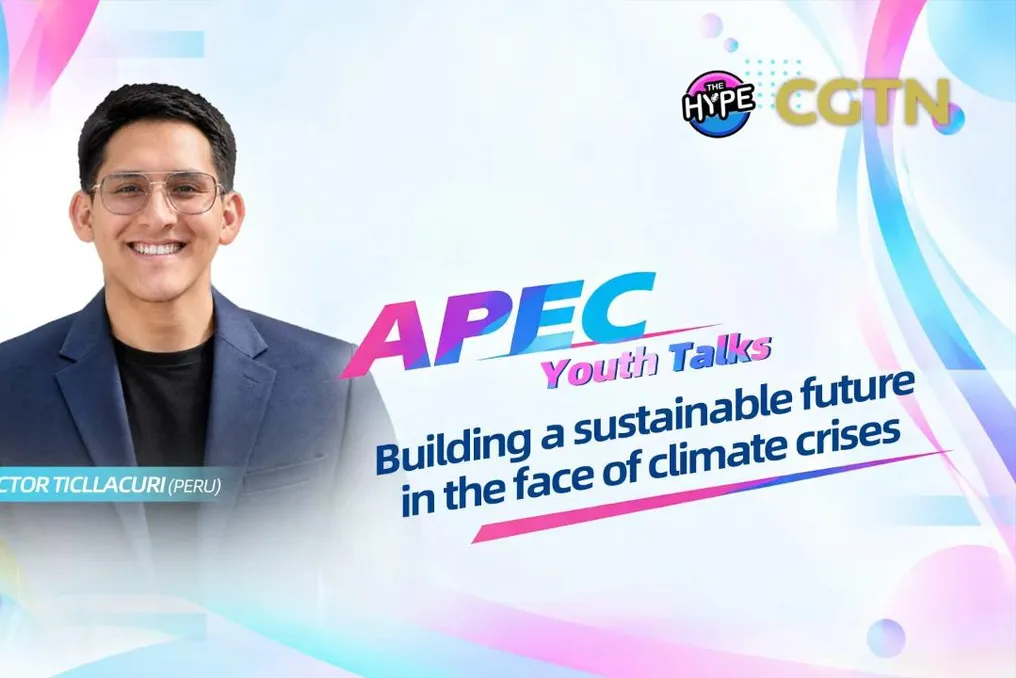
Victor Tikllakuri presented a report on the impact of climate crises in South America

The El Niño phenomenon causes intense heat in the Andean forests and destroys the coasts of South America. During the APEC youth summits, Victor Tikllakuri, a biomedical engineer from Peru, detailed the harsh reality of climate change in the region.

He called on APEC economies to join forces to jointly counteract this phenomenon.

Popular