Public Radio of Armenia marked the centenary of its international media conference
Read more
Tehran Times
www.tehrantimes.com

Public Radio of Armenia marked the centenary of its international media conference

Public Radio of Armenia celebrated its centenary by hosting an international media conference. The station's first broadcast in Armenia on September 1, 1926, with the phrase 'Listen! Listen! This is Yerevan radio station,' initiated a media legacy that has lasted for one hundred years.

Although the official daily schedule began on June 15, 1927, the initial transmission laid the foundation for a long-term media history. Over the decades, the institution transformed from a single experimental transmitter into a modern, powerful multimedia network. Today, Public Radio operates through numerous channels and digital platforms, broadcasting and publishing in 12 languages, including regional and minority languages such as Persian, Kurdish, and Arabic, alongside English and Russian.

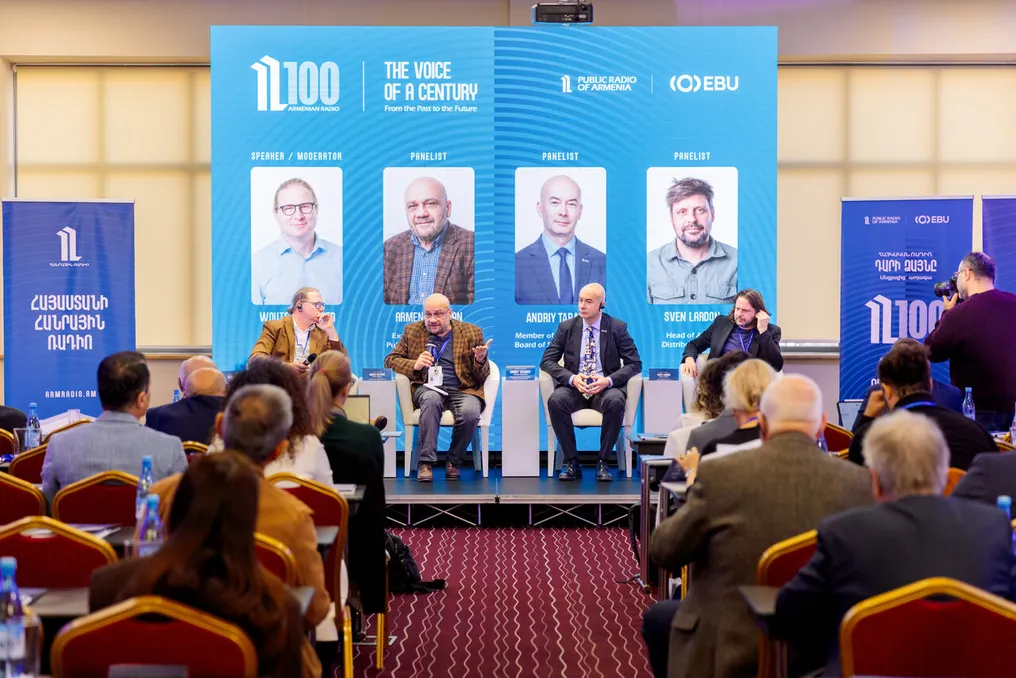
In November 2026, Public Radio of Armenia, as a member of the European Broadcasting Union (EBU), celebrated its centenary by organizing an international media conference titled 'Voice of the Century: From Past to Future.' This two-day event gathered 19 international delegates and experts from 15 countries. Among the participants was the Tehran Times newspaper, the only honorary media organization from outside Europe and not a member of the EBU, reflecting long-standing cultural and regional ties.

The first day of the conference took place at the historic Radio House in Yerevan, where guests visited the station's Museum Corner official opening. Among the main exhibits was the organization's historical 'birth certificate'—the original license granting broadcasting rights in Armenia. The preservation of this cultural memory was made possible by a large-scale archive restoration initiative. To date, Public Radio has digitized 102,422 historical tapes, preserving over 12,300 hours of rare audio recordings, national folklore, and old programs.

During his keynote speech, Archive Head Artur Ispyrian discussed the complexities of this project, explaining that modernizing decades of magnetic tape required combining outdated engineering concepts with contemporary digital technologies, complicated by the need for rare expertise to carry out the work.

The second day focused on the challenges of the modern and evolving media landscape. Sessions held at the Ani Grand Hotel brought together industry leaders, broadcasters, and editors who participated in three separate panels focusing on pressing issues shaping 21st-century journalism. Topics included the visual evolution of traditional radio and strategies to avoid simply copying television, the structural impact of artificial intelligence on newsrooms and media, and voice-controlled media, as well as tactical methods for combating disinformation and modern hybrid warfare.

The centenary concluded with a gala concert at the Armenian National Opera and Ballet Theatre, dedicated to celebrating the station's century-long contribution to serving listeners both at home and around the world.

Similar stories

Study shows how Uzbekistan residents consume news and which information sources they prefer
Read more
nuz.uz

Study shows how Uzbekistan residents consume news and which information sources they prefer

On November 2 in Tashkent, the official presentation of the first stage of the project 'National Study of Media Consumption in Uzbekistan' took place. This project was implemented with the participation of the Public Foundation for Support and Development of National Mass Media, the European Union Delegation to Uzbekistan, the Center for Content Preparation for Mass Media under the Presidential Administration, and the Republican Center for Public Opinion Research 'Ijtimoiy Fikr.'

The survey ran from September 8 to 19 and was conducted in the format of personal interviews at people's places of residence. A total of 1411 people from 14 regions of the country participated, all aged 18 or older.

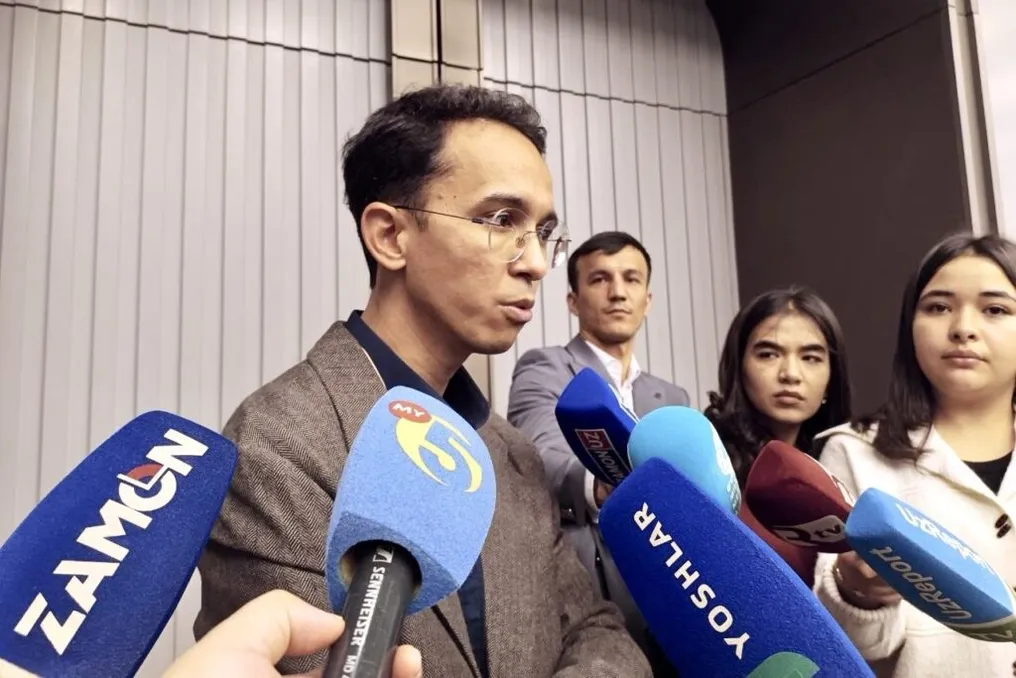
The Director of the Mass Media Foundation, Zhakhongir Azimov, emphasized that the research results provide a general picture of the republic's media space, covering television, radio, print, and online media. He noted that analyzing indicators by age, gender, place of residence, and media consumption habits requires close attention, and expressed hope that the collected data will be an important step toward understanding public media habits, although he acknowledged the need for more detailed studies in each area.

The main conclusion of the monitoring is that the audience is not a passive group simply receiving information; on the contrary, it actively participates in media processes, independently chooses sources, compares the information received, and determines the topics that interest them.

The study demonstrated that both youth and the older generation show high interest in news and socio-political agendas. 50.4% of the population follows news about events in Uzbekistan, and another 30.4% is interested in them periodically. Furthermore, respondents do not limit themselves to a single source of information.

Telegram has become one of the key channels for receiving news, followed by television and social networks. However, in terms of trust, television leads, trusted by 44.3% of respondents. Telegram is trusted by 11.3%, and news websites by 7.4%. Among television channels, O’zbekiston 24 commands the highest trust.

Radio, printed newspapers, and official government websites showed significantly lower levels of trust.

An important finding was the absence of differences in information preferences between residents of the capital, regional centers, and rural areas. In some regions, interest in news was even higher than in Tashkent. Additionally, rural residents are more likely than urban residents to express doubts about the reliability of materials published by online publications.

People are concerned not only about world and domestic events but also about issues related to their daily lives, such as income levels, employment, social support, prices, health, and child-rearing.

The main threat identified by the respondents is fake news. In their opinion, false information is most often spread through YouTube, Telegram, and social networks. 70.4% of respondents supported the idea of tightening responsibility for spreading inaccurate information.

Renata Vrabel, Acting Chargé d'Affairs of the European Union Delegation to Uzbekistan, noted that the study's findings can help identify information gaps, strengthen society against disinformation, and improve interaction between citizens, media, and institutions. A series of trainings and events aimed at increasing audience understanding and more effective communication using reliable content are planned following this study.

The results of the first stage of the national study of media consumption in Uzbekistan form a comprehensive view of the country's modern media environment, showing how accounting for audience interests and habits affects the media's ability to adapt, counter disinformation, and maintain professional standards.

Anniversary concert held in Tashkent in memory of Tom Khomyakov, dedicated to his 95th birthday
Read more
nuz.uz

Anniversary concert held in Tashkent in memory of Tom Khomyakov, dedicated to his 95th birthday

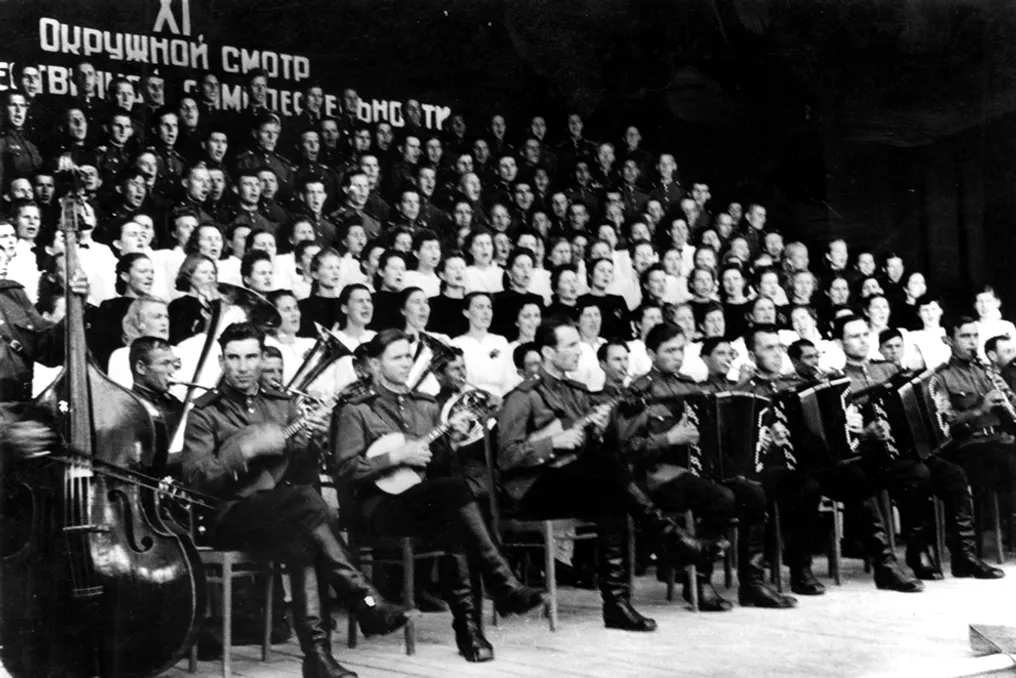
Last week, a solemn meeting was held at the State Institute of Arts and Culture of Uzbekistan dedicated to the 95th anniversary of the birth of Tom Alexandrovich Khomyakov. The memorial concert titled 'Life in Art' served as an acknowledgment of the merits of the musician, educator, and cultural worker of the Republic of Uzbekistan, whose life was closely connected with music and the orchestra of Russian folk instruments.

The event gathered Khomyakov's students and colleagues, who expressed their respect for him. The program was prepared by F. A. Khakimova, head of the 'Cholgu Ijrochiligi' department, and T. T. Sedikh, Doctor of Philosophy (PhD) in art history and holder of the badge 'Madaniyat va san’at fidokori'. The evening was filled with music, warm words, and sincere emotions, recalling the rich legacy of Tom Alexandrovich.

The audience was particularly drawn to the performances of young musicians, whose skill and love for art, which Khomyakov valued, evoked admiration. Colleagues also shared fond memories. Among the performers were Professor M. Atadjanov, holder of the 'Shuhrat' medal and laureate of international competitions, who presented his composition 'Okhangrabo', as well as A. Tikhonov, associate professor at the State Conservatory of Uzbekistan, who performed in an ensemble with a student. The soulful performance of Russian folk songs was demonstrated by the 'Nadezhda' choir of the 'Khimik' Palace of Culture from Chirchik under the direction of Z. R. Asanova.

The author recalls how Tom Alexandrovich performed with a group in her television 'Musical Living Room'. Thirty-five years ago, in Tashkent, his double jubilee was celebrated: 60 years since birth and 40 years of creative activity. Music accompanied every stage of his life—from working on stage and at the conductor's podium to pedagogical work at the Khamza Institute.

Tom Khomyakov was born on July 20, 1931, in Tokmak, Kyrgyzstan. At the age of fifteen, he began working in production, and later received education at an electrical engineering college. His musical journey began in 1945 when he joined the artistic self-activity circle under the guidance of N. A. Kasyanov. In the 1950s, he enrolled at the Khamza Tashkent Music School in the domra department, but a year later was called up for military service.

Military service in the Turkestan Military District orchestra, where he worked under A. F. Venegnev and A. V. Petrov, became an important period for honing his professional skills and style. After demobilization, he continued his studies at the institute and then entered the Tashkent State Conservatory in the faculty of Uzbek folk instruments. He graduated from the conservatory in 1962, receiving qualifications as a conductor and domra teacher. His mentors at various times were A. I. Petrosyants, F. V. Nazarov, and A. P. Evdokimov. Tom Alexandrovich dedicated decades of his life to his native institutes, teaching there starting in 1957, even while still a student.

Before this, he was actively involved in educational and organizational activities, leading the amateur orchestra of the T. Sadykov City Palace of Culture for 26 years. During this period, over a thousand people passed through his collective, many of whom became famous musicians, such as V. L. Medulyanov, who headed the Gosteleradiokompaniya orchestra, and O. S. Siloamsky, who led the TurkVO Song and Dance Ensemble. The orchestra under Khomyakov's direction held over 400 concerts, performed on radio and television, and visited VDNKh in Moscow twice, regularly receiving awards at exhibitions and competitions.

Later, Khomyakov taught at the M. Ashrafi Tashkent Conservatory, supervised pedagogical practice, organized trips for outstanding students to universities in Moscow and Leningrad, and participated in developing methodological courses and working in the laboratory for improving folk instruments. Nevertheless, from 1964, his main job again became the Khamza Institute, where he managed pedagogical and production practice for 20 years, sharing his experience at republican conferences in Tashkent, Bukhara, Namangan, and Jizzakh.

After the earthquake in Tashkent, he was gifted a set of folk instruments from Moscow, which allowed Tom Alexandrovich to realize a long-held dream—to take the conductor's podium of the orchestra, which was subsequently named 'Druzhba' (Friendship). This marked the beginning of a new phase of his life.

With this orchestra, Tom Alexandrovich developed extensive musical, educational, and concert activities, which received wide coverage in the press of Uzbekistan and abroad. Working with the school orchestra required a special approach: it was necessary not only to teach the boys but also to instill soul in them so that every graduate could begin a new cycle of study. Nevertheless, Tom Alexandrovich created a collective that sounded like a high-class philharmonic ensemble. The 'Druzhba' orchestra was indispensable at city holidays, toured throughout Uzbekistan, and helped amateur groups. The repertoire of the collective included over two hundred works, including music by Bach, Tchaikovsky, contemporary authors, and Uzbek melodies. A distinctive feature of 'Druzhba' was its freshness, temperament, and lively performance, which earned the collective the Youth of Uzbekistan award.

Under the direction of Tom Alexandrovich Khomyakov, the orchestra became a center of attraction for the leading stars of the republic's musical scene. His conducting united masters such as A. A. Adilov, Honored Artist of Culture and Professor at the M. Ashrafi Tashkent Conservatory; K. Mukhitdinov, People's Artist of Uzbekistan and soloist of the A. Navoi State Academic Grand Theatre; V. Baeva, People's Artist of the RSFSR and Associate Professor at the Sverdlovsk Conservatory (now Yekaterinburg); as well as L. Pinkhasov and Yu. Zhdanov, Honored Artists of Uzbekistan, among many other talented performers.

Looking back on the jubilee's life path, one cannot ignore his constant search, bold experiments, and striving for innovative musical forms. However, the most important aspect of his creativity was sincerity and deep dedication to the cause. The jubilee program, dedicated to his sixtieth birthday, and the sparkle in his students' eyes serve as proof that a life fully devoted to music was lived usefully, leaving behind a rich cultural heritage.

The recent concert was not just a musical event, but a deep tribute to a person whose destiny was inextricably linked to the service of art. It provided an opportunity to express immense respect for a master who not only created but also generously passed on his knowledge, educating a new generation of musicians. His contribution to culture is more than just notes and melodies; it is a living link between the past, present, and future of musical art.
Popular