Casa U Project by NAQI & Partners in Rural Areas of Northern Vietnam
Read more
ArchDaily Brasil
archdaily.com.br

Casa U Project by NAQI & Partners in Rural Areas of Northern Vietnam

In various rural regions located in northern Vietnam, large tracts of land that were previously owned by extended families and lineages are undergoing a gradual division among the younger family members. This subdivision aims to enable the construction of autonomous residences.

With the evolution of the lifestyle of the younger generations, driven by urbanization, territorial occupation models are undergoing significant transformations. The plots of land are decreasing in size, and multi-story buildings are replacing single-story houses with gardens, resulting in increasing autonomy of family life.

Project Gallery

The Casa U project was developed by NAQI & Partners and is documented on ArchDaily in Portuguese.

Similar stories

Hirandandani proposed that companies and banks build rental housing to solve the housing crisis
Read more
www.aajtak.in

Hirandandani proposed that companies and banks build rental housing to solve the housing crisis

A leading figure in the Russian real estate market, Niranjan Hirandandani, noted the need for significant changes in India's housing policy. He believes that to eliminate the shortage of affordable housing, the government should stimulate the development of rental housing over the next decade by providing incentives to private companies, banks, financial institutions, and charitable foundations to build such properties.

According to Hirandandani, rising land prices, construction costs, and government levies are making the creation of low-cost housing an increasingly complex process. In this situation, rental housing can become a preferred alternative for ordinary citizens and working professionals.

Speaking at the Rising India summit from News18, Hirandandani cited the United States, where about half of the population lives in rented accommodation. He advised India to consider this model, emphasizing that it is an option requiring rapid implementation, and the government must support the construction of rental homes over the next decade.

Hirandandani also suggested expanding housing-related tax benefits beyond just industrial zones. He insists that service sector companies should also receive similar advantages for building housing for their employees, including banks, financial institutions, and large corporations.

He recalled that about two years ago, the government incentivized the construction of housing for workers in the industrial sector by offering a 10-year tax exemption, provided the enterprise used the built housing exclusively for its employees' needs. Hirandandani proposes extending similar conditions to service sector companies, citing firms like Reliance and HDFC that could build rental housing for their staff.

According to Hirandandani, popularizing rental housing can significantly ease the lives of people working in large cities. This issue is particularly acute in megacities like Mumbai, where many employees travel long distances daily between home and office. He mentioned that many people commute from outlying areas such as Virar and Vasai to offices in South Mumbai, spending a lot of time and money. If companies build rental housing near workplaces, it can simplify commutes while also allowing companies to improve working conditions for employees.

Hirandandani explained why developers avoid investing in rental housing in India. Typically, the return on renting residential property is only around 2–3 percent, which reduces the interest of developers and large investors in this area. He called on the government to introduce additional financial incentives and tax concessions to make investments in rental housing profitable, thereby opening the market not only to builders but also to banks and financial institutions.

The availability of moderately priced housing remains a serious problem in the country. According to the Economic Survey for 2025–26, the share of apartments costing less than 50,000 rupees in the total new housing stock in the eight largest cities has dropped from 52.4 percent in 2018 to only 17 percent in 2025. This figure demonstrates a sharp decline in the supply of budget housing in major cities, linked to rising land and construction costs, forcing developers to abandon low-cost housing projects. Rental housing can help mitigate this problem.

Hirandandani also proposed using funds from charitable foundations and Corporate Social Responsibility (CSR) funds for building rental housing. He recalled the pre-independence era when many charities built chawls and other housing for workers and ordinary families, but such activities now face restrictions. He stated that the government should allow organizations like Tata Trust to engage in building rental housing and permit the use of large companies' CSR funds to create such properties, which can then be rented out to needy and working people.

House project in Vinhedo developed by Apiacás Arquitetos
Read more
archdaily.com.br

House project in Vinhedo developed by Apiacás Arquitetos

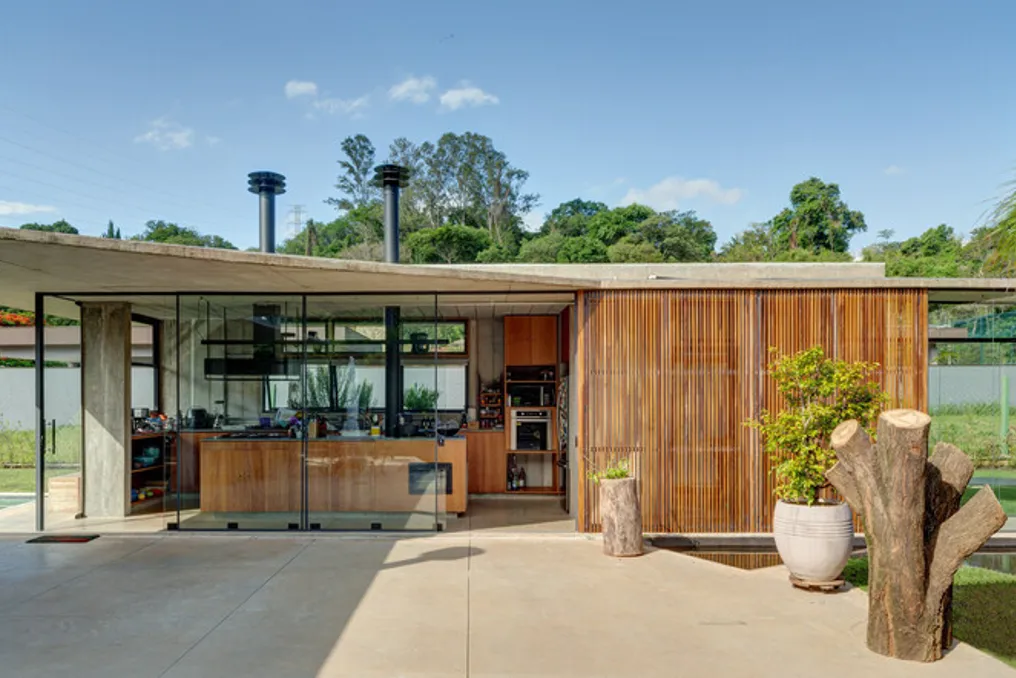
The design team described that a large and level plot of land, intended for the construction of a residence with a maximum area of 250 m², inspired the placement of the house in a way that maximizes the connection between the covered internal areas and the external spaces.

The final layout follows a logic already used in other residential projects by the office, where the circulation paths between the environments are designed as covered walkways, but open on the sides, dispensing with frames or walls. This feature aims to extend the living experience between the interior and the exterior of the building.

How a village on the edge of a cliff in China is overcoming isolation through a rural revitalization program
Read more
cgtn.com

How a village on the edge of a cliff in China is overcoming isolation through a rural revitalization program

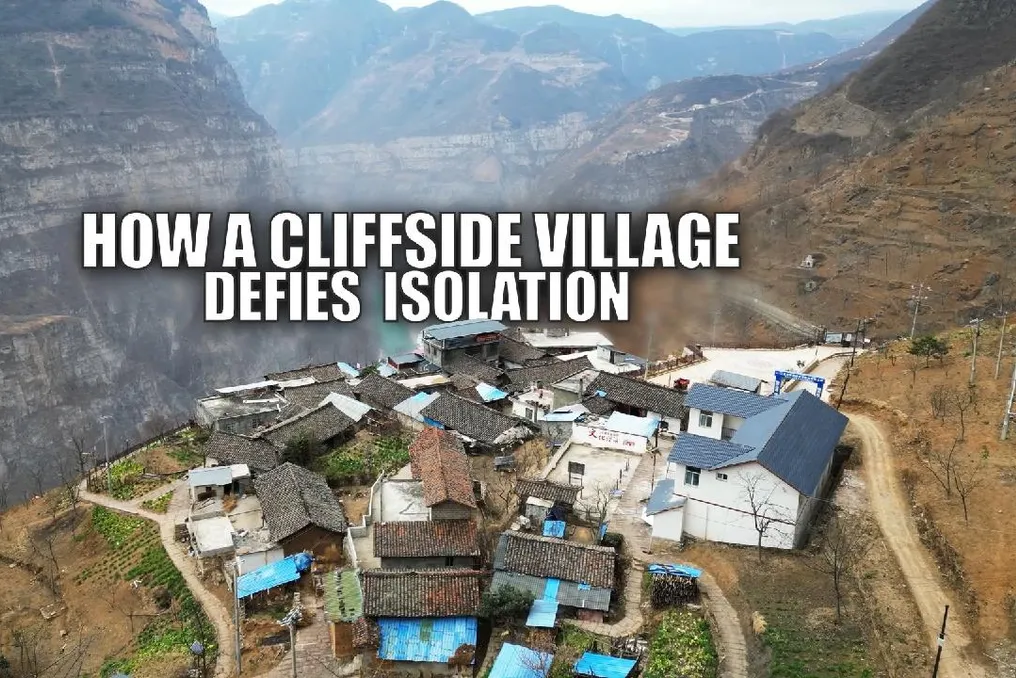
While rural communities across Africa have watched for generations as young people move to cities in search of better opportunities, a different story is unfolding in a remote mountain village in southwestern China. This transformation is built on strengthening community ties, improving living conditions, and enhancing rural viability.

In the village of Gulu, located in Sichuan province, a 750-meter cable car spans a deep mountain canyon, providing residents with a vital link to the outside world. What visitors might perceive as a picturesque attraction has become a symbol of the changes taking place in this village.

During a trip from Kenya to Gulu, the author sought to understand how China's efforts to revitalize rural areas are changing life in communities far removed from vast cities and modern skyscrapers. This journey revealed a stark contrast between the past and present of the village.

According to village head Zheng Wanchun, residents previously faced immense difficulties accessing basic services. Before roads and safer routes reached the area, descents from the mountain could take several days. Children spent hours traveling to school, access to healthcare was difficult, and many families struggled with inadequate housing, food shortages, and lack of electricity.

Progress came gradually. In 2003, a narrow mountain path was laid, offering an alternative to dangerous cliffside routes. The road reached the area in 2009, and the cable car began operating in 2018, helping to overcome some of the geographical barriers that had isolated the community.

Today, tunnels and bridges connect settlements in the mountainous landscape, and infrastructure projects have improved access to essential services. A nearly five-kilometer pipeline supplies water to residents, solving a previously intractable problem.

However, the transformation of Gulu is not just about roads, bridges, and cable cars; it is also linked to creating economic opportunities. Local farmer Lan Xuan notes that improved transport links have attracted more tourists to the area, opening up new avenues for selling local produce and delicacies. She says that tourists from major Chinese cities are increasingly discovering this village, aided by social media.

For communities striving for a sustainable lifestyle, the hope is that better connectivity can generate income and give residents more reasons to stay in their hometowns. Nevertheless, challenges remain.

Resident Xiang Yucai points to an aging population, as many young people have moved to cities with their families. Although improved infrastructure has raised the quality of life, reversing the trend of rural-to-urban migration remains a more complex challenge.

The experience of Gulu offers insight into China's broader strategy for rural revitalization, which aims to link infrastructure development with agriculture, rural industries, public services, and improved living standards.

As an African journalist, the author raised a question extending far beyond China: can rural communities become places of opportunity rather than places people feel compelled to leave? Many African villages face similar issues, including poor infrastructure, limited access to healthcare and education, and inadequate economic prospects. Despite the differences in circumstances, Gulu provides a case study on how targeted investments in connectivity and local industries can help address some of these barriers. The mountains around Gulu have not changed. What has changed is how people move through them and what opportunities better connections can create.

Popular