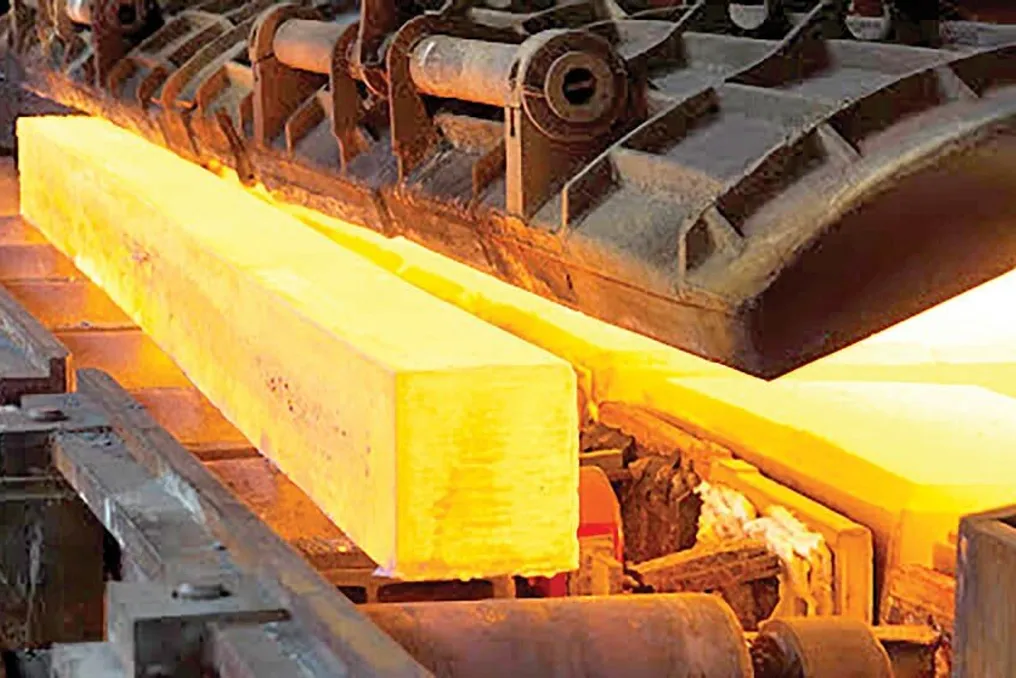
Steel production in Iran decreased by 10.6% in the first half of the year
Read more
Tehran Times
www.tehrantimes.com

Steel production in Iran decreased by 10.6% in the first half of the year

According to a senior industry official, steel production in Iran decreased by 10.6 percent during the first six months of the current Iranian year (from March 21 to September 22). The main reasons cited for this decline are imbalances in energy and the impact of the war.

Steel production fell by 10.6% in the first half of the year

Vahid Yaghubi, executive deputy head of the Iranian Steel Producers Association, reported that the production decrease was observed across all categories of steel products, including semi-finished steel, which also shrank by 10.6 percent.

Speaking at a meeting of the Iranian Institute of Metallurgical and Mining Research dedicated to the industry's performance over the half-year period, Yaghubi noted that the initial decline was 25 percent, but it gradually decreased monthly to 10.6 percent.

He added that during the reporting period, semi-finished product production exceeded 13 million tons. Furthermore, Yaghubi emphasized that even excluding the consequences of military actions, steel production continued to fall: the output of flat steel products decreased by 25 percent, and slab production decreased by 37.5 percent.

Previously, slab production decline reached 75 percent, but after restoring damaged production capacities, it was reduced to 37.5 percent. Overall, the volume of steel product production in the first half of the year amounted to 9.903 million tons, which is a drop of 7.4 percent.

In addition, Yaghubi reported that the export value of the steel industry dropped to $6.5 billion, the lowest figure since 2016. He also pointed to a sharp increase in energy costs, noting that natural gas prices have increased 53 times over the last seven years, while steel product prices have only risen 14 times. The cost of gas for Iranian steel producers currently exceeds the average regional indicator by approximately double.

Similar stories

Industrial lending in Uzbekistan decreased by 8.8% year-on-year
Read more
uzdaily.uz

Industrial lending in Uzbekistan decreased by 8.8% year-on-year

According to data from the Central Bank of Uzbekistan, the volume of bank lending to the industrial sector of Uzbekistan reached 133.4 trillion sums as of October 1, 2026, representing an 8.8% decrease compared to the same period last year. Previously, on October 1, 2025, outstanding loans for this sector amounted to 146.3 trillion sums.

This reduction occurred against the backdrop of an overall growth in the banks' loan portfolio, which increased by 13.2% to reach 659.1 trillion sums. As a result, the share of industry in the total lending volume decreased from 25.1% to 20.2%, and the industry's loan portfolio shrank by 12.9 trillion sums.

The construction sector demonstrated the fastest growth in lending, with loans increasing by 33.4% over the year to reach 22.9 trillion sums, raising its share in the total portfolio from 3% to 3.5%. Similar growth rates were observed in the trade and public services sectors, where loans grew by 31.7% to 53.9 trillion sums, and their share increased from 7% to 8.2%.

Loans for transport and communications grew by 16.4% to 37.9 trillion sums. Agriculture received 68 trillion sums in loans, which is 14.5% more than last year, while the sector's share in the total portfolio remained around 10%. Lending for material and technical supplies and sales grew slower, increasing by only 2.9% to 4.6 trillion sums. Loans for housing and communal services grew by 9.2% to 2 trillion sums.

Other sectors saw a 24% increase in loans, reaching 88 trillion sums, and their share in the portfolio rose from 12.2% to 13.4%.

Individuals remain the largest category of borrowers. Household loans increased by 19% year-on-year, reaching 248.4 trillion sums, accounting for 37.7% of the total portfolio, compared to 35.8% the previous year. The retail loan portfolio is now 1.9 times larger than industrial loans, whereas last year this ratio was 1.4.

The total volume of corporate lending grew by 9.9% over the year, amounting to 410.7 trillion sums, which is about twice as slow as the growth in retail lending. Industry accounts for approximately one-third of this corporate loan portfolio. Collectively, individuals, industry, and agriculture account for more than two-thirds of Uzbekistan's total bank lending portfolio.

policy
Uzbekistan's fruit and vegetable exports decreased by 10.9% from January to September 2026
Read more
uzdaily.uz

Uzbekistan's fruit and vegetable exports decreased by 10.9% from January to September 2026

According to data from the National Statistical Committee of Uzbekistan, the export of fruits and vegetables from Uzbekistan decreased by 10.9% year-on-year, reaching a volume of 1.299.1 million US dollars for the period from January to September 2026.

Over the nine-month period, the country exported 1,560.6 thousand tons of fruits and vegetables, which is 3.0% less than the previous year, or 48.2 thousand tons less. In the same period in 2025, exports reached 1,608.9 thousand tons worth 1.457.4 million US dollars.

Fruits and vegetables accounted for 5.0% of Uzbekistan's total exports for the reporting period. Fruit exports reached 393.0 thousand tons worth 445.2 million US dollars, compared to 413.7 thousand tons worth 489.2 million US dollars the previous year.

Grape exports brought in 123.0 million US dollars through shipments of 151.6 thousand tons. In the corresponding period in 2025, Uzbekistan exported 150.7 thousand tons of grapes worth 145.6 million US dollars. Peach exports showed growth in both volume and value: shipments increased from 111.5 to 119.9 thousand tons, and export revenues grew from 105.1 million to 116.8 million US dollars.

Export of dried grape bunches decreased to 63.2 thousand tons worth 74.2 million US dollars, and sweet cherry shipments fell to 25.2 thousand tons worth 59.9 million US dollars. Export of dried plum decreased to 20.6 thousand tons worth 38.1 million US dollars. Shipments of dried apricots also decreased to 12.5 thousand tons, although export revenue increased from 31.8 million to 33.1 million US dollars.

In contrast, vegetable exports showed growth in both volume and value. Shipment volume increased from 493.8 to 557.2 thousand tons, and export revenues grew from 172.1 million to 206.2 million US dollars. Among vegetables, onions accounted for 317.3 thousand tons, bringing in 92.4 million US dollars. Cabbage shipments amounted to 139.8 thousand tons worth 55.1 million US dollars, and tomato exports reached 34.2 thousand tons worth 35.5 million US dollars.

Carrot exports amounted to 59.8 thousand tons worth 13.4 million US dollars, and garlic shipments reached 6.1 thousand tons worth 9.8 million US dollars. Exports of melons and watermelons decreased from 229.2 to 206.3 thousand tons, but their export value increased to 64.7 million US dollars compared to 56.5 million US dollars the previous year.

Additionally, Uzbekistan exported 16.7 thousand tons of peanuts and nuts worth 38.8 million US dollars, as well as 36.8 thousand tons of mung beans worth 34.7 million US dollars. The total export of other fruits and vegetables amounted to 350.6 thousand tons worth 509.4 million US dollars, which is lower than the figure of 418.0 thousand tons worth 659.2 million US dollars in the same period in 2025.

Overall, Uzbekistan's total exports for January-September 2026 reached 25.8 billion US dollars, a decrease of 5.5% year-on-year. Nevertheless, commodity exports excluding gold increased by 31.6% to 13.3 billion US dollars for the same period.

Uzbekistan's gold exports fell by 71.4% to $2.8 billion in January-September 2026
Read more
uzdaily.uz

Uzbekistan's gold exports fell by 71.4% to $2.8 billion in January-September 2026

According to data from the National Statistical Committee of Uzbekistan, the export of unminted gold from Uzbekistan decreased by 71.4% year-on-year, reaching $2.8 billion for the period from January to September 2026. This figure is significantly lower than the $9.8 billion recorded for the same period in 2025.

During the reporting period, the share of gold in the country's total export volume sharply decreased—from 35.9% to 10.8%. This reduction represents an opposite trend compared to the previous year, when the export of unminted gold from Uzbekistan increased by 69.2% compared to the 2024 period.

The total export volume of Uzbekistan for the first nine months of 2026 amounted to $25.8 billion, reflecting a decrease of 5.5% compared to the same period last year. Despite the significant drop in gold supplies, the export of other goods showed substantial growth, increasing by 31.6% to reach $13.3 billion.

Furthermore, the export of services expanded, growing by 31.1% year-on-year to $9.7 billion. Services accounted for 37.6% of Uzbekistan's total exports over the nine-month period. Meanwhile, the total foreign trade turnover of Uzbekistan in January-September 2026 reached $65.4 billion, which is 6.3% more than in 2025.

However, imports rose by 15.7%, totaling $39.6 billion, surpassing overall export figures. As a result, Uzbekistan recorded a foreign trade deficit of $13.7 billion in the first nine months of 2026.

Popular