Iran presented a set of investment opportunities valued at approximately 300 billion US dollars to Chinese investors as part of both countries' efforts to expand trade and investment ties.
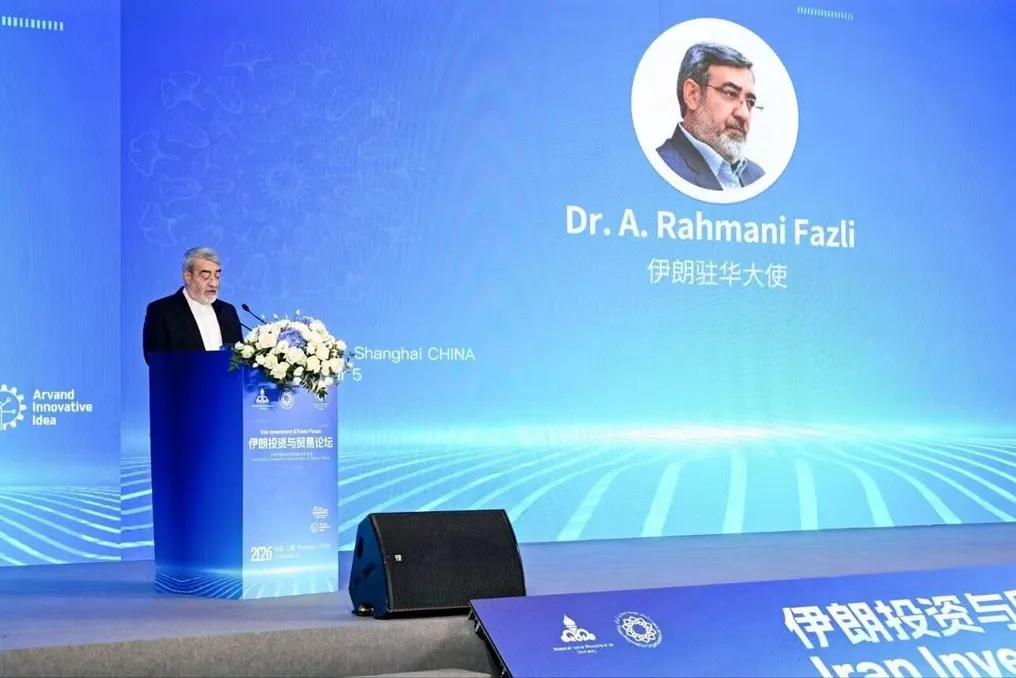
The event, named the Iran-China Forum on Investment and Trade, took place during the 9th China International Import Expo (CIIE) in Shanghai. Economic and diplomatic officials, leaders of major Iranian companies, and representatives of Chinese businesses participated in the forum.
About 300 business people, representatives of trade associations, chambers of commerce, and Chinese officials were present at the event. The main focus was on cooperation opportunities in the supply chain between Iran and China.
Speeches and areas of cooperation
The Iranian Ambassador to China, Abdolreza Rahmani Fazli, noted the 55th anniversary of establishing modern diplomatic relations between the two states, as well as the 10th anniversary of their comprehensive strategic partnership. He called for more active utilization of existing capabilities to develop economic and technological interaction.
The ambassador stated that Iranian companies participating in the exhibition represent sectors such as energy, petrochemicals, mining, agriculture, food processing, and new technologies. The Iranian national pavilion showcased not only traditional products but also the country's scientific and technological achievements.
Among the presented goods and opportunities were medical diagnostic equipment, nanomedicine, biopharmaceuticals, and medicinal plants, which open prospects for creating joint value chains with Chinese companies. Furthermore, the ambassador highlighted promising areas for bilateral cooperation: joint research, developing industries, clean production, technical standards, infrastructure, renewable energy, smart transport, and green economy.
Investment opportunities in 11 sectors
Mehdi Heidari, Deputy Minister of Economy, stated that Iran has prepared a portfolio of about 150 projects in 11 strategic sectors, with a total estimated value of 300 billion dollars. He specified that the modernization and expansion of the country's energy and infrastructure sectors over the next five years will require about 250 billion dollars in investment.
Heidari added that about 30 projects presented to foreign investors belong to the petrochemical sector and require more than 45 billion dollars in investment. Abdol-Sadegh Nisi, advisor to the head of the Iranian Trade Promotion Organization (TPO) and CEO of its East Asia and Oceania Department, identified expanding exports of high value-added goods and strengthening trade corridors as two key directions for economic cooperation between Iran and China.
He strongly recommended shifting the focus from exporting raw materials and semi-finished products towards finished goods in sectors such as food, agriculture, petrochemicals, mineral extraction, construction materials, and manufacturing.
The Governor of South Khorasan Province, Seyed Mohammad Reza Hashemi, also presented the economic potential of his province and invited Chinese businessmen and investors to visit it to explore investment opportunities. He cited the presence of over 58 types of active minerals in the province, more than 300 sunny days per year, and the potential for solar and wind energy generation as key advantages for investment.
Hashemi mentioned that South Khorasan produces about 98 percent of the world's seedless barberry berries, ranks first in Iran for jujube production and second for saffron production, and is home to about 80 species of medicinal plants. These resources provide opportunities for investment in agricultural processing and export.
Hosein Rouzbakhsh, head of the International Scientific and Technological Cooperation Development Organization, called for a shift from traditional trade to technological and industrial partnerships, as well as joint investments. Mehrdad Rahimi, Deputy for International Affairs of the National Petrochemical Company, emphasized the importance of the Chinese market for Iran's petrochemical industry and called for expanding cooperation in the fields of investment, financing, transportation, and completing the industry's value chain.
During the forum, representatives of Iranian and Chinese companies and institutions discussed project opportunities, industrial cooperation, financing schemes, investment guarantees, and participation in production and sales chains. Iranian officials stated their readiness for long-term partnership with Chinese investors, which could contribute to increasing non-resource exports, completing value chains, facilitating technology transfer, and strengthening economic ties.