Uzbekistan is developing a national strategy for the development of microelectronics and semiconductors until 2036
Read more
UzDaily
uzdaily.uz

Uzbekistan is developing a national strategy for the development of microelectronics and semiconductors until 2036

Uzbekistan is preparing a national strategy aimed at developing its microelectronics and semiconductor industry for the period from 2027 to 2036. The Ministry of Economy and Finance of Uzbekistan reported that the Asian Development Bank (ADB) approved technical assistance worth 1.2 million US dollars for this purpose.

Of the total funds, 1 million US dollars will be directly allocated to the development of the strategy itself. The remaining 200 thousand US dollars are designated for attracting consultants and launching a human resource training program in this sector.

The competition to select an international consulting company to prepare the document concluded on October 15, 2026. Five companies from countries such as the United States, Singapore, Malaysia, and Uzbekistan participated in the applications.

Who will develop the strategy

Both international and local experts are involved in developing the strategy, including specialists with over 25 years of experience in the semiconductor industry. Glen Kiro from the United States has been appointed as the international consultant.

He has over 25 years of experience in the semiconductor sector, including 17 years at Intel, and specializes in the physics and engineering of microelectronic and semiconductor devices. The local consultant is Oibek Abdulkhaev, who holds a PhD. He has over 15 years of experience in the semiconductor field and specializes in electronics and semiconductor physics.

Training specialists for the industry

As part of the workforce development program, 50 participants were selected from a pool of 300 candidates and provided with courses on integrated circuit (IC) design. Twenty selected candidates will go to initial preparatory scholarship courses in Malaysia. Another 20 candidates and instructors will travel to Sungsil University and Hoseo University in South Korea for two months. Specialists are also expected to be sent for internships at fabless companies.

In collaboration with the NIELIT institute in India, a free introductory training program on VLSI and semiconductor technologies will be organized at TashTech Technical University. It is designed for 100 people, including undergraduate and master's students, teachers, researchers, engineers, and other relevant specialists. The program covers two areas: Integrated Circuit Design (IC Design) and APT (semiconductor assembly, packaging, and testing).

Training civil servants

The government is also working to expand industry knowledge among civil servants. In 2025, 43 senior officials from 19 ministries and departments participated in a training seminar. In 2026, over 50 senior officials and responsible personnel from more than 30 ministries, departments, and organizations took part in the Strategic Laboratory Workshop. Another workshop held on September 30, 2026, gathered over 30 senior officials from more than 10 ministries and departments. In total, about 130 civil servants have enhanced their knowledge and skills in semiconductors. These programs covered education, the semiconductor value chain, public administration, and strategic decision-making.
Similar stories

Uzbekistan launches second phase of rural development project worth $320 million
Read more
uzdaily.uz

Uzbekistan launches second phase of rural development project worth $320 million

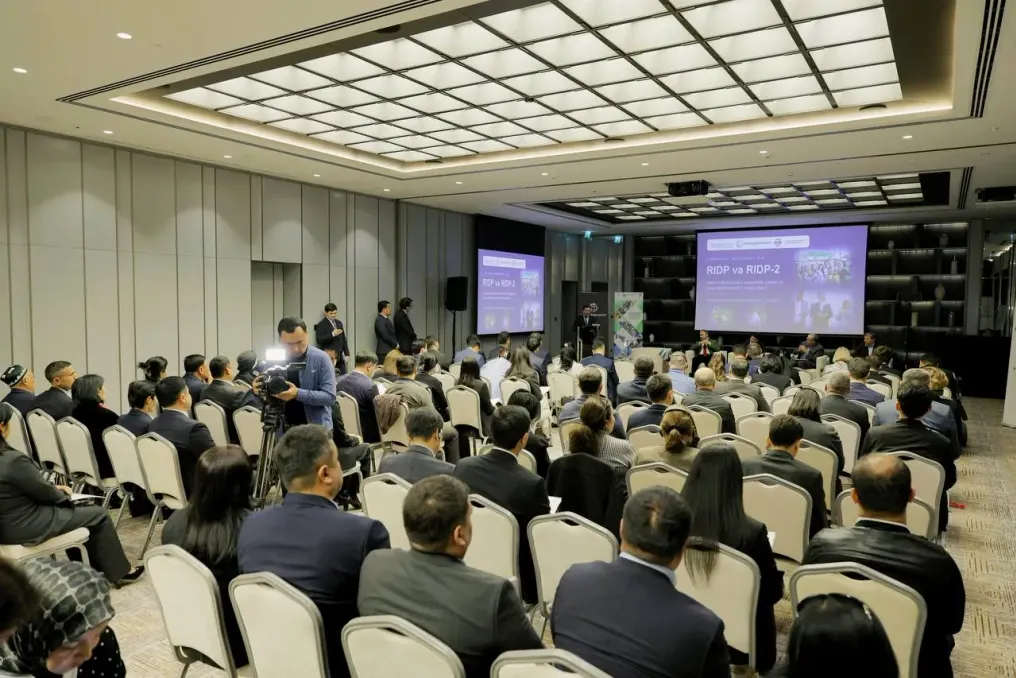
Uzbekistan has completed the analysis of the results of its Rural Infrastructure Development Project (RIDP), which was implemented from 2019 to 2026, and presented plans for its continuation under the second phase, named RIDP-2.

The new program will cover 296 mahallas across six regions and will focus not only on infrastructure renewal but also on entrepreneurship development and job creation.

Overview of the first phase of the project

On November 4, the Ministry of Economy and Finance of Uzbekistan, together with the World Bank Group, held a conference to assess the achievements of the first phase of the project and discuss the transition to the next stage—Rural Infrastructure Development Project 2 (RIDP-2).

During the implementation of RIDP, approximately 900 infrastructure projects were completed in 306 mahallas across five regions of the country. These projects included the construction and modernization of over 340 roads, 220 power supply systems, and 160 water supply systems.

Additionally, about 100 schools, 40 preschool institutions were renovated, and 10 bridges were built in rural areas. The project directly benefited approximately 1 million rural residents, almost half of whom are women.

Financing and goals of the second phase

The total budget for RIDP-2 will be $320 million USD. Funding will be distributed as follows: the World Bank will provide $150 million, the Asian Infrastructure Investment Bank (AIIB) will contribute $100 million, and the Government of Uzbekistan will allocate the remaining $70 million.

The second phase plans to cover 296 mahallas in six regions. By 2031, the program is expected to benefit approximately 1.2 million rural residents, including 600,000 women and 300,000 youth.

The program will focus not only on improving living conditions through infrastructure construction and renewal but also on expanding economic opportunities for rural residents, supporting entrepreneurship, and creating new jobs.

Entrepreneurship support and community involvement

Under RIDP-2, joint centers for entrepreneurs engaged in agricultural processing and small-scale production are planned for 15 pilot mahallas. These facilities are intended to give local businesses the opportunity to grow and increase employment.

The work of 'Mahalla Seven' will play a special role in implementing the new phase. Their involvement is expected to encourage residents to participate more actively in determining development priorities for their mahallas, preparing initiatives, and monitoring project execution.

The experience of the first phase of RIDP showed that the effectiveness of investments in rural infrastructure largely depends on the participation of the local community. When residents themselves determine their most pressing needs and monitor project implementation, the resulting initiatives better reflect the needs of individual communities.

Thus, RIDP-2 aims to develop this approach by combining infrastructure investments with measures to support entrepreneurship, increase income, and expand employment. Special attention will be paid to women and youth, as developing the rural economy provides them with additional opportunities for employment and self-realization.

Uzbekistan Develops Industrial Strategy Until 2035
Read more
uzdaily.uz

Uzbekistan Develops Industrial Strategy Until 2035

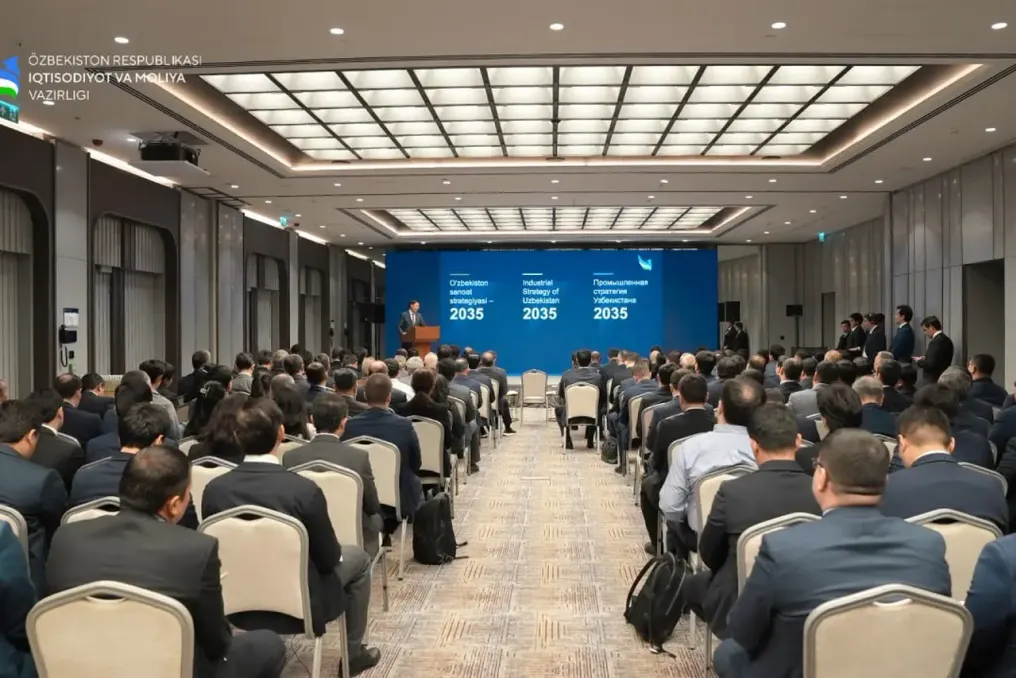
The Ministry of Economy and Finance reported that Uzbekistan held a forum to discuss the national industrial strategy for the period up to 2035. The main focus was on long-term priorities, increasing industrial competitiveness, and boosting production volume.

Strategy Discussion in Tashkent

The forum took place on November 2, 2026, in Tashkent. Participants included Deputy Prime Minister and Minister of Economy and Finance Jamshid Kuchkarov, Global Managing Partner of McKinsey & Company Bob Sternfels, experts from the World Bank and the International Finance Corporation, as well as representatives from other international organizations. Additionally, officials from state institutions, industrial companies, and business community representatives attended the event.

The central theme was the proposed conceptual vision for Uzbekistan's industrial strategy until 2035. Participants discussed methods to improve production efficiency, increase output with higher added value, and utilize the country's economic potential more fully.

Key Discussion Areas

During panel discussions, global trends in industrial development and international experience were reviewed. Special attention was paid to the opportunities and potential obstacles facing Uzbekistan, including attracting investment and major international investors, integration into global value chains, expanding export capabilities, and modernizing existing production facilities.

Thematic sessions focused on specific industries and related sectors, such as mining and deep raw material processing, mechanical engineering, automotive manufacturing, and consumer goods production. Issues regarding workforce training, energy, transport, and infrastructure development, as well as improving investment activities, were also discussed.

Representatives of relevant industries presented their proposals for further development, identified existing problems, and outlined issues requiring resolution. Discussions on the industrial strategy concept will continue taking into account the proposals presented at the forum. The event served as a platform for exchanging views on defining the long-term priorities of Uzbekistan's industrial development.

Artificial intelligence implementation planned in film production in Uzbekistan
Read more
podrobno.uz

Artificial intelligence implementation planned in film production in Uzbekistan

Uzbekistan is considering the possibility of integrating artificial intelligence technologies into the process of creating films. President Shavkat Mirziyoyev, during a meeting with representatives of the film industry on October 26, instructed the development of a cooperation program in this area within one month.

This program should include the creation of new educational courses, as well as ensuring the training and professional development of specialists abroad.

No additional information has been disclosed about this initiative at the moment, including details on which specific AI technologies will be used in film production and how the financing for their implementation will be carried out.

Furthermore, Uzbekistan plans to replace state orders with a system of subsidizing film projects, with the entire film production process being fully transferred to private companies.

Popular