Honda's R$ 3.3 billion investment aims to increase motorcycle production in Brazil
Read more
AutoPapo
autopapo.com.br

Honda's R$ 3.3 billion investment aims to increase motorcycle production in Brazil

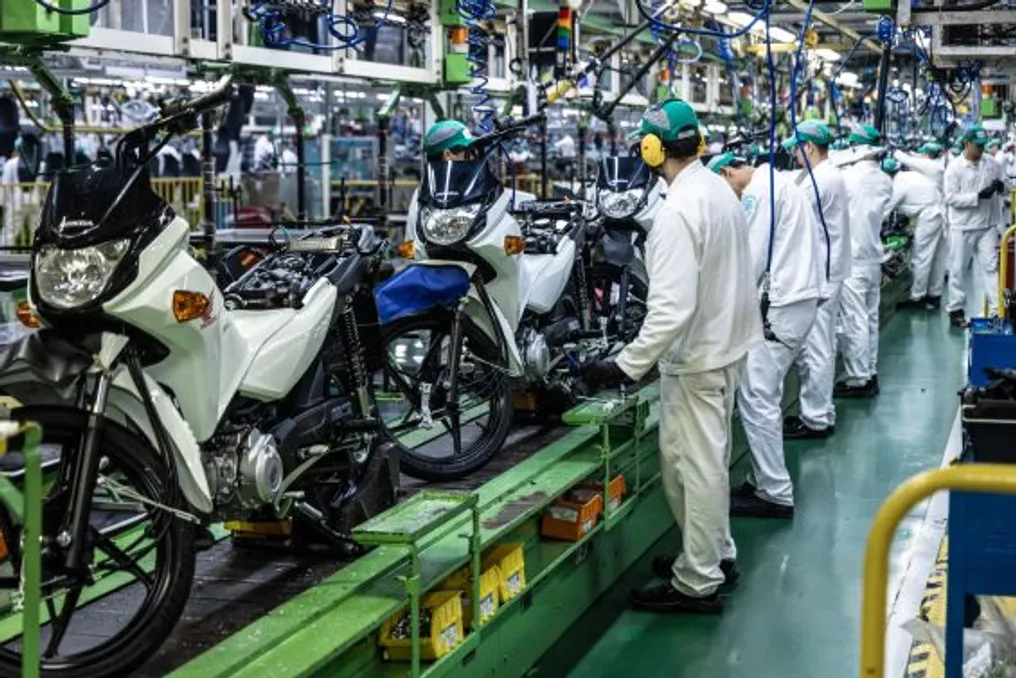
Honda announced this week an investment of R$ 3.3 billion dedicated to its motorcycle production in Brazil. According to the manufacturer, this injection will allow it to double the number of production units in Manaus, from two to four, aiming for an annual capacity of 2.3 million units by 2029.

This move represents a considerable challenge for competitors, given that Honda already holds a dominant position in the market. The situation can be interpreted as an effort to capture a large part of the market, as the company is expected to end the year with 1.6 million motorcycles, while the Manaus Industrial Pole projects the manufacturing of 2.1 million units, according to Abraciclo data.

Honda's goal of 2.3 million motorcycles by 2029 is almost equivalent to the total number of vehicles sold in Brazil in 2026, representing an increase of approximately 44% compared to the expected volume for the current year. Theoretically, this would be enough to restore Honda's market share percentages to the range of 70% or 80%.

Current Market Share Situation

Currently, Honda holds 65.62% of the Brazilian market share. This percentage dropped after the Covid-19 pandemic and the increased presence of Indian and Chinese brands in the country. Although Honda continues to sell in growing volume, its percentage share has decreased; in the first half of 2025, it registered 67.67%, and in the same period this year, 65.73%.

During this period, there have been consistent, albeit small, advances by brands such as Shineray, which rose from 5.73% to 6.27%; Bajaj, which went from 1.13% to 1.53%; and Haojue, which evolved from 1.01% to 1.18%. These gains were concentrated in entry-level categories that sustain Honda's sales volume.

Expert Analysis of the Investment

Luiz Vicente F. de Mello, a motorcycle specialist at Bright Consulting, argues that the investment is not primarily a response to competition, but rather a solution to an internal problem within Honda itself: the inability to meet existing demand. He points out that the brand faces pent-up demand, where there are waiting lists for certain models, even when production is ongoing.

According to Mello, the injected capital aims to align factory capacity with the company's actual sales volume. He explains that sometimes consumers who wanted to buy a Honda could not due to long waiting times, opting instead to purchase products from immediately available competitors. Thus, part of the growth of Chinese and Indian brands occurred due to the lack of stock from the leader.

However, if Honda solves this logistical bottleneck, the market dynamic could change drastically. The specialist states that a well-executed investment will force other brands to react, under penalty of suffering a reduction in their market share. This would cause rivalries to shift focus to the dispute over product and price, and no longer just availability.

Additionally, the general economic scenario favors Honda's leadership. Mello observes a trend of migration from car use to motorcycles, driven by growth projections until 2027 and the current cost of automobiles. He believes that even with sales growth, Honda can capture an even larger share of the national market.

Stakeholder Positions

Marcos Bento, Commercial Director of Honda Motos and also President of Abraciclo, stated that the company positively receives the entry of new competitors, provided that the competition occurs within the competitive norms established by the market.

The real threat to rival companies lies not in the size of the new factory unit, but in what it eliminates: waiting time. The brands Shineray, Bajaj, and Haojue combined still do not reach 10% of the market, while Honda maintains the CG 160 with over 22% of participation in all registrations, in addition to owning seven of the ten best-selling motorcycles in the country. Much of the success of the newcomers was achieved by taking advantage of gaps that the leader could not fill.

It is concluded that if the market continues to expand, Honda will grow along with the guarantee of immediate delivery; if there is a slowdown, there will be idle capacity.
Similar stories

Honda launches City 2027 focusing on reliability, presenting prices between R$ 117,700 and R$ 156,400
Read more
autopapo.com.br

Honda launches City 2027 focusing on reliability, presenting prices between R$ 117,700 and R$ 156,400

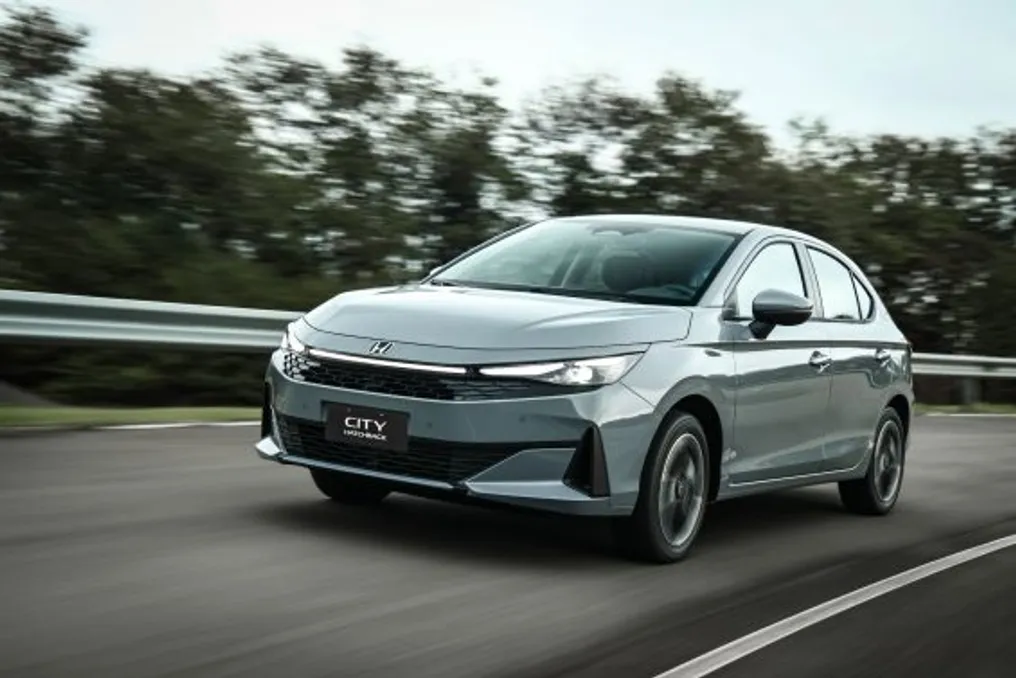
Honda has introduced the 2027 line of the City, available in hatchback and sedan versions, with price ranges varying from R$ 117,700 to R$ 156,400. These values position the Japanese compact vehicles in a highly competitive market segment.

This price level offers a wide range of options, including entry-level SUVs, compact SUVs, light pickups, electric compacts, compact sedans, and even mid-size SUVs on promotion. Given this fierce competition, the City must rely on solid arguments to stand out.

The brand's main differentiator lies in its reputation. Honda possesses a strong commercial appeal sustained by reliability, proven mechanics, good market liquidity, and low depreciation—a term the marketing calls 'residual cost.' This combination has established Honda as a desired product, an image built over more than 35 years since imports were allowed.

The manufacturer has achieved a quality level superior to that of other generalist automakers, positioning itself one step below German premium brands. However, the landscape has changed with the rise of Chinese brands, which are no longer seen merely as cheap vehicles of questionable quality, but have reached a sophistication standard comparable to European premium cars.

Despite fluctuations in the automotive panorama, including the increased participation of Chinese brands, Honda has maintained its stability in the Brazilian retail market without needing to modify its production plan or pricing policy. In contrast to other brands that have lost ground to the Chinese advance, Honda has registered sales growth.

Between January and September, the brand registered 82,634 units licensed, surpassing the 73,570 units sold in the same period of 2025, representing a slight increase of over 12%, significantly above the total market's 8%. Although its market share decreased from 4.07% to 3.83% in the same interval, almost all traditional brands saw their shares reduced due to the consolidation of new competitors such as BYD, GWM, GAC, Geely, and Omoda & Jaecoo.

Thus, Honda continues its trajectory in the Brazilian retail market, supported by the loyalty of its customer base, which trusts the added value of the H emblem.

Technical specifications and performance

The 2027 City shares the same characteristics as current generations, being offered with a single mechanical unit. It uses the 1.5 VVTI engine, which delivers 126 hp and 15.8 kgfm of torque. This engine is coupled with a CVT transmission, the same setup used in the sedan, hatchback, and WR-V and HR-V SUVs (in entry-level versions). This engine is suitable for consumers who are still hesitant about three-cylinder turbo engines or electrified units.

The City's performance is consistent, though not surprising. The power and torque provide good agility both in the city and on the highway. As it is a naturally aspirated engine, the peak torque occurs at higher RPMs, above 4,000 rpm. However, the gearbox quickly adjusts the ratios, immediately increasing the revs, resulting in agile acceleration and safe overtaking, despite lacking the thrust of a turbo engine.

The overall behavior of the City is characterized by being balanced and smooth, typical of any Honda vehicle, without jerks. The suspension has excellent calibration, remaining firm during curves while absorbing road imperfections.

Inmetro data indicates satisfactory fuel consumption: the City Sedan consumes 9.1 km/l in the city and 10.8 km/l on the highway using ethanol. With gasoline, the figures are 12.9 km/l in the city and 15.3 km/l on the highway.

Interior finish and technology

The equipment package varies from the LX to Touring versions, in addition to the RS, exclusive to the hatchback. All versions include digital climate control, electric steering, and a multimedia system with wireless connectivity for Android Auto and Apple CarPlay.

The Honda Sensing driver assistance system becomes standard starting from the EX version. In the top-of-the-line Touring and RS versions, the Low Speed Follow function is added, along with Adaptive Cruise Control (ACC), which maintains throttle control even at speeds below 32 km/h.

The interior finish of the City draws attention due to the quality of the materials. The more expensive versions feature leather-upholstered seats and panels, which increases the feeling of sophistication. However, the model could improve by having electric-adjustable seats, a feature that could be an additional attraction to encourage the consumer to invest over R$ 150 thousand in a compact, considering the various alternatives available.

In summary, the Honda City is an attractive automobile, offering a reliable engine without relying on turbines or complex electronic modules, efficient consumption, and a package of features expected of a modern and well-equipped car.

The City's weak point may be its exterior design. The Brazilian consumer, like much of the global public, shows a preference for SUVs, even if they are essentially the same structure with a modified body. The Honda customer itself reflects this trend: the WR-V, which shares the platform, engine, transmission, and equipment, starts at R$ 150 thousand but sold 27,145 units from January to September, surpassing the sales of the sedan (11,568) and the hatchback (10,005). For someone looking for a car at R$ 117,700, the City is a difficult option to beat.

Offer of vehicles with manual transmission increased in the Brazilian market in 2026
Read more
autopapo.com.br

Offer of vehicles with manual transmission increased in the Brazilian market in 2026

Although more than half of new cars sold in Brazil currently come equipped with automatic transmission or alternative solutions, such as electric propulsion, models with manual gearboxes remain present, especially in entry-level and sports categories.

In 2026, an increase was observed in the availability of cars with manual transmissions in Brazil, driven mainly by the sports vehicle segment. Toyota, for example, introduced a new batch of the GR Corolla and continues to sell the GR Yaris. Simultaneously, Porsche expanded its three-pedal options for the 911 model.

Other available brands and models

In the national scenario, the new Hyundai i20 arrived, which has two configurations with a 1.0 naturally aspirated engine and a five-speed gearbox. In November, Renault plans to launch the Niagara pickup truck, confirming that the entry-level version will have a manual transmission.

Chevrolet stands out as the only manufacturer offering 1.0 cars with six gears in the country, while the Onix and Onix Plus models also feature a manual transmission with a 1.0 turbo engine. Furthermore, the brand offers the manual option in other vehicles such as Spin, Montana, and S10; although the Tracker previously had this option, it is currently sold only in the automatic version.

The current Citroën lineup focuses on simpler models with 1.0 engines, whether naturally aspirated or turbo. However, in the turbo models, the gearbox is always CVT, reserving the manual gearbox for the naturally aspirated Basalt and C3 versions.

Fiat offers manual transmission in its cars equipped with 1.0 and 1.3 naturally aspirated engines. An exception to this rule is the medium pickup Titano, in the entry-level Endurance version, which uses the 2.2 turbodiesel engine with 200 hp.

Ford launched the manual Mustang GT in 2025 in a limited edition of 200 units, which sold out quickly. Currently, the only vehicle from the brand with three pedals is the Ranger pickup, in the XL work version.

Honda maintains a well-operating manual transmission, even in its compact cars, but today it is offered exclusively in the sporty Civic Type R model.

Hyundai made the HB20 1.0 turbo with a manual transmission available up to the 2024 line, with six gears. Currently, the offer is restricted to the 1.0 naturally aspirated models, which have a five-speed manual gearbox.

The new generation of the Mitsubishi Triton was launched with a complete variety, including the GL work model. This medium pickup is notable for being the only one that does not suffer power or torque loss in its manual version.

Peugeot simplified its 208 model range in Brazil, offering the 1.0 naturally aspirated engine only in the Style model, which includes a sunroof and sporty trim. The French brand also sells the Partner Rapid van, which shares a platform with the Fiat Fiorino.

Porsche has never discontinued the manual gearbox, but it was absent in Brazil for several years. Currently, the manual option is available in the Carrera T and in three variants of the GT3.

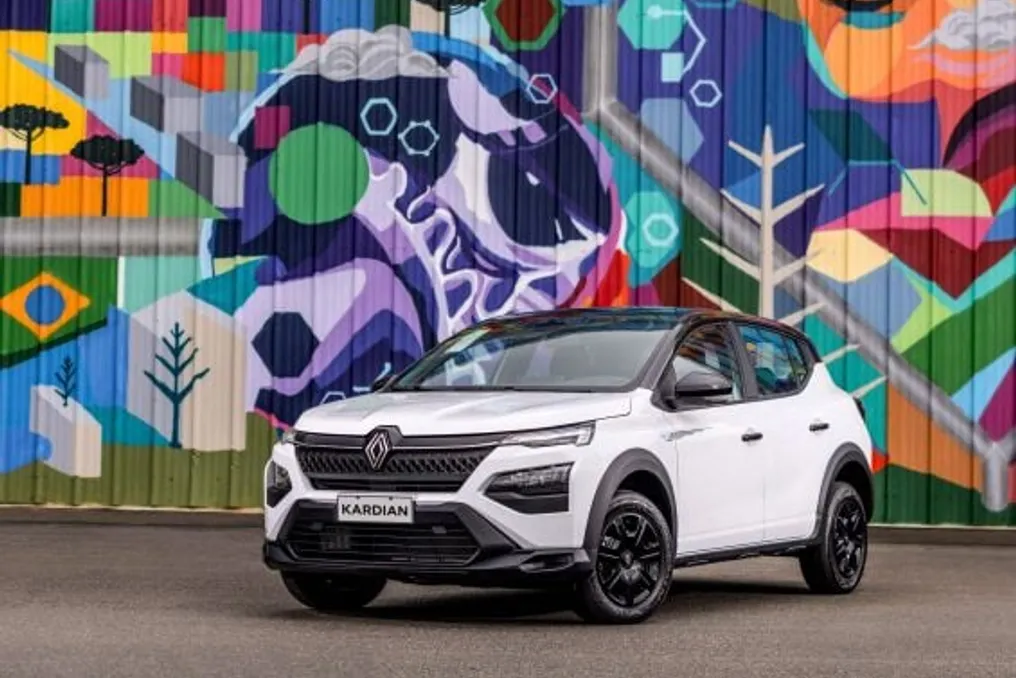
Renault initially launched the Kardian only with a dual-clutch transmission, but soon added a manual version. In 2026, the entry-level Vibe model was introduced, priced below R$ 100 thousand and featuring efficiency improvements. The French brand also maintains simple models in its portfolio, such as the Duster, aimed at fleets, the subcompact Kwid, and the Oroch pickup.

Toyota sells its special models in limited batches of 99 units. In 2026, the GR Yaris compact and the medium GR Corolla were launched with updates. The Japanese brand also offers the entry-level Hilux with a manual transmission.

In the Volkswagen line, there are the Tera TSI and Virtus Sense, which combine a manual gearbox with a 1.0 turbo engine. The Polo Track, Tera MPI, and Saveiro use naturally aspirated engines.

Removing stickers from a motorcycle requires caution and the use of the correct agent
Read more
autopapo.com.br

Removing stickers from a motorcycle requires caution and the use of the correct agent

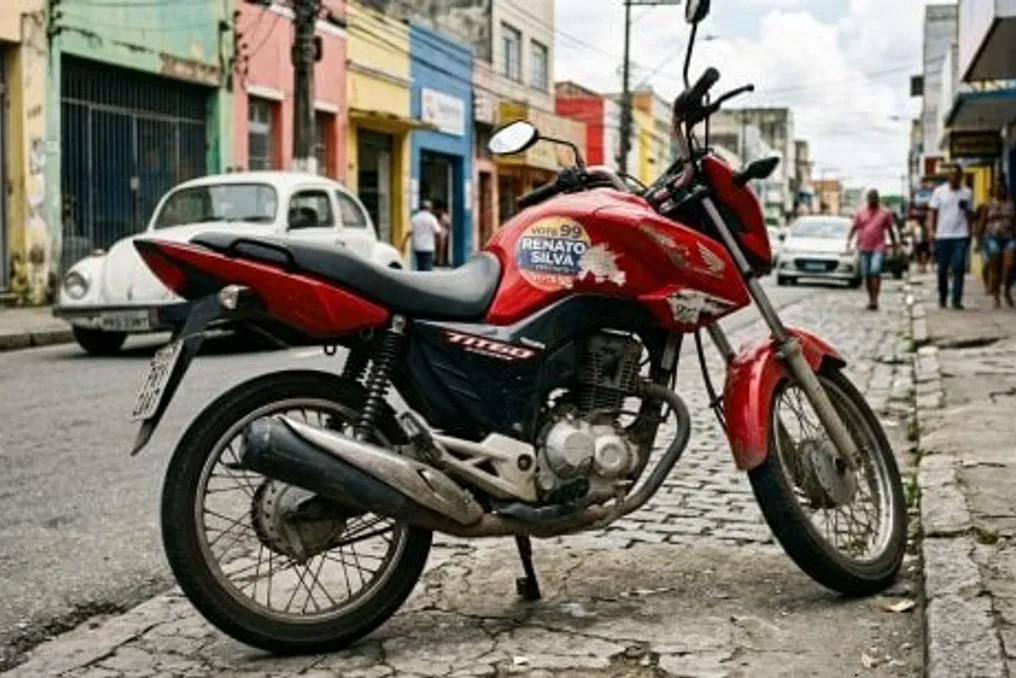
After elections, promotional stickers left over from campaigns often remain on vehicles. In addition to cars, stickers on motorcycles can also cause problems when attempting to remove them. Upon forceful peeling, there is a risk of damaging the sticker itself, adhesive sticking to the paintwork, and what seemed simple turning into a need for rework.

According to engineer, expert, and automotive aesthetics specialist Kleber Bertotto, owner of Tuio Car Detail, specialized products for removing adhesive material are now easily available. However, the issue lies in selecting and correctly applying this product.

Currently, many agents are available on the market for such tasks, but caution must be exercised because some of them can damage the paintwork to the extent that repainting will be required," explained the specialist. The solution is not in strength or aggressive products, but in using the appropriate agent. Adhesive and resin removers soften the sticker, allowing it to detach on its own without needing to be scraped off. Acidic compounds used in automotive aesthetics are intended for other purposes, such as intensive wheel cleaning, and degreasers are for grease. Neither of these products is designed for glue, and both can leave stains on paint and plastic.

More caution is required on a motorcycle than on a car because almost all elements onto which stickers are applied are made of plastic. If the remover is left on too long, it will begin to affect the fairing lacquer. And on black untreated parts—such as wings, protective elements, or covers—it can cause drying and leave a whitish surface.

Those who start removal incorrectly often face issues even after completely removing the sticker from the motorcycle. Bertotto asserts that in such cases, the same specialized products that should have been used initially solve the problem. In more complex situations, light polishing may be necessary.

It is important not to confuse this polishing with rubbing anything over the surface. Polishing is the controlled removal of a microscopic layer of lacquer using a suitable paste and polishing pad. A sponge, steel wool, or sandpaper does not perform this function—they cause damage.

Scissors, blades, steel wool, and kitchen sponges, especially the green side, are the most common mistakes. All of them scratch or sand the motorcycle's paint. Tuio notes: "This is poison for any type of paint; it is dangerous even for glass. Alcohol is another enemy. If you use alcohol, you will remove the glue, but then you will leave stains on the paint."

The residue left after removal depends on the material that was adhered. "There are millions of types of glue. There is the most expensive sticker, which is usually not used in campaigns: it leaves no traces and peels off easily," explains Tuio. During an election campaign, the standard practice is the opposite: "Usually, the cheapest sticker is placed. If it has a paper base, it crumbles, so caution is needed during removal."

Regarding stains on the paint, in his opinion, the probability of this is less than it seems, except for one specific case. "I think there is no time to leave a stain on the paint. If the paint was applied recently, and a sticker was placed on top of it, discoloration may occur. Then you can try to conduct professional polishing to solve this problem."

Every case is unique. In some, removal will be simple, while in others, serious cleaning of the motorcycle may be required. Bertotto concludes: "It is not a magic cure. If you do not know, or do not feel confident, I recommend contacting a company, an aesthetic studio, to perform this removal correctly."

Popular