Dubai launches first fully electric garbage truck capable of transporting up to 11 tons of waste
Read more
Khaleej Times
www.khaleejtimes.com

Dubai launches first fully electric garbage truck capable of transporting up to 11 tons of waste

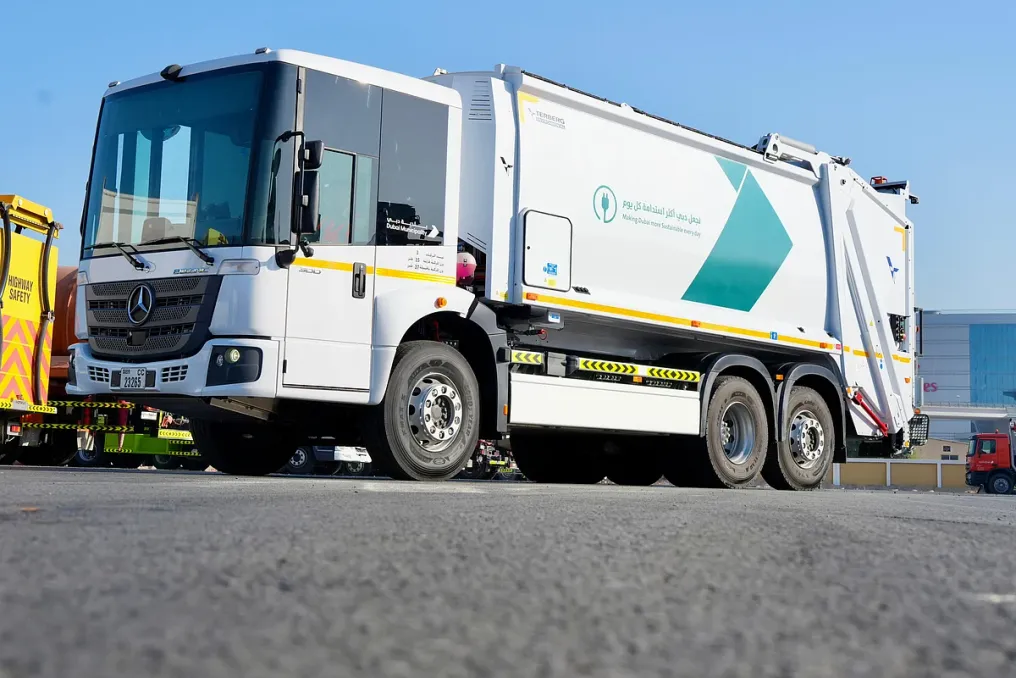
The Dubai Municipality has introduced its first fully electric vehicle for the collection and transportation of household waste. This move aims to enhance the environmental sustainability of cleaning processes in the emirate and reduce emissions from municipal services.

The vehicle is designed for daily waste collection across various areas of Dubai. It is equipped with three lithium-ion batteries totaling 2.2 tons and can cover distances from 100 to 150 kilometers without needing recharging. Thanks to a fast-charging system, the battery can charge from 20% to 80% in one hour and 45 minutes using a 160 kW charger.

The vehicle's capacity allows it to store up to 19 cubic meters of waste, with a maximum payload of 11 tons of compacted trash. It is compatible with various container sizes, including receptacles measuring 1.1 cubic meters, 360 liters, 240 liters, and 120 liters.

This initiative aligns with the Dubai Integrated Waste Management Strategy until 2041. This strategy aims to reduce waste generation by 18% and divert 100% of waste from landfills by 2041. These efforts support operational resilience and strengthen Dubai's position as a global model for a smart and eco-friendly city.

The vehicle is also fitted with an advanced electric compactor that supports various collection methods, including emptying public bins and collecting waste door-to-door. Furthermore, it is equipped with source-based weighing systems that record the weight of waste during container emptying.

Intelligent cameras are installed in the vehicle to enhance operational safety. They provide continuous monitoring of various work stages, as well as the movement of the vehicle and the surrounding environment. These systems improve driver visibility and contribute to safer maneuvering, thereby reducing risks for workers and other road users.

Safar stated that implementing electric vehicles in waste collection and transportation operations is a practical step towards utilizing clean and innovative technologies in daily activities. This further reinforces Dubai's status as a leading global city in sustainable development, innovation, and quality of life. Saeed Safar, Director of the Dubai Municipality Waste Operations Department, noted this.

He added that operating this vehicle is part of testing the actual performance of heavy electric vehicles under local climatic conditions and assessing their suitability for Dubai's operational needs. The results obtained will help create a scientific basis for potential future expansion of their use within municipal operations.

The Dubai Municipality has also trained a specialized operational team, which includes smart vehicle technicians and sanitation engineers, to ensure the efficient operation and maintenance of this vehicle. The electric compactor is planned to operate for two shifts, totaling 16 hours per day.
Similar stories

Scientists create unprecedented database with information on 2 thousand species of Cerrado plants
Read more
super.abril.com.br

Scientists create unprecedented database with information on 2 thousand species of Cerrado plants

In a pioneering initiative, researchers from Unesp and the Federal University of Minas Gerais (UFMG) developed a database called Cerrado Plant Traits (CPT). This collection gathers the functional characteristics of about two thousand native plant species of the Cerrado.

The project, started in 2024, centralizes data collected by more than one hundred Brazilian researchers working in the biome. The expectation is that CPT will help increase the presence of the planet's most diverse tropical savanna in global databases, assisting ecologists and specialists in designing research and restoration projects for the biome.

Functional characteristics refer to the morphological, physiological, anatomical, and phenological attributes of plants, explaining how each species interacts with its environment. Currently, the project has cataloged over one hundred thousand records related to approximately two thousand species, all standardized and made available under an open access policy. The researchers detailed CPT in an article in the journal Annals of Botany, describing the data collection and standardization method and pointing out the main deficiencies.

CPT covers a total of 154 functional characteristics, divided into seven groups according to the branches of plant morphology: whole plant, leaf, stem, root, flower, fruit, and seed. For example, the whole plant section includes data on height and regrowth capacity, while the fruit section provides information on coloration and traits related to seed dispersal. For the stem, information such as bark thickness, wood density, and water retention capacity was gathered.

The work to create this exclusive Cerrado repository began in 2024, following a meeting between biologists from Unesp and UFMG. Davi Rossatto, a professor at the Department of Biology of the Faculty of Agrarian and Veterinary Sciences (FCAV) at Unesp, explained that although his projects had already generated a large volume of data, this material remained restricted to specific groups or articles, without sharing. He is one of the initiators of the initiative.

Rossatto observed that, despite the existence of similar databases focused on temperate forests in Europe, the United States, and China, a collection dedicated exclusively to the functional characteristics of Cerrado plants is unprecedented. Alessandra Fidelis, a biologist at Unesp, and Fernando Silveira, a professor at UFMG, led the coordination of CPT.

The first steps involved contacting fellow researchers to present the project. After presentation meetings, several collaborators joined, agreeing to submit their data for standardization and processing, and are listed as creators of CPT in future scientific works.

The Cerrado belongs to the group of tropical savannas, ecosystems with high plant diversity. However, the Brazilian biome has specificities that attract international interest but remains underrepresented in large global databases. The creation of CPT aims to mitigate this imbalance.

In addition to supporting research, CPT can aid in the restoration of the Cerrado by providing technical support for regeneration projects. Rossatto emphasizes that instead of relying solely on the species name, functional characteristics can be more crucial for planning area recovery, allowing specific knowledge to be applied to the areas to be restored.

This open-access repository allows scientists worldwide to test ecological hypotheses on regional or global scales. According to Rossatto, analyzing these characteristics enables more detailed ecological comparisons, even allowing researchers from Africa or Australia to use the database to compare savannas from the three continents.

Current records cover preserved, degraded, and restored environments, with a predominance of whole plant and leaf characteristics. However, subterranean and reproductive characteristics are less represented. Future priorities include expanding the number of species (estimated between 12 and 13 thousand native species among angiosperms only), increasing geographical coverage, and diversifying record categories.

The initial survey identified asymmetries, such as the need for greater coverage in regions like Matopiba, an area under strong agricultural pressure. The underrepresentation of root functional characteristics was also noted, due to the difficulty and cost of study. Rossatto justifies the abundance of leaf data because they are easily removed for studies and are vital for plant metabolism.

Rossatto believes that with the established database, it will be possible to seek funding to fill gaps and expand coverage. He compares CPT to a software in its version 1.0, indicating that development will continue with a focus on a more accessible interface and the inclusion of new collaborators.

COP30 presents plan to raise $1.3 billion annually to combat climate crisis
Read more
noticiasaominuto.com

COP30 presents plan to raise $1.3 billion annually to combat climate crisis

The Brazilian presidency of the UN climate conference (COP30) released a detailed plan aimed at mobilizing $1.3 billion (equivalent to 1.17 billion euros) annually by 2035. This amount is intended to assist developing countries in facing the climate crisis.

The document, titled 'COP30 Presidency: Implementing the Baku to Belém Roadmap towards $1.3 Billion,' emphasizes that preventing the planet from exceeding the 1.5°C warming limit, as stipulated in the Paris Agreement, has moved from being merely a risk to a fundamental prerequisite for global planning.

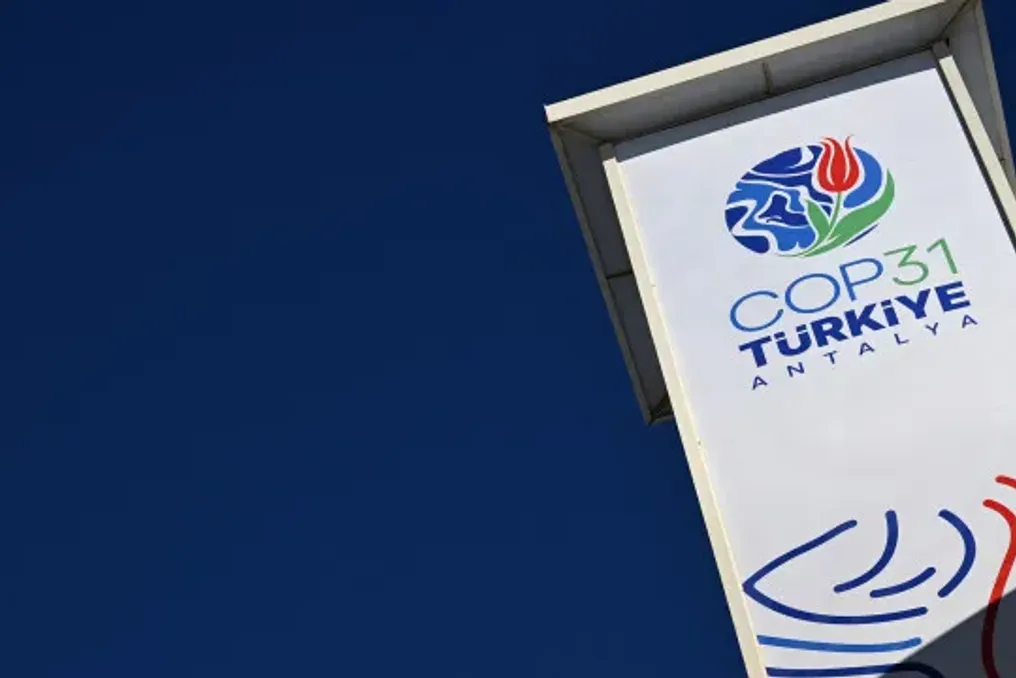
Ambassador André Corrêa do Lago, president of COP30, warned on the eve of the start of COP 31 in Antalya, Turkey, that the currently available flow of resources is insufficient. If the situation persists, the most vulnerable nations would receive only approximately $461 billion (413 billion euros) per year, resulting in an estimated funding deficit of $840 billion (753 billion euros).

This text, presented at the conclusion of Brazil's mandate in leading UN negotiations, is advisory in nature and seeks to achieve the financial goal set the previous year during the summit held in the Amazonian city of Belém.

To determine the methods of resource acquisition, Brazil invited renowned economists, including Esther Duflo, Nicholas Stern, and Gabriel Zucman. The proposed strategy integrates public sources from developed countries, private investments, and the creation of new international taxes applied to large fortunes and fossil fuels, totaling six revenue streams.

Private capital would be responsible for the largest portion, needing to multiply by more than nine to reach $882 billion annually (790 billion euros). This would be made possible through public risk mitigation mechanisms, such as government guarantees, insurance policies, and currency fluctuation protection.

Additionally, public assistance provided by rich countries and multilateral financial institutions would need to double, reaching $384 billion (344 billion euros) annually. The plan also foresees imposing new taxes on very wealthy individuals, financial transactions, aviation, and oil, aiming to capture an additional $129 billion (115 billion euros) per year.

To ensure compliance with international commitments, the incumbent presidency suggested implementing the 'Climate Finance Action Compass.' This will be an open-access digital platform designed to monitor the destination, speed, and scope of financial transfers.

According to the document, these guidelines aim to fulfill what was agreed upon at COP29 in Azerbaijan and the consensus of the decision adopted in Belém, where the international community recognized the urgency of raising resources to $1.3 billion per year (1.17 billion euros).

Sebastian Honner's beach house designed to account for future climate changes
Read more
archdaily.com.br

Sebastian Honner's beach house designed to account for future climate changes

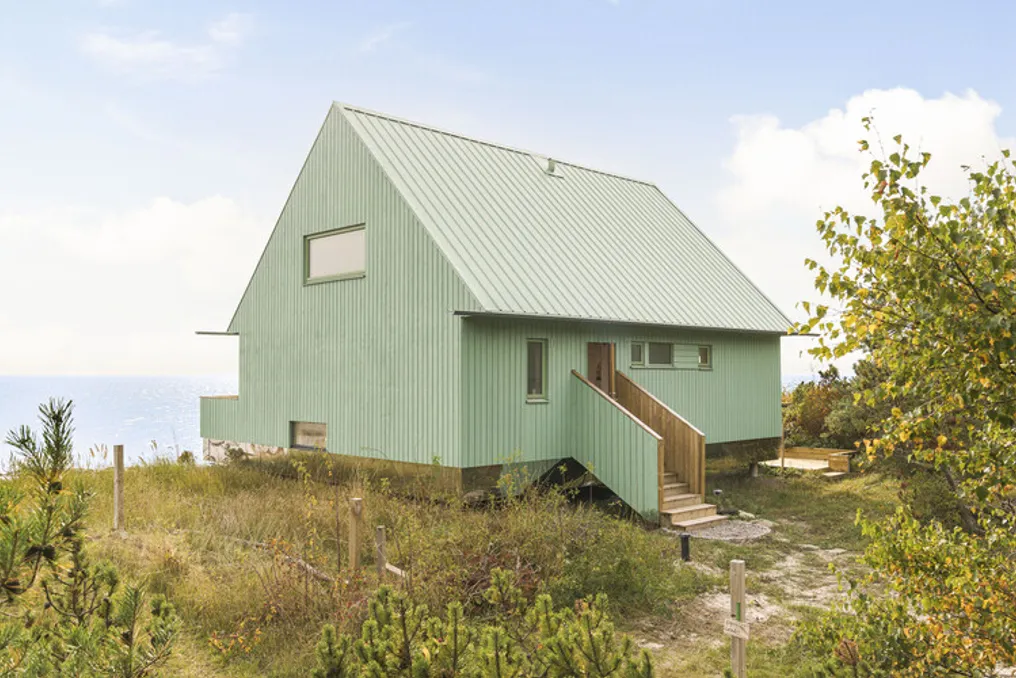
This beach house is a response to predicted climate change. The building was erected on stilts to withstand future storms and high tides, giving the impression that it is floating above the dunes.

Reflective metal elements enhance this feeling while concealing the load-bearing structure of the foundation beams, which, along with the stilts, allows the structure to be relocated in case of a future climate emergency.

The interior space was designed to maximize its seaside location. Views change depending on whether you are standing or sitting. For example, windows facing the adjacent public area are placed at a lower height so that local vegetation can be seen rather than passersby.

The attic window is also positioned low to give the building a more modest volume, reduce solar heat absorption, and provide a directed view of the waves breaking right off the beach.

Sweden is known for its conservative policy regarding building permits. The building is expected to remain in place for at least 100 years. If the plot is not suitable for such a period, construction typically does not receive approval.

This plot has building rights according to an old master plan; however, obtaining a building license proved to be a complex process due to the municipality's conservative approach.

Popular