NASA begins selection of astronauts to support new lunar missions of the Artemis program
Read more
Olhar Digital
olhardigital.com.br

NASA begins selection of astronauts to support new lunar missions of the Artemis program

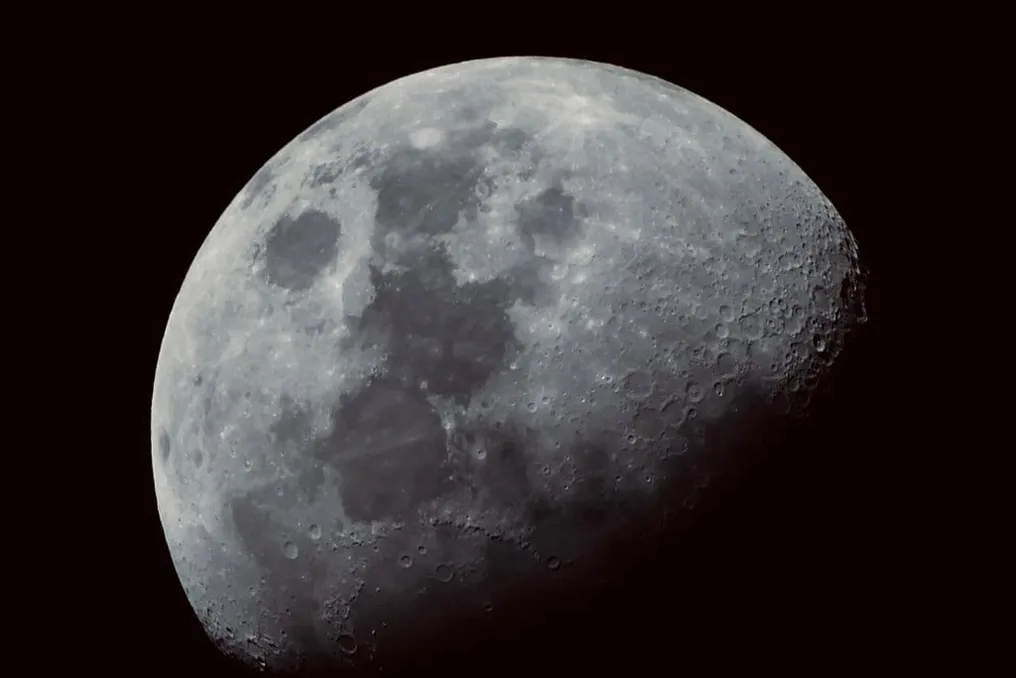
NASA is conducting a recruitment drive for new astronauts with the goal of expanding its personnel roster to meet the needs of the Artemis program. This program aims to return humans to the lunar surface and establish a lasting presence on the satellite.

The announcement was made last Saturday, the 7th, during an event held at the Kennedy Space Center in the United States, focused on promoting lunar exploration and advancements in aviation and technology. Interested individuals have until December 3, 2026, to submit their applications.

The agency plans to finalize the selection of new members by the end of 2027, with training scheduled to begin in early 2028. It is expected that this new cohort will start their preparations in the same year that NASA intends to resume crewed flights to the Moon, after a hiatus of over 50 years.

The last astronaut selection took place two years ago and generated over 8,000 applications, resulting in only ten candidates being chosen in September 2025. Currently, NASA has 32 active astronauts, a number considered insufficient for plans to increase human presence beyond low Earth orbit.

The impetus for the lunar campaign increased in April 2026 when the Artemis II mission crew performed a flyby of the Moon. The subsequent phase will be Artemis 3, scheduled for the Northern Hemisphere summer of 2027.

Artemis 3 will be led by Randy Bresnik, who will travel to Earth orbit accompanied by three other crew members. The purpose of this mission is to practice docking the capsule with two lunar landing modules: one developed by SpaceX, belonging to Elon Musk, and another from Blue Origin, owned by Jeff Bezos. Unlike the previous mission, Artemis 3 will not include a lunar flyby; the Earth orbit training will serve as preparation for Artemis 4, scheduled for the following year, which will aim to take two astronauts to an area near the lunar south pole.

Randy Bresnik told the Associated Press on Saturday, the 7th, that there is 'much more work than astronauts.' Requirements for candidates include being U.S. citizens, possessing a university degree, and having professional experience. Patience is also seen as an essential quality, given that the preparation process can take several years.

The mandatory training lasts two years and can be quite rigorous. Even after this phase, selected individuals may have to wait several more years before being assigned to a space mission. Frank Rubio, a member of the Artemis 3 crew, emphasized that going to the Moon constitutes only a small part of an astronaut's responsibilities. He holds the American record for consecutive time in space, totaling 371 days.

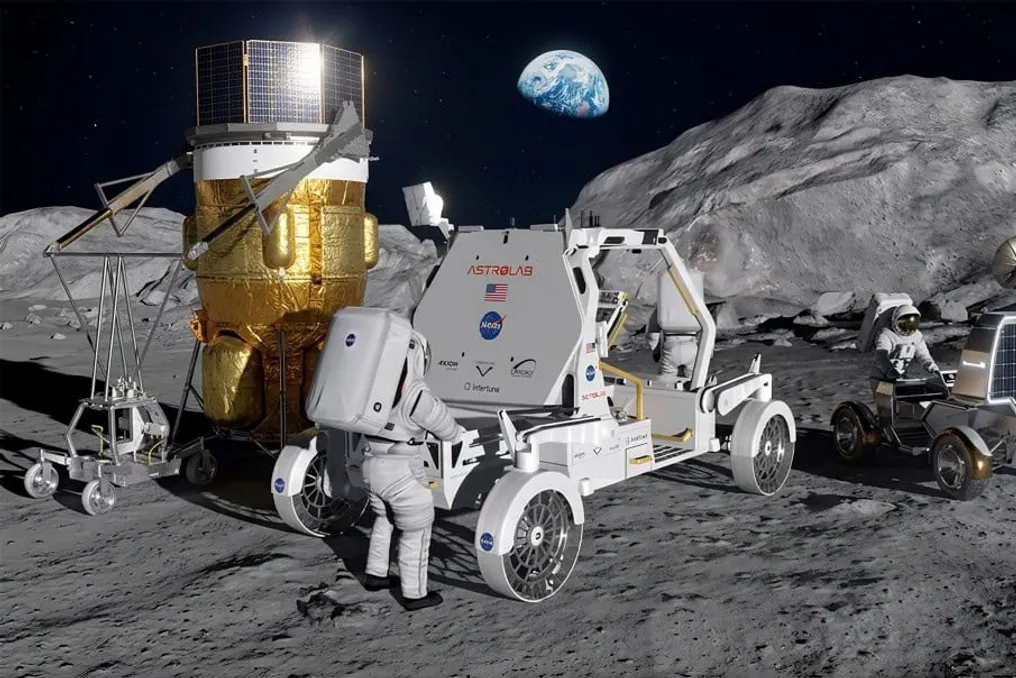
According to Rubio, these professionals must understand that much of their time will be dedicated to other tasks necessary to enable the missions. NASA's projects extend beyond new crewed landings; the agency aims to build a permanent lunar base, which will be gradually established through the deployment of exploration vehicles, robots, infrastructure, and power supply systems.

The expansion of the astronaut corps integrates into this strategic planning, aiming to accelerate human presence outside low Earth orbit. The selection announced in November will mark the 25th class of NASA astronauts, with the first being formed in 1959 and known as the Mercury Seven.

Similar stories

NASA postpones crewed Moon landing to 2028 and alters test mission plans
Read more
olhardigital.com.br

NASA postpones crewed Moon landing to 2028 and alters test mission plans

NASA has released new guidelines to accelerate the return of astronauts to the lunar surface, altering the initial schedule. The agency plans to execute a test mission in Earth orbit in 2027, concentrating the next crewed landing attempt on the Artemis 4 mission, scheduled for 2028.

These updates were communicated on October 23 by NASA Administrator Jared Isaacman, along with other agency leaders. The overall goal of this strategic adjustment is to reduce technical risks, expedite the development of necessary equipment, and pave the way for a continuous human presence on the natural satellite.

The main modification concerns the Artemis 3 mission. Unlike previous planning, which anticipated a lunar landing, this mission will focus on testing crucial components for future activities on the Moon's surface.

Four astronauts will board the Orion capsule, which will be launched by the SLS (Space Launch System) rocket. This journey is expected to last 14 days and will take place in low Earth orbit. During this period, NASA will verify the rendezvous, approach, and docking procedures between Orion and prototypes of lunar modules created by SpaceX and Blue Origin.

The crewed landing is now set for Artemis 4 in 2028. This mission will also utilize the Orion capsule and the SLS rocket, with the launch scheduled from the Kennedy Space Center in Florida, USA.

To reach the lunar surface, NASA is evaluating two transport options provided by private companies. SpaceX proposes refueling the Starship in Earth orbit, at which point the spacecraft will meet Orion to head toward the Moon. On the other hand, Blue Origin plans to use orbital transfer stages in Earth orbit to propel its Blue Moon Mark 2 module to the Moon; this vehicle will rendezvous with Orion in a lunar orbit closer to the satellite before beginning the descent.

Both companies are committed to making their systems available for the 2028 crewed landing. Furthermore, NASA is studying two possible configurations for the upper stage of the SLS rocket on Artemis 4: maintaining the existing cryogenic propulsion stage or adopting an extended version of the Centaur V, manufactured by United Launch Alliance, which has greater propellant carrying capacity. This analysis aims to keep options open and prevent the program from depending on only one configuration.

Another reported advancement relates to the equipment astronauts will use on the lunar surface. The agency has partnered with Axiom Space to develop a second type of space suit, lighter, called the Sortie suit. This new equipment will weigh about half as much as the main suit developed by Axiom and will be used during the first lunar walks. It is important to note that it will not replace the primary Axiom model, which will remain reserved for more extensive and challenging tasks in future missions.

With the progress of the Artemis program, NASA aims to conduct progressively more complex expeditions in the lunar south pole region, expanding scientific knowledge about the satellite and establishing a lasting human presence beyond Earth. The agency also views these operations as part of the technological and operational preparation for future crewed missions to Mars.

China details plan to send astronauts to the Moon with crewed mission by 2030
Read more
olhardigital.com.br

China details plan to send astronauts to the Moon with crewed mission by 2030

China has disclosed new details regarding its scheme to execute a crewed mission to the Moon before 2030. This plan involves launching two rockets, meeting two spacecraft in lunar orbit, and sending a team of three astronauts. Of this group, two individuals will descend to the surface of the natural satellite to conduct scientific investigations.

The planning details were presented by Wang Xiang, who serves as the deputy chief designer of the Chinese crewed space program and is responsible for the lunar exploration project. This presentation took place during the 7th Symposium on Crewed Spaceflights, held in Beijing, China, from October 31 to November 1, 2026.

The mission structure calls for the use of two Long March 10 rockets. One of these rockets will be responsible for transporting the crewed spacecraft Mengzhou, while the second will carry the lunar landing module named Lanyue. After both reach lunar orbit, the vehicles must meet and dock. Subsequently, the astronauts will transfer from Mengzhou to Lanyue, which will perform the landing on the lunar surface.

The decision to use two separate launches is linked to the capabilities of Chinese rockets. Instead of concentrating all mission elements into a single vehicle, the country opted to send the crewed spacecraft and the landing module separately. This approach is called lunar orbit rendezvous, requiring an approach and docking maneuver after the equipment arrives around the Moon.

Once the docking operation is complete, two of the three crew members will enter the Lanyue module to begin the descent. The third astronaut will remain in Mengzhou, which will serve as the support vehicle and for the return to Earth. This configuration resembles the architecture used by NASA's Apollo program in the 1960s and 1970s, when the lunar module also separated from the main spacecraft to go to the surface and return to orbit for rendezvous.

Three pieces of equipment are crucial for China's attempt to reach the Moon. The name Lanyue means something close to 'embracing the Moon,' and the design of this module was introduced in 2023, officially receiving this name the following year.

Wang Xiang clarified that the crewed mission will not occur without a series of prior checks, following a gradual progression: first, validating the equipment in near-Earth flights, and only then proceeding to operations in the lunar environment. The established timeline covers several phases, although these dates are merely a disclosed plan and not guarantees of execution.

Some preparations have already been made by China, including emergency escape tests of the Mengzhou spacecraft, simulations of the Lanyue module's landing and takeoff, and a low-altitude test of the Long March 10 rocket. Furthermore, the strategy includes using the Tiangong space station, located in low Earth orbit, to test procedures and technologies before they are sent to the Moon.

This plan positions China in a technological and strategic competition with the United States, which is also seeking to return astronauts to the lunar surface. While the Chinese goal is to reach the satellite before 2030, NASA uses a distinct architecture based on the Orion spacecraft and landing modules developed by private companies.

The rivalry goes beyond merely replicating the Apollo missions; both countries have plans to establish a more sustainable human presence in the lunar region. Within the Chinese scope, the long-term project includes building the Lunar International Research Station, an initiative that envisions collaboration with international partners. The construction of this station is planned to begin in 2031, utilizing the heavy-lift Long March 9 rocket in the future.

Currently, the priority is proving the integrated functionality of all components of the crewed mission. Among the most complex stages of the project are the spacecraft rendezvous, the lunar module descent, and the astronauts' return to orbit.

Four NASA volunteers complete Mars mission simulation after 378 days of isolation
Read more
olhardigital.com.br

Four NASA volunteers complete Mars mission simulation after 378 days of isolation

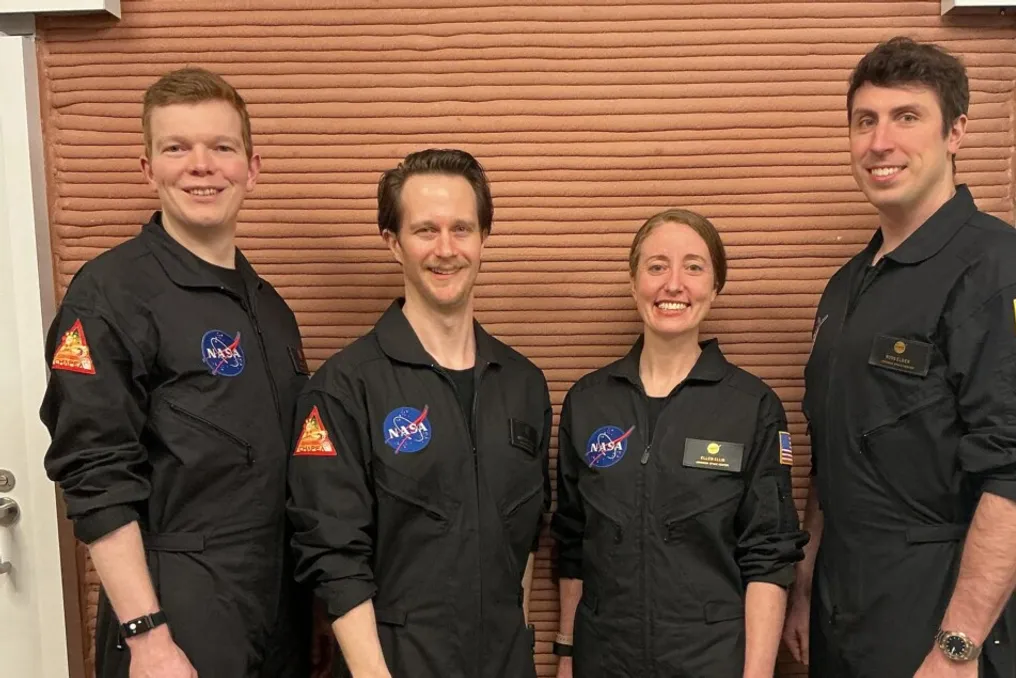
Four NASA volunteers concluded a confinement experience last Saturday (the 31st) that lasted 378 days, replicating the conditions of a crewed mission to Mars. This group resided in a 158 square meter habitat located at the Johnson Space Center in Houston, USA, carrying out preparatory tasks for future journeys to the Red Planet.

This initiative is part of the Crew Health and Performance Exploration Analog (CHAPEA) program, which aims to investigate how humans would respond to the physical and psychological challenges inherent in a long-duration space expedition.

The second mission under this program began on October 19, 2025. The participants included Ross Elder, serving as commander; Ellen Ellis, responsible for medical affairs; Matthew Montgomery, designated as science officer; and James Spicer, flight engineer.

Ellen Ellis commented after leaving the habitat with the other members that it was a period of 'a year and a half, simulation astronauts living in captivity by free will.'

The primary focus of CHAPEA is to understand the impact that prolonged isolation, supply restrictions, and communication difficulties have on the health and performance of a space crew. The data obtained may assist researchers in developing methods to keep astronauts healthy, productive, and mentally fit during extended space missions.

Additionally, NASA plans to use these results to improve protocols for medical assistance, psychological support, nutrition, and the organization of activities in isolated environments.

After leaving the habitat, the four volunteers will begin a subsequent phase consisting of two weeks dedicated to post-mission evaluations and discussions with agency scientists, aiming to analyze team behavior and identify lessons applicable to future expeditions.

This is the second time NASA has conducted an experiment of this type. The first CHAPEA mission took place between 2023 and 2024, when another group of four people remained confined for the same period of 378 days.

NASA aims to conduct a crewed mission to Mars in the 2030s. Until reaching this milestone, the agency is focused on developing technologies and executing experiments aimed at mitigating the risks associated with such long journeys. The studies may also benefit lunar exploration plans, particularly those related to human presence on the Moon.

According to the director of the Johnson Space Center, CHAPEA experiences are crucial for paving the way for future missions, starting with the Moon and subsequently Mars.

Popular