Traditional Iranian methods of water resource management, including historical systems of water sharing, rainwater harvesting, and community-supported reservoirs, can offer valuable lessons for solving current water issues, according to Atousa Momeni.
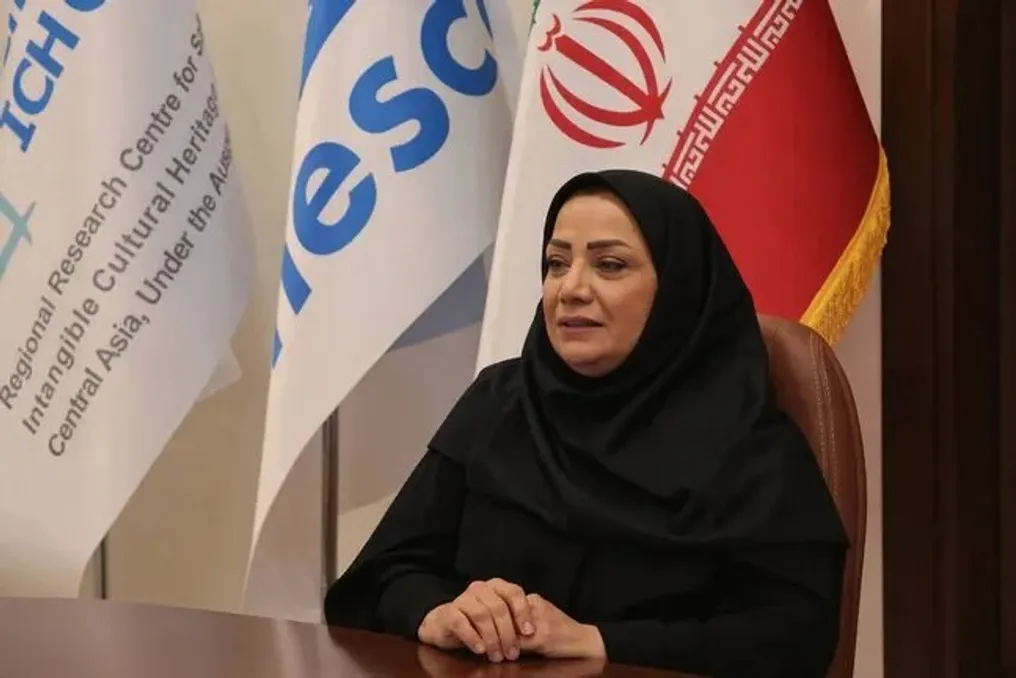
Atousa Momeni, head of the regional research center in Tehran dedicated to preserving intangible cultural heritage in West and Central Asia, emphasized that protecting living heritage requires more than just registering cultural practices in national or international lists. She noted that it depends on the active participation of local communities, the transmission of traditional knowledge to the younger generation, and the preservation of the social and ecological conditions that allow these practices to exist.
The Tehran center has chosen the theme of the year as 'Living Heritage and Water,' which will be celebrated on Monday, November 9, 2026. As part of this event, the 'Living Heritage and Water Award' will be presented to three selected initiatives from the provinces of Semnan, Hormozgan, and Fars.
The goal of the event is to demonstrate how traditional knowledge and community-based practices can complement modern approaches to water resource management, especially in regions facing drought, climate change, and increasing pressure on water resources.
Momeni stated: 'Water is one of the most evident expressions of the interconnection between historical knowledge, living culture, and the future of our land.' She clarified that Iran's heritage in water use extends far beyond known qanats, reservoirs, and historical hydraulic structures.
Over centuries, local communities have accumulated extensive knowledge about identifying, collecting, storing, distributing, and responsibly using water in arid and semi-arid conditions. The annual celebration, she said, should not be viewed as an isolated ceremonial event. Among the programs approved by the center's governing board is the identification, documentation, and implementation of successful experiences in preserving traditional water-related knowledge.
This initiative is also aimed at encouraging research, experience exchange, and regional cooperation among countries in West and Central Asia, where water scarcity, climate change, and humanitarian issues are becoming increasingly common concerns.
Momeni added: 'For us, the award is not the end of the process; it is the beginning of broader efforts to integrate valuable knowledge, strengthen community participation, and create opportunities for sharing successful experiences.' When explaining the three selected initiatives, Momeni pointed out that each illustrates a different facet of the link between intangible heritage and contemporary life.
The selected experience in Semnan relates to a traditional system of water distribution and management. Its significance lies not only in the physical infrastructure but also in the customary rules regulating water rights, collective responsibility, and cooperation among users. Momeni stressed: 'The water heritage in Semnan is not just a history of hydraulic engineering; it is also a history of social organization and the wisdom of living in water-scarce conditions.'
On Kish Island in Hormozgan province, the traditional practice known as 'Heyrab' demonstrates how rainwater harvesting in historical reservoirs can be linked to community participation and modern technological capabilities. Momeni believes this experience can provide useful insights for coastal and island communities where freshwater reserves are particularly vulnerable.
The third initiative, located in Karmostaj, a village in the Larestan region of Fars province, focuses on restoring traditional reservoirs and water storage facilities with the involvement of local residents and philanthropists. These three projects show how local knowledge, collective responsibility, and cultural attachment can contribute to maintaining traditional practices while addressing modern needs.
Momeni insisted that local communities must remain at the center of conservation efforts, in line with the 2003 UNESCO Convention for the Safeguarding of the Intangible Cultural Heritage, which recognizes their central role in identifying and maintaining their heritage. She noted that the ceremony in Tehran will give representatives of the selected initiatives a chance to explain their work, ensuring that the discussion is not limited to officials and academics.
'Water heritage should not be told exclusively by experts and administrators,' she said, pointing to traditional water users, farmers, artisans, reservoir builders, and those who maintain customary water-sharing systems as the true bearers of this knowledge. She added: 'Living heritage cannot be preserved only for people; it must be preserved with people and through their participation.'
Addressing the broader issue of heritage protection, Momeni stated that the number of registered elements should not be considered the main indicator of success. She emphasized that traditional knowledge can disappear even after being included in a national or international heritage list if practitioners lose the ability to pass it on, face economic difficulties, or the social and ecological environment supporting it gradually disappears.
In her view, more important questions are whether knowledge holders can continue to transmit their experience, whether the younger generation has the motivation and opportunity to learn, and whether local communities are involved in decisions concerning their heritage. For example, restoring a historical reservoir would be insufficient if the traditional skills needed for its construction and maintenance cease to be passed down. Similarly, documenting a water-sharing system will only preserve a historical record if the experience of those who manage it is ignored.
'Registration is the beginning of recognition; preservation is a commitment to the continuous life of heritage,' she concluded. Momeni summarized the main idea of the year simply: 'The future of water depends on the memory of water.'
Nevertheless, she warned that one cannot assume that solutions to today's complex water problems can be found by simply returning to the past. Historical experience should be considered alongside modern scientific developments and technologies. For the younger generation, studying traditional water management methods is not only about acquiring old technical skills but also about understanding fairness, collective responsibility, moderation, and respect for the rights of other and future generations. 'These are the values we hope to convey to society through this year's celebration.'
_