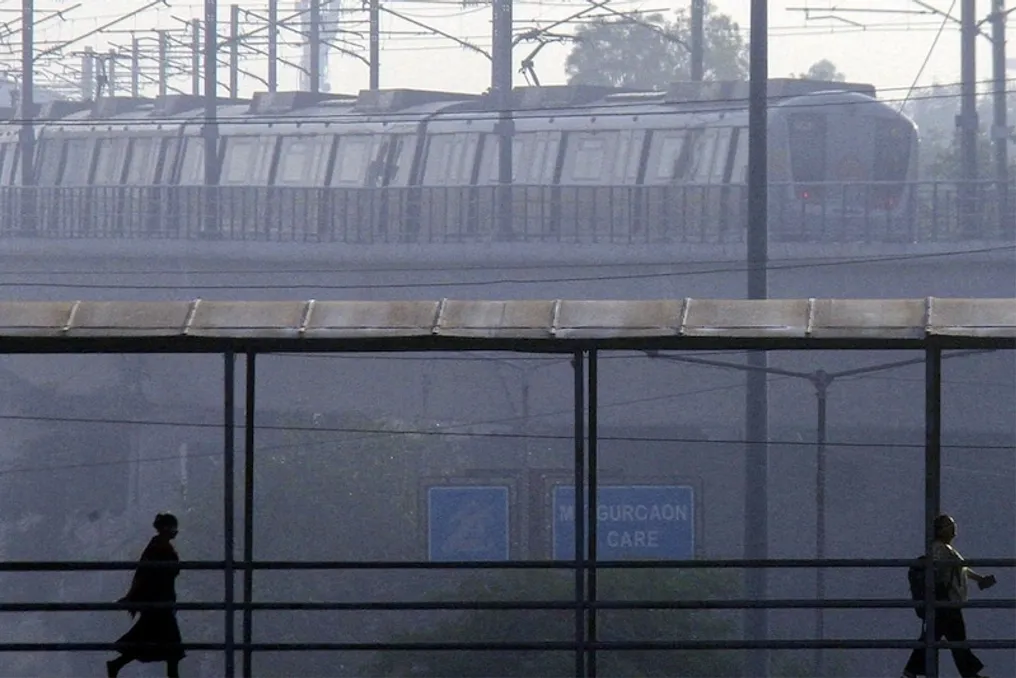
Delhi's Air Quality Worsens to 'Very Poor' Ahead of Diwali Celebration
Read more
Aaj Tak
www.aajtak.in

Delhi's Air Quality Worsens to 'Very Poor' Ahead of Diwali Celebration

Ahead of the Diwali celebration, air quality in Delhi reached the 'very poor' category. On Sunday, the average Air Quality Index (AQI) in the city was 376. A dense haze hung over the entire city, significantly reducing visibility.

Experts warn that after the Diwali celebrations and the use of fireworks on Monday, air quality could transition into the severe category. Adverse weather conditions, transport emissions, and seasonal stubble burning in neighboring states could exacerbate the situation.

Of the 59 monitoring stations that provided data on Sunday, 12 locations were in the severe category, and 22 were in the very poor category. The worst reading was recorded in Jahangirpuri, where the AQI reached 463. On Saturday, the average AQI was 369, and on Sunday, it rose to 376, close to the severe category threshold of 400.

According to the Air Quality Early Warning System (EWS), the air may remain in the severe category for several days starting from Monday, November 9th. Meteorologists and air quality specialists point to adverse weather conditions as the main cause. The ventilation index is below six thousand square meters per second, and the average wind speed is less than ten kilometers per hour. Under such conditions, pollutants cannot disperse and accumulate over the city.

Smoke from Diwali fireworks and vehicle emissions made PM 2.5 the primary pollutant. According to the decision-making system, the transport sector's contribution on Sunday was about 19 percent. Stubble burning contributed 3.5 percent, and it is expected to remain around three percent on Monday.

The Central Pollution Control Board defines categories as follows: 0 to 50 — good, 51 to 100 — satisfactory, 101 to 200 — moderate, 201 to 300 — poor, 301 to 400 — very poor, and 401 to 500 — severe. Level 376 falls into the very poor category, close to severe. Such air causes breathing problems, especially for children, the elderly, and people with lung diseases. Furthermore, the dense fog reduces visibility, affecting traffic movement. There are concerns that pollution may accelerate after the Diwali fireworks.

This pollution problem recurs every year in Delhi at the start of winter. The combination of stubble burning, transport, and weather conditions makes the air toxic. Following the EWS warning, both the administration and citizens must be vigilant. Recommended measures include refraining from unnecessary driving, wearing masks, and staying indoors. Currently, the air is very poor, and the next few days may be even more difficult. Residents of the capital should exercise caution regarding their health.
Similar stories

Air remains dangerous in Delhi: AQI reached 450 in Punjabi Bagh, over 11 areas exceeded the 400 mark
Read more
www.aajtak.in

Air remains dangerous in Delhi: AQI reached 450 in Punjabi Bagh, over 11 areas exceeded the 400 mark

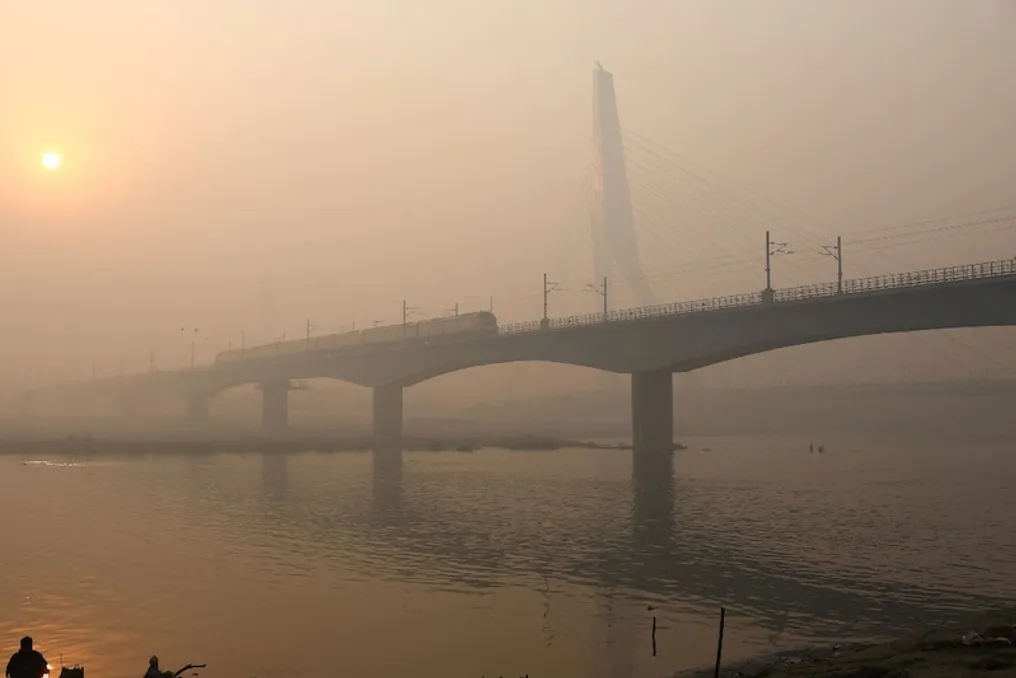
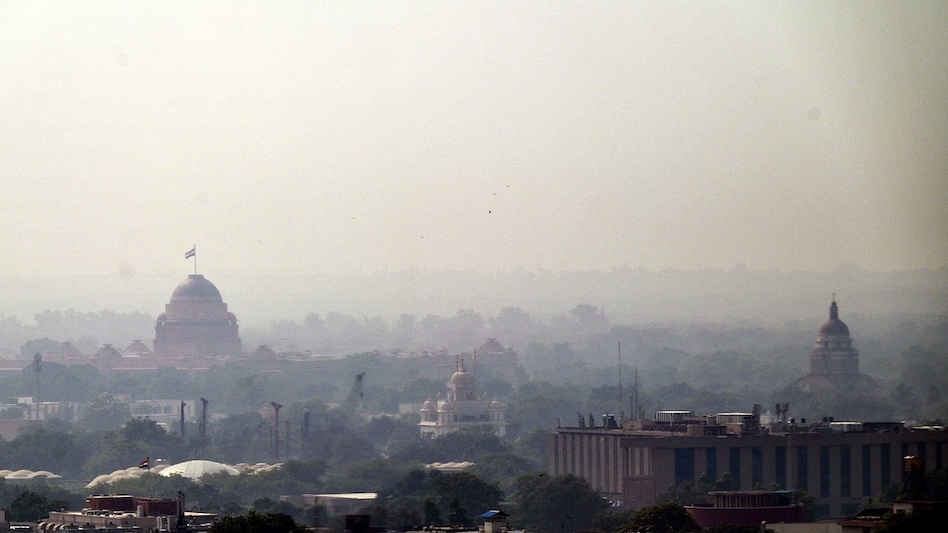
The air quality situation in the capital city of Delhi remains extremely alarming. Even on Sunday morning, smog hung over many areas, and the Air Quality Index (AQI) was recorded at a dangerous level. According to fresh data published by the Central Pollution Control Board (CPCB) at 6 am, the AQI is in the 'hazardous' category in many parts of the city.

The most toxic air was noted in the Punjabi Bagh area, where the AQI reached 450. Nearby, in RK Puram, the reading was 449, and in IIT Delhi—446. The situation also remained very poor in Dwarka, West Delhi, where the AQI stood at 444.

Furthermore, an AQI of 425 was recorded in Matura Road, 423 in Sirfort, and 423 in the North Campus (DU). The areas of Pusa, Chandni Chowk, Burari Crossing, and NSUT Jafarpur were also in the 'hazardous' category with AQI readings above 400: 415, 417, 411, and 409, respectively.

Even where the AQI was below 400, breathing there was still difficult. According to statistics, Narela recorded a reading of 399, ITO registered 396, and Mandir Marg showed 393. Uttam Nagar had an AQI of 373, Burari 370, Talkatora Garden 369, and Ay Nagar also recorded an AQI of 369.

Similarly, Vasundhara Enclave had an AQI of 356, while Tikri Kalan and Badarpur recorded a reading of 349. In Karawal, the AQI reached 337, and on Lodhi Road (IITM)—333.

This level of air pollution in Delhi-NCR before Diwali poses a serious threat to public health. Despite the implementation of GRAP-3 restrictions by the administration, no significant improvement in air quality has been observed.

Delhi's air quality deteriorates: AQI reaches 349
Read more
www.aajtak.in

Delhi's air quality deteriorates: AQI reaches 349

The air in the capital city of Delhi has become extremely polluted this season. On Monday morning, a thick haze hung over the city, and pollution levels sharply increased. Although previous rains provided some relief, the air once again turned toxic.

According to data from the Central Pollution Control Board (CPCB), at 7:05 AM on Monday, the Air Quality Index (AQI) reached 349, which falls into the 'very poor' category. The average daily AQI on Sunday was 261 (poor), while the day before that it was 117 (moderate). On Friday after the rain, the AQI dropped to 60, marking the cleanest day in October in four years, but the situation worsened again.

Ninety-eight percent of the available data was collected from 58 out of 59 air quality monitoring stations in Delhi. At 36 of these stations, the air was in the 'very poor' category. The Jahangirpuri station was the only one where the AQI reached 417 and entered the 'hazardous' category. Five stations showed a 'moderate' level, and the rest were classified as 'poor.'

In the morning, PM2.5 was the main pollutant at most stations. PM2.5 was the primary source of pollution at 51 of the 58 stations, and PM10 at the remaining seven. CPCB defines air quality as follows: 0-50 — good, 51-100 — satisfactory, 101-200 — moderate, 201-300 — poor, 301-400 — very poor, and 401-500 — hazardous.

According to NASA satellite observations, 1394 instances of field burning were detected in Punjab and Haryana between November 1 and November 1: 1249 in Punjab and 145 in Haryana. Only 171 fires were registered on November 1. Last year, 1861 fires were detected during a similar period. However, this data does not reflect the full picture, as most straw is now burned in the evening. In 2025, about 98 percent of fires occurred after 3:00 PM, compared to 94 percent in 2024. Since the satellite passes around 1:30 PM, evening fires often go unnoticed. These burnings are one of the main external factors affecting the air in Delhi.

The rise in AQI is due to a combination of several scientific reasons. Firstly, there are local pollution sources: vehicle exhaust, factories, construction work, and road dust release pollutants daily. Rain washed away these substances, but as soon as the rain stopped, these sources became active again. Secondly, a significant factor is the smog from straw burning in Punjab and Haryana, which is carried by the wind into Delhi-NCR. Thirdly, and this is a very important factor, are adverse weather conditions. Meteorologist Navdeep Dahiya noted that the wind is blowing from the northwest and has a very low speed, meaning it is calm. With calm winds, pollutants do not disperse and remain in the air for a long time. During winter, temperature inversion is often observed, where the air near the ground remains cold, and a warm layer forms above it. This layer prevents pollutants from rising, causing them to accumulate near the ground surface. PM2.5 particles are very small and can penetrate the lungs, coming from transport, burning, and industry. When the wind is still, these particles easily accumulate, and the AQI rises quickly. With the approach of Diwali, the use of fireworks and burning may intensify pollution.

Meteorologist Navdeep Dahiya warned that the smog season has begun. Most sensors in Delhi-NCR show an AQI above 300, and at night in many places, it approaches 400-500. With calm winds from the northwest, all emissions will remain in the atmosphere for a long time. Favorable weather conditions are not expected for the next seven to ten days, which means a possible further intensification of smog. This year, Delhi last recorded 'very poor' air quality on February 11, when the average AQI was 305; before that, on February 4, it reached 339. The worsening situation in early November is causing concern.

The government is implementing measures to combat smog and is carrying out pollution control measures. Fines amounting to millions of rupees have been imposed in a single day, and many vehicles have been impounded. However, long-term relief is only possible with a reduction in field fires, decreased transport emissions, and favorable weather conditions. Citizens are advised to spend less time outdoors in the morning and evening, use masks, and pay special attention to children and the elderly. Home air purifiers can help. The air in Delhi reached the 'very poor' category for the first time this season. After the relief from the rains, pollution took over again. Straw burning, local emissions, and adverse weather jointly increase the AQI. From a scientific point of view, calm wind and temperature keep pollutants near the ground. The situation may worsen in the coming days. Only caution and collective efforts can bring relief.

Popular