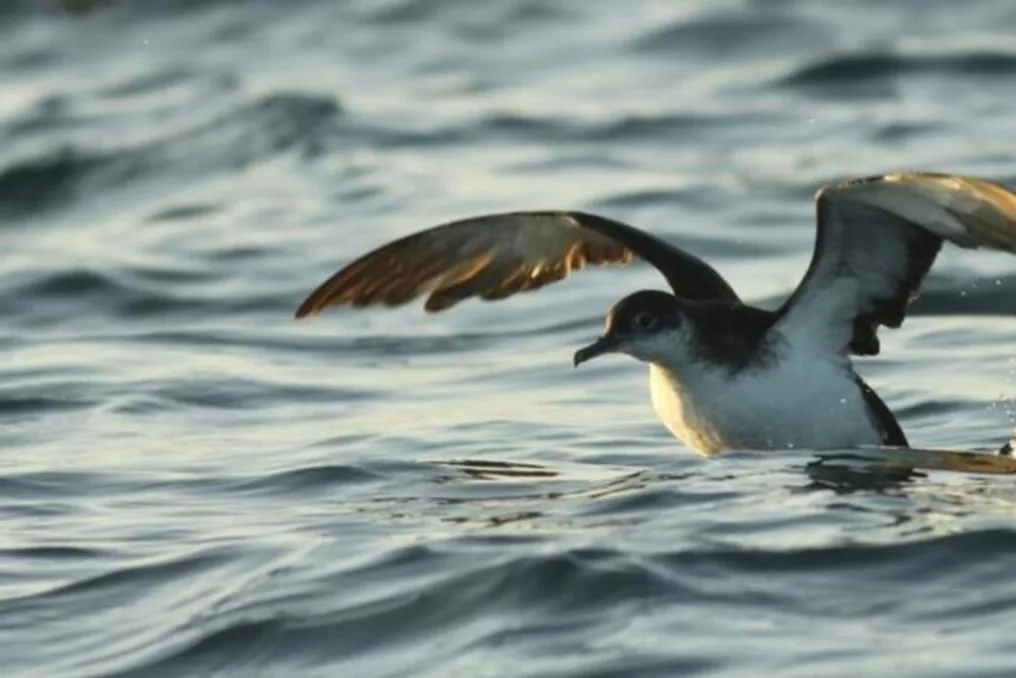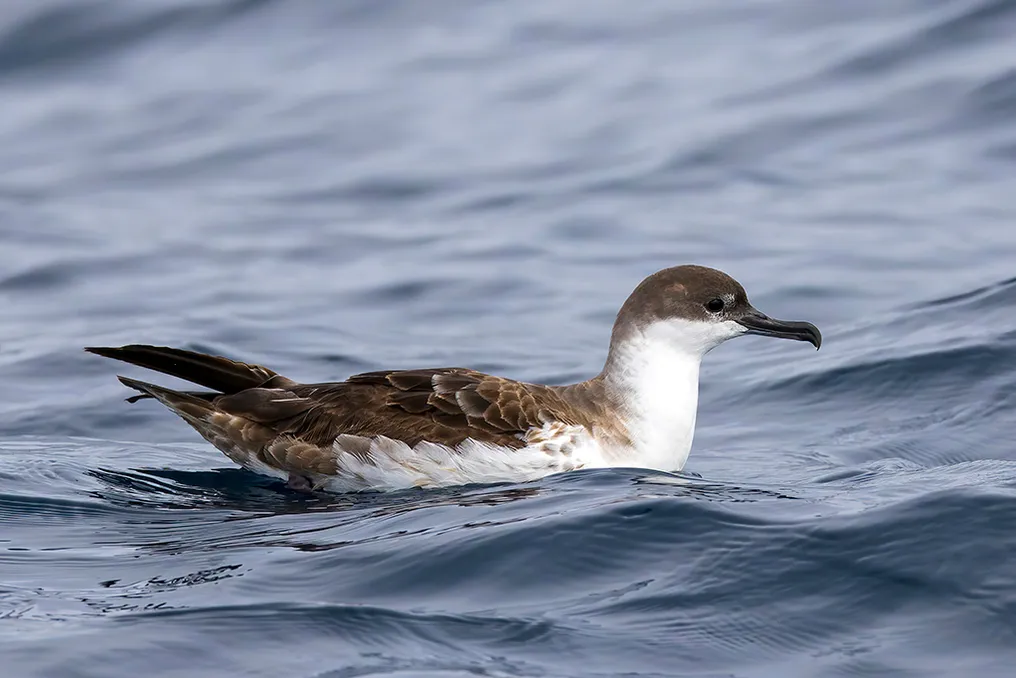
The disorder known as jet lag does not only affect humans; research indicates that certain birds are also susceptible to it.
The puffins (Puffinus puffinus), when flying rapidly eastward on their return to the nest, experience a desynchronization in their internal biological clock relative to the local time zone. These changes, analogous to human jet lag, cause slight disorientation, leading the birds to alter their trajectories by up to 15 degrees.
However, researchers emphasize that this effect is minor and does not represent a significant threat to the birds' journey. They suggest that the species did not evolve to prevent jet lag because the resulting error is so small that it does not compromise flight.
These findings were detailed in an article published in the journal Science on October 29.
Jet lag mechanism in birds
Similar to humans, jet lag in these birds is linked to their internal circadian rhythm. This mechanism is fundamental for regulating vital aspects such as sleep, feeding, reproduction, and navigation, using the alternation between light and darkness as a reference to determine the organic rhythm.
During their oceanic crossings, puffins use the sun as a guide to return to the nest, defining the flight direction based on the star's position. However, since the solar position varies throughout the day, they rely on their internal clocks to interpret these changes and maintain the correct course.
This ability is crucial, given that puffins are medium-sized seabirds that spend most of their lives over the open ocean. During the breeding season, the pair splits up to incubate their single egg: while one remains in the nest, the other may spend up to two weeks in the Atlantic Ocean searching for food, often hundreds of kilometers west of the colony.
On the return flight, heading east, they fly at high speed to find their mate, a journey that is often completed in just one day. Scientists suspected that this high speed was the cause of jet lag, as crossing time zones rapidly exceeds the processing capacity of their biological systems. Upon returning, they head to areas where the sun rises earlier, causing their internal clock to lag by up to one hour compared to the local solar time. Thus, they formulated the hypothesis that this would affect their solar compasses and, consequently, the overall accuracy of navigation.
Route deviations
To validate this theory, researchers analyzed GPS tracking data collected over twenty years, involving 1,045 puffins during the breeding period. A total of 3,688 foraging trips were recorded, of which the team managed to isolate 1,837 uninterrupted flights back to the nest, heading east.
The prediction was that jet lag would induce a subtle deviation in the route, clockwise. This expectation was confirmed by the data, which showed deviations of up to 15 degrees in the puffins' routes. However, this deviation is not classified as significant.
Considering that the birds continuously adjust their route, deviations of this magnitude probably do not have a considerable impact on the total trajectory. The authors estimate that, in a trip of approximately one thousand kilometers, an average error of seven degrees would add only about 5 kilometers to the journey.
With the knowledge that puffins suffer from jet lag, the subsequent focus of the researchers is to investigate other impacts of this phenomenon, such as possible errors in the schedule of essential behaviors or physiological effects, as observed in humans. Although the study focused specifically on the puffin, researchers speculate that other animals undertaking long journeys, including various bird species, bats, and insects, may also be affected by jet lag.