Honda factory in Manaus produces more French bread than motorcycles in a day
Read more
AutoPapo
autopapo.com.br

Honda factory in Manaus produces more French bread than motorcycles in a day

Honda celebrated fifty years of motorcycle manufacturing in Brazil and, in celebration, announced an investment of R$ 3.3 billion in its Manaus plant (AM). Furthermore, an archive was inaugurated at the unit documenting the brand's trajectory in the country with 37 motorcycles.

This contribution aims to increase production capacity to 2.3 million annual motorcycles by 2029, surpassing the current level of approximately 1.6 million.

Bread production surpasses motorcycle production

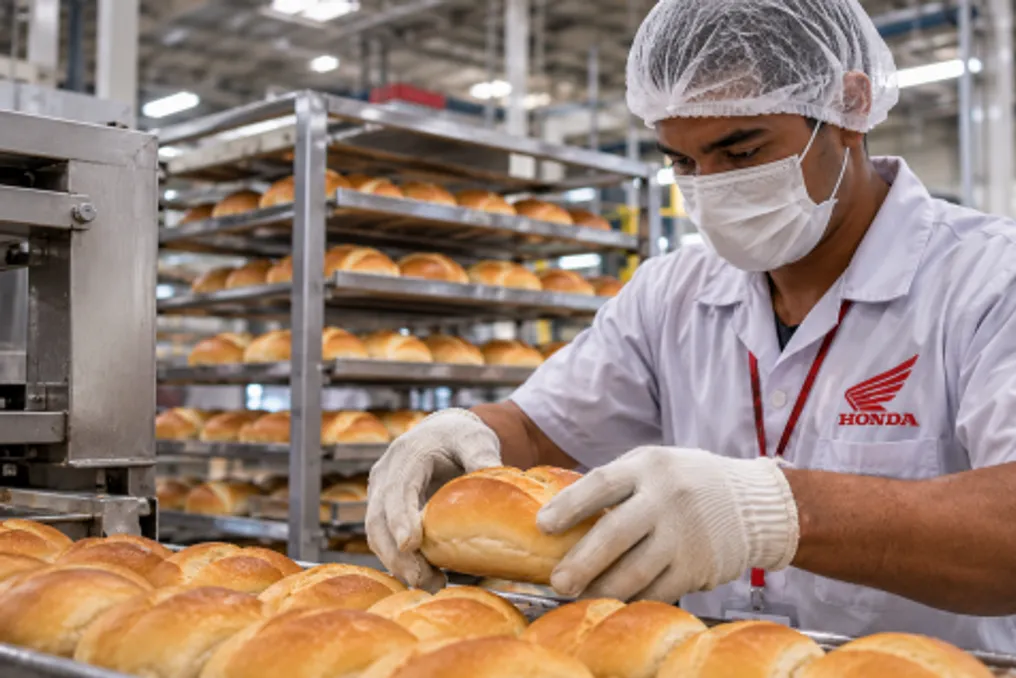
A notable fact revealed during the press visit to the factory's anniversary is that, in a single day, the Manaus unit bakes about 25 thousand French loaves. This volume is almost four times greater than the number of motorcycles leaving the production line in the same period, which is around 7 thousand units daily.

This peculiarity attracted the attention of the press, but the justification lies in the scale of the operation and the need to meet the daily demand of the complex, since there are no local bakeries capable of meeting this volume alone. Therefore, the manufacturer assumed the role of bakery.

Internal structure and supply

Lourival Barros, responsible for Honda Motos do Brasil production, highlighted that Moto Honda da Amazônia is one of the largest industries in the Manaus hub, employing about 9 thousand direct employees, plus partners, totaling approximately 13 thousand people, which constitutes a true city.

The 25 thousand loaves produced daily are exclusively intended for internal consumption by employees. In an exclusive conversation with AutoPapo, Lourival detailed that food supply goes beyond bread; the company has a natural reserve located 70 kilometers from Manaus, where it cultivates vegetables used internally at the factory.

The executive explained that, although Honda is primarily a mobility company that manufactures motorcycles, it also produces bread and vegetables to maintain the supply of the Manaus unit.

Regional impact and global examples

When asked about the benefits for the neighboring community, Lourival confirmed that hiring local labor for the bakery activities, vegetable cultivation, and other operations with partners generates jobs and supports regional development over the last five decades of the factory's operation.

The situation in Manaus is not isolated in the automotive industry. In Germany, Volkswagen has been producing its own currywurst since 1973, prepared in the Volkswagen Service Factory butcher shop and cataloged with a specific part number.

The sales disparity is evident in the case of VW: in 2024 data, 8.552 million sausages were recorded sold in cafeterias and supermarkets, a record about 200 thousand units higher than in 2023. In the same period, the VW brand registered the sale of approximately 5.2 million cars and utility vehicles, indicating that the sausage is by far the most commercialized item.

In Brazil, Mercedes-Benz sought to integrate vegetable production into its factory park. In November 2019, the manufacturer ceded an area next to the restaurant of the truck and bus factory in São Bernardo do Campo (SP) to an Urban Farm managed by the Minas Gerais startup BeGreen. Mercedes provided the land, and the partner took over production.

According to data released at the time, this greenhouse used aquaponics, aeroponics, and LED lighting, with the capacity to produce 2,680 kilograms of vegetables monthly, corresponding to 44 thousand plants of greens, herbs, and spices. In February 2020, this project received second place in the Excellence in Environmental Management category of the Daimler Environmental Leadership Award.

Similar stories

Honda announces R$ 3.3 billion investment in Brazil to expand production in Manaus
Read more
autopapo.com.br

Honda announces R$ 3.3 billion investment in Brazil to expand production in Manaus

Honda announced a financial injection of R$ 3.3 billion designated for the Brazilian market. This investment aims to increase productive capacity and boost vehicle manufacturing, focusing on the city of Manaus, in the state of Amazonas.

The news was presented last Wednesday (4) during a press conference held to celebrate the brand's 50 years of presence in the country. According to Japanese representatives, the plan includes the construction of two new production facilities, each equipped with its own assembly line.

With this expansion, Honda aims to achieve an installed capacity of 2.3 million motorcycles by 2029. This volume exceeds the total of 1.9 million currently produced by all brands in the national market.

Investment Details and Employment Impact

The R$ 3.3 billion will be applied between 2026 and 2030, adding to a previous investment of R$ 1.6 billion made last year. In addition to increasing capacity, the expansion of operations in Manaus is expected to generate 2,000 new jobs to support production growth. Currently, the factory has 9,000 direct employees.

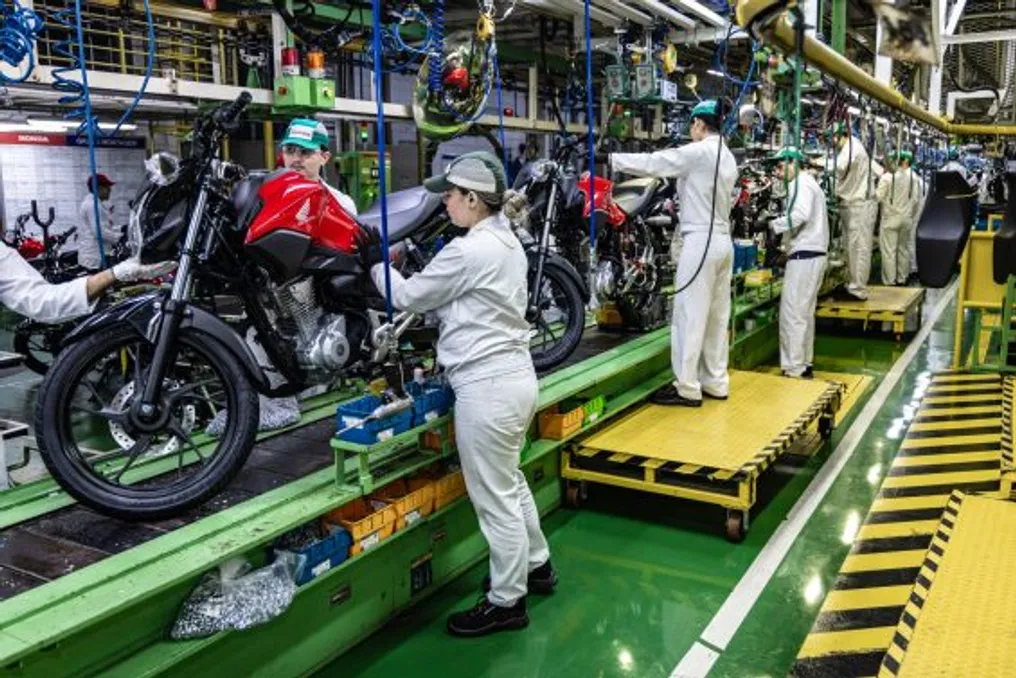
The Manaus complex already has four assembly lines spread across two production units. The new investment cycle foresees the construction of two more units within this same complex, each with its dedicated assembly line and other associated manufacturing processes.

Market Strategy and Competition

In response to questions about whether the strategy is related to a gradual loss of market share, Marcos Bento, Honda's sales director in Brazil, assured that the company's objective is to maintain leadership. He emphasized that any increase in market share, returning to higher levels, is always positive.

Currently, Honda holds 64.05% of the national motorcycle market, although this percentage has decreased due to the growth in the number of competitors, despite having once approached 80%. Despite this scenario, the manufacturer expressed no concern, as its sales are on the rise. Beto stated that Honda positively receives the arrival of new competitors, provided that competition occurs under the sector's competitive norms.

Operations and Technology

During the event, executives also addressed other aspects of the Brazilian operation. Regarding the introduction of electrified models, the Japanese company mentioned that it constantly monitors the needs of each consumer and country but did not confirm any specific launch. In the context of the 'energy race,' Honda emphasizes that its focus in Brazil is the FlexOne technology, which allows for the use of both ethanol and gasoline.

The factory, established in the Free Trade Zone since 1976 and responsible for all Honda motorcycle production in Brazil, has assembled over 33 million units over five decades. Daily, 7,200 motorcycles are produced, covering 20 models with engine displacements ranging from 110 cm³ to 1,100 cm³.

Beyond the domestic market, the unit exports to 19 nations, including the United States, Australia, and Mexico. Honda describes this operation as the most vertically integrated globally for the group, as it manufactures most components internally, such as chassis, wheels, seats, and engines. The company also maintains more than 1,200 points of sale and more than 120 direct suppliers in the country.

Royal Enfield unveils a range of new motorcycles at EICMA 2026 exhibition
Read more
www.aajtak.in

Royal Enfield unveils a range of new motorcycles at EICMA 2026 exhibition

Royal Enfield, a brand known for its unique style and passion in the motorcycle world, presented a wide range of new models at the EICMA 2026 exhibition, which began in Milan, Italy. The company commemorates its 125-year journey, preserving its heritage while expanding its ambitions.

At the EICMA show, the company demonstrated various new motorcycles, including the powerful Himalayan 750, Continental GT 750, and the Flying Flea S6 Scrambler model, which is a gift for both custom bike enthusiasts and the general public. Royal Enfield used its 125th anniversary to present a new strategy and an updated product lineup to the world.

Now, in addition to traditional motorcycles, the company is focusing on models with larger engines, electric mobility, and the culture of custom motorcycles.

The centerpiece of the exhibition was the Royal Enfield Himalayan 750. This is the company's first model with a 750cc engine, specifically designed for long-distance travel and tackling challenging routes. Previously, the company popularized motorcycling for enthusiasts with the Himalayan 411 about ten years ago, and now the Himalayan 750 elevates this segment to a new level.

This model is equipped with a new 743cc parallel-twin air and oil-cooled engine. It is capable of generating 63 Nm of torque at 5000 rpm. Notably, 90 percent of this torque, or about 56.7 Nm, is achieved at only 3500 rpm, promising better power in difficult conditions and various riding modes.

The Himalayan 750 features five riding modes, a 6-axis Inertial Measurement Unit (IMU), ABS, lean-sensitive traction control, and cruise control. It has a 19-inch front wheel and a 17-inch rear wheel, both tubeless. The company will offer it with both cast and spoked wheel options. To ensure comfortable long journeys, it includes an adjustable windscreen, separate seats for the rider and passenger, and a load capacity of 195 kg. The motorcycle is designed for those who love traveling on all types of roads, from mountains to long highways.

The next presentation was the Continental GT 750, which is currently the most powerful production motorcycle model in the brand's lineup. It is a sportier version of the company's famous cafe racer series. It retains the signature style of older GT models but emphasizes a more modern design and increased performance.

The Continental GT 750 uses an advanced version of the new 743cc twin-cylinder engine found in the Himalayan 750. The company claims that the Continental GT 750 will be the most high-performance production motorcycle model, offering improved components, premium materials, and numerous modifications to enhance efficiency.

The model is equipped with a special hybrid dual-panel TFT display, which combines retro design with modern technology. It will be presented in two configurations: a standard model with an open fairing and a faired version. In the faired model, the handlebars are positioned lower, providing the rider with a sportier posture. Royal Enfield offers it in three color schemes: Red Line, TT Blue, and Master Clean.

Royal Enfield also introduced the new S6 Scrambler under its electric mobility brand, Flying Flea. This model promotes the concept of the company's City+ electric mobility, showing that electric motorcycles can be used not only for city rides but also for adventures.

The Flying Flea S6 is developed on the basis of the company's light and flexible C6 platform. It is equipped with a high-power electric motor and features an enduro-style seat, giving it a scrambler look. According to the company, it can be easily used in city traffic as well as on rough roads.

The electric motorcycle is equipped with a round touch display running Fleaware.OS, as well as multiple riding modes and driver assistance functions. A special feature is the new off-road mode, presented for the first time. The Flying Flea S6 will be available in two colors—Dart Yellow and Lightning Grey, with a launch planned for Summer 2027.

In addition to new production models, Royal Enfield paid special attention to the custom motorcycle culture. The company, in collaboration with the renowned custom motorcycle brand Deus Ex Machina, presented a special custom edition of the Shotgun 650, named 'Son of Gun'. This motorcycle was crafted with particular care: it combines dark red, cream, and gold colors, features special graphics on the fuel tank, a piano black finish on the 650 Twin engine casing, contrasting aluminum wheels, and a brown leather seat with the signature Deus branding.

BYD Sealion 7 sets new standard of performance and sophistication in premium SUVs
Read more
g1.globo.com

BYD Sealion 7 sets new standard of performance and sophistication in premium SUVs

Since BYD arrived in Brazil, consumers have discovered a range of electric and super hybrid vehicles that surpass previously known models. Among the luxurious all-electric cars from the greentech, the BYD Sealion 7 stands out: this new member of the Ocean line combines the robust dimensions of a luxury SUV with the sporty and elegant lines of a coupe.

Equipped with all-wheel drive (AWD), the vehicle generates 531 hp of power and 690 Nm of torque, reaching 0 to 100 km/h in just 4.5 seconds. This setup positions the model as the most powerful among its direct rivals, raising the level of performance and sophistication in the category.

Considering the characteristics of Brazilian topography, BYD conducted specific calibration for the national market, as explained by Alexandre Aquino, product director at BYD Auto Brazil. He emphasized that the Sealion 7 offers the best of both worlds: the practicality of an SUV combined with the vigor of a high-performance sports car, mentioning a careful adjustment for Brazil without losing the model's dynamics, with a ground clearance of 169 mm.

Design, performance, and comfort

The ability of an SUV to exhibit supercar figures facilitates the purchasing decision for those who appreciate both proposals. With the BYD Sealion 7, the buyer does not have to choose between emotion and functionality. In urban areas, the coupe shape attracts attention, while the 169 mm ground clearance and the contactless trunk opening simplify daily life. On highways, the power is complemented by height control and protection.

The Sealion 7 has the highest safety rating from Euro NCAP and is equipped with nine airbags (including front, side, curtain, and a central seat airbag), in addition to a complete driver assistance package (ADAS 2). This package includes Adaptive and Intelligent Cruise Control (ACC), Automatic Emergency Braking (AEB), Lane Keeping Assist/Lane Departure Warning (ELKA/LDA), and advanced radars for cross-traffic alerts and braking, both front and rear.

This 100% electric model redefines standards of technology, design, and performance. Its range reaches 360 km in the PBEV cycle, and fast charging allows the battery to go from 30% to 80% in approximately 30 minutes.

Sophistication begins with the exterior, evidenced by the dual U-shaped headlights, the 20-inch wheels fitted with Michelin 245/45 R20 tires, and the futuristic taillight design. Inside, the BYD Sealion 7 transforms premium comfort into a high-level experience.

The cabin features genuine Nappa leather upholstery, a panoramic roof with an electric blind, multicolor ambient lighting, and a Dynaudio sound system with 12 speakers. The front seats offer heating, ventilation, and detailed electric adjustments (eight positions for the driver, including lumbar support), and the rear seats also have a heating function.

On the dashboard, a 15.6-inch rotating screen accompanies the 10.25-inch instrument cluster and a head-up display, which displays navigation alerts and information on the windshield. Alexandre Baldy, Senior Vice President of BYD Brazil, concluded that the Sealion 7 demonstrates that electrification is not just a rational choice, but also an aspirational and sophisticated one, meeting the needs of the Brazilian consumer who seeks performance and connectivity.

Popular