Water reserves in the country's reservoirs increased by 57%
Read more
Tehran Times
www.tehrantimes.com

Water reserves in the country's reservoirs increased by 57%

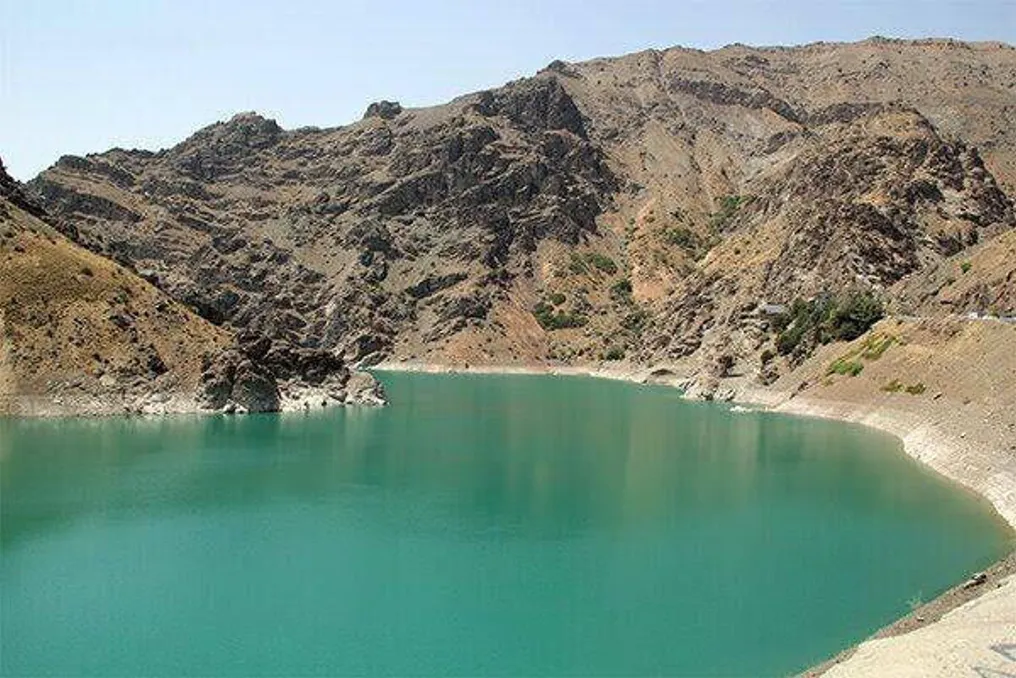
The volume of water in the country's reservoirs reached 22.58 billion cubic meters, indicating a 30 percent increase compared to last year.

Water reserves in the country's reservoirs increased by 57%

According to data provided by the Mehrs Information Agency, citing the Iranian Water Resources Company, the total volume of water accumulated in reservoirs across the country amounted to 22.58 billion cubic meters. This increase compared to the same period last year demonstrates a 30 percent rise.

Despite the growth in reserves compared to the previous year, an analysis of the current situation relative to the ten-year average shows that the volume of water in the reservoirs is only five percent above the long-term average level.

Furthermore, the filling percentage of the country's reservoirs reached approximately 43 percent, with more than 57 percent of the dams' total capacity remaining unfilled.

Similar stories

Bank deposits in Uzbekistan grew by 34.9% to 501 trillion soums
Read more
uzdaily.uz

Bank deposits in Uzbekistan grew by 34.9% to 501 trillion soums

According to data from the Central Bank of Uzbekistan, as of October 1, 2026, deposits placed in commercial banks in Uzbekistan reached a volume of 501 trillion soums. This figure demonstrates a growth of 34.9% compared to the same period last year. Previously, on October 1, 2025, the total amount of deposits was 371.5 trillion soums.

The growth rate of deposits was significantly higher than the expansion rate of the loan portfolio, which increased by only 13.2% over the same period. Consequently, the ratio of loans to deposits in the banking system decreased from 1.57 to 1.32. For state-owned banks, this ratio decreased from 2.03 to 1.69, while for other banks it decreased from 1.06 to 0.93.

The main driver of growth was deposits in the national currency. Deposits denominated in soums increased by 41.8%, reaching 407.9 trillion soums, while foreign currency deposits grew by 11.2%, amounting to 93.1 trillion soums. The share of foreign currency deposits in the total volume decreased from 22.5% to 18.6%.

Customer structure showed that individual depositors contributed 191.6 trillion soums, accounting for 38.2% of the total deposit volume, while corporate deposits reached 309.4 trillion soums.

Changes in the structure of deposit maturities

The structure of deposit maturities also changed. Short-term deposits with a term of up to one year showed a growth of 49.3%, reaching 187.2 trillion soums, and became the largest category, accounting for 37.4% of the share. Long-term deposits increased by 24.3%, amounting to 168.3 trillion soums, although their share decreased from 36.5% to 33.6%. Demand deposits grew by 31.6%, reaching 145.5 trillion soums, corresponding to 29% of the total amount.

Private banks attracted deposits more actively than state-owned banks. Deposits in private banks grew by 40.8%, reaching 249.6 trillion soums, while state-owned banks saw a growth of 29.5%, amounting to 251.5 trillion soums. Currently, both segments have almost equal deposit volumes.

The National Bank of Uzbekistan (NBU) maintained the largest deposit volume with an amount of 58.8 trillion soums. Kapitalbank is second with 51.5 trillion soums, which also holds the largest volume of individual deposits in the banking system, amounting to 30 trillion soums. Following them are Agrobank with 44.6 trillion soums, Uzpromstroybank with 37.7 trillion soums, People's Bank with 31.5 trillion soums, and Ipoteka Bank with 29.3 trillion soums.

Impact of deposit growth on financing the banking sector

The increase in deposits also affected the funding structure of banks. Deposits now account for 56.2% of the banking sector's liabilities, compared to 50.4% a year earlier. Meanwhile, the share of borrowings and leasing obligations decreased from 33.6% to 28.2%. The volume of these borrowings increased by only 1.7% over the year, reaching 251.4 trillion soums.

Total consumer debt for water supply in Uzbekistan exceeds 542 billion soms
Read more
podrobno.uz

Total consumer debt for water supply in Uzbekistan exceeds 542 billion soms

The total amount of consumer debt for water supply and sewage services in Uzbekistan has reached 542.6 billion soms. According to information presented on October 30, 430 billion soms of this total amount is attributed to the population, and the remaining 111 billion soms is owed by legal entities.

Representatives of JSC "Uzsuvtaʼminot" reported that over nine months of 2026, 23 thousand consumers with unpaid debts were disconnected from the drinking water supply network. Furthermore, in 122 thousand cases, debts totaling 265 billion soms were transferred to judicial bodies.

During inspections, specialists discovered 8.6 thousand violations. Among these, 4.6 thousand cases were related to illegal connections to water networks, the damage from which is estimated at 112 billion soms. At the time of the press conference, 30 billion soms had been recovered from this amount.

JSC "Uzsuvtaʼminot" also shared positive trends: the number of major debtors whose debt exceeds one million soms decreased by 4.4 thousand, and the total amount of their debt decreased by 5.4 billion soms. The number of consumers who have not paid for services for more than a year also decreased by 46.3 thousand, which accounts for 4%.

Nevertheless, an inconsistency is observed in the provided data: the stated total debt amount is 542.6 billion soms, while the sum of debts of the population and legal entities combined equals 541 billion soms, creating a difference of 1.6 billion soms. The editorial office has sent a request to JSC "Uzsuvtaʼminot" to clarify the reasons for this discrepancy.

Iran's agricultural production grew despite reduced water supply and planted areas
Read more
www.tehrantimes.com

Iran's agricultural production grew despite reduced water supply and planted areas

Agricultural production in Iran reached 137 million tons in the last harvest year, even though the sector was allocated 15 billion cubic meters less water than planned, according to the deputy minister of agriculture.

Majid Anjafi, Deputy Minister of Agriculture for Crop Production, noted that the areas allocated for vegetables, summer crops, as well as many types of melons and other field crops, have decreased. Nevertheless, increased productivity and higher yield per hectare contributed to the overall growth in production volume.

He specified that the Ministry of Energy allocated 15 billion cubic meters less water to agriculture than was planned in the previous harvest year, which significantly limited the possibilities of expanding cultivated areas with available water resources.

According to Anjafi, out of approximately 65 billion cubic meters of water that were supposed to be supplied to agriculture according to official plans, only a limited amount was allocated as available water for planned use.

He warned that without improvements in productivity and abandonment of traditional farming methods, the water deficit could reduce agricultural production by at least 30 million tons. He added that production could fall to 100 million tons instead of the projected 130 million tons.

Nevertheless, official data showed that the total volume of agricultural production reached 137 million tons, which Anjafi called an exceptional achievement for farmers and the country's agricultural sector.

This growth was achieved despite reduced water availability and smaller planted areas for several crop categories, highlighting the crucial role of increasing yields in maintaining and increasing production.

Popular