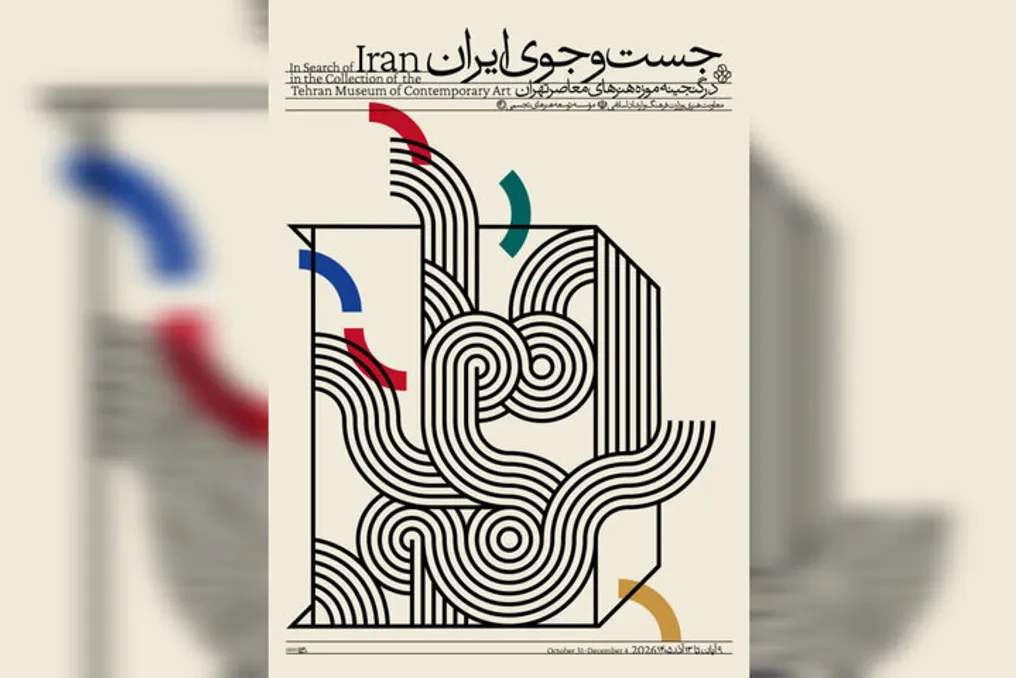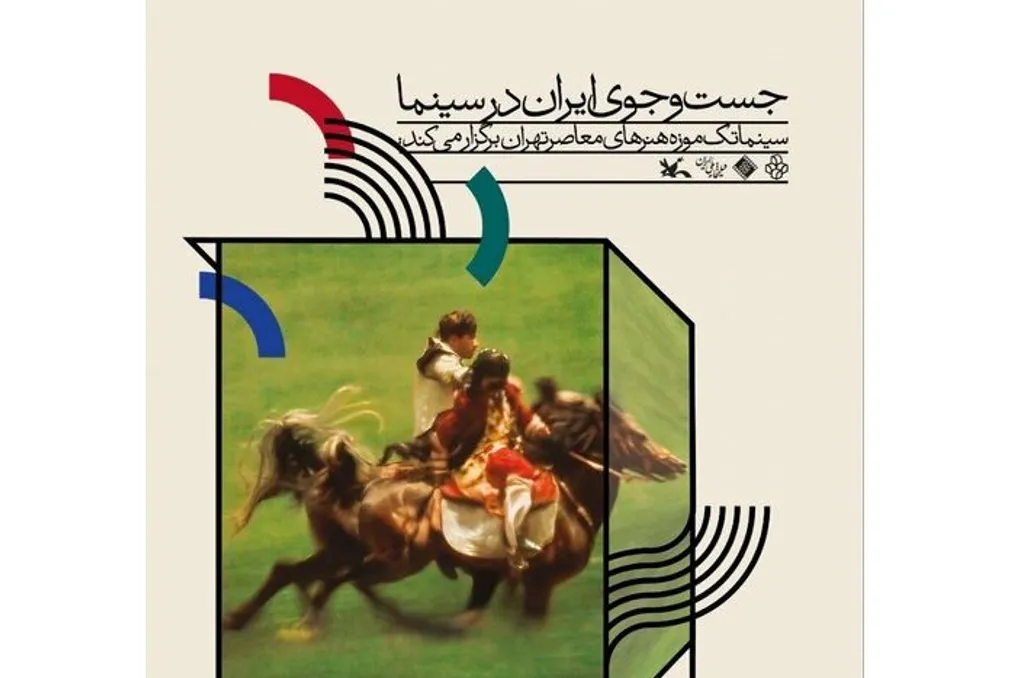
As part of the exhibition 'In Search of Iran: In the Collection of the Tehran Museum of Modern Art,' a program titled 'In Search of Iran in Cinema' will be held at the museum's cinema. The event will feature films where Iran plays a significant role, and the program will run for five weeks at the Tehran Museum of Modern Art (TMoCA) in Tehran, according to IRNA.
The first screening will take place on Sunday, November 8, featuring the documentary film 'Wind of Lovers' by Albert Lamorisse. Following the screening, film critic Mehrzad Danesh will give a presentation on it.
'Wind of Lovers' is a dreamlike documentary that explores the diverse landscape of Iran, both natural and man-made. The film paints a picture of Iranian landscapes from a bird's-eye view, showing the waters of the Caspian Sea in the north and the Persian Gulf in the south, palms in the west, central deserts and eastern plains, as well as ruins of ancient historical sites such as Susa and Persepolis, alongside images of people in various locations.
Approximately 85 percent of the film was shot using a helicopter. Although it shows real footage of the country, the narrative is fictional (and sometimes humorous) and belongs to the renowned Iranian veteran filmmaker, writer, editor, translator, and voice actor Manouchehr Anwar. The film is also accompanied by traditional and ethnic Iranian music. Master Hossein Dehnavi's composition includes several pieces using Persian instruments such as tar, tonbak, santur, nay, and violin, which significantly enriches every scene.
In Persian, the film's title translates to 'Saba Wind,' which comes from the northwest and symbolizes a message of love. The film is lyrically voiced by the wind.
Anwar, born in Tehran, at the age of 98, graduated from the Royal Academy of Dramatic Art in London and began his creative career in 1958 after returning to Iran. Lamorisse (1922–1970) was a French film director, producer, and screenwriter of short films, which he began shooting in the late 1940s. He also invented the strategic board game Risk in 1957.
In film production, he developed a camera mounting system for helicopters called 'Helivision,' which fueled his long-standing passion for filming aerial and ground subjects from the air. Thanks to his unique capabilities in aerial documentary filmmaking, Lamorisse received a commission from the Iranian Ministry of Art and Culture in 1968 to create a film celebrating the magnificent culture of Iran from ancient times to the present day, utilizing his patented aerial photography.
Lamorisse completed most of the filming for the movie in 1969, much of which (about 85 percent) was aerial photography, in line with his own poetic vision of what the film should be. In 1970, he returned to shoot more material on modern industrial developments but died in a plane crash while filming the Karaj Dam (Amir Kabir) 63 km northwest of Tehran.
His widow and son, who worked as assistants on the production of this film, completed it based on his production notes and released it eight years later, in 1978. In 1979, he was nominated for a posthumous Academy Award for Best Documentary Feature.
There is also an epilogue to this story in the form of a six-minute film. After the Karaj accident, Lamorisse's camera was recovered from the wreckage, and its film was processed in the Ministry of Art and Culture laboratory. The recorded material was then edited by members of his original film crew in recognition of the director and in memory of his death.
The 'In Search of Iran in Cinema' program will continue in the coming weeks with films such as Nasser Taghavi's 'About Iran,' Abdolhossein Sepanti's 'Ferdowsi,' Parviz Kimiavi's 'Iran - My Land,' and Bahram Beizai's 'Bashu, Stranger.' The program is organized in collaboration with the National Film Archive of Iran and the Institute for Intellectual Development of Children and Youth (Kanoon). Admission is free and open to the public.