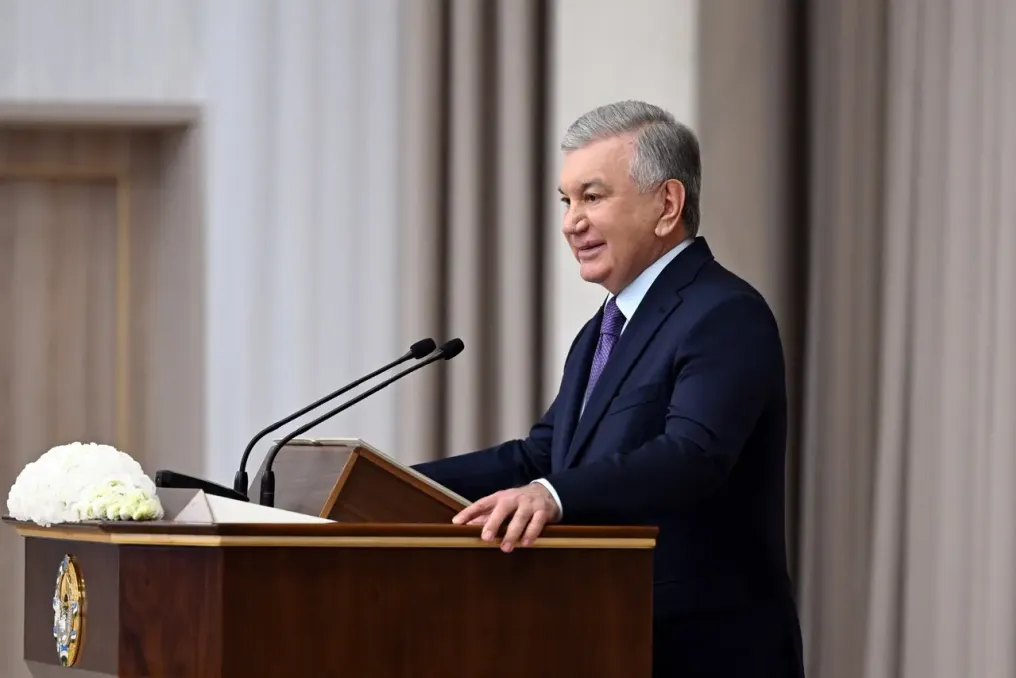
As part of efforts to increase private sector participation in vocational education and improve overseas employment opportunities, Uzbekistan plans to transfer two or three technical educational institutions in each region to the management of large private enterprises for a period of 15 years. These plans were announced on November 2 at a meeting chaired by President Shavkat Mirziyoyev dedicated to labor migration.
The President noted the growing demand for skilled workers in construction, industry, and logistics both domestically and internationally. However, the existing professional training system does not yet fully meet employer requirements.
To solve this problem, the government intends to more actively involve entrepreneurs in managing technical schools and develop direct cooperation between educational institutions and foreign companies. It is expected that at least 30,000 specialists will be trained annually in the institutions transferred to business management, who can immediately start working after completing the courses and receive state-recognized certificates.
Example of private sector participation in workforce training
As an illustration of private sector involvement in workforce training, Mirziyoyev cited the Tashkent Pipe Plant in the Sergely district of the capital. This company offered to train 2,500 welders, electricians, and mechanics annually using its own experienced specialists.
State support for companies involved in training personnel
The government plans to introduce tax and financial incentives to encourage business participation in vocational education. Companies will be able to reduce their taxable base by deducting expenses related to specialist training and providing equipment for technical schools. A grant system is also provided to encourage organizations for every graduate successfully employed abroad, although the size of the grants and distribution procedures have not yet been determined.
Educational institutions will also interact directly with foreign employers to train specialists according to the requirements of specific vacancies. Mirziyoyev expressed confidence that leading entrepreneurs will help the state form a brand of Uzbek specialists abroad.
Furthermore, the President instructed officials to select 20 technical schools within a month to adapt their educational programs to the needs of foreign employers, starting in 2027. According to information presented at the meeting, large companies from Germany, Japan, and South Korea are interested in having the specialists they need trained directly in Uzbekistan.
Mirziyoyev criticized the current vocational education system, demanding that technical schools achieve more practical results, and that young people acquire in-demand professional skills and foreign language knowledge before graduation.
International recruitment agencies planned for 2027
The meeting also discussed improving conditions for the employment of Uzbek citizens abroad. Presidential press secretary Sherzod Asadov reported that Mirziyoyev emphasized the growing role of large international recruiting companies in connecting employers with qualified specialists. The President ordered the creation of conditions for such companies to operate in Uzbekistan, including permission for independent specialist training and their direct employment abroad. It is expected that two large international recruiting companies will begin operating in the country in 2027.
It was also reported that in 2026, opportunities for the employment of 287,000 Uzbek citizens were identified in 34 countries. Meanwhile, Mirziyoyev pointed to the public's insufficient awareness of available vacancies and problems in cooperation between the Migration Service and representatives of 'mahalla seven'—a local group of community-level officials.
The President stated that this system would also be changed: 'In migration matters, we need quality, not numbers.' He instructed officials to ensure that information about foreign vacancies reaches every mahalla. Every employer's request must contain information about the country where workers are needed, qualification requirements, necessary language skills, and available training opportunities. 'Mahalla seven' will inform residents about vacancies and enter data on individuals interested in working abroad into the Mahalla online platform.
Regional governors and relevant departments will be responsible for organizing professional and linguistic training for candidates and assisting with subsequent employment. Regional governors will conduct progress checks monthly, and district heads twice a month.
Plans to expand private vocational education were previously developed
The involvement of entrepreneurs in vocational education was discussed previously. In June 2026, the President reviewed proposals to expand private vocational training. At that time, plans were announced to increase the number of training and certification centers operating according to international standards from 50 to 200 over three years. It was expected that the annual number of people covered by private vocational education would increase from 45,000 to 500,000.
The proposals included revising over 300 educational programs, improving the qualifications of more than 1,000 teachers and instructors, and allocating 500 billion soms from the Employment Fund. Other proposed support measures for private training centers included preferential loans, partial reimbursement of equipment costs, attracting foreign teachers, and providing free state buildings.