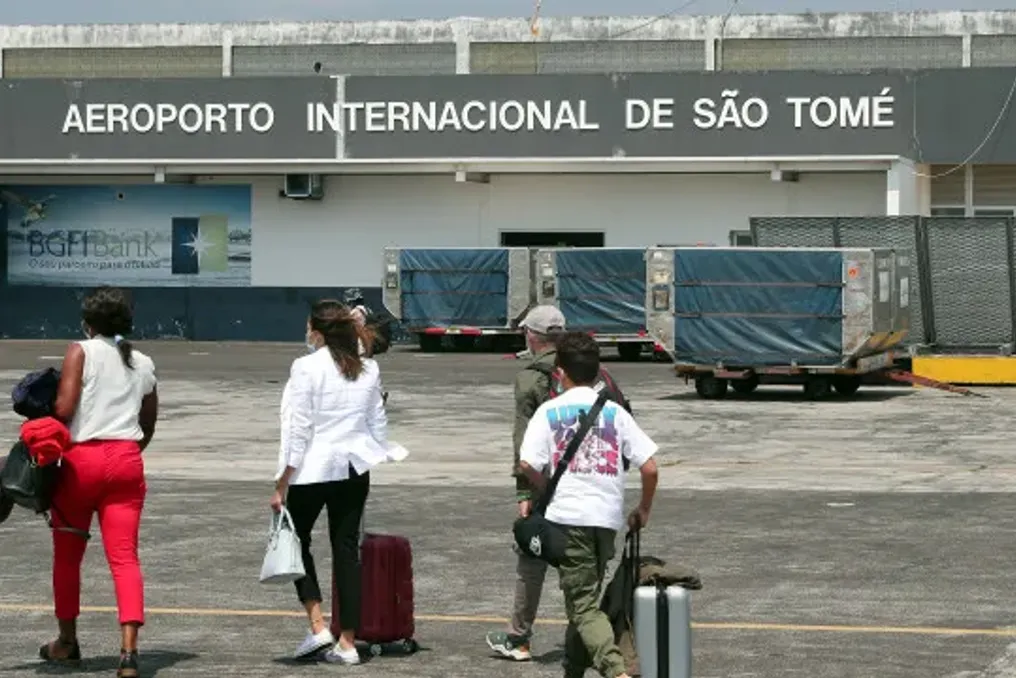
China provides St. Thomas with two advanced technology scanners to improve security
Read more
Noticias ao Minuto
noticiasaominuto.com

China provides St. Thomas with two advanced technology scanners to improve security

The Chinese Embassy in the archipelago announced the provision of two advanced technology scanners to St. Thomas, which are the first of their kind in Africa. These devices are being installed to enhance the level of security at the airport and port of St. Thomas and Príncipe.

The Chinese Ambassador to St. Thomas and Príncipe, Xu Jinzhen, emphasized the importance of installation and staff training in the coming days, noting that the scanners will help the country combat smuggling and increase overall operational efficiency.

The diplomat and officials from St. Thomas and Príncipe visited the installation process of the NUCTECH WooKong H model equipment. This device is classified as an advanced baggage screening system included in modern airport and customs security systems. It is capable of analyzing baggage contents from various angles using three-dimensional images and tomographic slices.

The equipment installation is being carried out by Chinese specialists, who will also train St. Thomas and Príncipe employees on how to use these systems.

The Minister of Economy and Finance of St. Thomas and Príncipe, Gareth Guadalupe, expressed gratitude to the Chinese government and the people of the People's Republic of China for the support provided. He noted that the goal is to facilitate passenger passage and minimize manual baggage checks.

With this equipment, the government of St. Thomas and Príncipe plans to improve customs monitoring, contributing to the 'streamlining of flows' and reducing intrusive control. According to Gareth Guadalupe, such control should only be applied in cases where there is suspicion of transporting prohibited materials.

Guadalupe also stressed that the scanners will allow for the mitigation of certain aspects that are one of the reasons for the country's lower ranking in the Mo Ibrahim Index, which relates to transnational crime. He specifically highlighted that this is the first high-quality equipment in Africa with high resolution, 3D images, and the ability to view baggage in all positions.

Similar stories

US authorities investigate Nvidia chip smuggling scheme to China, noting CEO and acquaintance
Read more
www.aajtak.in

US authorities investigate Nvidia chip smuggling scheme to China, noting CEO and acquaintance

US agencies are conducting an investigation into a suspicious network involved in smuggling advanced AI chips into China. The investigation also examines aspects of espionage and the collection of confidential commercial information for Beijing.

This investigation has drawn attention to the connection between Nvidia CEO Jensen Huang and individuals under scrutiny. At the center of attention is Alice Huang, also known as Huang Le, a Chinese businesswoman associated with the Singapore-based data center company MegaSpeed.

According to The New York Times, she is suspected of collecting commercial information for China, and reports have emerged about her close relationship with Jensen Huang. Alice Huang is a Chinese citizen and previously worked at MegaSpeed, based in Singapore, as a senior executive director.

Although little is known about her personal life or early career, her professional position placed her at the epicenter of the global AI chip supply chain. MegaSpeed acquires computing equipment running on Nvidia chips and acts as an intermediary, leasing data center capacity to various Chinese tech giants, including Alibaba.

US authorities are determining whether companies operating through Southeast Asia helped Chinese businesses circumvent restrictions on advanced AI chips. This raises questions about the business model itself. During the investigation, Alice Huang held the position of senior executive director at MegaSpeed. Through her position and interaction with Nvidia, she came into contact with CEO Jensen Huang.

It is reported that the US had already suspected her of assisting in the smuggling of Nvidia chips into China, after which she was placed under surveillance.

China's secret spacecraft spotted docked to satellite
Read more
olhardigital.com.br

China's secret spacecraft spotted docked to satellite

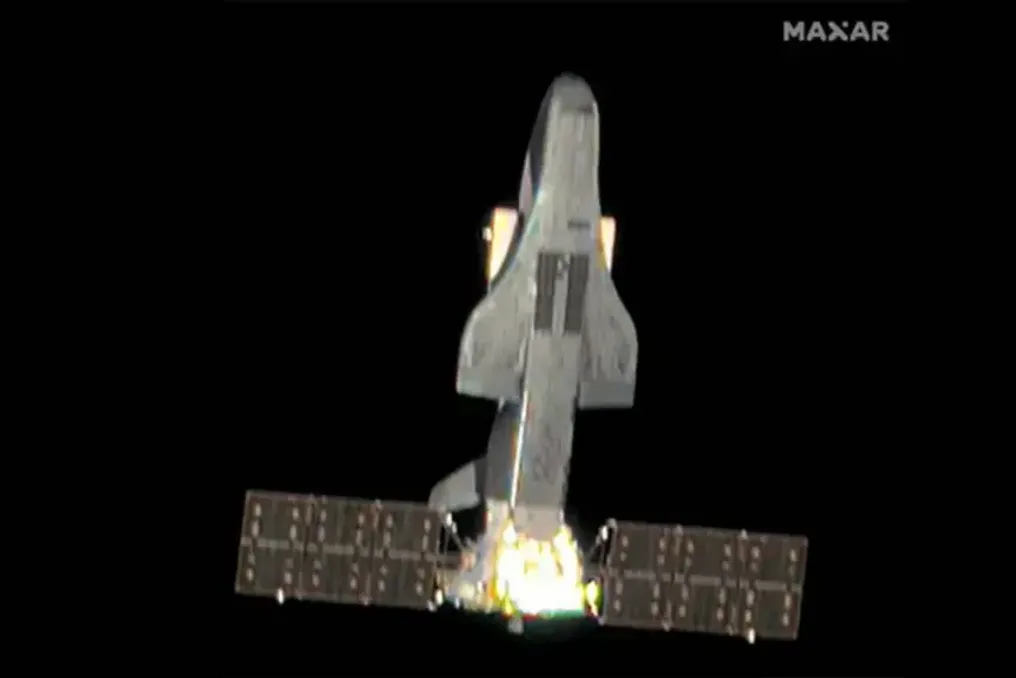
An image published by the U.S. Department of Defense's Defense Intelligence Agency (DIA) shows China's Shenlong spacecraft docked to another satellite in orbit. The photograph, taken in 2024, also reveals open hatches on the vehicle's cargo bay.

The recording was obtained by the Vantor WorldView 3 satellite from a distance of about 90 kilometers. Thanks to a resolution of 4.5 centimeters per pixel, the image provided details of the spacecraft that were previously only available to ground observers.

This photograph is part of a declassified DIA report concerning the scale and range of space threats posed by competing nations. The satellite to which Shenlong is connected has not yet been identified.

Shenlong, first launched in 2020, is a reusable robotic spacecraft developed by China. Since then, it has carried out numerous missions, some lasting for months in orbit.

The craft is currently on its fourth mission, which began in February 2026. China states that the project is testing technologies aimed at increasing the accessibility of round-trip flights into space, but it does not disclose details of its current activities.

In June 2026, the American space intelligence company LeoLabs detected a new object near the craft. After additional observations, the company concluded with high confidence that this object was released by Shenlong. LeoLabs reported at the time: 'This activity is consistent with satellite deployments performed by the spacecraft during previous missions.'

This incident aligns with patterns observed in other flights. During its second mission in 2023, Shenlong also released an object and may have conducted rendezvous and proximity operations, where two spacecraft maneuver to approach each other. Similar behavior was recorded during the third mission, which concluded in 2024.

Another example of such operations is presented in the DIA report. In November 2022, Shenlong allegedly conducted rendezvous maneuvers with a companion satellite, initially maintaining a distance of about one kilometer. At a certain point, both objects approached each other to less than 100 meters before a possible meeting and subsequent satellite deployment.

Such maneuvers can help test various capabilities of the craft, such as rendezvous, inspection of other satellites, and placing smaller objects into orbit. There is also a possibility that some equipment is deployed before returning to Earth. However, the actual purpose of these operations remains unknown.

China asserts that Shenlong is used to test reusable spacecraft technologies. After the mission that concluded in 2024, the craft returned to Earth after 268 days in orbit. The Chinese space agency stated that the experiment demonstrated the improvement of the country's reusable space transport technologies, which, according to them, could facilitate peaceful round-trip flights into space.

The United States also possesses the X-37B robotic spacecraft, developed by Boeing. Similar to Shenlong, little detail about its capabilities and missions is published. In February 2025, the U.S. Space Force released its first official photograph of X-37B in orbit. The image apparently showed the craft in high low Earth orbit with open hatches on the cargo bay.

China and the United States are striving to expand their space capabilities within a competition observers call a new space race. Both craft are classified military projects kept secret, and images like those published by the DIA provide records of their activities without fully revealing their capabilities or objectives.

Popular