Tashkent hosts the fifth NAUKA 0+ festival on a space theme
Read more
UzDaily
uzdaily.uz

Tashkent hosts the fifth NAUKA 0+ festival on a space theme

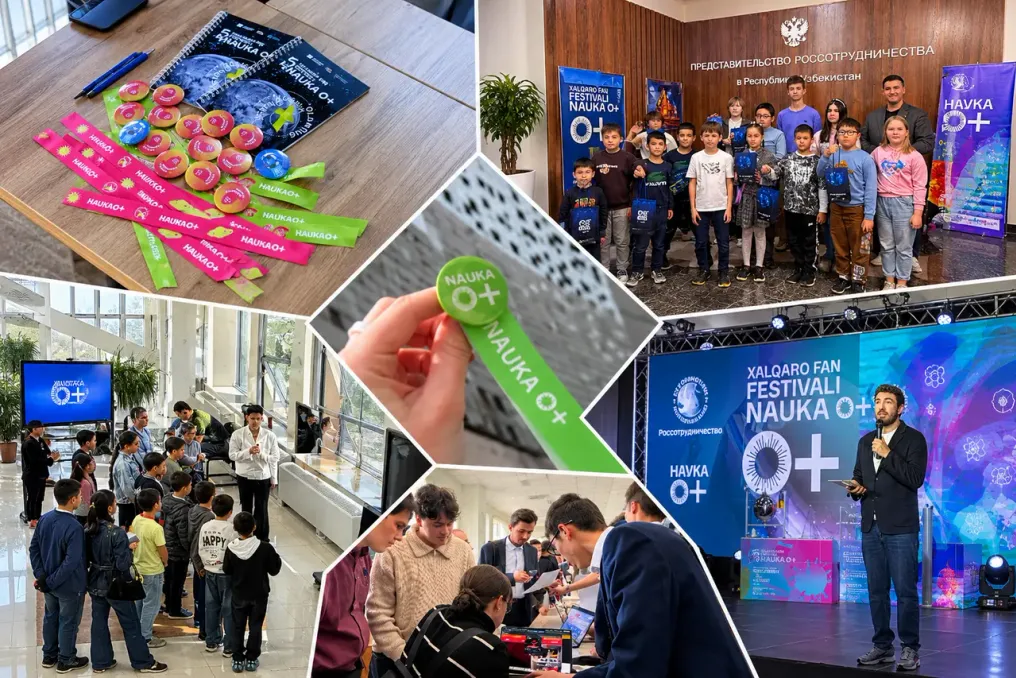
Uzbekistan is hosting the weekly BRICS+ science week from November 2 to 8, during which the fifth international NAUKA 0+ festival will take place in Tashkent on November 7–8. For the first time, the events covered all regions of the country.

The festival program includes 70 popular science lectures, interactive exhibitions spanning over 2000 square meters across 20 different venues, as well as master classes, quizzes, and science shows. The Polytechnic Museum remains the main venue in Tashkent.

The main theme for the festival in 2026 has been declared as 'Your Cosmic Universe,' marking the 65th anniversary of the first human space flight.

The festival is organized by the Ministry of Science and Higher Education of Russia and Moscow State University with the support of the Russian Academy of Sciences and the Academy of Sciences of Uzbekistan. The main partner was the Alisher Usmanov Charitable Foundation in the field of art, science, and sports, and the organizing partner is the Center for Subject Olympiads at the Agency of Specialized Educational Institutions of Uzbekistan.

Rector and Academician of Moscow State University, Viktor Sadovnichy, noted that Uzbekistan is once again becoming one of the key venues for the NAUKA 0+ festival, uniting science popularizers, students, and schoolchildren through a common interest in science and technology. He expressed confidence that the festival's events will strengthen scientific and educational ties between Russia and Uzbekistan, contribute to the development of international scientific dialogue, and inspire a new generation towards research and discovery.

For the first time in Uzbekistan, the 'Future Scientists' competition was held, covering all regions of the country. Semi-finals took place in specialized schools, where participants presented their projects in poster session format. They were evaluated by a jury consisting of researchers from regional universities and industry representatives.

The final of the competition, held at the branch of Moscow State University in Tashkent, gathered over 100 schoolchildren who reached the final stage from STEM centers in Russia, Uzbekistan, and other countries. They presented their work to a jury composed of university and business representatives.

Participants in the festival included Lomonosov Moscow State University, Mirzo Ulugbek National University of Uzbekistan, the branch of MEI National Research Nuclear University in Tashkent, the branch of Dmitrievsky University of Chemical Technology of Russia, Gubkin Russian State University of Oil and Gas, Shenzhen MSU-BIT University, Zaryadye Park, Uzavtosanoat JSC, as well as the companies VOLTBRO and MUR Edu.

Lectures were given by Russian researchers and representatives of scientific and technological companies. Nikolai Nikitin from the Faculty of Biology at MSU spoke about viruses in space and conducted a quiz on the topic. Ivan Panchenko from the Sternberg Institute of Astronomy at MSU discussed gamma-ray bursts—the most powerful explosions in the universe, while Maxim Mironenko from the University's VR Center explained how virtual reality helps in astronaut training.

Ivan Samylovsky and Anastasia Samylovskaya from the Laboratory of Astrodynamics of the MSU Space Research Faculty talked about satellite docking and space solar panels. Yuri Moiseev from the Sternberg Institute of Astronomy and the Space Research Institute of the Russian Academy of Sciences discussed the early history of the universe. Natalia Makarova and Elvira Dorofeeva from Zaryadye Park explored the influence of space on the human body and methods of growing plants in orbit.

Sergey Sergeev, organizer of the 'Future Scientists' competition, gave a lecture for parents and teachers titled 'How to Raise Geniuses.' A Roscosmos cosmonaut spoke about how to become a space researcher and what experiments are conducted in orbit.

Visitors had the opportunity to control a rover at the Martian Polygon organized by the Research Institute of Mechanics of MSU, view rockets, satellites, and unmanned aerial vehicles that have undergone flight tests, and practice drone control using a VR simulator. The MUR Edu team demonstrated underwater vehicles that participated in the Underwater Navigation Grand Prix.

Quizzes on the history of science, astronomy, and virology were also held. At the National University of Uzbekistan and the MEI branch, visitors assembled an atomic power plant model and used virtual reality technology for a virtual tour of the research reactor.

Other events included master classes in Chinese painting and calligraphy, mineral and oil sample exhibitions, CubeSat models, and a mission control center. Uzavtosanoat presented an exhibition titled 'The Evolution of the Wheel.' A forum for science popularizers was held at the MSU branch in Tashkent, bringing together researchers and journalists.

The NAUKA 0+ festival has been held since 2006 at the initiative of Rector and Academician of Moscow State University Viktor Sadovnichy. Over the years, the total audience of the festival has exceeded 100 million people.
Similar stories

Tashkent Hosts Conference on Civil Aviation Cooperation between Central Asia and China
Read more
uzdaily.uz

Tashkent Hosts Conference on Civil Aviation Cooperation between Central Asia and China

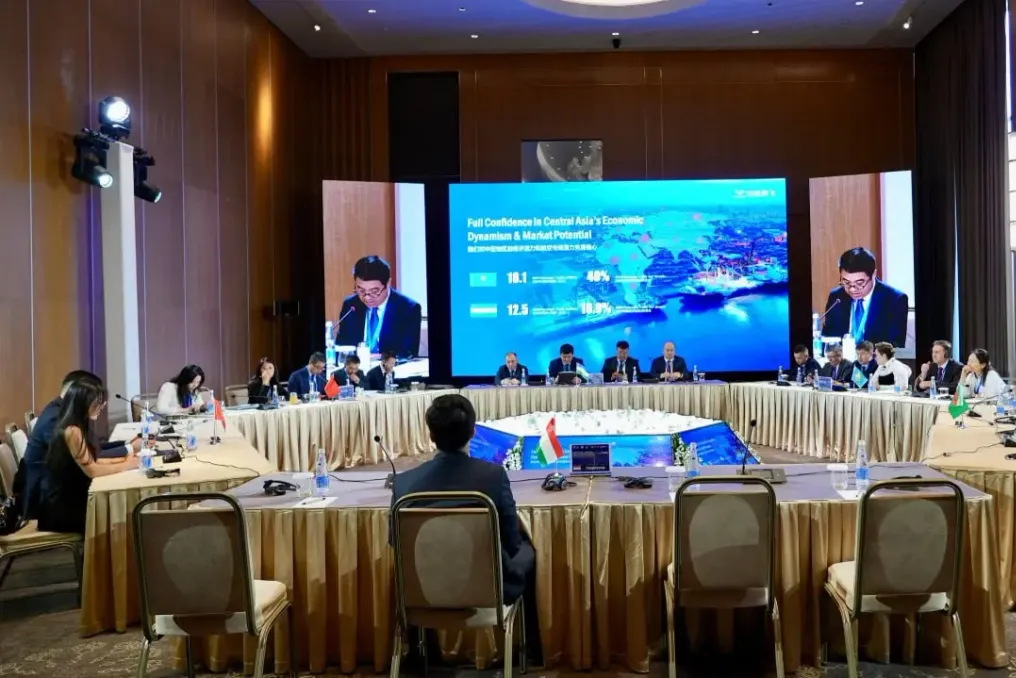
The third meeting of the Central Asia-China Working Group on civil aviation cooperation in the C5+1 format has begun in Tashkent. The event gathered representatives from aviation authorities and airlines from six countries.

The conference is being held at the Hyatt Regency Tashkent hotel, with delegations from Uzbekistan, China, Kazakhstan, Kyrgyzstan, Tajikistan, and Turkmenistan participating. The main goal of the meeting is to strengthen interaction in the field of civil aviation between China and the Central Asian countries, as well as to promote the implementation of the agreement on the joint development of the Air Silk Road.

This agreement was signed on January 24, 2024, by the Ministry of Transport of Uzbekistan and the Civil Aviation Administration of China. During the conference, participants plan to discuss deepening cooperation in priority areas of civil aviation, implementing joint projects, liberalizing the air transport market, and unifying the industry's regulatory framework.

It is expected that this meeting will contribute to strengthening regional aviation partnership, stimulating joint initiatives, and expanding the practical participation of the participating countries within the Air Silk Road project.

Representatives from six countries will gather in Tashkent to discuss the development of the 'Air Silk Road' and air routes
Read more
podrobno.uz

Representatives from six countries will gather in Tashkent to discuss the development of the 'Air Silk Road' and air routes

The third conference of the Working Group on Civil Aviation Cooperation 'Central Asia – China' (C5+1) will take place in Tashkent, at the Hyatt Regency Tashkent hotel, from November 3 to 5. Delegations from the aviation administrations and airlines of Uzbekistan, China, Kazakhstan, Kyrgyzstan, Tajikistan, and Turkmenistan will participate in this event.

The main objective of this meeting is to further strengthen ties between the states of the region and China in the field of civil aviation. Participants plan to implement already concluded agreements and outline new horizons for cooperation.

Special emphasis will be placed on fulfilling obligations for the joint creation of the 'Air Silk Road,' which was formalized by an agreement signed on January 24, 2024, between the Ministry of Transport of Uzbekistan and the Civil Aviation Administration of China.

In addition, participants will consider issues of deepening partnership in key industry areas, including launching joint projects, liberalizing the air transport market, unifying legal norms, and expanding the geography of regional flights. The conference also includes bilateral consultations dedicated to the development of air communications, opening new directions, and increasing the frequency of existing flights.

The initiative to hold such meetings regularly, rotating among the six countries, was put forward by the Chinese side. The first C5+1 conference took place in China in 2024, and the second was held in Kazakhstan in 2025; Uzbekistan is the organizer this year.

First EcoAtomFest held in Tashkent with participation from representatives of five countries
Read more
uzdaily.uz

First EcoAtomFest held in Tashkent with participation from representatives of five countries

The first environmental festival, EcoAtomFest, took place in Tashkent, Uzbekistan, on October 24. The event was organized at the Tashkent branch of the National Research Nuclear University MEPhI and gathered participants from Uzbekistan, Kazakhstan, Tajikistan, Kyrgyzstan, and Russia.

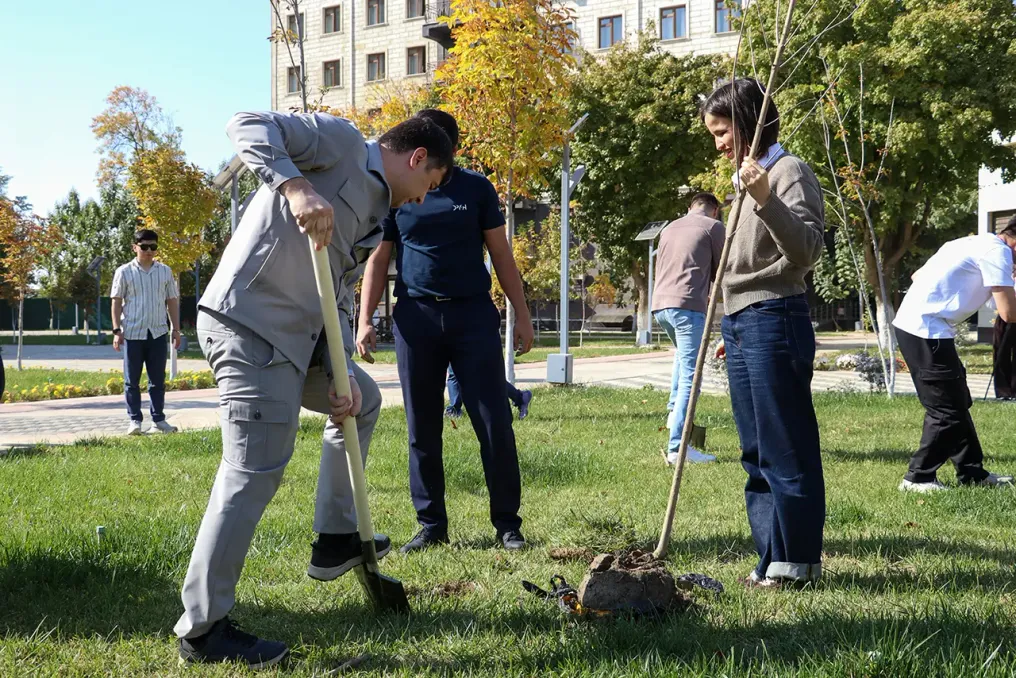
The festival, which concluded the Summer School and Environmental Camp of the Impact Team, combined educational sessions on sustainable development with practical environmental activities. The central event was a joint tree-planting action involving delegates from all five countries.

With support from the Russian state atomic corporation Rosatom and the Uzbek agency Uzatom, 50 apple trees were planted during the event. The program also included environmental seminars and presentations on grant support opportunities for socially beneficial projects.

Activities and Environmental Initiatives

Before planting began, volunteers instructed participants and divided them into groups. Under their guidance, the groups planted 50 apple trees in designated areas. This initiative aligns with Uzbekistan's environmental priorities, including the national project 'Yashil Makon,' launched by President Shavkat Mirziyoyev in 2021.

According to organizers, Uzbekistan aims to increase the share of green spaces from the current 14.2% to 30% by 2030. The practical part of the festival covered topics such as urban ecosystems, plant care, and forming environmentally responsible daily habits.

During the festival, representatives of Oltin Qanot Volontyorlari conducted a master class on growing microgreens, while Pavel Volkov, head of the non-profit organization Indigo, spoke about methods for caring for seedlings and mature trees. Margarita Davydova, an activist from the birds.uz community and bird enthusiast, introduced participants to urban wildlife and the basics of birdwatching.

Environmental expert Mohinurkhon Ergash and the Association of Volunteers of Uzbekistan urged participants to discuss environmental problems in different regions of the country and develop ideas for their solutions. Jamshid Khakimov, chairman of the non-profit organization ECOLAND, delivered an introductory lecture on ecology.

Attendees also participated in creating eco-themed crafts and designing energy-efficient housing. Another block of the program was dedicated to opportunities for receiving financial assistance for environmental protection and public initiatives.

Grant Support and Cultural Program

Organizers presented the international Rosatom grant competition, available to relevant organizations from Uzbekistan and other participating countries. The competition supports projects related to environmental protection, raising ecological awareness, education, volunteering, assisting vulnerable groups, urban development, and other socially significant actions. Applicants can submit both new initiatives and individual stages of existing programs. Successful candidates will receive funding, as well as consulting and organizational support from experts.

The festival also featured cultural performances by young participants from various parts of Uzbekistan. The cultural program began with performances by students of Specialized General Education School No. 11 in Syrdarya region, who performed music on the dombra and danced. Aziz and Akmal Anvarov from Tashkent region presented the Andzhyan polka, and Divas Dance Studio showcased the traditional Korean dance Sarang-Mu.

Conclusion and Calls to Action

At the end of the festival, organizers noted the contribution of environmental activists to Uzbekistan's environmental protection initiatives and thanked representatives of public and volunteer organizations for their educational work. Alexandra Khidirnazarova, Head of the Department of Industrial Safety, Labor Protection, and Environmental Protection of the NPP Construction Directorate, emphasized the importance of engaging youth in practical environmental activities.

She stated: 'Environmental protection and safety culture begin with taking responsibility for our actions. That is why it is so important to involve young people not only in discussing environmental issues but also in practical work.'

Diana Gamazova, member and mentor of the International Council of Youth Consultants Impact Team 2050 and head of the 'Nuclear Energy for Central Asia' project, noted that the international program helped participants understand the interconnection between technology, the environment, and quality of life. She added that the program also fostered teamwork skills and collaborative problem-solving regarding environmental issues.

Alexey Dremuchev, CEO of Rosatom Central Asia, noted that EcoAtomFest was conceived as a platform to unite youth, volunteers, and experts to solve practical environmental challenges. He expressed hope that the festival would become a starting point for new partnerships and long-term environmental protection projects.

Popular