World Media Summit Adopts Beijing Consensus on Artificial Intelligence
Read more
UzDaily
uzdaily.uz

World Media Summit Adopts Beijing Consensus on Artificial Intelligence

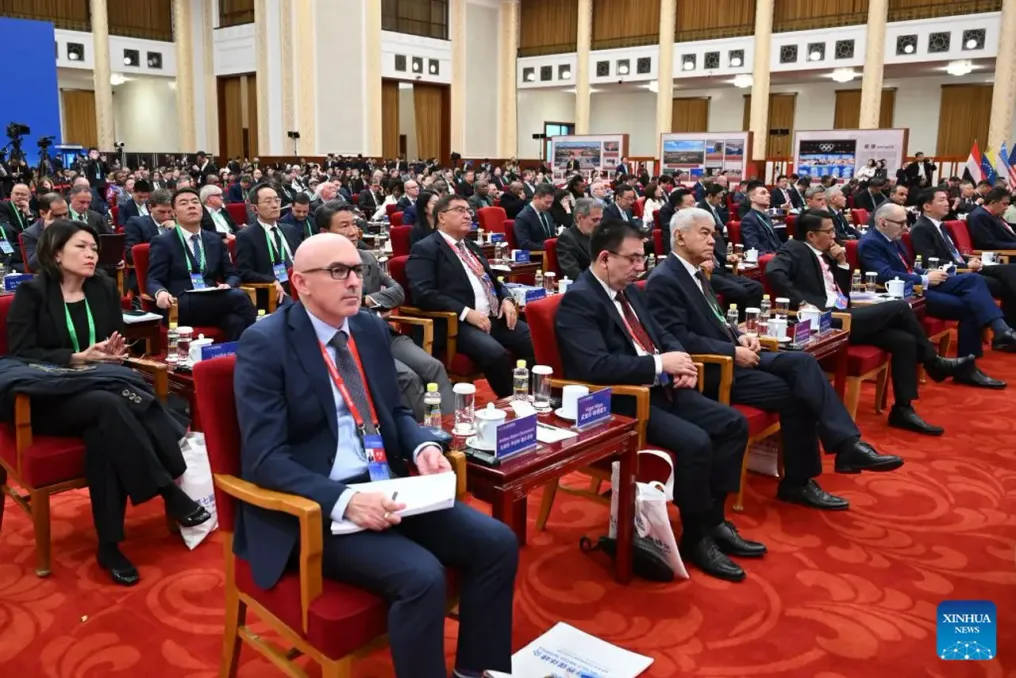
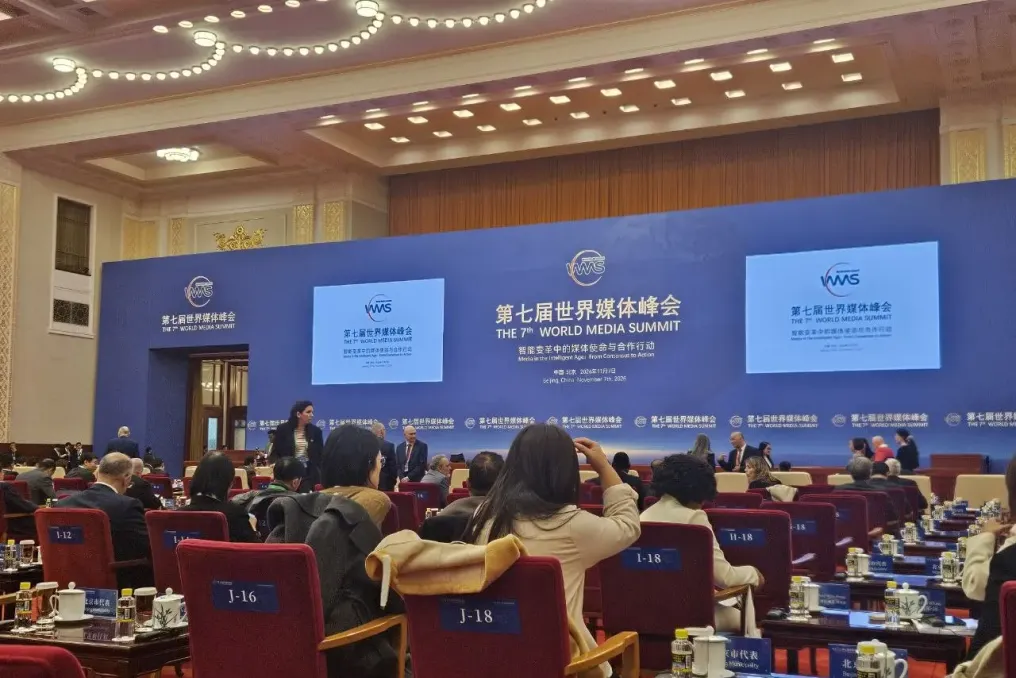
Participants of the seventh World Media Summit, held in Beijing, adopted the Beijing Consensus. Representatives from media organizations, think tanks, government agencies, as well as international and regional organizations, expressed readiness to cooperate to promote global media in the age of artificial intelligence. The summit took place from November 5 to 9 under the slogan 'Media in the Age of AI: From Consensus to Action.'

The adopted document notes that AI marks a new stage of technological and industrial transformation, changing people's ways of life and work, as well as the broader landscape of global development. Participants pledged to support the responsible and comprehensive use of AI in the media industry, ensuring that technological advancements benefit media organizations in all countries, regardless of their level of development. Furthermore, they called for objective and impartial reporting, efforts to combat disinformation, and the creation of channels for rational dialogue on global issues. Signatories intend to leverage the strengths of media, strengthen consensus among stakeholders, and turn cooperation into tangible results.

During the summit, Xinhua News Agency presented its Global Media Initiative and the Document on the Framework Program for Global Media Cooperation in AI. The agency also demonstrated its AI agent, 'Xinhua Yudian.'

Organization and Scale of the Event

The summit was jointly organized by Xinhua News Agency and the Municipal Government of Beijing. According to the organizers, about 500 representatives from nearly 330 organizations representing 112 countries and regions were invited. Guests included leading media organizations, think tanks, government bodies, the United Nations, and other international structures. The organizers aimed to set a record for the number of represented countries and organizations, as well as the level of delegates.

In the summit's conceptual document, the organizers characterize the international situation as complex and unstable. It defines overcoming development gaps, solving security problems, strengthening inter-civilizational exchanges, and improving global governance as common challenges for humanity. The authors argue that solving these tasks requires not only economic and technological potential but also cultural influence. They view the mission of media as connecting the world, promoting mutual understanding, and forming consensus.

The authors of the document emphasize that intelligent technologies are transforming the entire media workflow, from news gathering and content creation to distribution and management. These technologies can increase efficiency, diversify formats, and expand audience reach. However, the organizers point out that AI generates new challenges, including the spread of disinformation, increased algorithmic bias, and deepening the digital divide. Priorities for international media cooperation are named as technology exchange and capacity building, equal access for Global South countries, and safe, fair, and inclusive AI development.

Key Themes and Areas of Work

The summit program covers five thematic areas. The first is dedicated to AI-based solutions for news gathering, production, and distribution, as well as editorial room management. Participants discussed ways to encourage media organizations and technology companies to share multilingual text corpora, editorial tools, and training materials. Another important issue is ensuring accessible AI services for Global South countries and small media organizations. This session also addresses the topic of human oversight of AI-generated outputs and mutual recognition of standards for data security, content labeling, and algorithmic transparency.

The second theme concerns media cooperation in responding to non-traditional security threats, such as energy and food security, and climate change. Joint reporting and regular cooperation mechanisms for fact-checking, source tracking, and crisis communications are discussed. The third theme explores the role of AI in inter-civilizational interaction. Participants consider the possibility that AI could lead to the erosion of cultural differences and discuss how it can be used to strengthen local narratives and amplify diverse voices.

The fourth theme focuses on global communication governance. Media organizations discuss how they can establish acceptable boundaries for the use of AI agents and the labeling of deep learning-synthesized content. Discussions also cover content traceability, algorithmic transparency, and data security. A question under consideration is expanding the participation of Global South countries in rule-making. The fifth theme, 'Beijing Approach: Decoding China's Modernization,' is based on field visits focusing on the development of Beijing's sub-centers, the preservation of the historical capital, megacity management, and green development.

Among the expected outcomes listed in the conceptual document was the publication of the book 'AI Plus Media: Global Development Report 2026.' Organizers also planned to present a humanoid news anchor, which they called the first in the world. Other planned events included photo exhibitions, a presentation of a book on China's governance, and a digital tour 'China's Solutions for Sustainable Development.'

The World Media Summit was established in 2009 by Xinhua News Agency and several leading global media organizations. Over the past 17 years, six summits and four presidium meetings have been held in China, Russia, and Qatar. Under the auspices of the summit, Global Excellence Awards are presented, media training programs are organized, and charitable journalism initiatives are conducted. Organizers describe the summit as one of the largest global platforms for media cooperation, comparing it to the 'Olympics of Media.'
Similar stories

Xinhua launches global initiative to develop AI usage standards in media
Read more
uzdaily.uz

Xinhua launches global initiative to develop AI usage standards in media

The Xinhua News Agency has initiated a Global Media Initiative aimed at jointly developing standards for the application of artificial intelligence in journalism. These standards were presented as a Document on Global Cooperation in Media and AI at the World Media Summit 2026.

The goal of this initiative is to promote experience exchange and cooperation in the responsible and standardized use of AI in journalism. Key areas of work include sharing practices, joint testing of solutions, collective research, and enhancing participants' professional skills. The initiative aims to help partners contribute by leveraging their strengths.

The first group of partners consists of eleven Chinese and eleven international organizations. Among the Chinese participants are entities such as People's Daily, Xinhua News Agency, China Media Group, Peking University, Tsinghua University, Renmin University of China, China Copyright Protection Centre, China Academy of Information and Communications Technology, Institute of Automation of the Chinese Academy of Sciences, China National Institute of Standardization, and China Association of Printing Technology.

International partners include TASS, Vietnam News Agency, Rossiyskaya Gazeta, Union of OIC News Agencies, Qatar News Agency, Independent Online (South Africa), La Nueva Televisión del Sur, Malaysian National News Agency, Agencia Peruana de Noticias Andina, Uganda Broadcasting Corporation, and Tunis Afrique Presse.

The framework document is based on Xinhua's practical experience in creating a system of standards for using AI in the news industry. It is designed to facilitate the exchange of experience in risk management and the application of AI in areas such as data management, model deployment, and content security. Furthermore, the document seeks to establish communication channels between global media organizations and is presented as a voluntary reference guide.

A central principle of the document is that AI must remain an auxiliary tool, and ultimate responsibility for news content must remain with journalists. Media organizations are advised to adhere to journalistic ethics of truthfulness, combat AI hallucinations and disinformation, strengthen accuracy guarantees, and pay attention to testing and evaluating model capabilities. The importance of respecting cultural diversity and considering the different levels of development of media organizations is also emphasized, aiming to build a reliable and diverse global information environment.

The practical basis covers three key areas. The first is content labeling and provenance verification. Materials substantially created, rewritten, or synthesized with the help of AI must carry visible labels and embedded metadata. These labels must inform the audience about the use of AI, while the metadata must record the degree of AI involvement, the model version, and the creation time. For synthetic content with high risk, more robust anti-forgery measures are provided, including digital watermarks where appropriate. The framework structure also requires maintaining records at every stage of AI production, from prompts and source materials to edits by editors and reviewers. Labels must be retained upon content republication.

The second area is AI model evaluation. Xinhua's standard system for the news industry combines automated testing with professional journalistic expertise, which includes checking factual accuracy and logical coherence. Participants are urged to share evaluation tools and test scenarios that have been verified in real practice. Evaluations must be objective and impartial, results reproducible, and reports standardized.

The third area is security and risk management. The document provides a closed-loop risk management system covering pre-deployment assessment, access control, logging during operation, and post-implementation incident response. Before system operation begins, they must be tested for risks, including factual hallucinations, malicious prompt injection, deepfakes, and algorithmic bias. Clear operational boundaries and access rights must be established for AI agents and automated news systems, along with mechanisms for human intervention and emergency shutdown. AI-generated results can only be used as drafts or reference materials; all content intended for publication must undergo professional fact-checking across multiple sources. Using AI to fabricate quotes or event details is prohibited. Simulated or reconstructed multimedia materials must be clearly labeled and must not be presented as authentic on-site recordings. Personal data used in training and processing AI materials must be anonymized, and access to confidential materials must be strictly limited.

Participants may form a working group and an open review mechanism after consultations to ensure regular updates and improvements to the document. They are also encouraged to share practical experience from media operations and conduct joint case analyses. Participation formats, including practical implementation, case sharing, joint model evaluation, and thematic discussions, are voluntary. The document is not mandatory and is voluntary. Participants can adapt it to their local legal systems, and it imposes no obligations. Media organizations and specialized institutions worldwide are invited to join this initiative, and the document is expected to be updated periodically to reflect the development of AI technologies.

Chinese internet reports highlight focus on inclusivity, AI literacy, and accessibility
Read more
cgtn.com

Chinese internet reports highlight focus on inclusivity, AI literacy, and accessibility

China presented two key internet reports at the World Internet Conference Summit in Uzhhen on Wednesday. These reports detail achievements in digital development both domestically and internationally.

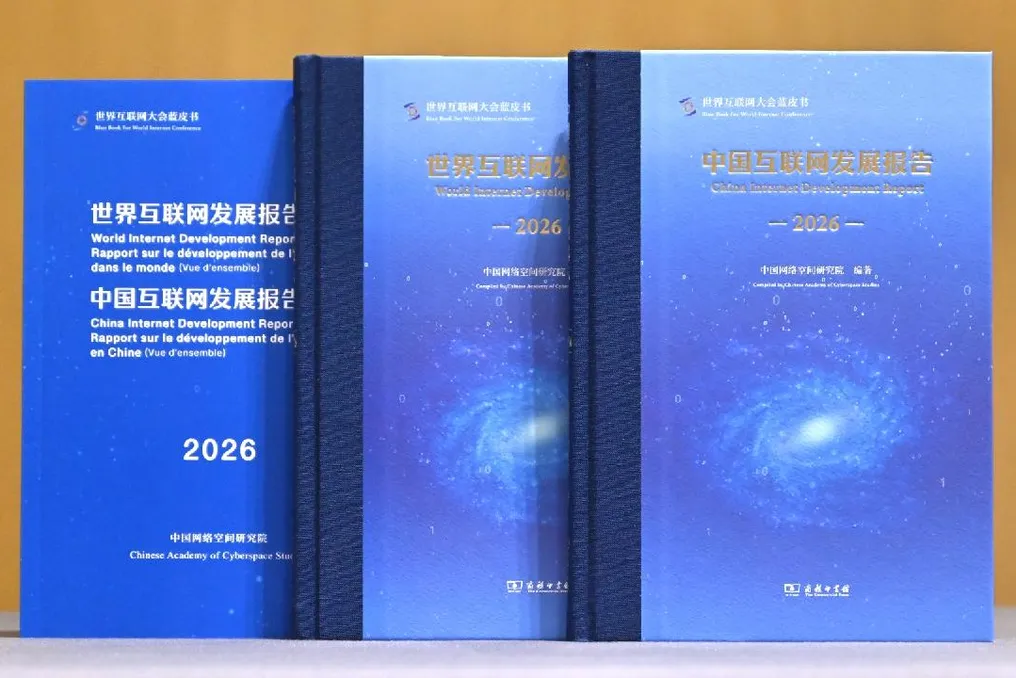
The reports, 'China Internet Development Report 2026' and 'World Internet Development Report 2026,' were unveiled at a press conference by the China Academy of Cyber Space Studies (CACS).

In response to a question from CGTN about how digital development can benefit all people more equitably, a CACS representative stated that enhancing digital inclusivity is a central task within China's initiative to build a digital society. Over the past year, China has intensified efforts to reduce the urban-rural digital divide and improve digital skills nationwide.

Special attention is given to ensuring connectivity in rural areas. By the end of 2025, the number of broadband users in rural China reached 204 million as network infrastructure continues to expand in rural regions. The representative noted that digital village programs are deepening to support the development of rural territories.

Furthermore, new steps have been noted in preparing the population for the era of artificial intelligence (AI). For the first time, increasing public literacy in AI has become a priority, which was cemented by a national digital literacy campaign in May covering daily life, work, education, and innovation.

For elderly residents, China is promoting smarter elder care services, including remote medical consultations and chronic disease management, to facilitate access to digital services for seniors. Regarding people with disabilities, authorities are encouraging companies to develop accessible software and hardware, and they are promoting practical examples of digital products and services created for users with disabilities. Local initiatives, such as smart services for people with disabilities and employment data platforms, aim to improve support through digital tools.

Popular