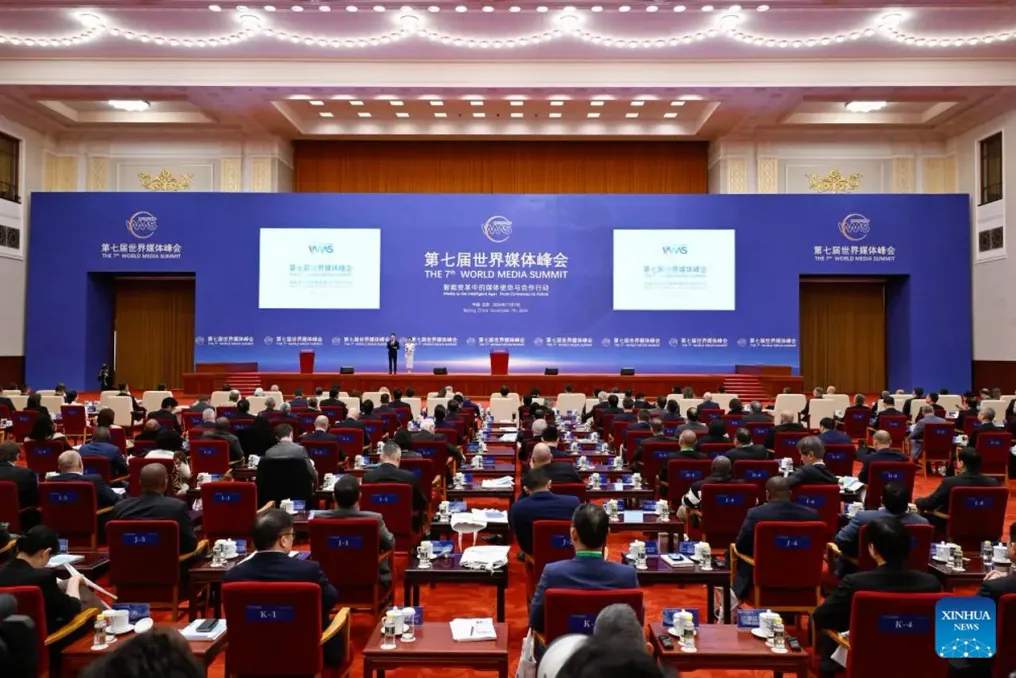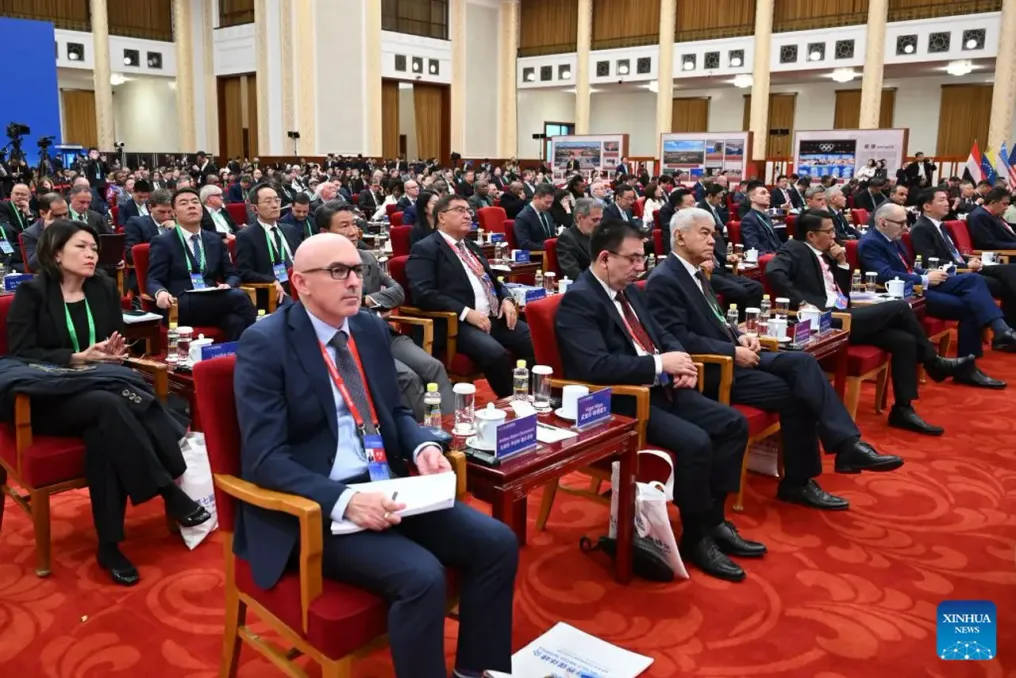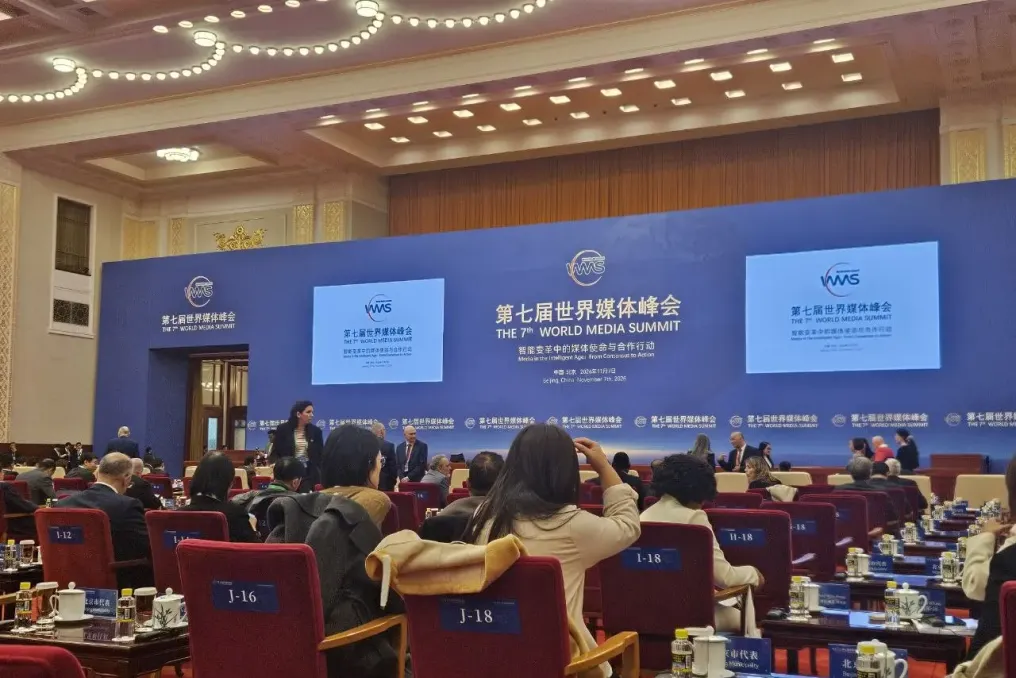
The Xinhua News Agency has initiated a Global Media Initiative aimed at jointly developing standards for the application of artificial intelligence in journalism. These standards were presented as a Document on Global Cooperation in Media and AI at the World Media Summit 2026.
The goal of this initiative is to promote experience exchange and cooperation in the responsible and standardized use of AI in journalism. Key areas of work include sharing practices, joint testing of solutions, collective research, and enhancing participants' professional skills. The initiative aims to help partners contribute by leveraging their strengths.
The first group of partners consists of eleven Chinese and eleven international organizations. Among the Chinese participants are entities such as People's Daily, Xinhua News Agency, China Media Group, Peking University, Tsinghua University, Renmin University of China, China Copyright Protection Centre, China Academy of Information and Communications Technology, Institute of Automation of the Chinese Academy of Sciences, China National Institute of Standardization, and China Association of Printing Technology.
International partners include TASS, Vietnam News Agency, Rossiyskaya Gazeta, Union of OIC News Agencies, Qatar News Agency, Independent Online (South Africa), La Nueva Televisión del Sur, Malaysian National News Agency, Agencia Peruana de Noticias Andina, Uganda Broadcasting Corporation, and Tunis Afrique Presse.
The framework document is based on Xinhua's practical experience in creating a system of standards for using AI in the news industry. It is designed to facilitate the exchange of experience in risk management and the application of AI in areas such as data management, model deployment, and content security. Furthermore, the document seeks to establish communication channels between global media organizations and is presented as a voluntary reference guide.
A central principle of the document is that AI must remain an auxiliary tool, and ultimate responsibility for news content must remain with journalists. Media organizations are advised to adhere to journalistic ethics of truthfulness, combat AI hallucinations and disinformation, strengthen accuracy guarantees, and pay attention to testing and evaluating model capabilities. The importance of respecting cultural diversity and considering the different levels of development of media organizations is also emphasized, aiming to build a reliable and diverse global information environment.
The practical basis covers three key areas. The first is content labeling and provenance verification. Materials substantially created, rewritten, or synthesized with the help of AI must carry visible labels and embedded metadata. These labels must inform the audience about the use of AI, while the metadata must record the degree of AI involvement, the model version, and the creation time. For synthetic content with high risk, more robust anti-forgery measures are provided, including digital watermarks where appropriate. The framework structure also requires maintaining records at every stage of AI production, from prompts and source materials to edits by editors and reviewers. Labels must be retained upon content republication.
The second area is AI model evaluation. Xinhua's standard system for the news industry combines automated testing with professional journalistic expertise, which includes checking factual accuracy and logical coherence. Participants are urged to share evaluation tools and test scenarios that have been verified in real practice. Evaluations must be objective and impartial, results reproducible, and reports standardized.
The third area is security and risk management. The document provides a closed-loop risk management system covering pre-deployment assessment, access control, logging during operation, and post-implementation incident response. Before system operation begins, they must be tested for risks, including factual hallucinations, malicious prompt injection, deepfakes, and algorithmic bias. Clear operational boundaries and access rights must be established for AI agents and automated news systems, along with mechanisms for human intervention and emergency shutdown. AI-generated results can only be used as drafts or reference materials; all content intended for publication must undergo professional fact-checking across multiple sources. Using AI to fabricate quotes or event details is prohibited. Simulated or reconstructed multimedia materials must be clearly labeled and must not be presented as authentic on-site recordings. Personal data used in training and processing AI materials must be anonymized, and access to confidential materials must be strictly limited.
Participants may form a working group and an open review mechanism after consultations to ensure regular updates and improvements to the document. They are also encouraged to share practical experience from media operations and conduct joint case analyses. Participation formats, including practical implementation, case sharing, joint model evaluation, and thematic discussions, are voluntary. The document is not mandatory and is voluntary. Participants can adapt it to their local legal systems, and it imposes no obligations. Media organizations and specialized institutions worldwide are invited to join this initiative, and the document is expected to be updated periodically to reflect the development of AI technologies.