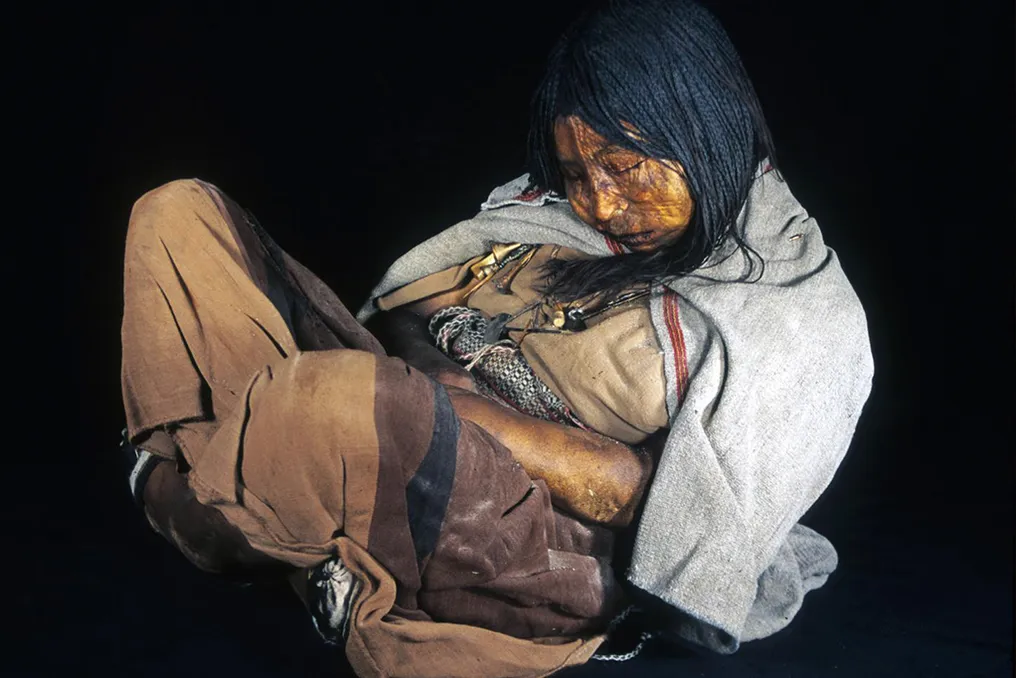
Before Inca children were offered to the Andean gods, they were given various substances that likely helped alleviate anxiety and soften the horror of human sacrifice. A new study, based on the analysis of Inca mummies, allowed for the precise identification of psychoactive compounds used to prepare victims for the ritual.
Toxicological analyses detected cocaine in all hair samples, as well as signs of alcohol consumption in half of the individuals. Furthermore, harmine, a psychoactive compound associated with ayahuasca, was identified in one nail sample—a drink used in spiritual ceremonies.
Human sacrifice held a central place in Inca religion. Those chosen for the ceremony were considered sacred messengers intended to mediate between humans and deities. Primarily, children and adolescents of both sexes participated in rituals, usually aged between 6 and 15 years.
This rite, known as Capacocha, was performed to restore stability after periods of crisis in the Inca Empire. According to the record of the Spanish monk Martín de Murúa, written in 1590, the ceremony served to ensure the absence of 'hunger, lack of crops, drought, epidemic, or rebellion.'
Children were selected for sacrifice based on subjective qualities such as beauty and the absence of physical 'defects,' according to the Incas. They were often led to the empire's capital, Cusco, where they participated in carefully planned ceremonies before being sent to sacred places. These processions could last for months, traversing great distances and difficult terrain.
According to Spanish chroniclers, the victims were given chicha, fermented corn beer, so that they might approach the gods joyful and calm. Previous studies had already found traces of coca and alcohol in some Inca mummies, but tests for other substances often yielded inconclusive or negative results. It remained to be determined whether other psychoactive plants were administered to other children during Capacocha and for what purpose.
This prompted researchers to analyze hair and nail samples from the mummies to determine which psychoactive plants were given to the children. Eight mummified and frozen children aged 6 to 14 years—seven of them girls—were found on the peaks of volcanoes in Peru and Argentina. According to Socha, Capacocha victims were often strangled, buried alive, or left to die of cold on mountain peaks.