An archaeologically significant find was made in the Panna region of Madhya Pradesh state. During excavations conducted by the Archaeological Survey of India (ASI) in the historic village of Nachna, located in the Salha district, an ancient statuette of an adorned heroine was discovered.
This artifact, estimated to be approximately 1500 years old, is important evidence for understanding the art, culture, and beauty traditions of women from that era, belonging to the Gupta period.
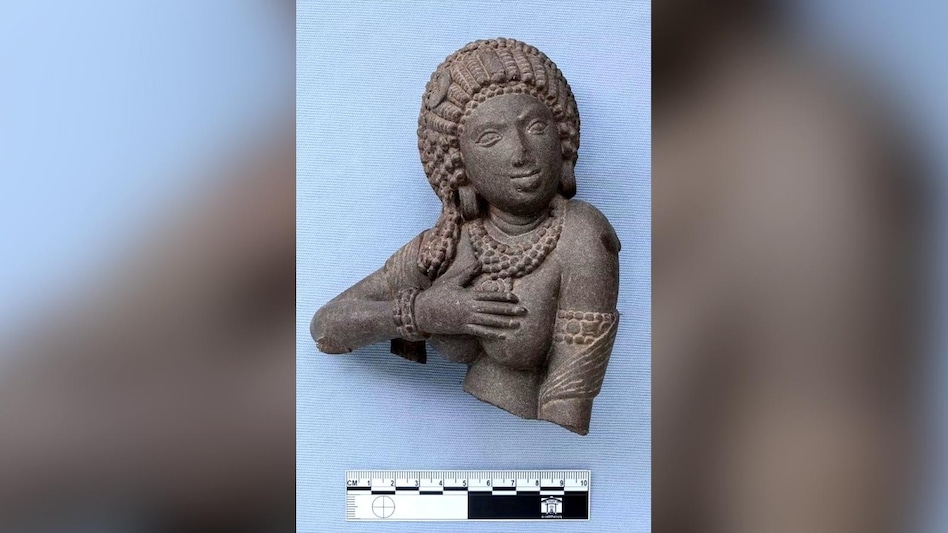
The statuette, about 20 centimeters high, is made of gray sandstone and has a glossy polish. The sculpture depicts a woman attending to herself. Particular attention is drawn to how meticulously the artisan carved her hairstyle and ornaments.
Decorative elements resembling hairpins are visible on the woman's head, and a seven-strand necklace is on her neck. Additionally, bracelets are visible on her arms, and armlets are on her forearms. These small details suggest how developed the traditions of jewelry and cosmetics were among Indian women more than fifteen hundred years ago.
According to archaeologist and ASI chief Shivkanta Bajpai, this statuette is about 1500 years old. This artifact, dated to the 4th-5th centuries, demonstrates the artistic achievements and cultural richness of that time. The extremely fine depiction of jewelry, hairstyle, and makeup on the stone testifies to the outstanding craftsmanship of the artisans of that period.
This statuette is considered special because the image of an adorned heroine in Gupta art is rare. Other well-known works, such as 'Dama Gyaraspura' and 'Sukhanaika', housed in the Khajuraho museum, should also be noted, but the find from Nachna is considered significantly older, making it an important discovery for studying the evolution of Indian sculpture.
The village of Nachna in the Panna district is already known for its temple architecture from the Gupta period. It houses the Parvati Mandir and Chaumkhanaat Mandir, which hold significant historical and religious importance. The discovery of the statuette of the adorned heroine has further enriched the archaeological significance of this village.
This discovery goes beyond simply finding an ancient statue; it provides an opportunity to study the lifestyle, aesthetic preferences, beauty, and socio-cultural traditions of that time. The jewelry and hairstyle depicted on the statuette point to a deep connection between beauty and art during the Gupta era.
It is planned that this historical statuette will be exhibited and preserved in a museum in the future. This will allow the general public to view a unique example of Gupta period art up close. For archaeologists and history enthusiasts, this artifact will be of particular interest.
The heroine's statuette found in Nachna serves as a reminder of the glorious period of Indian history when works of art carved in stone served not only as decoration but also as a living document of the society, culture, and way of life of that time. Even after almost 1500 years, the form of the adornment on this statuette remains, telling the story of artistic mastery and cultural prosperity of ancient India.