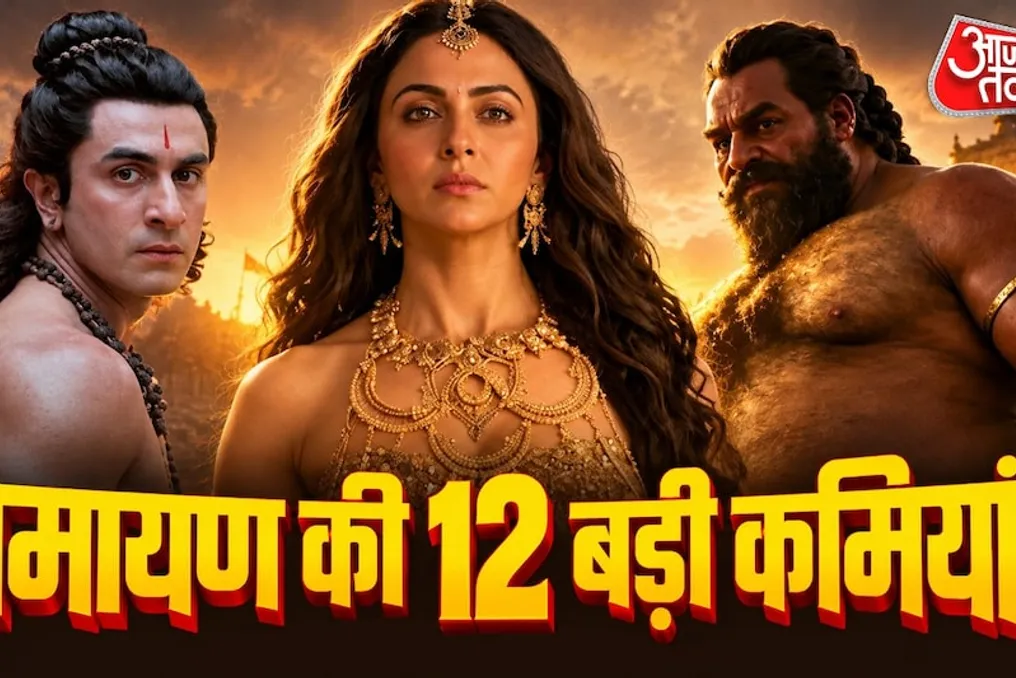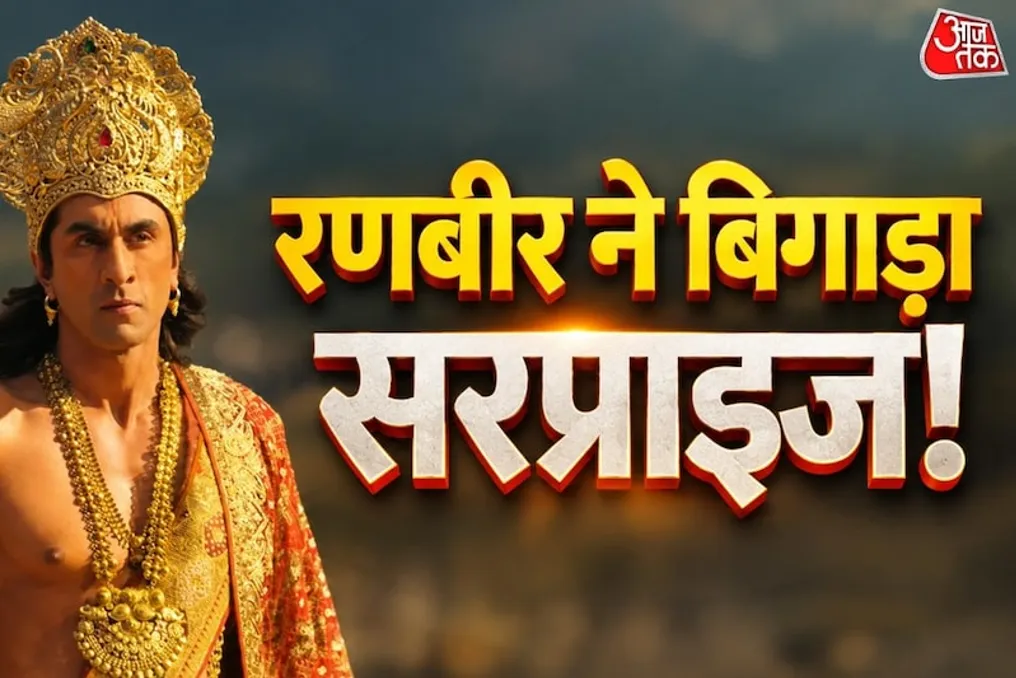
Nitesh Tiwari's film, based on the ancient Indian epic 'Ramayana,' has sparked significant discussions on social media following its premiere. The focus of the discussions has shifted from the character of Rama to that of Ravana.
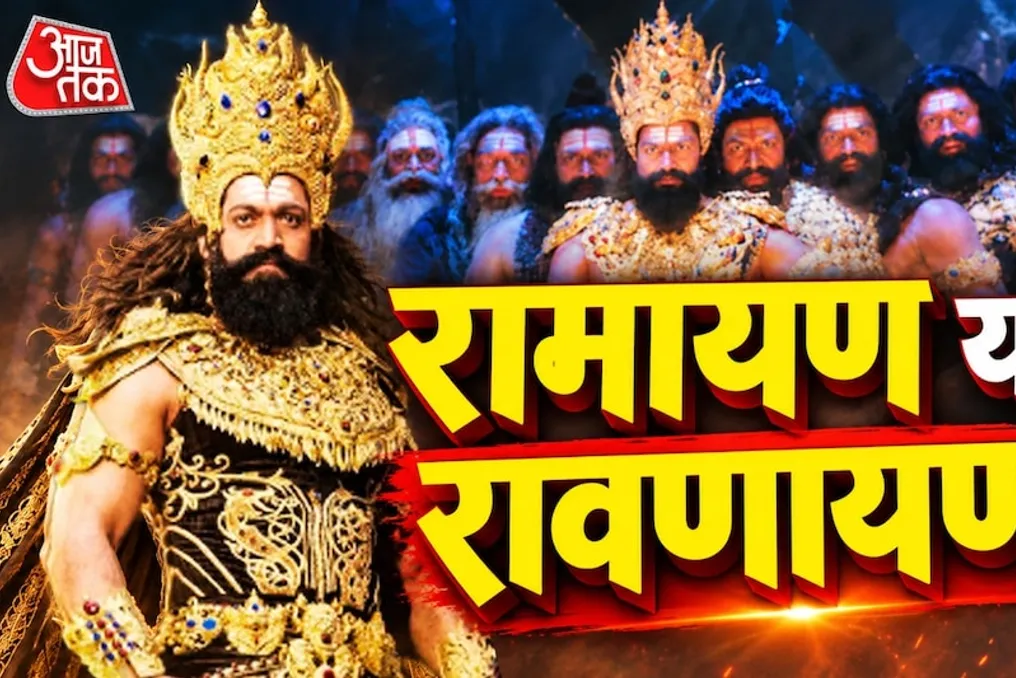
A large portion of viewers question the exaggerated, 'bigger than life' portrayal of the character Ravana. Some argue that Ravana is given such a central role in the film that Lord Rama appears merely as a secondary character in his own story.
Critical remarks are also heard on social media. One user noted the excessive glorification of Ravana and the depiction of Lord Rama as weak. Another commentator stated that the deities in the film are presented as tyrants, and Shurpanakha as a victim. A third user compared the traditional 'Ramayana' with this version, noting that in Namita Malhotra's adaptation, Ravana is made the main pillar of the narrative, whereas in the original, it is a story about Lord Rama.
Nitesh Tiwari's film does not begin with Rama, but with the appearance of Ravana. His clan is persecuted by the gods and forced to work in slavery under the god of wealth Kubera, which ultimately leads them to rebellion. However, it is emphasized here that Ravana and his family are not shown as victims; their subjects are the ones who suffer from food shortages.
At the beginning of the film, Ravana is depicted playing the vina, Vibhishana studying knowledge from his scriptures, and Kumbhakarna feasting heartily. After this, Ravana undergoes severe asceticism, receives divine blessings, and conquers Lanka, where he subsequently rules. The film meticulously shows his path to power.
The question arises whether the film truly praises Ravana. Upon careful examination, there is some truth to this idea. A good aspect of the film is that it does not present Ravana as an 'incomprehensible hero.' His arrogance is constantly evident. The most tragic moment is his killing of Vidhitha, Shurpanakha's husband, simply out of spite. This murder occurs because Vidhitha mistreated women and tried to possess her. This version lacks the portrayal of a 'restrained Ravana.'
How good is Ravana, feminist Ravana?
Turning to the strong creative elements, it is worth noting how Ravana's ten heads are portrayed with different voices and personalities. This allowed Yash to play the character as a ruler, warrior, devotee, and a person with many flaws. But this is where the film's main question arises: why did Ravana kidnap Sita?
In Nitesh Tiwari's film, the insult to Shurpanakha becomes one of the key reasons for the decision to abduct Sita. In Valmiki's 'Ramayana,' the abduction of Sita is described in detail. Valmiki offers a more complex interpretation of Ravana. In the 34th sura, 'Aranyakanda,' of the epic, Shurpanakha informs Ravana of Sita's extraordinary beauty and urges him to make her his wife. She advises him to kill Rama and Lakshmana to obtain Sita. When Ravana, disguised as an ascetic, arrives at Sita in Panchavati, Valmiki again explains that he is completely consumed by sensuality. His attraction to Sita and desire to possess her are at the center of this episode. Shurpanakha's insult adds another aspect to Ravana's decision, but it does not eliminate the role of sensuality and the desire to 'possess.'
In this context, the film's emphasis is very important: the theme of nose cutting and revenge is brought to the forefront, which changes Ravana's intentions. Ravana, his rule, and glimpses of Rama
The author's main complaint lies in the imbalance between Rama and Ravana. Ravana is given enough time to demonstrate his lineage, ambitions, relationships, and path to power. He is even given a good speech about what he will do for his people: no hierarchy, no division. Whoever eats Ravana will be his people. This speech was presented so convincingly that ordinary people might say, 'We need not Raja Rama, but Raja Ravana.'
Meanwhile, Rama's life is presented only as a series of important moments: his wedding, preparations for coronation, and exile into the forest. Although all these events are included, if more time had been dedicated to some of them, viewers could have related to them emotionally better. Very little is shown about how Rama interacts with his people. Where is that Raja Rama we are talking about? Nitesh Tiwari, please explain.
The question was raised by a member of the censorship board
Despite users on social media writing whatever they want, that can be dismissed. But what if the member of the censorship board himself called the film 'Ravanayana'? Indeed, the famous film critic, recipient of the National Film Award, Vino...
3.